
Does the Surface of Industrial Chrome-Plated Rollers Require Polishing?
In industrial manufacturing, chrome-plated rollers are widely utilized across sectors such as film processing, papermaking, coating, printing, rubber calendering, and metal calendering, thanks to their high hardness, wear resistance, corrosion resistance, and exceptional surface finish. After extended periods of use, users frequently raise a critical question:
“Does the surface of a chrome-plated roller require polishing? When should it be polished? What impact does polishing have on the chrome plating layer?”
What appears to be a simple question actually involves complex considerations regarding process precision, surface roughness control, plating layer longevity, structural stability of the roller body, and processing standards.
From a professional perspective, this article will provide an in-depth analysis of why chrome-plated rollers require polishing, when such maintenance is necessary, under which conditions it should be avoided, and the potential outcomes and risks associated with the process. It serves as a systematic and practical technical guide for equipment users, factory maintenance personnel, and equipment procurement specialists.
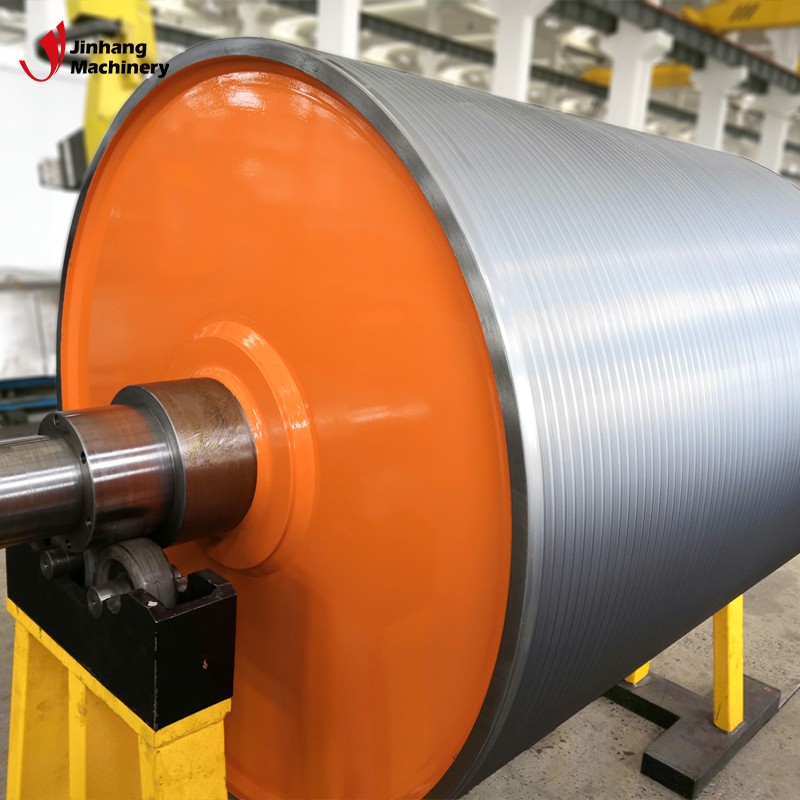
Why Do Chrome-Plated Rollers Require Polishing?
Chrome-plated rollers typically possess a surface hardness ranging from HRC 55 to 65; their chrome plating layer is exceptionally robust and highly resistant to wear. However, after prolonged operation—even if the plating layer itself remains structurally intact—the surface finish may deteriorate due to external contamination, indentations, microscopic scratches, or adhering residues, thereby compromising product quality.
The primary reasons why industrial chrome-plated rollers require polishing include:
① Surface Scratches
Such scratches typically originate from:
•Friction caused by contact with blade edges, paper edges, or film edges during cutting operations.
•Contact with metallic debris or foreign objects during operational processes.
•Particulate contaminants becoming embedded within the processed material.
Scratches compromise the surface flatness of the industrial chrome-plated roller, leading to:
•Uneven calendering.
•Localized inconsistencies in product gloss or brightness.
•Fluctuations in coating thickness.
② Deterioration of Surface Roughness
Chrome-plated rollers typically demand an exceptionally high degree of surface finish, such as:
•Mirror-grade finish: Ra 0.01–0.05 μm.
•Semi-mirror-grade finish: Ra 0.1–0.2 μm.
When surface roughness exceeds these specified limits, the finished product may exhibit surface defects such as bright spots, ripples, or a hazy/matte appearance; polishing is then required to restore the surface to its original specifications.
③ Adhered substances cannot be removed by cleaning alone
For example:
•Molten plastic residue
•Adhesives
•Cured coating deposits
•Imprints from rubber rolls
If chemical cleaning proves ineffective, mechanical grinding is required to restore the surface.
④ Micro-cracks caused by natural fatigue of the chrome plating layer
After years of use, the chrome plating layer may develop micro-cracks, even if it has not yet begun to peel. At this stage, precision grinding can help extend the service life of the plating.
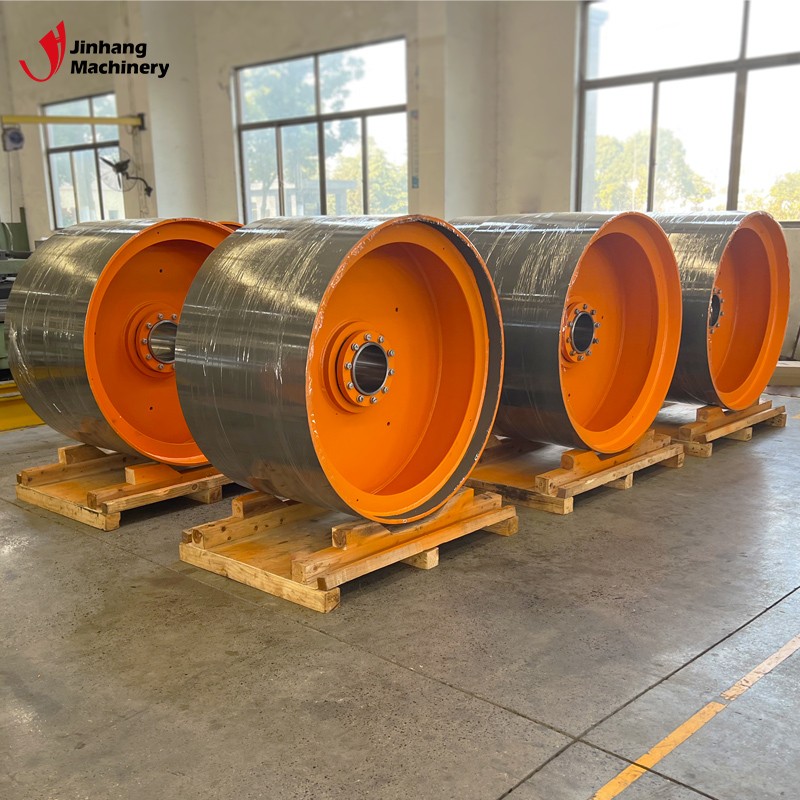
How often do chrome-plated rolls need to be ground? Is periodic maintenance mandatory?
Chrome-plated rolls do not require grinding at fixed intervals; rather, the decision is based on the actual condition of the surface.
Factors influencing the frequency of grinding include:
•Whether the production materials are prone to scratching the roll surface
•Whether there is a risk of adhesion from coatings, adhesives, resins, etc.
•Whether the production environment contains metal debris
•Whether the load distribution, pressure, and temperature remain stable
•Whether the requirements for surface finish (smoothness) are extremely high
•Whether the thickness of the chrome plating layer is sufficient (typically 0.05–0.2 mm)
Under normal operating conditions, high-quality chrome-plated rolls may not require grinding for 1 to 3 years.
Chrome-plated rolls requiring an extremely high-gloss mirror finish may require precision grinding every 3 to 12 months.
Under what circumstances should chrome-plated rolls not be ground?
Chrome-plated rolls cannot be ground at just any time. Improper grinding can lead to excessive thinning of the chrome layer or even damage to the underlying roll substrate.
Grinding of chrome-plated rolls is strictly prohibited under the following conditions:
① The chrome plating layer is too thin
If the remaining thickness of the plating is less than 0.03 mm, further grinding will result in:
•Exposure of the underlying nickel layer
•Exposure of the base metal substrate
•Total scrapping of the roll
② The surface exhibits deep pits or corrosion-related depressions
Grinding cannot remove deep corrosion damage; the roll must be directly re-plated with chrome.
③ The roll body runout (eccentricity) exceeds tolerance limits
Grinding cannot correct a bent roll; the roll must first be straightened or remachined.
④ The chrome plating layer on the surface has begun to peel
Peeling indicates a structural failure of the chrome plating layer; grinding is ineffective, and the roll must be completely re-plated.
⑤ The temperature of the roll body is excessively high
Precision grinding cannot be performed while the roll is in a state of thermal expansion; it must first be allowed to cool down to ambient temperature.
What is the surface roughness of a chrome-plated roller? How does grinding affect its surface finish?
High-quality chrome-plated rollers typically exhibit the following surface roughness specifications:
Roller Surface Type | Roughness Requirement
Ultra-Mirror Finish | Ra 0.005–0.02 μm
Mirror Finish | Ra 0.02–0.05 μm
Semi-Mirror Finish | Ra 0.05–0.2 μm
Functional Roller | Ra 0.2–1.0 μm
Grinding can typically restore the roller to its original surface finish, provided that:
•The chrome plating layer remains undamaged.
•The grinding process is executed with precision.
•The grinding equipment possesses sufficient precision (≤ 0.002 mm).
Unprofessional grinding can degrade the surface roughness, thereby diminishing the roller's overall performance.
What is the process for grinding the surface of a chrome-plated roller?
A typical grinding process for industrial chrome-plated rollers is as follows:
1.Clean the roller surface.
2.Inspect the plating thickness.
3.Perform rough grinding to remove surface defects.
4.Perform fine grinding to restore the required roughness.
5.Perform super-finishing (super-lapping).
6.Perform mirror polishing (if required).
7.Conduct a final inspection for runout and surface roughness.
High-end production lines can achieve exceptional stability through the use of micron-precision grinding heads.
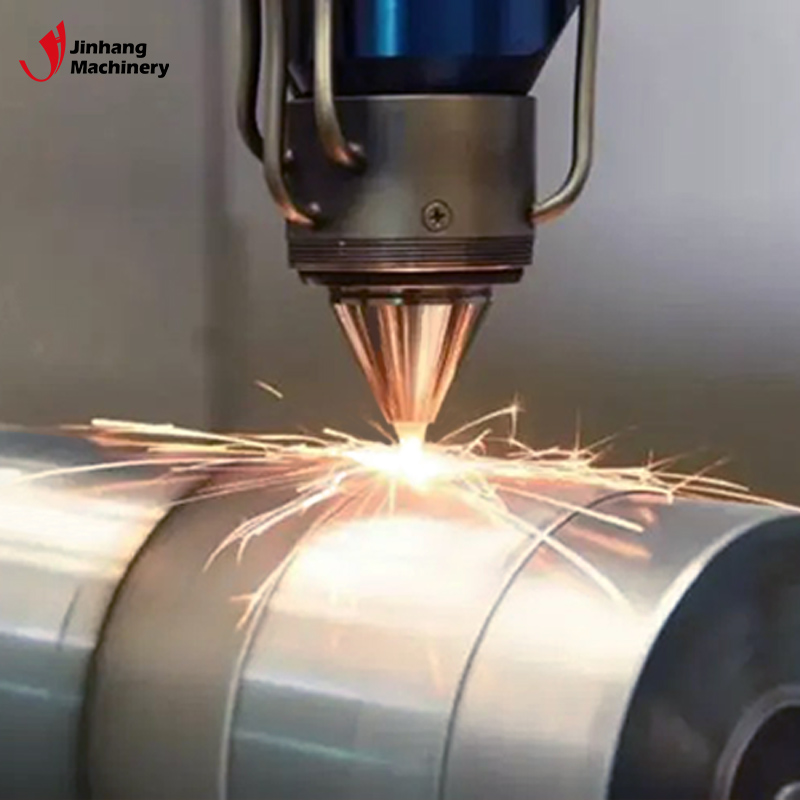
What are the risks associated with grinding chrome-plated rollers? Does it affect the lifespan of the plating?
The primary risks involved in grinding industrial chrome-plated rollers include:
① Thinning of the Plating Laye
Each grinding operation reduces the thickness of the chrome plating, thereby shortening its overall service life.
② Stress Changes Caused by Surface Heat Buildup
Excessive heat generation can cause micro-cracks within the chrome plating layer to propagate.
③ Surface Profile Distortion Due to Uneven Grinding
This is a particularly serious concern for rollers used in calendering and coating applications.
④ Residual Grinding Particles
Residual abrasive particles can lead to scratches and surface damage during subsequent production processes.
How can one determine whether a chrome-plated roller requires re-plating rather than grinding?
Re-plating is mandatory under the following circumstances:
•The thickness of the chrome plating has reached its minimum allowable limit.
•The surface exhibits signs of peeling or blistering.
•Visible defects persist even after grinding.
•The required surface roughness cannot be restored.
•The roller has suffered severe corrosion caused by adhesives or resins.
Re-plating is generally a more economical and safer option than subjecting the roller to repeated grinding cycles.
Can a chrome-plated roller be restored to a "like-new" condition after grinding?
Theoretically, provided that the chrome plating is of high quality and sufficient thickness, and the grinding equipment is highly precise, a chrome-plated roller can be restored to a mirror-finish state that closely approximates that of a brand-new roller.
However, there are two limitations:
•The thickness of the chrome plating cannot be restored (unless the roller is re-plated).
•Micro-cracks on the surface cannot be completely eliminated.
Therefore, while the roller can be restored to a "near-new state," it is not "completely identical to a brand-new roller."
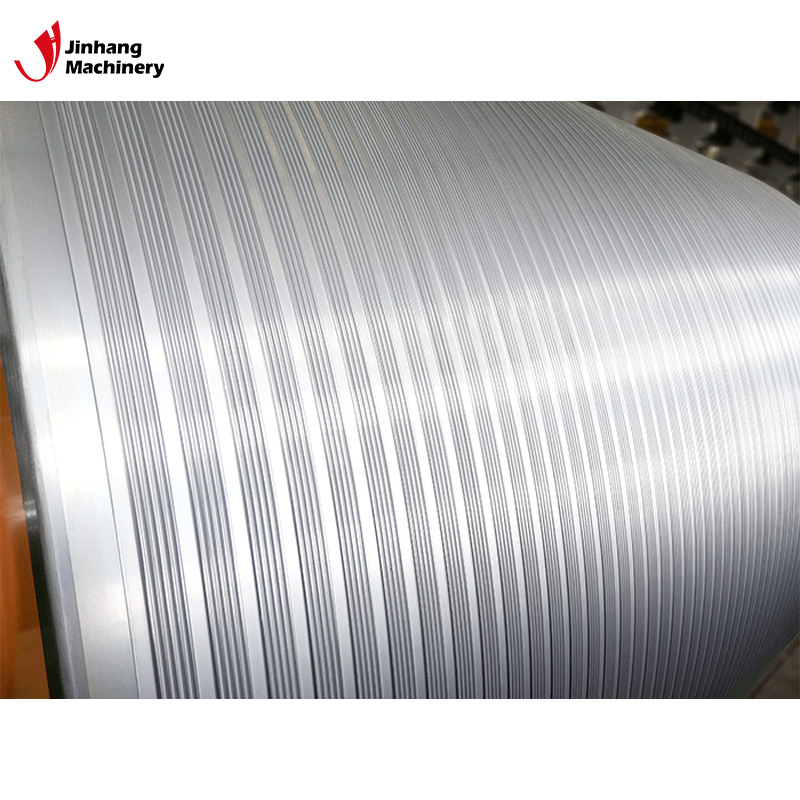
How can the frequency of chrome-plated roller grinding be reduced?
Key strategies include:
•Using appropriate rubber doctor blades or air knives.
•Avoiding contact with metal objects.
•Regularly cleaning the roller surface.
•Controlling dust levels in the production environment.
•Adjusting pressure settings to prevent uneven loading.
•Using soft packaging materials when handling or transporting the roller.
Proper maintenance can extend the grinding cycle of an industrial chrome-plated roller by a factor of 2 to 5.