
Why Do Industrial Corona Rollers Offer Multiple Customizable Coating Options?
In processing and production lines across industries such as film manufacturing, packaging, coating, tape production, and printing, corona treatment stands as one of the most fundamental, common, and—crucially—critical processes. As the core component of corona treatment equipment, the surface coating of the corona roller directly determines the stability, uniformity, and service life of the treatment process.
Many people notice a specific feature when purchasing or replacing corona rollers:
The coating on a corona roller is not fixed; rather, it can be customized according to specific operating conditions, with various types available—including silicone, epoxy, and ceramic coatings.
This raises a common question within the industry:
Why are industrial corona rollers designed with multiple coating options? What exactly are the differences between these various coatings? And why do their service lives and performance characteristics differ?
This article will provide a detailed analysis—examining factors such as material properties, the mechanism of corona treatment, operating environments, temperature resistance requirements, dielectric characteristics, and cost-effectiveness—to explain why it is essential for corona rollers to offer a range of customizable coating options.
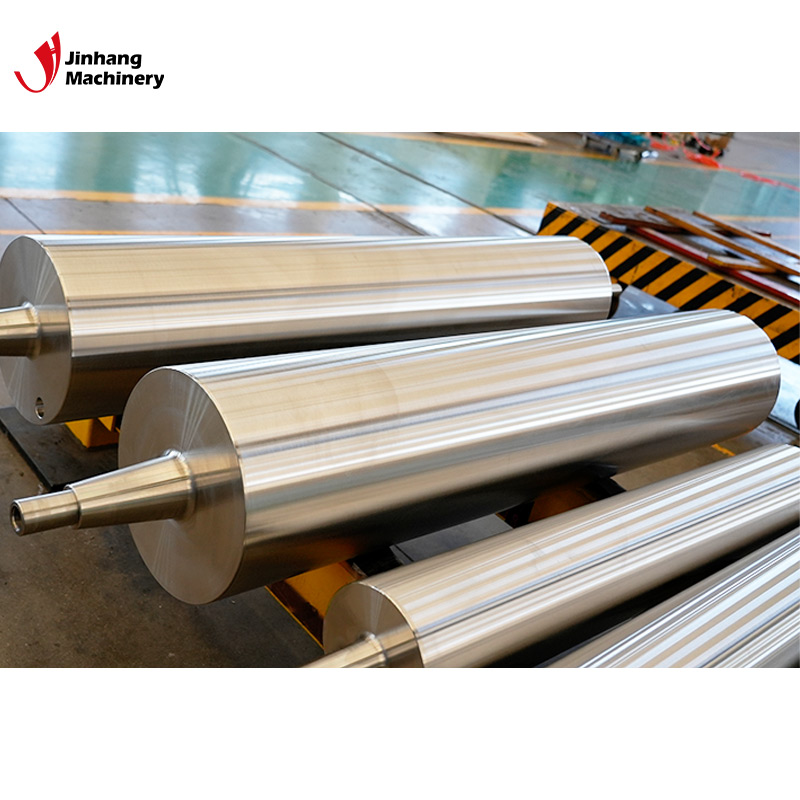
Why Do Corona Rollers Require Different Coatings? Where Do the Core Differences Lie?
Corona treatment is a method designed to increase the surface tension (Dyne level) of films. It relies on high-frequency, high-voltage electrical energy to generate an ionizing discharge on the material's surface, thereby activating the surfaces of materials such as plastics, films, and paper.
This activation serves to enhance:
•Coating adhesion
•Printing ink bonding strength
•Heat-sealing performance
•Adhesive bonding capability
During the corona treatment process, the corona roller acts as the direct physical medium that bears the electrical discharge. Consequently, the surface coating of the corona roller must satisfy the following criteria:
1.Excellent dielectric strength
2.High-temperature resistance
3.Resistance to electrical breakdown
4.Mechanical abrasion resistance
5.Corrosion resistance
6.Superior insulating properties
7.Excellent thermal stability
Since different coating materials exhibit varying performance levels across these specific attributes, manufacturers offer multiple customizable coating options to meet diverse operational requirements.
For example:
•Silicone Corona Rollers: Offer moderate dielectric properties and relatively lower temperature resistance, but provide excellent cost-effectiveness.
•Epoxy Corona Rollers: Possess higher dielectric strength compared to silicone and present a lower risk of abrasion-related issues.
•Ceramic Corona Rollers: Possess arguably the strongest resistance to abrasion, corrosion, and high temperatures, as well as superior insulation and electrical properties; however, they come with the highest cost.
In industrial environments, no single coating can "suit all operating conditions"; therefore, corona rollers must be available with a variety of coating options to ensure proper compatibility.
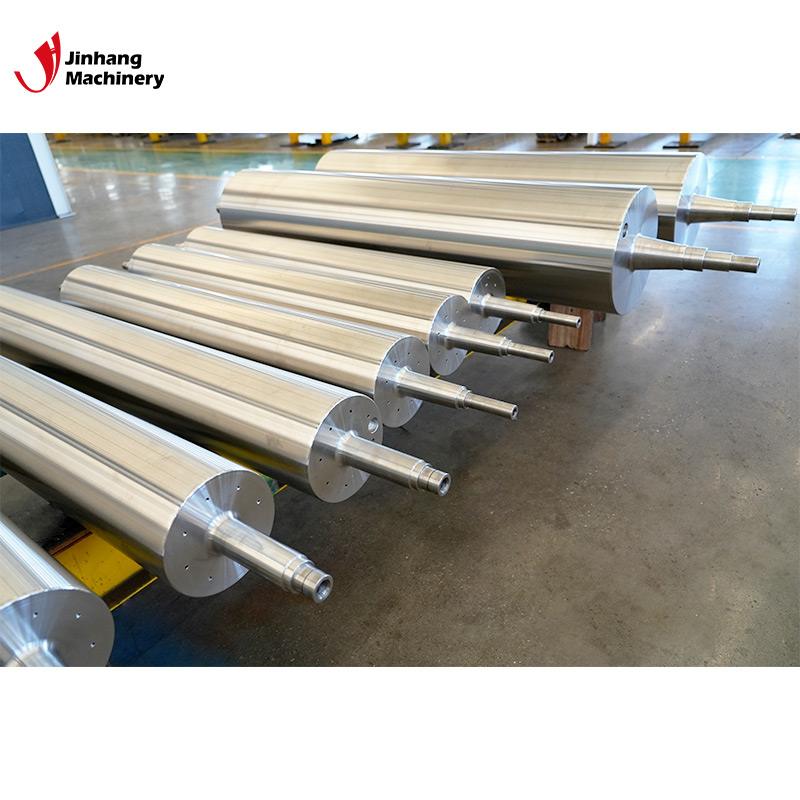
How do corona rollers with different coatings differ in terms of dielectric properties?
When selecting a corona roller, the primary consideration is dielectric strength, as the corona treatment process is, by nature, an electrical discharge phenomenon.
The dielectric characteristics of various coating materials are as follows:
Coating Material | Dielectric Characteristics | Suitable For
Silicone | Moderate; prone to aging under high temperatures | Light to medium-duty corona treatment
Epoxy | Stronger; offers a more balanced stability profile than silicone | Medium to heavy-duty corona treatment
Ceramic | Extremely strong; offers optimal resistance to high temperatures and electrical breakdown | High-frequency, high-temperature, or heavy-load operating conditions
The availability of multiple coating options for corona rollers is essentially designed to meet the varying requirements for electric field strength.
For example:
•High-power corona machines → Require a ceramic coating
•Medium-power machines requiring high stability → Require an epoxy coating
•Standard film corona treatment (cost-sensitive applications) → Opt for a silicone coating
Differences in dielectric properties constitute one of the fundamental reasons for the diversity of available coatings.
Does the heat resistance of a corona roller affect its service life?
Differences in service life are a topic of paramount concern for users. The typical service life for rollers with different coatings is as follows (based on general industry performance):
•Silicone Corona Rollers: Approximately 6 months
•Epoxy Corona Rollers: Approximately 1 year
•Ceramic Corona Rollers: Approximately 2 years or longer
Why is there such a significant difference?
Service life is closely correlated with the following factors:
1.Heat resistance
2.Resistance to electrical breakdown
3.Resistance to ozone corrosion (ozone is generated during the corona process)
4.Abrasion resistance
5.Resistance to chemical attack
6.Hardness stability
7.Load stability
Why is the service life of silicone rollers relatively short (approximately six months)?
•Poor temperature resistance
•Prone to aging caused by ozone
•Softer surface; insufficient abrasion resistance
•Susceptible to dielectric breakdown under high-power corona discharge
Why is the service life of an epoxy coating approximately one year?
•Higher temperature resistance than silicone
•More stable surface hardness
•Greater resistance to dielectric breakdown
•Stronger abrasion resistance
However:
•It still cannot withstand extreme high temperatures
•It cannot endure prolonged use in corrosive environments
Why is the service life of a ceramic corona roller approximately two years?
Ceramic coatings feature:
•High hardness
•High abrasion resistance
•Exceptional high-temperature resistance
•High dielectric strength
•Resistance to dielectric breakdown
•Resistance to chemical corrosion
•Resistance to ozone aging
A ceramic coating is arguably the "perfect match" for the operating environment of a corona roller; consequently, it naturally offers the longest service life. The existence of these differences in service life necessitates that corona rollers be offered with a variety of coating options to accommodate diverse budgets and operating conditions.
Do the coating thickness and material of a corona roller affect the uniformity of the corona discharge?
The answer is yes—and the impact is quite significant.
The key factors determining corona uniformity are:
•Whether the dielectric constant of the coating is uniformly distributed
•Whether the surface roughness is consistent
•Whether the coating thickness is uniform
•Whether the coating material possesses stable insulating properties
•Whether the surface temperature is balanced
The electrical and thermal properties of silicone, epoxy, and ceramic coatings differ significantly, resulting in distinct corona performance characteristics:
•Silicone Corona Rollers: Offer acceptable corona uniformity, but performance becomes unstable at high temperatures.
•Epoxy Corona Rollers: Provide superior uniformity and a more stable electric field distribution.
•Ceramic Corona Rollers: Represent the near-optimal solution for corona performance, offering the highest level of stability.
Therefore, the choice of coating material not only affects the service life of the roller but also directly influences the effectiveness of the corona treatment.
What precautions should be taken when using a silicone corona roller? Why is its service life typically limited to approximately six months?
The reasons for the widespread use of silicone corona rollers are clear: low cost, high adaptability, and ease of rapid replacement. However, its weaknesses are also quite evident:
1.Rapid aging at high temperatures
2.Surface cracking caused by ozone corrosion
3.Poor abrasion resistance
4.Rapid degradation of dielectric strength over time
5.Susceptibility to dielectric breakdown
Most silicone corona rollers are used under medium-power conditions, and their typical service life is:
•Approximately 4–6 months (a common average)
Silicone is suitable for:
•Cost-sensitive users
•Medium-to-low-load corona treatment applications
•Production lines that are not sensitive to high temperatures
However, it is not suitable for:
•High-frequency corona treatment
•High-temperature environments
•Processing environments involving sticky materials that generate significant friction and cause rapid wear
In which environments are epoxy-coated corona rollers suitable? Why is their service life typically around one year?
Epoxy coating strikes a balance between silicone and ceramic, making it a well-rounded choice for corona roller coatings.
The reason for its approximate one-year service life lies in the following factors:
•Higher temperature resistance than silicone
•Greater abrasion resistance
•More stable dielectric properties
•Superior resistance to ozone
Epoxy-coated corona rollers are suitable for:
•Medium-to-high-load corona treatment applications
•Users who require a balance between cost-effectiveness and performance
•Film production processes with strict requirements for corona treatment uniformity
•Production lines with specific requirements regarding operating temperature and speed
However, epoxy still cannot fully deliver:
•Long-term stability under high-frequency and high-temperature conditions
•Extreme corrosion resistance
•Extreme abrasion resistance
Consequently, periodic replacement remains necessary.
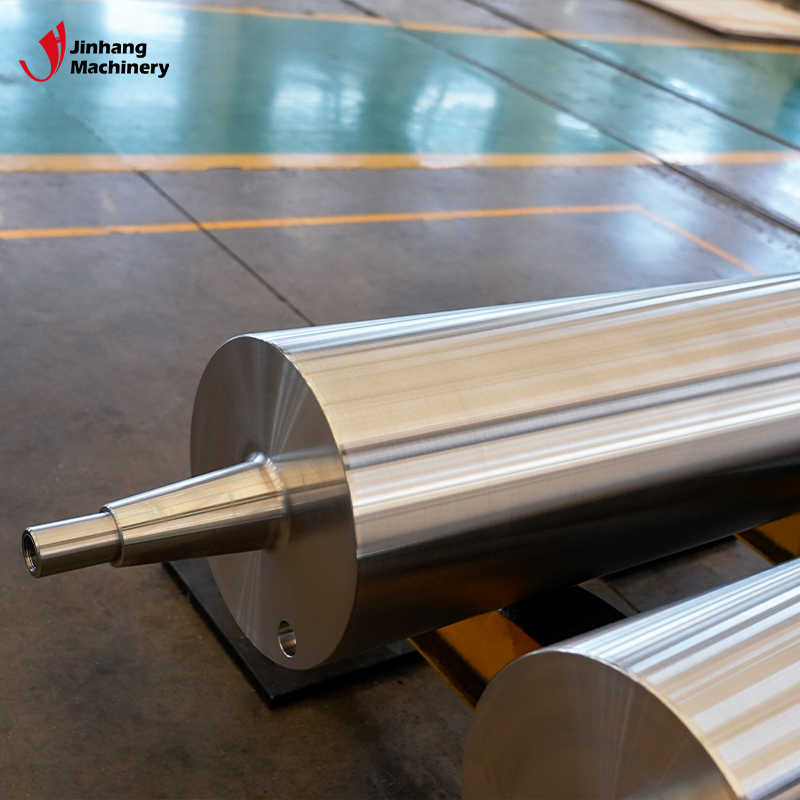
Why do ceramic corona rollers have a longer service life? What accounts for the advantage of their two-year lifespan?
Ceramic-coated corona rollers outperform silicone and epoxy alternatives in almost every critical metric:
1.Exceptional abrasion resistance
2.High-temperature resistance, capable of withstanding heavy-load corona environments
3.Superior electrical insulation properties, highly resistant to dielectric breakdown
4.Resistance to chemical corrosion
5.Resistance to ozone aging
6.High thermal stability
7.High surface dimensional stability (resistance to deformation)
These attributes enable ceramic corona rollers to maintain corona uniformity over extended periods, resulting in a typical service life of:
•Approximately 1.5 to 2 years, or even longer
Ceramic represents the premium choice, making it ideally suited for:
•High-frequency corona treatment applications
•Continuous, long-duration production operations
•High-temperature operating environments
•Users with exceptionally stringent requirements regarding stability and service life
Precisely because of their superior performance and longevity, they also represent the highest-cost option.