
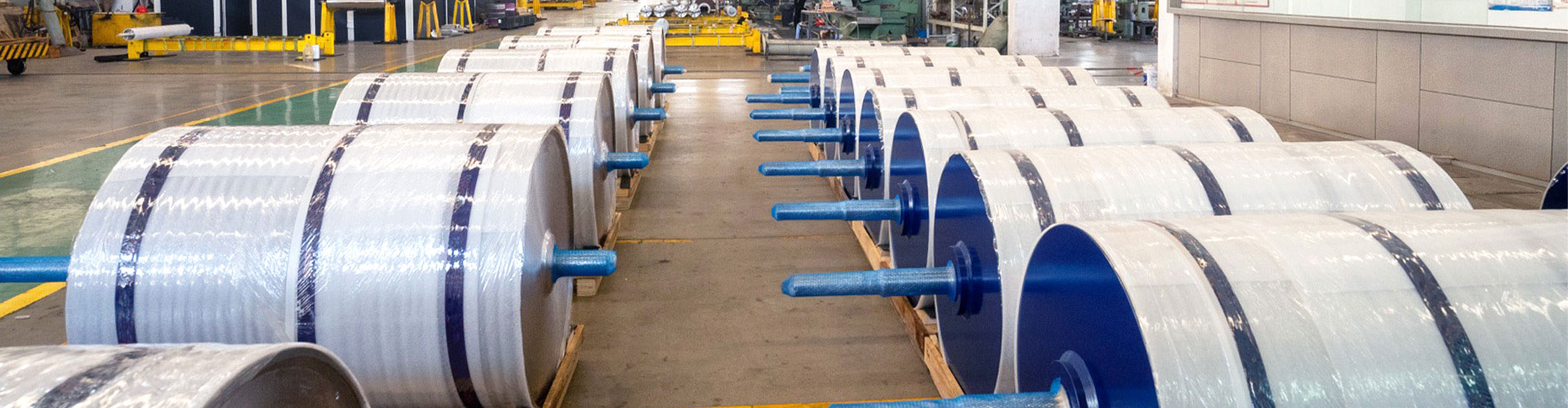
—Comprehensive Analysis from Structural Classification and Manufacturing Processes to Industry Applications
In the context of the rapid development of modern manufacturing, industrial rollers have become an indispensable core component in many industrial equipment. In actual production, many companies encounter problems related to industrial rollers.
For example, why can some equipment run continuously for many years with industrial rollers of the same specifications and dimensions, while others show wear, deformation, surface scratches, or decreased precision after only a few months of use? Why can't the original industrial rollers meet the high-speed operation requirements after the production line is upgraded to automation? Why do some companies find that purchasing lower-priced rollers results in increased overall costs due to frequent maintenance and replacements?
The root cause of these problems is that industrial rollers are not simple standard mechanical parts, but rather specialized industrial products that require consideration of equipment structure, production processes, operating environment, and material properties.
Depending on the application environment, the diameter of industrial rollers can typically range from tens of millimeters to over 1000 millimeters, the length can reach several meters, and the operating speed can increase from tens of revolutions per minute to thousands of revolutions per minute. Some continuous production equipment operates for 16-24 hours a day, requiring industrial rollers to withstand tens or even hundreds of millions of cycles of contact. Therefore, a correct understanding of the structural characteristics, material selection, and application areas of different types of industrial rollers is crucial for enterprises to improve production efficiency, reduce equipment downtime risks, and control long-term manufacturing costs.
This article will provide a detailed introduction to different types of industrial rollers, systematically analyzing their basic functions, classification methods, and main application industries, offering professional references for enterprises to select suitable industrial rollers.
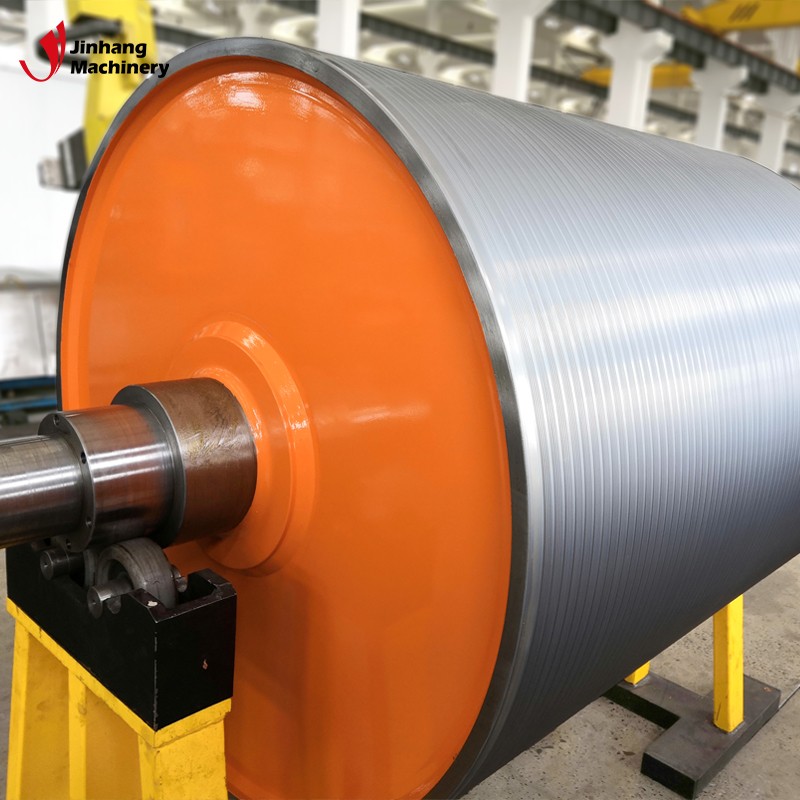
Why is industrial production inseparable from industrial rollers?
An industrial roller is a rotating cylindrical mechanical component installed in industrial equipment, typically consisting of a roller body, shaft end, bearing mounting structure, and surface treatment layer. Depending on the production process, industrial rollers can perform multiple functions such as conveying, pressing, traction, guiding, coating, heating, cooling, and leveling.
On automated production lines, industrial rollers usually work in conjunction with motors, transmission systems, control systems, and other processing components. For example, in automated coating production lines in the furniture industry, industrial rollers work in conjunction with roller coaters to continuously apply primer and topcoat; in the packaging industry, industrial rollers are responsible for the stable transport of paper, film, and composite materials; and in the metal processing industry, industrial rollers use pressure to shape materials and perform surface treatments.
The importance of industrial rollers is mainly reflected in three aspects. First, industrial rollers directly affect product quality. Since many production processes require materials to be in direct contact with the roller surface, the roundness, roughness, and operational stability of the roller surface all affect the final product. For example, the high-precision coating industry typically requires the surface roughness of industrial rollers to be controlled within the range of Ra 0.1–0.8 μm to ensure uniform coating thickness.
Second, industrial rollers affect production efficiency. If rollers experience wear, eccentricity, or surface damage, it can lead to unstable material flow speeds, increase equipment adjustment time, and in severe cases, even cause the entire production line to shut down.
Finally, industrial rollers affect the overall operating costs of enterprises. Although the purchase cost of high-performance industrial rollers may be higher than that of ordinary products, their longer lifespan and fewer maintenance requirements reduce equipment downtime and production losses. Therefore, for industrial equipment operating for extended periods, selecting the appropriate industrial rollers typically yields higher economic benefits.
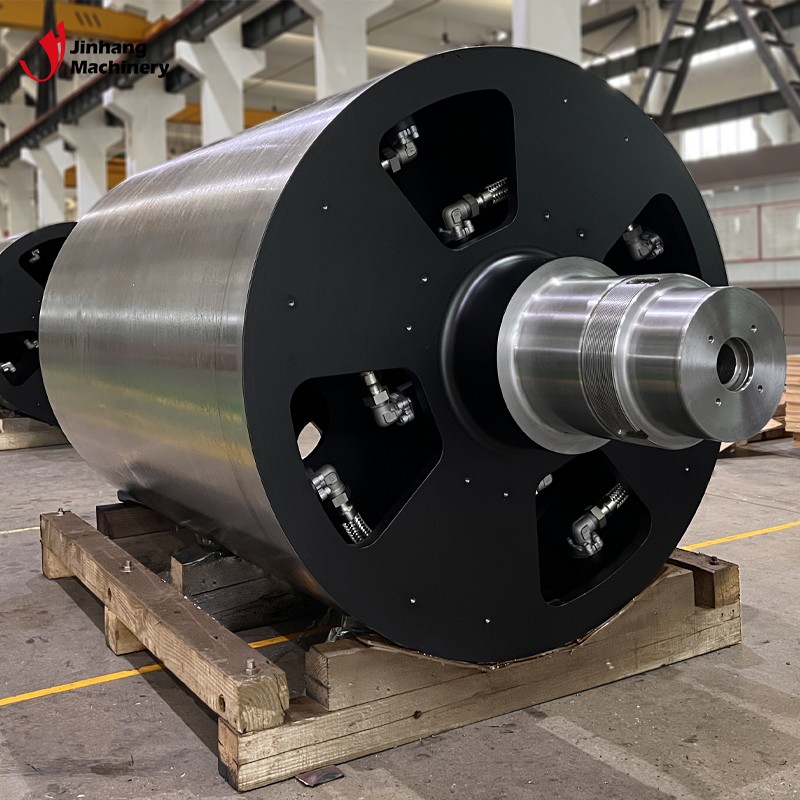
Classification by Function: Common Industrial Roller Types and Their Applications
Industrial rollers come in a wide variety, and different production processes have different functional requirements for them. Therefore, they need to be classified according to their actual application. Common industrial rollers mainly include conveying industrial rollers, calendering industrial rollers, coating industrial rollers, heating industrial rollers, cooling industrial rollers, traction industrial rollers, and special surface treatment industrial rollers.
I. Conveying Industrial Rollers: Fundamental Components in Automated Production Lines
Conveying industrial rollers are the most widely used type of industrial roller, primarily used for continuous material conveying and position control. They are typically installed in conveying equipment and driven by a motor to move products from one processing stage to the next.
In the furniture manufacturing industry, conveying industrial rollers need to stably transport materials such as MDF boards, solid wood boards, and composite boards. Due to the significant weight of these boards, the rollers need to possess high load-bearing capacity and good resistance to deformation. In the packaging industry, industrial conveyor rollers are commonly used for transporting cartons, films, and label materials, with a strong emphasis on operating speed and low noise performance.
In high-speed conveyor equipment, industrial rollers can rotate at speeds ranging from 300 to 800 rpm, making manufacturing precision crucial. Significant circular runout or axial misalignment in the industrial rollers can easily lead to vibrations during high-speed operation, affecting equipment stability and potentially shortening the lifespan of bearings and transmission components.
II. Calendering Industrial Rollers: Controlling Material Thickness and Surface Quality
Calendering industrial rollers are primarily used in the plastics, rubber, film, and sheet metal industries. They achieve specified thicknesses and surface finishes by applying pressure between two or more rollers.
Calendering industrial rollers typically require high rigidity because they withstand continuous pressure over extended periods. Insufficient roller rigidity can lead to minute deformations under pressure, resulting in uneven product thickness.
For example, in the production of plastic film, calendering industrial rollers must ensure stable material thickness. Some high-precision thin-film production equipment requires micron-level thickness control, thus placing higher demands on the diameter accuracy, cylindricity, and surface finish quality of industrial rollers.
These industrial rollers are typically made of alloy steel and undergo heat treatment, precision grinding, and hard chrome plating to improve wear resistance and dimensional stability.
III. Coating Industrial Rollers: Key Equipment Affecting Surface Treatment Results
Coating industrial rollers are widely used in the furniture, door panel, flooring, packaging materials, and electronic materials industries, and are a core component of surface treatment equipment.
In automated roller coating production lines, industrial rollers need to uniformly transfer coatings, inks, adhesives, or functional materials onto the product surface. If the roller surface condition is unstable, uneven coating thickness, material waste, and product appearance defects can easily occur.
Common coating industrial rollers include rubber coating rollers, steel metering rollers, and anilox rollers. Rubber industrial rollers are typically selected based on material properties, with hardness ranging from 20 to 90 Shore A. Soft rubber rollers are suitable for processing flexible materials and provide better adhesion; hard rubber rollers are more suitable for high-speed operating environments. For high-precision coating equipment, industrial rollers typically require high processing accuracy control, including circular runout, surface roughness, and dynamic balance performance, to ensure long-term stable production.
IV. Heated Industrial Rollers: Meeting High-Temperature Processing Needs
Heated industrial rollers are mainly used in industrial production processes requiring temperature control, such as hot pressing, lamination, and drying.
Heated industrial rollers are usually designed with a heat transfer oil circulation system, electric heating structure, or steam heating structure to achieve stable processing by controlling heat transfer.
The biggest technical challenge for these industrial rollers is temperature uniformity. Significant temperature differences on the roller surface will lead to uneven heating of the product, affecting the final quality.
For example, in composite material production, some equipment requires the roller surface temperature control error to be no more than ±2℃. Therefore, it is necessary to optimize the internal flow channel design to improve heat transfer efficiency.
V. Cooling Industrial Rollers: Ensuring Material Molding Stability
Cooling industrial rollers are mainly used to quickly reduce the material temperature during the production process, allowing the product to quickly set.
In the plastic film, packaging material, and composite materials industries, cooling industrial rollers can increase production speed and improve product dimensional stability.
High-quality cooling industrial rollers typically employ an internal circulating water structure, controlling the flow of the cooling medium to maintain a uniform temperature across the entire roller surface.
If the cooling industrial roller design is inadequate, uneven temperature distribution on the roller surface may occur, causing inconsistent material shrinkage and affecting product quality.
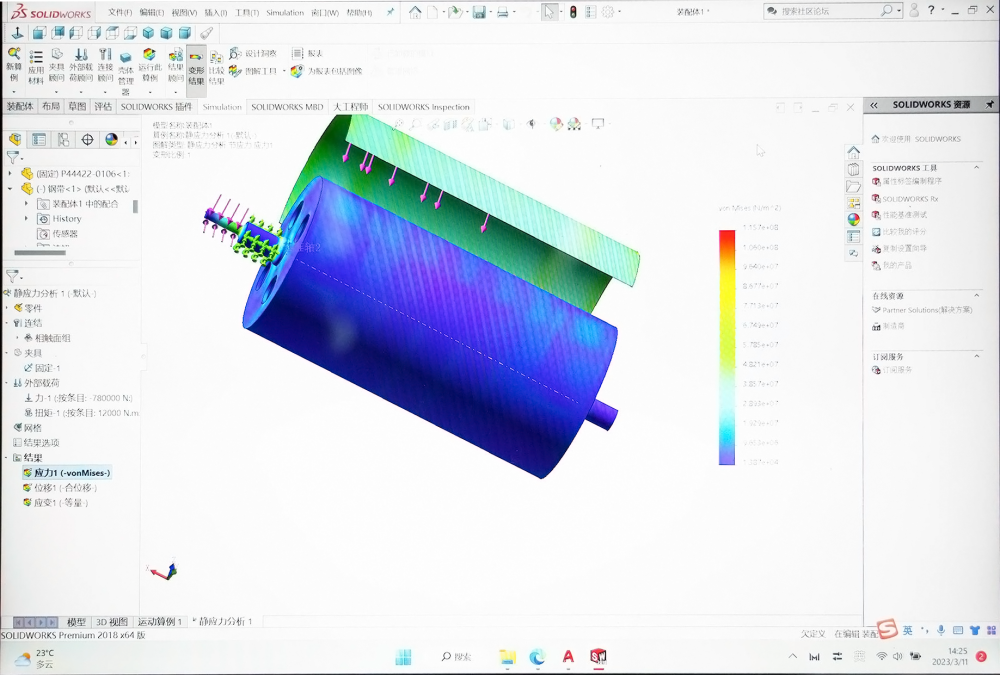
Classification by Surface Structure: Characteristics and Applications of Different Industrial Rollers
Besides functional classification, industrial rollers can also be distinguished based on their surface structure. Different surface treatments directly affect the contact effect between the roller and the material.
I. Mirror-finish Industrial Rollers
Mirror-finish industrial rollers undergo precision grinding and polishing, resulting in a very high surface finish.
Their surface roughness typically reaches Ra 0.05–0.2 μm, and they are mainly used in the film, electronic materials, high-end packaging, and precision coating industries.
Mirror-finish industrial rollers can reduce surface defects and improve product appearance quality, thus playing an important role in the production of high value-added products.
II. Anilox Industrial Rollers
Anilox industrial rollers feature a special textured surface that allows for control over the transfer of liquid materials, making them widely used in the printing and coating industries.
Anilox parameters typically include line count, cell depth, and cell shape; different parameters affect the coating weight. For example, the line count of anilox rollers can range from tens to hundreds of LPI, selected based on the coating viscosity and product requirements.
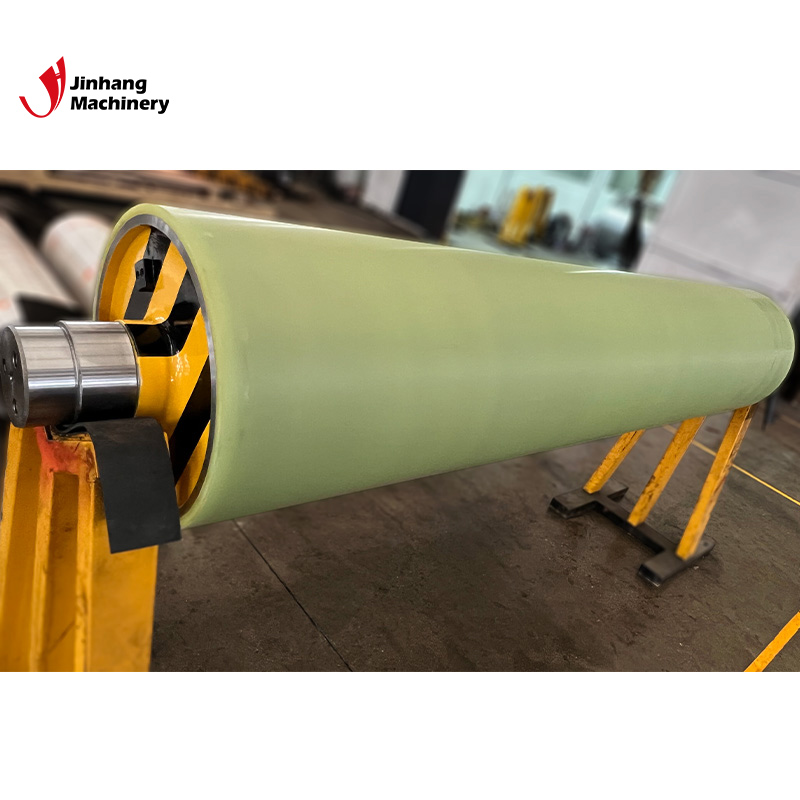
III. Rubber Industrial Rollers
Rubber industrial rollers possess excellent elasticity and friction properties, making them widely used in pressing, conveying, and coating equipment.
Common rubber materials include NBR (nitrile butadiene rubber), EPDM rubber, silicone rubber, and polyurethane rubber. NBR offers good oil resistance, EPDM provides strong weather resistance, and silicone rubber is suitable for high-temperature environments.
Industrial Roller Material Selection: A Key Factor Determining Performance and Lifespan
The material of an industrial roller directly determines its strength, wear resistance, and service life. Different application environments require different materials.
Carbon steel industrial rollers are relatively inexpensive and suitable for general conveying and low-load equipment.
Alloy steel industrial rollers offer superior strength and fatigue resistance, making them a widely used choice in industrial equipment. After heat treatment, their surface hardness can reach HRC45-60.
Stainless steel industrial rollers possess excellent corrosion resistance, making them suitable for humid environments and industries such as chemical and food processing.
Tungsten carbide industrial rollers are primarily used in high-wear, high-speed environments. Through HVOF high-speed flame spraying technology, a wear-resistant layer with a hardness of HV900-1400 can be formed, extending their service life by 2-5 times compared to ordinary industrial rollers.
How to Choose the Right Industrial Roller for Your Equipment?
When selecting industrial rollers, companies should not only consider price or size but also take into account multiple factors.
First, the operating environment of the industrial roller needs to be clearly defined, including temperature, pressure, speed, and contact materials.
Second, the surface requirements of the roller need to be considered. For example, ordinary conveying equipment may only require wear-resistant treatment, while precision coating equipment requires a mirror finish.
Third, the manufacturer's processing capabilities need to be taken into account. Excellent industrial roller manufacturers typically possess:
• CNC precision machining equipment;
• Dynamic balancing testing equipment;
• Surface treatment capabilities;
• Custom design capabilities.
As an industrial roller manufacturer, Jinhang Machinery® can provide customized industrial roller solutions to meet the needs of different equipment, including structural design, material selection, and surface strengthening treatments.
For global manufacturing companies, when selecting an industrial roller supplier, the focus should be on product stability, not simply comparing purchase prices. Because industrial rollers are long-running components, their true cost includes not only the purchase price but also maintenance, replacement, and losses due to downtime.
FAQ: Frequently Asked Questions about Industrial Rollers
1. In which industries are industrial rollers mainly used?
Industrial rollers are widely used in steel processing, aluminum manufacturing, paper printing, packaging machinery, furniture production, coating production lines, plastic film, and composite materials industries, and are an important component of modern automated production equipment.
2. Can different types of industrial rollers be substituted for each other?
Generally, they cannot be completely substituted. Different industrial rollers vary in materials, structure, surface treatment, and function. For example, coating rollers require high-precision surfaces, while conveyor rollers prioritize load-bearing capacity.
3. Why are industrial rollers custom-made?
Because different equipment operates under different conditions, including dimensions, speed, pressure, temperature, and processed materials, all of which affect roller design. Custom-made industrial rollers improve equipment compatibility and operational stability.
4. What is the typical lifespan of an industrial roller?
The lifespan of an industrial roller depends on the materials, operating conditions, and maintenance methods. Under normal conditions, it may last 1-3 years, while industrial rollers made with high-quality materials and wear-resistant treatments can achieve a longer service life under suitable conditions.
5. Can industrial rollers be repaired after wear?
Some industrial rollers can have their performance restored through regrinding, plating repair, or reprocessing. However, whether repair is worthwhile requires a comprehensive assessment based on the extent of roller damage and the precision requirements of the equipment.