Common Issues with Industrial Cooling Rollers: Uneven Cooling, Deformation, and Solutions
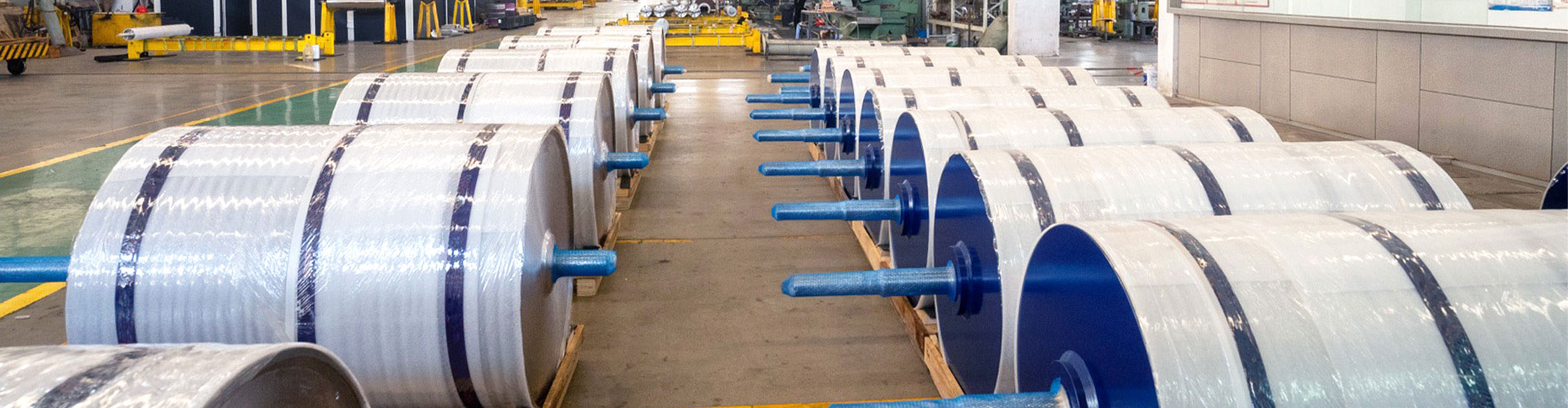
In modern industrial manufacturing, temperature control has become a critical factor influencing product quality, production efficiency, and equipment stability. Particularly in sectors such as plastic film, composite materials, metal processing, printing and packaging, rubber products, and new energy materials, industrial cooling rollers play a vital role in rapidly cooling materials, setting their shape, stabilizing dimensions, and enhancing surface properties. Many enterprises find that this seemingly ordinary roller component often becomes a critical link affecting the stable operation of the entire production line.
In actual production, common issues with industrial chill rollers generally fall into several categories: uneven cooling effects, significant temperature variations across the roller surface, roller deformation after prolonged operation, reduced rotational precision, and inconsistent product surface quality. For instance, on a plastic film production line, insufficient cooling capacity or uneven temperature distribution can lead to variations in transverse film thickness, fluctuations in shrinkage rates, and inconsistent surface gloss. In composite material processing, unstable cooling rates can induce internal stresses, thereby impairing the material's subsequent processing performance. Furthermore, for high-speed continuous production equipment, even slight deformation of the chill roller can alter material pressure, resulting in product defects.
When encountering these issues, many enterprises simply increase the cooling water flow rate or adjust equipment parameters, often with unsatisfactory results. This is because problems with industrial cooling rollers rarely stem from a single factor; rather, they are determined by a combination of elements, including structural design, internal flow channel layout, material selection, machining precision, heat treatment processes, and daily maintenance practices.
A truly professional manufacturer of industrial cooling rollers analyzes the customer's process requirements right from the design stage. Through rational structural design, precision manufacturing, and rigorous quality testing, they ensure that the rollers can operate stably over the long term in high-temperature, high-speed, and high-load environments.
The Core Role of Industrial Cooling Rollers in Industrial Production
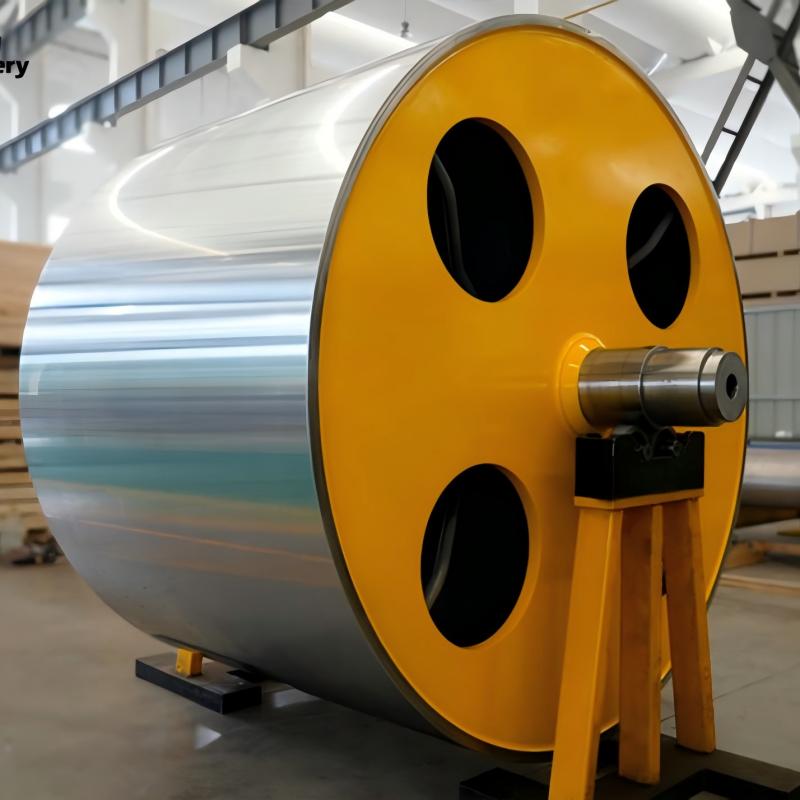
An industrial chill roller is a functional roller that facilitates heat exchange through the circulation of an internal cooling medium. Its primary operating principle involves circulating water, oil, or another cooling medium within the roller body to rapidly remove heat transferred from the material to the roller surface during production, thereby bringing the processed material to a stable temperature. During the production of plastic film, molten plastic material typically requires rapid cooling to establish a stable structure. In this context, industrial cooling rollers not only determine the rate of temperature reduction but also influence the film's thickness uniformity, transparency, flatness, and mechanical properties. In the printing and lamination industries, these rollers help regulate material temperature, ensuring the stability of adhesive layers, coatings, or composite structures. During metal strip processing, chill rollers must withstand high thermal loads while maintaining surface precision to prevent material deformation.
Consequently, industrial chill rollers are not merely "cooling devices" but precision control components within the overall production process. For high-speed production lines, these rollers must meet rigorous performance standards: surface temperature uniformity typically needs to be controlled within a range of ±1°C to ±3°C, and radial runout within 0.01 to 0.03 mm. Additionally, they require excellent dynamic balance to ensure there is no significant vibration during high-speed rotation.
If an industrial cooling roller fails to maintain stable performance, the enterprise faces more than just equipment issues; it may also suffer from raw material waste, reduced production efficiency, and inconsistent product quality. Therefore, selecting the right manufacturer for industrial cooling rollers is crucial for ensuring production stability.
Analysis of the Main Causes of Uneven Cooling in Industrial Cooling Rollers
Uneven cooling is one of the most common issues encountered when using industrial cooling rollers, and it is often one of the most difficult problems for enterprises to resolve completely. Uneven cooling refers to significant temperature differences across various zones of the roller surface during operation, subjecting the material to varying degrees of cooling.
For instance, with a 3,000 mm long industrial cooling roller, a substantial temperature difference between the central section and the ends can lead to inconsistent transverse properties in the material passing over the surface. While such variations might go unnoticed in standard industrial materials, a temperature difference of just a few degrees can compromise the quality of thin plastic films, electronic material films, and high-precision composite materials.
The first cause of uneven cooling in industrial cooling rollers is an inefficient internal cooling channel design.
Some traditional industrial cooling rollers utilize a simple straight-through design, where the cooling fluid enters at one end and exits at the other. This type of design offers lower manufacturing costs but is prone to a gradual rise in coolant temperature along the flow path; this results in a lower temperature at the roll surface's inlet zone and a higher temperature at the outlet zone.
To address this issue, specialized manufacturers of industrial cooling rollers typically employ more advanced internal circulation structures—such as spiral flow channels, double-shell sleeve designs, or multi-zone circulation layouts—to ensure the cooling medium covers the entire roll surface more uniformly. Optimizing the flow channel layout helps reduce temperature gradients and improves the overall heat transfer efficiency of the industrial cooling roller.
A second reason is insufficient cooling medium flow rate.
The cooling capacity of an industrial chill roller depends not only on its structure but also on the flow rate and temperature of the cooling water, as well as the capabilities of the circulation system. If the cooling water flow rate fails to meet production demands, the roller cannot effectively dissipate large amounts of heat in a timely manner, even if its internal design is sound.
For instance, during the operation of high-speed film production equipment, the material may continuously transfer significant heat to the cooling roller; if the cooling water flow is inadequate, the roll surface temperature will gradually rise, diminishing the cooling effect. Therefore, the design process for industrial cooling rollers requires comprehensive calculations based on production speed, material temperature, contact area, and thermal load.
A third reason is instability in the cooling system's control.
Some enterprises focus solely on the industrial chill roller itself while neglecting peripheral cooling equipment. Issues such as fluctuations in cooling water temperature, blockages in filtration systems, or insufficient circulation pump pressure can all compromise the roller's actual performance.
Consequently, resolving uneven cooling requires collaborative optimization between the manufacturer and the end-user, involving adjustments across multiple aspects, including roller structure, the cooling system, and production parameters.
Causes and Impacts of Deformation in Industrial Cooling Rollers
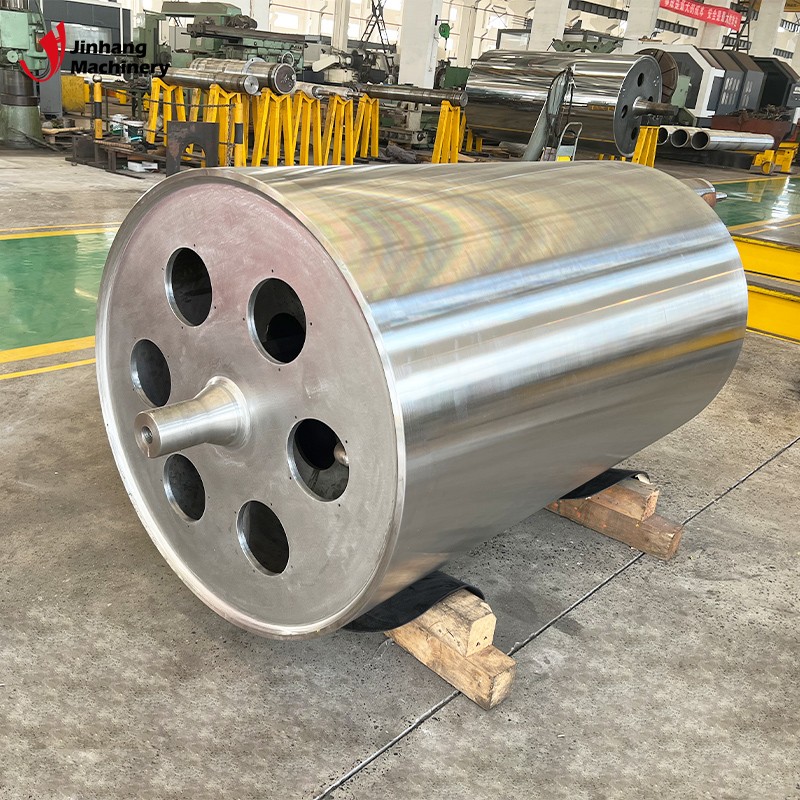
In addition to uneven cooling, deformation is another major issue affecting production stability. Given that industrial cooling rollers are typically large and heavy—and must withstand prolonged exposure to temperature fluctuations and mechanical stress—they demand a high level of structural stability.
Deformation in industrial cooling rollers primarily falls into three categories: thermal deformation, mechanical deformation, and long-term stress-induced deformation.
Thermal deformation is the most common type. During operation, the roll surface continuously absorbs heat transferred from the material, while the internal cooling system works to lower the temperature. If cooling is uneven, different sections of the roller body undergo varying degrees of thermal expansion and contraction; over repeated cycles, this can lead to the buildup of internal thermal stress. For instance, if one side of a large industrial chill roller consistently operates at a temperature more than 10°C higher than the other, internal stress changes may gradually develop within the material, causing the roller to warp slightly or undergo dimensional changes.
Mechanical deformation is primarily linked to the roller's structural design and operating pressure. Industrial cooling rollers must withstand material tension, equipment pressure, and their own weight; if the roller wall is too thin or the support structure is poorly designed, deflection may occur after prolonged operation.
For example, large industrial chill rollers exceeding 4,000 mm in length may experience slight misalignment due to their own weight during high-speed rotation if they lack a robust structural design. Although such misalignment is often invisible to the naked eye, it alters the contact pressure between the material and the roller surface, ultimately leading to inconsistencies in product quality.
Therefore, professional manufacturers perform structural calculations during the design phase—accounting for factors such as roller diameter, length, rotational speed, operating temperature, and load—to prevent deformation issues during subsequent use.
How does material selection affect the stability of industrial cooling rollers?
Industrial cooling rollers operate in environments subject to thermal cycling; consequently, material properties directly determine their service life and dimensional stability. If a material lacks sufficient thermal stability, dimensional changes may occur during long-term use, even if the initial machining precision meets specifications.
Common materials for industrial chill rollers include alloy steel, stainless steel, high-strength steel, and certain specialty alloys. Each material offers distinct characteristics:
Alloy steel typically offers high strength, making it suitable for rollers subjected to significant pressure; stainless steel provides excellent corrosion resistance, ideal for humid or chemically aggressive environments; and high-strength steel is well-suited for manufacturing large, heavy-duty rollers.
Beyond material strength, internal residual stress is another critical factor affecting performance. If the material is not properly treated prior to machining, dimensional changes may occur during subsequent processing or actual operation.
Consequently, reputable manufacturers incorporate material testing and heat treatment—such as hardness testing, metallographic analysis, and stress-relief treatments—into the production process to ensure a more stable material structure.
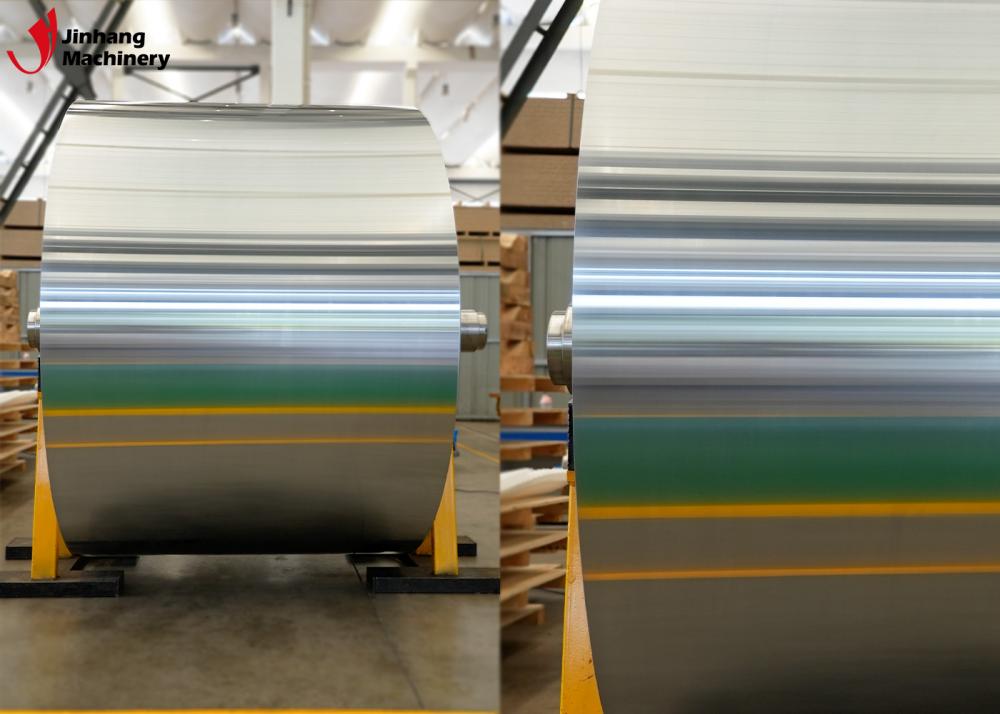
How do precision manufacturing processes ensure the performance of industrial cooling rollers?
Industrial cooling rollers are high-precision components, and their manufacturing process is far more complex than that of standard rollers. The production of a high-quality industrial cooling roller typically involves multiple stages: raw material processing, rough machining, heat treatment, finish machining, surface treatment, and final inspection.
During manufacturing, ensuring the stability of the roller body's basic dimensions is the first priority. Significant dimensional errors during the rough machining stage can complicate subsequent finishing processes. Consequently, professional manufacturers often employ a staged machining approach, allowing the material to gradually meet design specifications.
The finish machining stage focuses on controlling the roller's roundness, cylindricity, and coaxiality. Industrial cooling rollers used in high-speed production equipment require high rotational precision; otherwise, vibrations are likely to occur during operation.
Additionally, the impact of heat must be managed during the machining of large industrial cooling rollers. Cutting generates heat, and improper temperature control can lead to localized dimensional changes. Therefore, high-precision manufacturers typically use optimized cutting parameters, effective cooling methods, and constant-temperature machining environments to ensure product consistency.
How do manufacturers of industrial chill rollers address issues like uneven cooling and deformation?
Professional manufacturers address these challenges by establishing comprehensive product development and quality control systems.
First, during the design phase, customization based on the client's equipment parameters is essential. Since production speeds, material types, and operating temperatures vary across enterprises, industrial chill rollers cannot simply rely on standard specifications.
For instance, a film production line might prioritize cooling uniformity and surface finish, whereas the metal processing industry focuses more on load-bearing capacity and heat resistance.
Second, strict control of machining precision is required during manufacturing. Industrial chill rollers must deliver effective internal cooling while maintaining high external rotational precision. Standard procedures typically include:
•Outer diameter inspection;
•Roundness inspection;
•Coaxiality inspection;
•Dynamic balancing tests;
•Hydrostatic pressure testing.
Finally, operational validation is necessary. Simulating the client's actual working conditions allows for the early detection of potential issues, thereby enhancing the roller's reliability.
FAQ: Industrial Cooling Rollers
1. Why does uneven cooling occur in industrial cooling rollers?
Key causes include poor internal flow channel design, insufficient cooling medium flow, unstable temperature control, and structural issues with the roller body. Solutions require optimizing both the design and the system based on specific equipment parameters.
2. Does deformation of the industrial cooling roller affect production?
Yes, it does. Deformation of industrial cooling rolls can lead to uneven material pressure, variations in product thickness, and increased equipment vibration; in severe cases, it can compromise the stable operation of the entire production line.
3. What materials should be chosen for industrial chill rollers?
The choice depends on the operating environment. Common materials include alloy steel, stainless steel, and high-strength steel. High-temperature, high-load, or corrosive environments typically require materials with superior performance characteristics.
4. How often do industrial cooling rolls require maintenance?
Maintenance intervals depend on the production environment and intensity of use. For high-speed, continuous production equipment, regular inspections of the cooling system, roll surface condition, and rotational accuracy are recommended to prevent minor issues from escalating into equipment failure.
5. How can one determine if an industrial chill roller manufacturer is professional?
Assessment can be based on factors such as design capabilities, machining equipment, quality inspection systems, industry experience, and customization capabilities. A professional manufacturer can provide comprehensive solutions tailored to the customer's specific process requirements, rather than simply supplying standard products.