
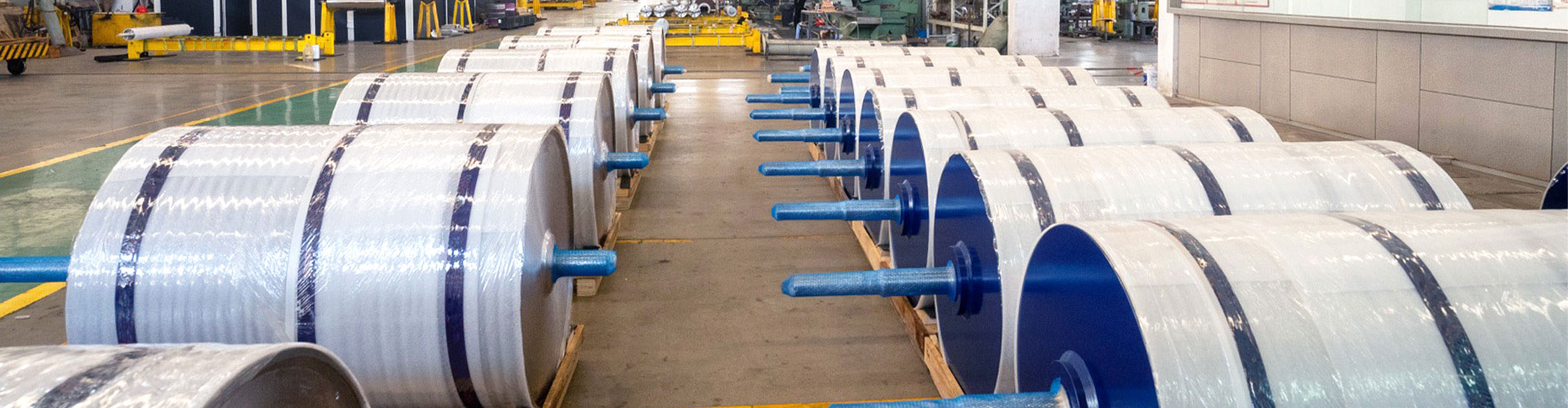
In industrial production, it is not enough for the roller to simply reach the set temperature; maintaining temperature uniformity across the entire roller surface is paramount.
Many enterprises find that even when the equipment displays a normal operating temperature, the final product still exhibits issues such as uneven thickness, surface defects, or inconsistent adhesion. A common culprit is a significant temperature differential across the roller. For instance, if the set temperature is 120°C, the center of the roller might reach 123°C while the ends remain at 115°C; although the control system indicates normal operation, an actual temperature variance of approximately 8°C exists across the working surface. While such a difference might have a negligible impact on standard heating processes, it can significantly affect the quality of the final product in high-precision applications like coating, calendering, lamination, and new energy material processing.
Therefore, the core performance of an industrial heating roller is defined not merely by its maximum heating temperature, but by its temperature control precision and thermal uniformity across the roller surface.
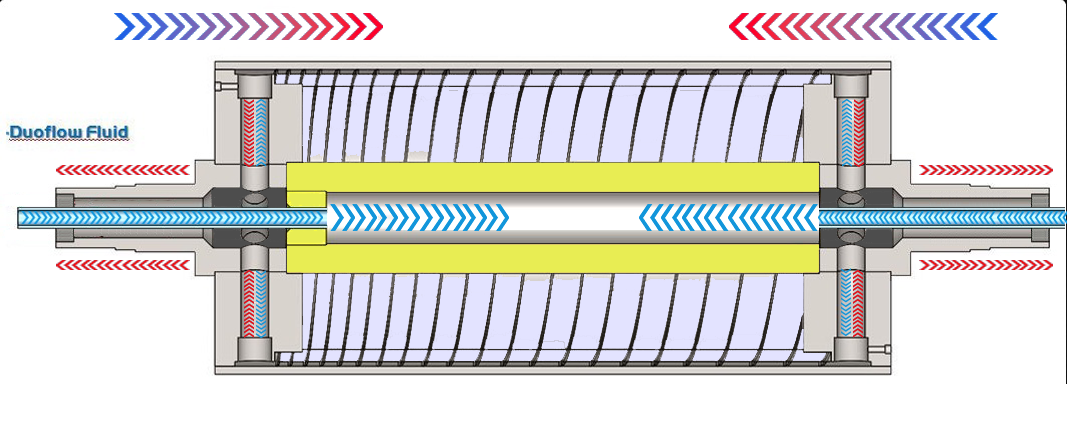
Excessive temperature differences in industrial heating rollers lead to uneven material heating
During operation, materials typically pass continuously over the roller surface, absorbing heat through contact. If temperature variations exist across different zones of the roller, the material absorbs heat unevenly at different points.
For example, if a wide industrial heating roller is hotter in the center and cooler at the ends, the central section of the material may soften or dry prematurely, while the edges may receive insufficient heat. This scenario often results in inconsistent transverse properties, including thickness variations, uneven surface characteristics, and reduced dimensional stability.
In the film industry, excessive temperature differentials can alter the film's thermal shrinkage rate, leading to issues like warping or deformation. In lamination, it can cause uneven adhesive curing speeds, thereby compromising bond strength. In the coating industry, it may result in inconsistent drying, leading to surface quality defects. High-precision production lines typically demand high temperature uniformity from industrial heating rollers; some processes even require the temperature difference across the roller surface to be controlled within ±1°C, whereas standard industrial heating applications may tolerate larger deviations. Consequently, enterprises must select industrial heating rollers with the appropriate level of precision based on their specific process requirements.
Excessive Temperature Differences Affect Product Thickness and Processing Precision
Industrial heating rollers are widely used in production stages—such as calendering and hot pressing—where material thickness control is critical. In these processes, temperature directly influences the material's degree of softening and flow characteristics.
When temperatures vary across different zones of the industrial heating roller, the material undergoes uneven deformation under pressure. For instance, material in hotter zones softens more readily and exhibits increased flowability under pressure, while material in cooler zones remains harder and deforms less; this can ultimately result in uneven transverse thickness across the product.
For products such as plastic films, rubber sheets, and lithium battery materials, thickness deviations directly impact downstream processing performance. This is particularly crucial in the new energy industry, where high consistency in material thickness is often required; temperature fluctuations in industrial heating rollers can further amplify production errors.
Therefore, if an enterprise observes persistent instability in product thickness, it should inspect the temperature distribution of the industrial heating rollers in addition to checking pressure, speed, and material parameters.
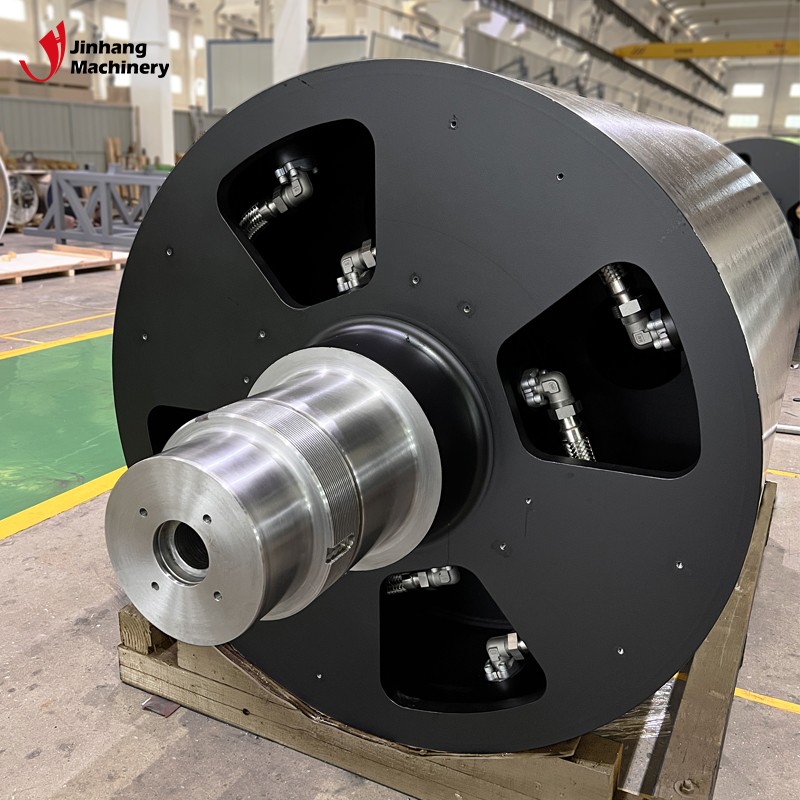
Excessive Temperature Differences Cause Thermal Deformation in Industrial Heating Rollers
Industrial heating rollers are metal structural components susceptible to temperature-induced changes. Metal materials undergo thermal expansion when heated; if significant temperature differences exist between various zones of the roller, the degree of expansion will vary accordingly.
For example, a long industrial heating roller operating with a consistently high-temperature center and cooler ends may experience axial thermal deformation. Although such changes are often minute, in high-speed, high-precision production equipment, even slight variations can affect the roller surface's cylindricity and parallelism, as well as the contact pressure applied to the material.
Thermal deformation in industrial heating rollers can lead to uneven pressure distribution, resulting in fluctuations in product quality. Consequently, the design of large industrial heating rollers requires comprehensive consideration of the roller structure, material selection, internal flow channels, and thermal compensation mechanisms.
Excessive Temperature Differences Compromise Product Surface Quality
Beyond thickness issues, temperature differences in industrial heating rollers also directly affect the surface quality of the product. In the production of films, decorative materials, and coated products, surface gloss, flatness, and coating uniformity all rely on a stable thermal environment. If the local temperature of an industrial heating roller is too high, it can cause excessive material softening, surface tackiness, or localized changes in material properties; conversely, if the temperature is too low, issues such as insufficient drying or poor lamination bonding may occur.
For instance, during the production of composite films, insufficient roller temperature can prevent the adhesive layer from achieving optimal bonding, while excessively high local temperatures can compromise material properties. Therefore, industrial heating rollers must deliver stable and uniform heat rather than simply increasing the heating temperature.
Primary Causes of Excessive Temperature Variation in Industrial Heating Rollers
Temperature variations in industrial heating rollers are typically linked to equipment design, the heating system, and maintenance status.
First, the design of internal flow channels directly affects temperature uniformity. Thermal-oil heating rollers rely on the circulation of an internal heat-transfer medium; if the flow channel design is flawed, uneven distribution of the medium can occur, leading to insufficient temperatures in certain areas.
Second, insufficient flow of the heat-transfer medium is a common cause. Issues such as inadequate circulation pump capacity, pipeline blockages, or filtration system malfunctions can reduce the circulation speed of the thermal oil, thereby lowering the roller's heat-transfer efficiency.
Third, the condition of the thermal oil itself affects heating performance. Prolonged high-temperature operation can lead to oil degradation or contamination, reducing heat-transfer capability and slowing the roller surface's temperature response.
Fourth, improper dimensional design of the roller can also cause temperature variations. For wide rollers, a lack of proper thermal circulation structure design often results in higher temperatures at the center and lower temperatures at the ends.
Additionally, improper placement of temperature sensors can prevent the control system from accurately reflecting the true temperature across the entire roller surface.
How to Determine if an Industrial Heating Roller Has Temperature Variation Issues?
Assessing temperature variation in industrial heating rollers requires more than just observing a single temperature reading on the control panel.
Many systems are equipped with only one temperature sensor; if this sensor is installed at the center of the roller, the displayed temperature represents only a localized area and fails to reflect the actual conditions across the entire roller surface.
A more reliable approach involves multi-point temperature measurement at various locations on the roller, including the center, the ends, and the effective working area. Once the equipment reaches a stable operating state, record the data from each temperature measurement point and calculate the maximum temperature difference.
For high-precision industrial heating rollers, infrared thermal imaging equipment can also be used to detect the temperature distribution across the entire roller surface, thereby identifying any localized cold or hot spots.
FAQ: Common Questions About Temperature Variation in Industrial Heating Rollers
1. What is the acceptable temperature variation for industrial heating rollers?
Requirements vary by application. Standard industrial heating processes might tolerate a variation of a few degrees Celsius, whereas high-precision sectors—such as those dealing with films, composite materials, or new energy materials—impose stricter standards, with some processes requiring control within approximately ±1°C.
2. Why are the temperatures at the ends of the industrial heating roller lower?
The primary reasons include faster heat dissipation at the ends, uneven distribution of the internal heat transfer medium, inadequate flow channel design, and poor thermal insulation at the ends. This phenomenon is particularly common in wide industrial heating rollers.
3. Can increasing the set temperature resolve temperature variation issues in industrial heating rollers?
It cannot provide a fundamental solution. Raising the temperature may cause overheating in certain areas while simultaneously increasing energy consumption. The correct approach is to inspect the heat transfer medium circulation, flow channel design, and temperature control system.
4. How often should temperature uniformity in industrial heating rollers be checked?
Regular testing is generally recommended, though the frequency depends on the production environment and usage intensity. For high-speed, continuous production lines, a system for recording temperature data should be established to detect abnormal fluctuations promptly.