
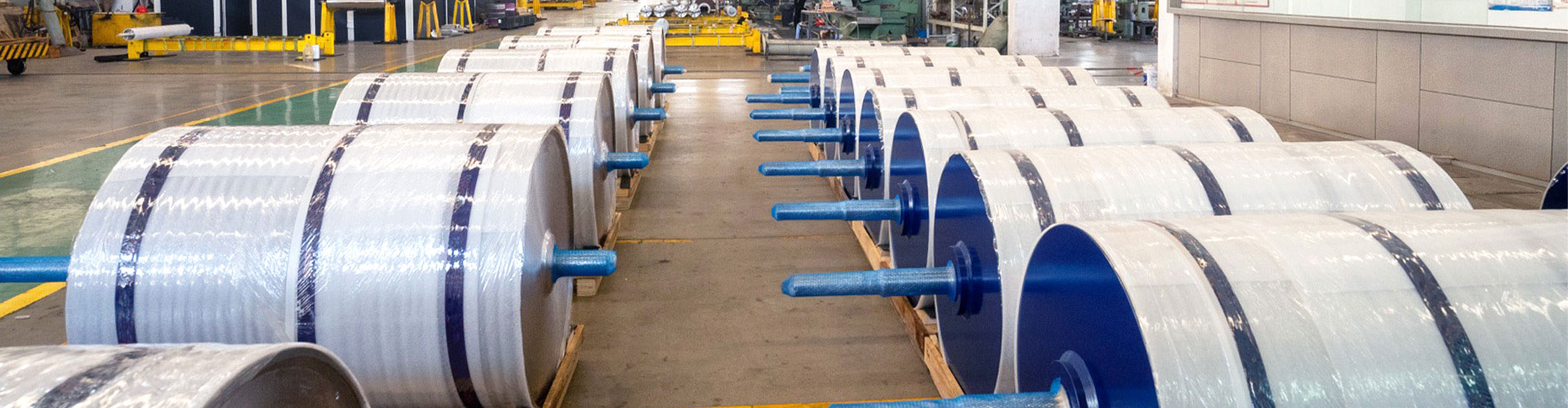
Industrial thermal oil heating rolls and water-circulating heating rolls represent the two most common technical approaches currently in use. When selecting equipment, many enterprises often wonder: given that water possesses significantly superior thermal conductivity compared to thermal oil, why do industrial thermal oil heating rolls remain so widely adopted in manufacturing? Some enterprises have even observed that, in actual operation, thermal oil rolls appear to lag behind water-heated rolls in terms of heating rates, thermal response times, and energy consumption efficiency.
This issue essentially stems from the distinction between fundamental heat transfer principles and the practical requirements of industrial applications. From the standpoint of pure physical properties, water is indeed an excellent heat transfer medium.
However, the "efficiency" of industrial equipment cannot be judged solely by the heat transfer performance of the medium itself. For industrial thermal oil heating rolls, the true metric is the comprehensive efficiency of the entire system under target production conditions—encompassing operating temperature ranges, thermal stability, operating pressures, equipment reliability, maintenance costs, and the capability for long-term continuous operation. Consequently, while thermal oil rolls may offer lower heat transfer efficiency than water-based systems in certain low-temperature applications, they retain irreplaceable advantages in many high-temperature industrial scenarios.
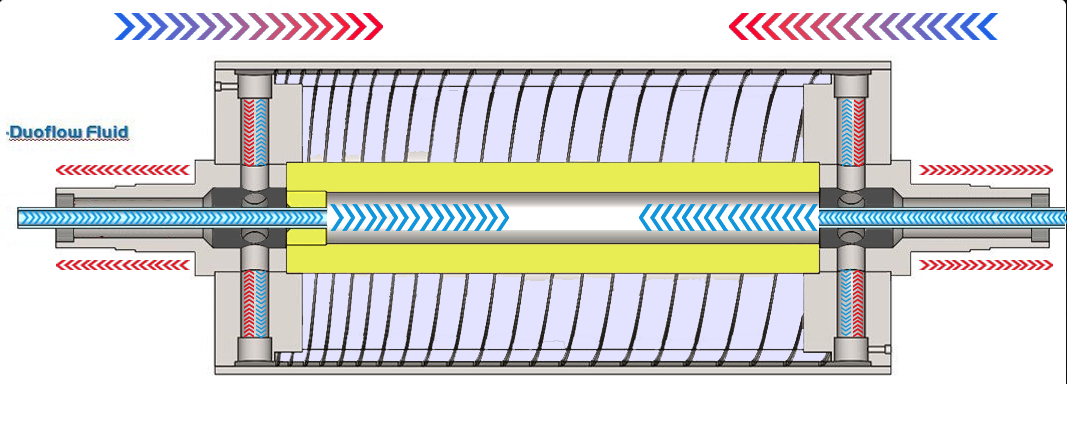
Heat Transfer Principles of Industrial Hot-Oil Heating Rollers: Why Does Water Have Superior Heat Exchange Capability?
The operation of an industrial heating roller is, at its core, a process of heat transfer. The heat source first heats the medium; the heat is then transferred via a circulation system to the interior of the heating roller and subsequently through the roller wall to the product surface. This entire process involves multiple stages of thermal resistance, with the properties of the heat transfer medium directly influencing heat exchange efficiency.
First, water possesses a higher specific heat capacity.
Specific heat capacity represents the amount of heat a unit mass of a substance must absorb to raise its temperature by a certain degree. Simply put, the higher the specific heat capacity, the more heat a given weight of the medium can carry. For instance, when the temperature of 1 kg of water rises by 10°C, it absorbs approximately 41.8 kJ of heat, whereas 1 kg of thermal oil typically absorbs only about 20 kJ under the same conditions. Consequently, water holds a natural advantage in scenarios requiring rapid heat absorption and release.
Second, water has a higher thermal conductivity.
Thermal conductivity directly affects the speed at which heat travels through the medium. Water’s thermal conductivity is roughly four times that of standard thermal oil; this means that within a heating roller of identical design, water facilitates faster heat exchange. Therefore, on production lines requiring lower operating temperatures but high heat exchange rates, water-circulating heating rollers often demonstrate faster heat-up times and superior thermal responsiveness.
For example, consider an industrial heating roller with a diameter of 600 mm and a length of 3000 mm operating in the 80°C–100°C range. A water circulation system might reach a stable temperature relatively quickly, whereas a thermal oil system—due to the oil's comparatively lower heat exchange capability—might take longer to reach the same temperature. Of course, actual heating time is also influenced by factors such as heating power, roller material, oil flow rate, and internal flow channel design; thus, performance cannot be judged solely based on the medium's properties.
What are the primary reasons for a decline in the efficiency of industrial hot-oil heating rollers?
Many enterprises find that after several years of operation, industrial hot-oil heating rollers exhibit issues such as slower heating rates, uneven roller surface temperatures, and increased energy consumption. In reality, these problems do not stem solely from the heat-transfer oil itself but are often caused by inadequacies in the design and maintenance of the overall hot-oil system.
First, insufficient hot-oil circulation flow directly impacts the heat transfer efficiency of the roller. The heat-transfer oil must circulate continuously to transport heat from the heater to the interior of the roller body. If the circulation pump is undersized, or if pump efficiency degrades over time, the flow rate of the hot oil decreases, thereby reducing the amount of heat entering the roller per unit of time.
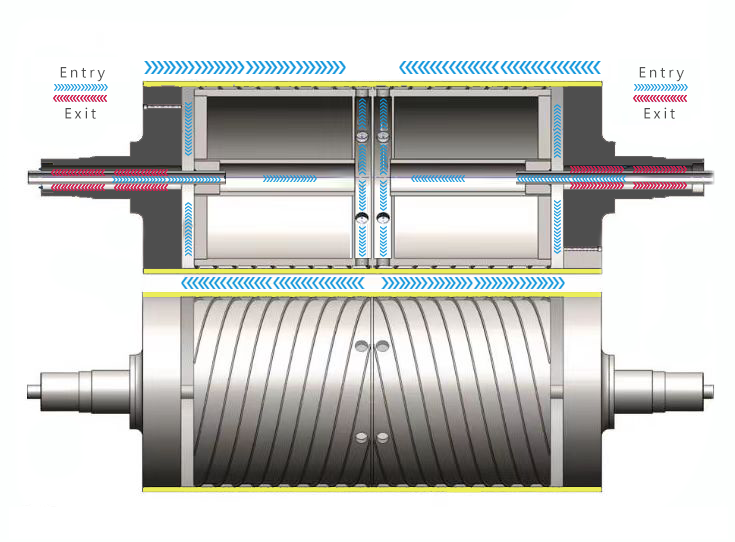
For example, if an industrial hot-oil heating roller designed for a circulation flow of 120 L/min operates at an actual flow rate of only 70–80 L/min, issues such as sluggish surface temperature response and increased axial temperature differentials may arise. Secondly, the design of the internal flow channels within the heating roller also affects heat transfer performance. Traditional designs often utilize a simple hollow cavity allowing the hot oil to flow freely; this setup is prone to "short-circuiting," where some oil passes rapidly through the roller while other areas become stagnant zones, ultimately compromising temperature uniformity across the roller surface.
Modern, advanced industrial hot-oil heating rollers typically employ spiral flow channels, multi-zone circulation structures, or flow-guiding baffles. These designs ensure the hot oil evenly covers the entire roller surface, thereby enhancing heat exchange efficiency. For high-speed production lines, precise control of the temperature difference across the roller surface is critical; failure to maintain this can adversely affect product thickness, tension, and surface quality.
Additionally, heat transfer oil is susceptible to degradation during prolonged high-temperature operation. Over time, the oil may undergo oxidation and thermal cracking, leading to increased viscosity and thermal resistance, as well as the formation of internal deposits. These factors reduce the overall efficiency of the heating roller. Consequently, regular monitoring of parameters such as viscosity, acid value, flash point, and carbon residue is essential to ensure the equipment's long-term operational integrity.
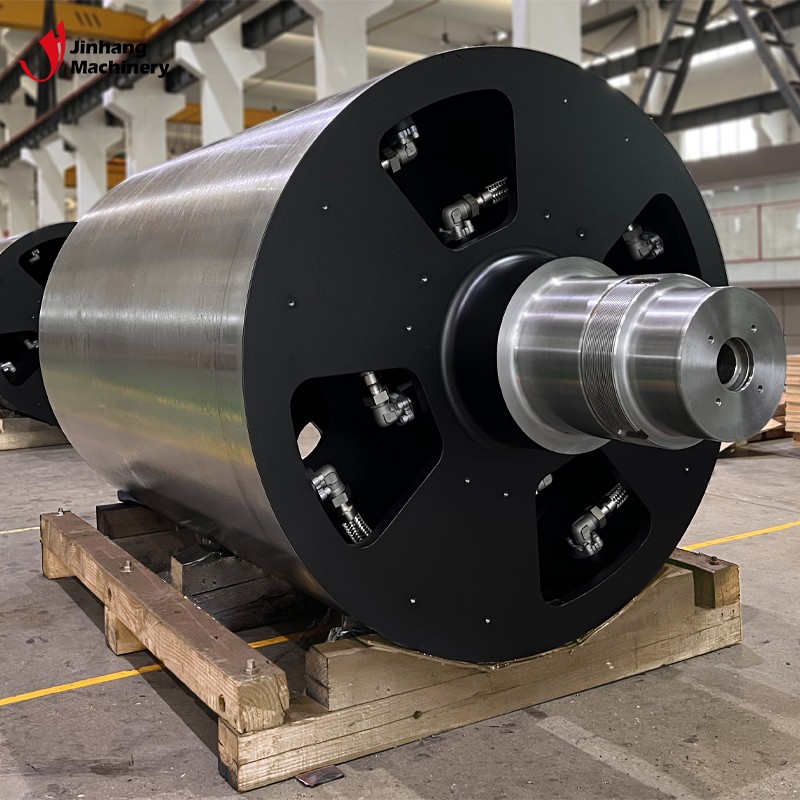
Why do some enterprises perceive industrial hot-oil heating rollers as more energy-intensive?
In practice, some companies report higher energy consumption for hot-oil heating rollers compared to water-heated rollers. While this situation can indeed occur, the underlying reasons require specific analysis.
First, the hot-oil system itself requires additional power for circulation.
Heat transfer oil generally has a higher viscosity than water—particularly during low-temperature startups—resulting in greater flow resistance and higher electricity consumption by the circulation pump. Poor system design, such as excessive pump head or high pipeline resistance, can further inflate operating costs.
Second, high-temperature operation leads to greater heat loss.
For an industrial hot-oil heating roller operating at 250°C, the associated piping, valves, and circulation equipment require effective thermal insulation; without it, significant heat is lost to the surrounding environment. In contrast, water-heated rollers typically operate within lower temperature ranges, resulting in comparatively lower heat loss.
Third, using an industrial hot-oil heating roller for processes requiring only 80°C to 100°C can result in reduced energy efficiency.
Hot-oil systems are better suited for production environments that demand high temperatures and continuous, stable operation. If the requirement is merely for low-temperature heating, a water-based system might be more economical.
Therefore, determining whether an industrial hot-oil heating roller is energy-efficient requires a comprehensive assessment—considering production temperatures, operating times, product specifications, and equipment design—rather than looking solely at the heating medium.
FAQ: Industrial Hot-Oil Heating Roller – Frequently Asked Questions
Q1: Why are industrial hot-oil heating rollers suitable for high-temperature production?
The primary reason is that thermal oil can circulate in a liquid state at high temperatures without requiring the high operating pressures associated with high-temperature water systems, making it better suited for continuous high-temperature industrial equipment.
Q2: What is the maximum operating temperature for industrial hot-oil heating rollers?
This varies depending on the specific thermal oil used and the equipment design. Standard industrial hot-oil heating rollers typically operate in the 150°C to 300°C range, though some specialized high-temperature systems can reach higher temperatures.
Q3: How can the reliability of an industrial hot-oil heating roller be assessed?
Focus on several key indicators: roll surface temperature uniformity, heating rate, thermal oil circulation efficiency, long-term operational stability, and energy consumption levels. A well-designed industrial hot-oil heating roller should maintain stable temperature control during continuous production and meet product quality requirements.