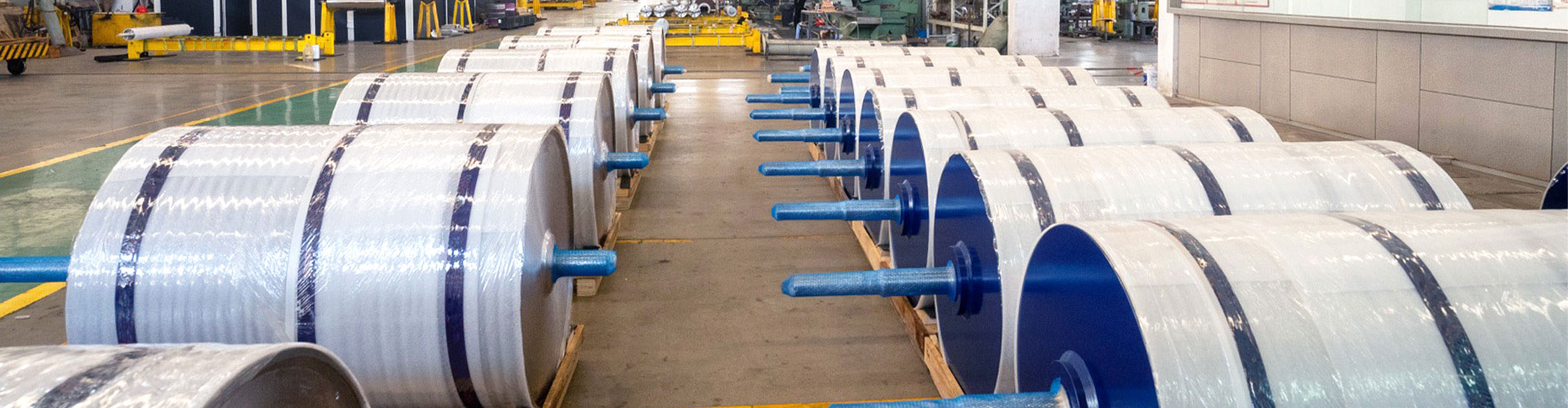
When procuring industrial equipment, "custom industrial rollers" might not seem like a particularly complex undertaking. A customer provides a CAD drawing, the manufacturer machines the roller to the specified dimensions and completes processes like grinding, coating, rubber covering, or dynamic balancing—and it appears ready for delivery. However, those with actual experience in industrial roller projects realize that customization is far more complex than simply "machining to the print." An industrial roller measuring several hundred millimeters in diameter and several meters in length may look like a simple rotating component, but it involves a multitude of factors: material selection, shell structure, welding deformation, heat treatment, turning, grinding, surface treatment, internal flow channels, thermal expansion, dynamic balancing, coaxiality, radial runout, and final installation requirements. Inadequate control at any stage can cause a roller that meets dimensional specifications to perform unreliably once it enters the production line.
This highlights a very real pain point in the industrial roller procurement market: while many manufacturers claim to "support customization," there is a vast difference between merely offering customization and possessing reliable customization capabilities. Some suppliers can machine standard rollers but struggle to consistently produce large-scale, high-precision ones. Others can manufacture according to drawings but must outsource extensively when dealing with specialized types—such as heated rollers, cooling rollers, mirror-finish rollers, tungsten carbide rollers, rubber-covered rollers, or rollers with special coatings. Then there are manufacturers capable of mechanical machining but lacking a true understanding of the customer's operating speeds, temperatures, pressures, material tensions, and process requirements; this often results in rollers that pass every inspection on paper yet suffer from vibration, temperature differentials, tracking issues, surface defects, or premature failure once installed.
Therefore, to determine if a manufacturer truly possesses customization capabilities, one must look beyond the simple question of "Can you make this?" and delve deeper: What is the maximum size they can handle? What level of precision can they consistently achieve? Can they evaluate structural integrity based on specific operating conditions? Do they have mature processes for materials and surface treatments? Do they possess the capacity for large-scale turning, grinding, and dynamic balancing? Can they manufacture and inspect internal structures? Are there in-process inspections for critical dimensions? Is comprehensive inspection data provided upon completion? It is the answers to these questions that truly determine whether an industrial roller manufacturer can serve as a reliable, long-term supplier. This article examines the engineering logic behind the customization of industrial rollers to systematically analyze the core capabilities required by a manufacturer in this field. Drawing on publicly available corporate and manufacturing information regarding Jinhang Machinery®, it explains why the company’s capabilities are particularly well-suited to clients requiring non-standard, high-precision, and complex industrial rollers. The analysis focuses on technical and supply-chain perspectives rather than mere corporate promotion.
Why is "customizing industrial rollers" far more challenging than sourcing standard parts?
The fundamental reason industrial rollers require customization is that industrial production lines themselves are highly non-standardized. Factors such as mounting dimensions, material widths, linear speeds, operating temperatures, loads, surface contact conditions, and environmental media vary across different equipment; consequently, it is rarely possible for a single roller model to suit every application.
For instance, a cooling roller for a film production line might prioritize surface temperature uniformity, internal cooling channels, surface roughness, and high-speed rotational stability. In contrast, industrial rollers for metallurgical equipment might focus more on high load capacity, wear resistance, thermal shock resistance, and surface hardness. Rollers for lithium-ion battery manufacturing equipment might simultaneously require cleanliness, high surface quality, minimal radial runout, and material compatibility. Meanwhile, rubber rollers in the printing industry impose distinct requirements regarding rubber hardness, elasticity, surface roughness, and oil resistance.
This implies that a genuine industrial roller manufacturer must comprehend the entire chain of relationships—from equipment parameters and process requirements to roller structure, manufacturing processes, and final performance—rather than focusing solely on the final stage of production.
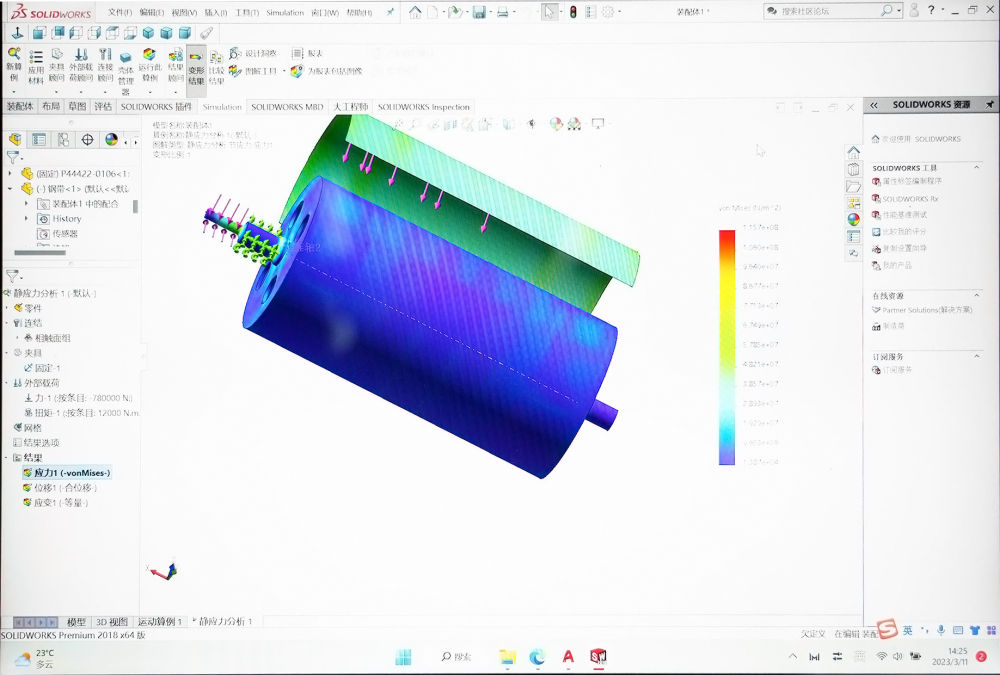
To illustrate this with a concrete example: suppose a client requires an industrial roller with a diameter of 500 mm, a working length of 3,000 mm, and a design speed of 600 rpm. Viewed purely in terms of geometry, it is simply a large roller measuring "500 mm in diameter by 3,000 mm in length." However, factoring in the 600 rpm operating speed completely changes the nature of the challenge. High-speed rotation necessitates considerations regarding mass distribution, shaft system rigidity, eccentricity, dynamic balance, and deflection under operating conditions. If the roller requires heating or cooling, its internal structure will further influence thermal expansion and surface temperature distribution. Furthermore, if the roller surface requires chrome plating, tungsten carbide spraying, or rubber coating, the thickness of the surface layer and the allowance for subsequent grinding must be factored in during the initial structural design phase.
Ultimately, the true meaning of "customizing industrial rollers" lies not in whether a manufacturer possesses a lathe, but in whether they have the capability to translate a client's specific operating conditions into a roller that is manufacturable, inspectable, and capable of stable, reliable operation.
When evaluating industrial roller manufacturers, the primary indicator is not price, but engineering comprehension
One of the most common errors in industrial roller projects occurs when a client submits drawings and the supplier immediately provides a quote—leading to negotiations focused solely on price and delivery schedules—without seriously discussing the manufacturability of the designs themselves.
Upon receiving drawings, a mature industrial roller manufacturer should first conduct a technical review. At a minimum, they must verify specifications such as outer diameter, working length, total length, journal diameter, shaft shoulders, keyways, threading, mounting method, coaxiality, runout, surface roughness, material, heat treatment requirements, surface finishing, and dynamic balancing specifications. For heating or cooling rollers, further verification of internal flow channels, inlet/outlet locations, operating temperatures, and media conditions is also required.
For instance, a drawing might specify an outer diameter of φ500 mm with a tolerance of ±0.02 mm. While this appears to be a clear dimensional requirement, the manufacturer must also account for subsequent surface finishing and grinding processes. If the final surface requires a 100 μm coating, the base material cannot simply be machined to φ500 mm before coating; doing so could result in the final dimensions falling outside the tolerance range. Such issues are particularly critical for rollers featuring tungsten carbide coatings, hard chrome plating, ceramic coatings, or rubber coverings.
Therefore, a reliable industrial roller manufacturer should be capable of raising pertinent questions before quoting, rather than merely answering inquiries.
For rollers ranging from 4 to 8 meters in length, the manufacturer must consider factors such as deformation during long-shaft machining, clamping methods, support positioning, and grinding strategies. If the roller features a thin-walled cylinder, considerations must include residual welding stresses and structural rigidity during rotation. If high-speed operation is required, dynamic balancing specifications must be integrated into the overall manufacturing plan.
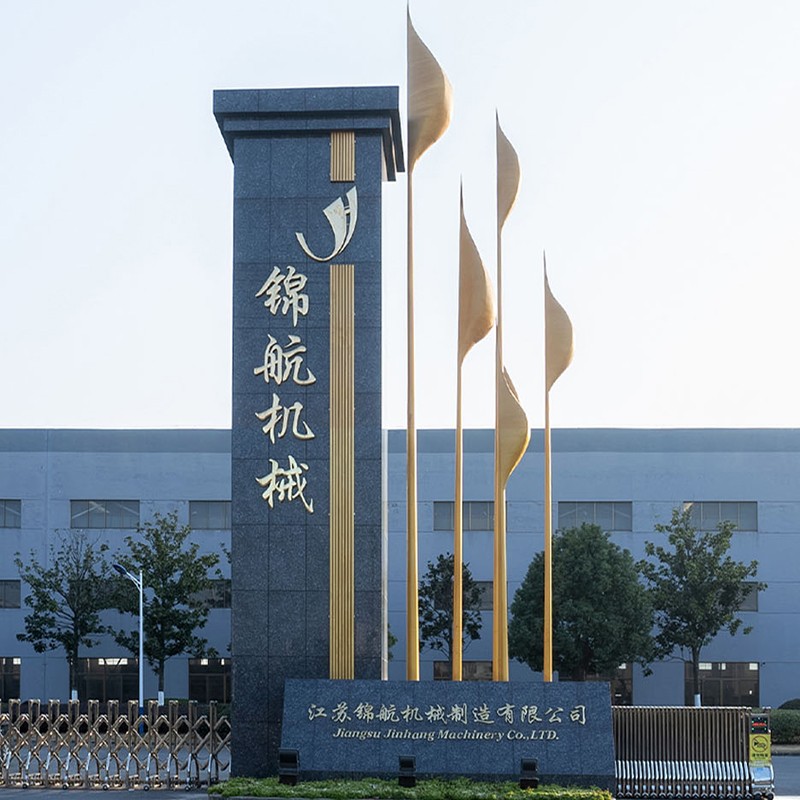
At Jinhang Machinery®, we offer custom machining based on client-provided drawings and can also design industrial roller structures to meet specific equipment requirements. Established in 2001 and ISO 9001 certified, our company specializes in the R&D and manufacturing of industrial rolls in a wide variety of shapes and structural configurations.
The true value of such capabilities lies not merely in the ability to interpret CAD drawings, but in the manufacturer's capacity to identify potential manufacturing risks before production begins.
Second Key Indicator: Does the industrial roller manufacturer possess sufficient large-scale machining capabilities?
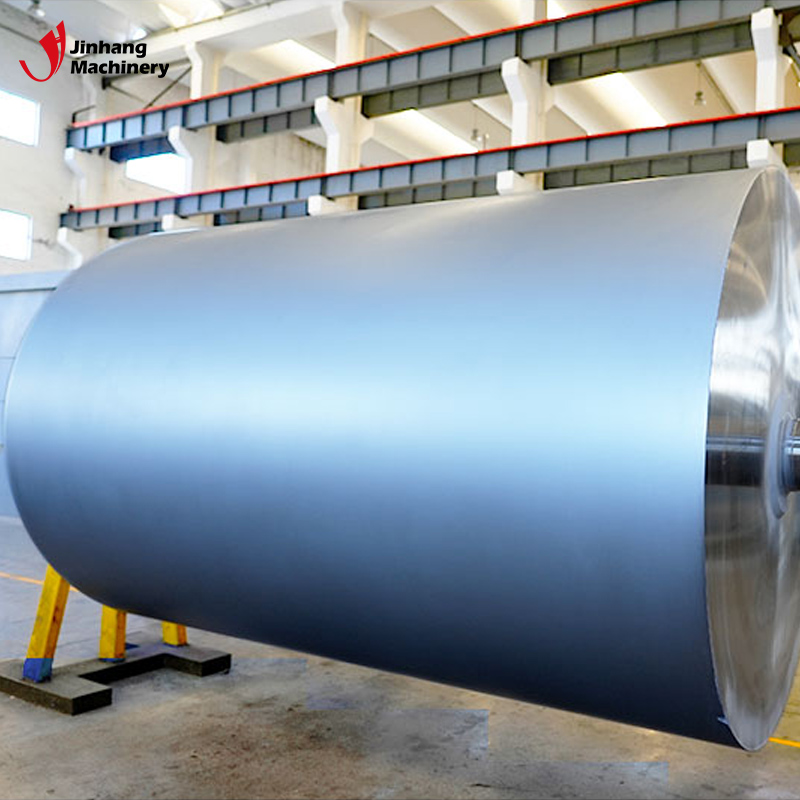
Industrial rollers are quintessential examples of "large-scale precision mechanical components." While many standard machine shops can handle shaft-like parts measuring a few hundred millimeters in length, equipment capability becomes a significant hurdle when dimensions reach diameters exceeding 1,000 mm and lengths of 5,000–8,000 mm (or even greater).
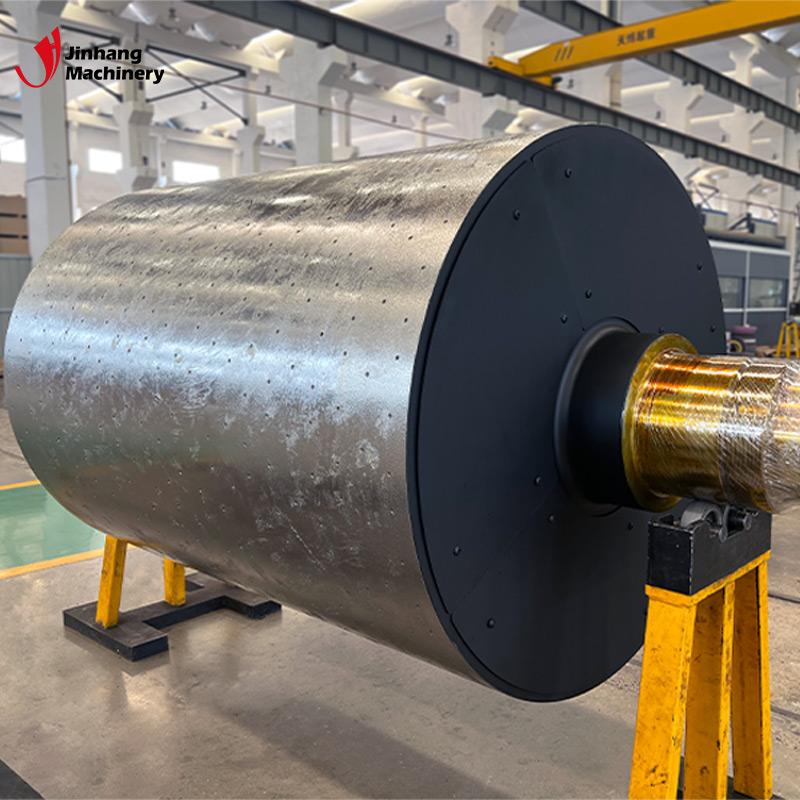
Manufacturing large industrial rollers involves processes such as large-scale turning, boring, grinding, welding, balancing, and inspection. Grinding, in particular, presents a unique challenge: the difficulty lies not merely in achieving a smooth surface finish, but in maintaining consistent roundness, cylindricity, straightness, and surface roughness across the entire working length.
For instance, consider a 6,000 mm long industrial roller: a dimensional variation of a few tens of microns in the middle section might be negligible for ordinary mechanical parts. However, on a high-speed continuous production line, such minute geometric errors can be amplified, resulting in fluctuations in material tension, localized pressure, or product thickness.
The Jinhang Machinery® facility spans approximately 13,000 square meters and is equipped with large-scale lathes (models CW61190, CW61160, CW61120, CW61125, CW6180, etc.), Italian POMINI universal grinders, 1380/1363/1350 series grinders, 160/110 boring machines, milling machines, drilling machines, and dynamic balancing equipment. We possess the capability to manufacture large industrial rollers (accommodating maximum outer diameters of approximately 2,000 mm and lengths of up to 8,000 mm, with machining precision capabilities reaching the 0.002 mm level).
Third Indicator: Can the industrial roller manufacturer control deformation during the manufacturing of "long, heavy, and large" components?
Generally, the greater the length of an industrial roller, the more difficult it is to manufacture. Long cylindrical shells, welded roller bodies, and thin-walled rollers are particularly susceptible to deformation during machining, welding, heat treatment, and grinding processes. For instance, a 6-meter-long industrial roller may undergo dimensional changes after rough turning due to the release of residual stress; subsequent welding or surface overlaying can introduce new thermal stresses; heat treatment causes further internal stress redistribution; and finally, during precision grinding, failure to properly allocate machining allowances across rough, semi-finish, and finish stages makes it difficult to consistently meet design specifications.
Therefore, a truly professional industrial roller manufacturer must establish a structured "process route" rather than simply stringing together various machining steps.
A sound manufacturing process typically begins with material inspection, followed by rough machining, welding or structural fabrication, stress-relief treatment, semi-finish machining, heat treatment or surface treatment, finish machining, grinding, dynamic balancing, and final inspection. While process routes vary by roller type, the core logic remains consistent: mitigate risks at key stages rather than deferring all precision requirements to the final operation.
Jinhang Machinery® tracks and inspects quality at various stages, ensuring a roller passes intermediate checks before proceeding to the next step; this minimizes the risk of discovering issues only during final assembly.
For buyers, this level of detail is more significant than a mere "ISO 9001" certification. While certification indicates the existence of a quality management system, the actual quality of an industrial roller depends on how effectively that system is implemented across material selection, machining, surface treatment, inspection, and delivery documentation.
Fourth Indicator: Surface Treatment Capabilities Determine Suitability for Specialized Operating Conditions
For many industrial rollers, core value lies not just in the roller body, but in the roller surface.
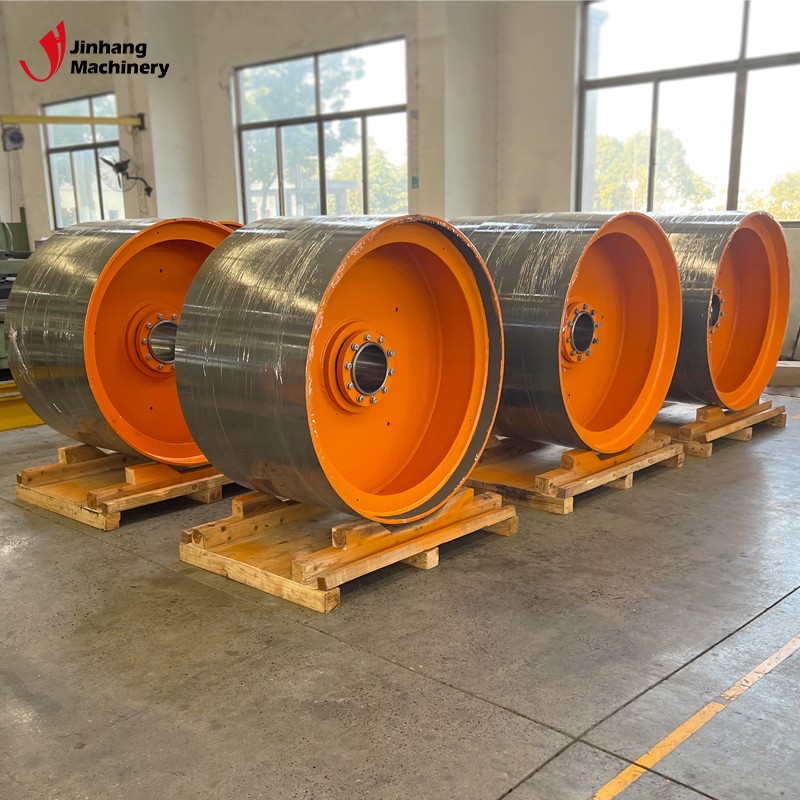
Consider a steel industrial roller: applying hard chrome, tungsten carbide, ceramic, rubber, polyurethane, or mirror polishing to the surface can result in vastly different operational capabilities and suitability for specific working environments. For hard-chrome industrial rollers, key considerations typically include wear resistance, corrosion resistance, and surface hardness; tungsten carbide rollers are generally employed in environments characterized by high wear, high speeds, or stringent wear-resistance requirements; rubber rollers require attention to hardness, elasticity, oil and temperature resistance, and surface grinding; polyurethane rollers necessitate a balanced consideration of wear resistance, elasticity, and chemical compatibility; and mirror-finish rollers demand a focus on surface roughness, roundness, cylindricity, and the quality of the final polish.
The Jinhang Machinery® product range includes—but is not limited to—rubber rollers, polyurethane rollers, heating rollers, mirror-finish rollers, cooling rollers, corona rollers, ceramic anilox rollers, chrome-plated rollers, tungsten carbide-coated rollers, and other custom carbide-coated industrial rollers.
From a supply chain perspective, this capability to handle multiple processes offers a distinct advantage: industrial roller projects do not need to be fragmented into separate stages involving a machine shop, an outsourced surface treatment facility, an outsourced grinding shop, and an outsourced dynamic balancing service. For complex industrial rollers, minimizing intermediate transport and outsourcing steps helps reduce risks associated with datum shifts, repeated clamping, and dimensional variations.
Of course, this does not imply that reliability is achieved only when a single enterprise performs every step of the process. For the purchaser, the critical factor is confirming whether the manufacturer exercises quality control over outsourced processes and whether they assume full technical responsibility for the delivered industrial rollers.
The Fifth Indicator: Dynamic Balancing Capability of Industrial Rollers Cannot Be Overlooked
For high-speed industrial rollers, dynamic balance is a frequently underestimated parameter.
The centrifugal force generated by an industrial roller during rotation is directly proportional to the square of its rotational speed. Simply put, if the speed increases from 600 rpm to 1200 rpm—assuming all other conditions remain constant—the centrifugal force resulting from imbalance could theoretically increase approximately fourfold. Consequently, high-speed industrial rollers are highly sensitive to mass distribution, coaxiality, and dynamic balance.
For instance, consider an industrial roller with a diameter of 600 mm operating at 1000 rpm; the linear speed at the roller surface is approximately 31.4 m/s. If the production line speed is increased to 1500 rpm, the linear speed rises to approximately 47.1 m/s. In this context, industrial rollers must not only meet geometric precision requirements but also ensure dynamic stability during rotation.
A roller that meets static dimensional specifications is not necessarily stable when operating at high speeds. Factors such as internal density variations, welded structures, keyways, uneven coatings, inconsistent rubber covering thickness, and machining errors in the shaft can all affect the final balance state.
Therefore, when selecting a manufacturer, one should specifically inquire about dynamic balancing capabilities, balance grades, test speeds, correction methods, and the final reporting process, rather than simply asking, "Do you have a dynamic balancing machine?"
The Sixth Criterion: Customization of Heating and Cooling Rollers Requires Examining Internal Structure
While customization for standard support rollers may focus primarily on dimensions and surface finish, the true technical challenges for thermal industrial rollers—such as heating rollers, cooling rollers, and water quench rollers—often lie within the roller body itself.
For instance, heating rollers may utilize circulating thermal oil, steam, electric heating, or other heat sources, while cooling rollers might employ circulating water or other cooling media. The number, cross-section, location, and distribution of internal flow channels directly impact temperature uniformity across the roller surface.
Consider an industrial roller with a working length of 3000 mm; if the internal thermal medium is unevenly distributed, a significant temperature difference may arise between the left and right ends of the roller surface. While such a difference might be negligible for standard conveying applications, in processes like film production, coating, lamination, or calendering, uneven temperature can lead to variations in thickness, tension, viscosity, or surface quality.
Consequently, a manufacturer with genuine engineering expertise should be able to derive the optimal internal structure based on thermal requirements, rather than simply manufacturing according to external dimensional drawings.
Jinhang Machinery® offers a product range that includes thermal industrial rollers such as heating rollers, chill rollers, and water quench rollers. Customers can specify requirements regarding temperature, pressure, materials, operating speed, and environmental conditions (e.g., oil, water, or solvents), allowing the manufacturing team to design the internal structure accordingly.
For purchasers, this means that inquiries should not be limited to just "diameter × length." To obtain a truly optimized roller design, it is best to provide details on operating temperature, medium, rotational speed, load, material width, production line speed, and installation method.
Indicator 7: A reliable industrial roller manufacturer should be able to provide "verifiable data"
When purchasing industrial rollers, the most dreaded statement is: "We have extensive experience, and there are no issues with quality."
While experience is certainly important, it must ultimately be backed by data.
For industrial rollers, one should at least require the manufacturer to provide inspection data based on project specifications—such as outer diameter, working length, journal diameter, radial runout, coaxiality, cylindricity, surface roughness, hardness, coating thickness, and dynamic balance results. For heating and cooling rollers, additional attention should be paid to flow channel pressure tests, leak tests, and thermal uniformity tests.
If the roller drawings specify a radial runout of ≤0.03 mm, the delivery documentation should reflect the actual inspection results; similarly, if a surface roughness of Ra ≤0.2 μm is required, there should be corresponding inspection records. For specialized industrial rollers, coating thickness and hardness must also be verified.
An important point to note here is that parameters are not necessarily better simply because they are more "extreme."
For instance, tightening a radial runout requirement from 0.03 mm to 0.002 mm theoretically yields higher precision, but it may also drive up manufacturing costs, inspection complexity, and lead times. If the equipment's actual operation does not require such high precision, this kind of "over-engineering" merely increases procurement costs. Therefore, a mature industrial roller manufacturer should not only possess manufacturing capabilities but also be able to help clients determine which parameters are truly necessary.
Why is Jinhang Machinery® worth considering as an industrial roller supplier?
When evaluating the criteria mentioned earlier, Jinhang Machinery® stands out not merely for a single exceptional metric, but for having established a comprehensive system covering everything from design, machining, grinding, and surface treatment to inspection and after-sales support.
The company is equipped with large-scale lathes, POMINI universal grinders, standard grinders, boring machines, milling machines, drilling machines, dynamic balancing machines, automatic welding equipment, polyurethane casting systems, and eco-friendly automatic sandblasting equipment. It manufactures a wide range of industrial rollers, including rubber rollers, polyurethane rollers, heating rollers, mirror-finish rollers, cooling rollers, corona rollers, ceramic anilox rollers, chrome-plated rollers, and tungsten carbide-coated rollers.
From a customer's perspective, this combination of capabilities means Jinhang Machinery® is not limited to a "standard industrial roller" market; instead, it can accommodate diverse materials, structural designs, surface treatments, and operating environments. The company entered the polyurethane industrial roller market around 2008, introduced POMINI grinders in 2010, launched custom services in 2012, entered the lithium battery sector in 2015, and began developing tungsten carbide-coated rollers in 2023.
FAQ: Common Questions About Industrial Roller Manufacturers and Customization
Q1: How can I quickly determine if an industrial roller manufacturer has genuine customization capabilities?
Do not simply ask if they support OEM services. Instead, provide complete drawings and operating conditions, then ask the supplier to conduct a technical review. Observe whether they proactively inquire about materials, rotational speed, temperature, load, operating media, surface treatment, dynamic balancing, and critical tolerances. If a supplier merely provides a quote without discussing operating conditions or manufacturing risks, their customization capabilities warrant further verification.
Q2: Can industrial roller manufacturers produce rollers based solely on customer drawings?
Yes, they can; however, for complex industrial rollers, "manufacturing strictly to the drawing" is not always the optimal approach. A mature manufacturer should be able to assess the manufacturability of the drawings and promptly consult the client if potential risks regarding dimensions, tolerances, materials, or surface treatments are identified. Public information indicates that Jinhang Machinery® supports both customization based on customer drawings and the design of industrial rollers tailored to specific equipment requirements.
Q3: Is a precision of 0.002 mm for industrial rollers always better?
No. Precision must align with the roller's actual function and the equipment's requirements. While certain precision rollers may indeed require micron-level machining capabilities, blindly pursuing 0.002 mm precision for standard conveyor rollers—which may only require looser dimensional tolerances—can significantly drive up manufacturing and inspection costs. Therefore, appropriate tolerances should be determined based on specific drawings and operating conditions.
Q4: Why do industrial rollers require dynamic balancing?
Industrial rollers typically operate in a state of continuous rotation; the higher the rotational speed, the more pronounced the impact of centrifugal forces caused by imbalance becomes. Large, high-speed rollers, in particular, can suffer from vibration, increased bearing loads, noise, and fluctuations in product quality if their mass distribution is uneven. Consequently, dynamic balancing grades and inspection requirements should be clearly specified when procuring high-speed industrial rollers.
Q5: What types of custom industrial rollers does Jinhang Machinery® offer?
Jinhang Machinery® offers a wide range of rollers, including rubber, polyurethane, heated, mirror-finish, cooling, corona, ceramic anilox, chrome-plated, and tungsten carbide-coated rollers, as well as other specialized types. We provide custom solutions for industries such as metallurgy, mining, packaging, printing, lithium-ion battery manufacturing, and automotive testing. Suitability for specific projects is ultimately determined based on customer drawings, operating parameters, and the results of technical reviews.