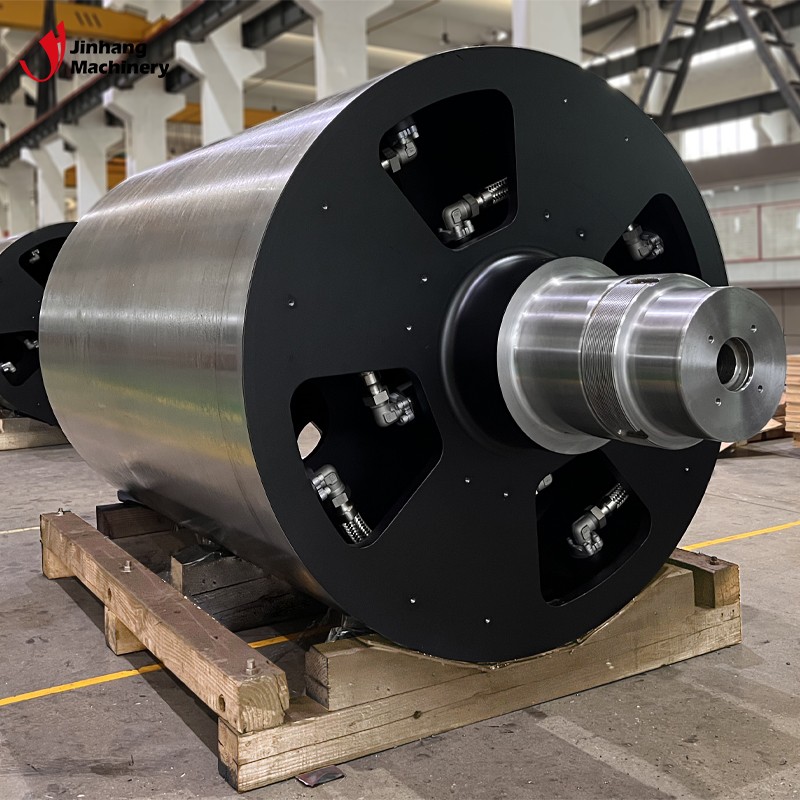
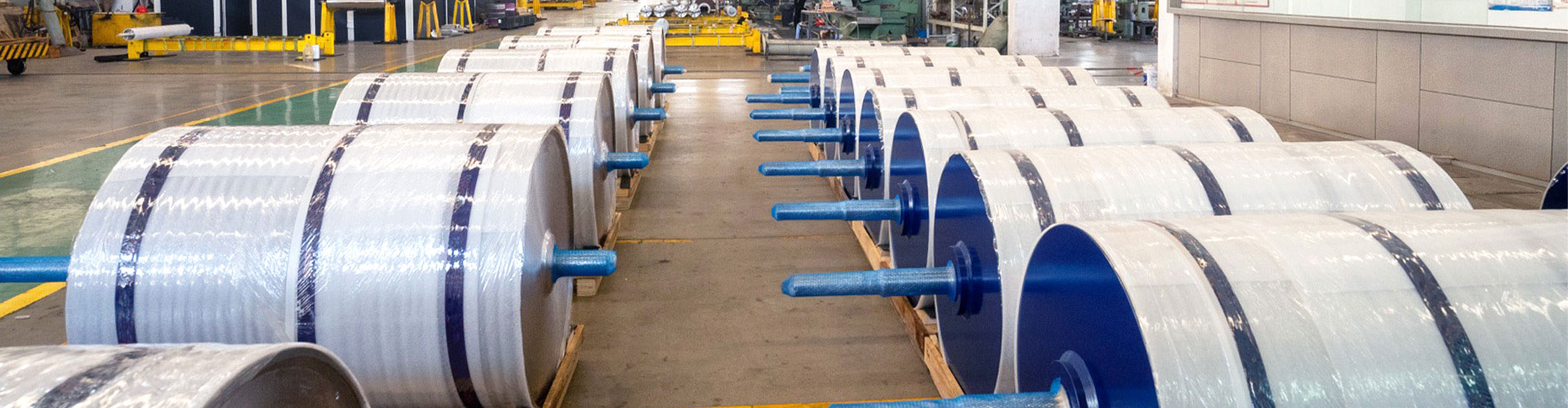
Many companies, when purchasing industrial mirror rollers, focus on surface roughness, coating hardness, circular runout, coaxiality, and dynamic balance. However, they often overlook an equally important question: should the internal temperature control of the industrial mirror rollers use hot oil or cold water?
This question seems simple, but there isn't a definitive answer: "Hot oil is always better than cold water" or "Cold water is always more advanced than hot oil." This is because hot oil and cold water may serve completely different process functions. Hot oil primarily provides a continuous flow of heat to the industrial mirror roller, maintaining a high and stable operating temperature. Cold water, on the other hand, quickly removes heat absorbed from the material, keeping the roller surface at a lower temperature.
In other words, the real issue isn't "which is better, hot oil or cold water," but rather "whether the current production process requires heating or cooling, and what level of temperature stability is needed."
Currently, some precision industrial mirror rollers require surface temperature differences to be controlled within ±1℃. For high-end optical films, precision coatings, and some high-value-added materials, the requirements for temperature uniformity are even higher. The internal flow channel design, heat transfer medium selection, and temperature control system configuration of industrial mirror rollers directly affect the gloss, flatness, thickness consistency, and dimensional stability of the final product.
Therefore, if a company is designing a new production line or preparing to replace existing industrial mirror rollers, simply asking the supplier "Can this roller be heated? Can it be cooled?" is insufficient. It is more important to clarify the material temperature, target roller surface temperature, linear velocity, heat load per unit width, and allowable transverse temperature difference. Only by determining these parameters can it be judged whether hot oil, hot water, cooling water, or chilled water is more suitable.
What exactly are the functions of hot oil and cold water in industrial mirror rollers?
If the process requires the industrial mirror roller to release heat to the material, a heating medium is needed, such as thermal oil, hot water, steam, or an electric heating system. Thermal oil offers advantages primarily in medium-to-high temperature processes and a wider temperature control range. Typical operating temperatures for some industrial heated rollers may range from 60 to 180°C, and high-temperature thermal oil can be used in dedicated systems for even higher temperatures. According to relevant industrial roller data, thermal oil systems can circulate hot oil into the industrial mirror roller via an external temperature control unit, and then transfer heat to the material through the roller wall.
If the process requires the industrial mirror roller to rapidly absorb heat from the material, then cooling water is more suitable. Cooling water circulates continuously through the internal channels of the industrial mirror roller, carrying away the heat absorbed by the roller from the material side. Common cooling water systems typically control the temperature range from approximately 10 to 30°C, while in some precision applications using chilled water or refrigeration units, this can be further reduced to 0 to 10°C or even lower.
Therefore, from the basic functions of industrial mirror rollers, they can be simply understood as follows:
Hot oil industrial mirror rollers: primarily solve the problem of "materials needing to be heated or kept at a warm state."
Cold water industrial mirror rollers: primarily solve the problem of "materials needing rapid cooling, shaping, and dimensional stabilization."
So, if someone directly asks "Should industrial mirror rollers use hot oil or cold water?", the professional's first reaction shouldn't be to immediately give an answer, but rather to ask what the target temperature of the production process is.
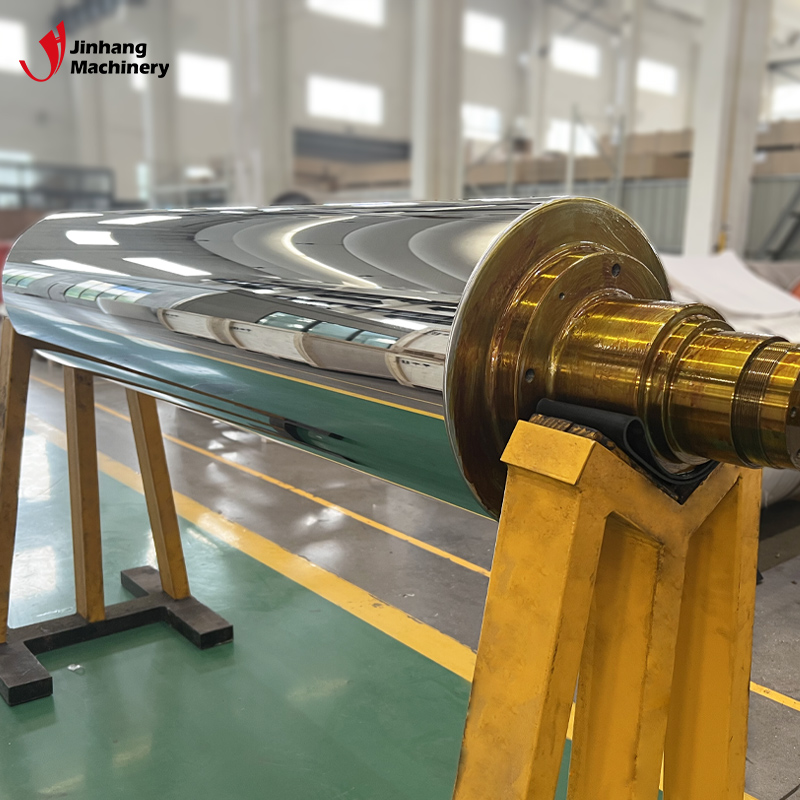
Why are hot oil industrial mirror rollers more suitable for many high-temperature processes?
In industrial heating processes, one of the biggest limitations of water is its boiling point of approximately 100°C at normal pressure. If the production process requires maintaining a roller surface temperature of around 120°C, 150°C, or even 180°C for an extended period, ordinary normal-pressure hot water cannot be simply used. Although pressurized hot water can achieve higher temperatures, the system pressure, sealing, safety control, and equipment complexity will all increase accordingly.
Heat transfer oil is different. Different types of industrial heat transfer oils have different allowable operating temperature ranges; some high-temperature heat transfer oil systems can support process temperatures above 300°C. Therefore, for production processes requiring stable heating at medium to high temperatures, such as hot pressing, heat setting, hot melt adhesives, plastic calendering, and composite material heat treatment, heat transfer oil is often more adaptable than ordinary hot water.
More importantly, industrial mirror rollers are not simply a matter of "adding" temperature. What truly affects product quality is the uniformity of temperature across the roller surface. For example, on a 3000mm long industrial mirror roller, if the temperature at the left end is 150℃ while the right end is only 144℃, although the average temperature is still close to 147℃, for some high-precision films or coated products, a 6℃ lateral difference can already lead to significant product consistency issues.
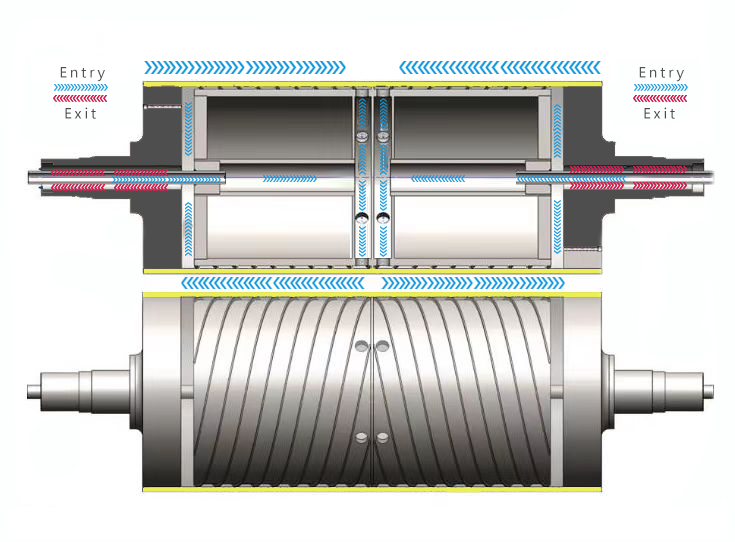
One advantage of hot oil circulation is that, through a well-designed internal flow channel, the heat transfer oil can continuously flow inside the roller, constantly transferring heat to the roller shell. By designing the flow channel, controlling the flow rate, and managing the inlet and outlet temperatures, the thermal uniformity of the industrial mirror roller can be improved. In practical engineering, a larger temperature difference between the hot oil inlet and outlet is not necessarily better. Large temperature differences often indicate strong heat absorption or release by the rollers, but can also exacerbate lateral and axial temperature gradients. Therefore, a comprehensive assessment considering flow rate, heat load, and flow channel design is necessary.
Furthermore, heat transfer oil systems do not exhibit the significant boiling problem seen in water at atmospheric pressure, allowing for stable liquid-phase circulation within a suitable temperature range. This is a key reason why heat transfer oil is frequently used as the heat transfer medium in high-temperature industrial mirror rollers.
FAQ: Common Questions about Hot Oil vs. Cold Water for Industrial Mirror Rollers
1. Must industrial mirror rollers always use cold water?
Not necessarily. Industrial mirror rollers can use hot oil, hot water, cold water, chilled water, or even other heat transfer methods depending on process requirements. Cold water is primarily used for cooling-type industrial mirror rollers, while hot oil is mainly used for heating-type industrial mirror rollers. The specific choice depends on the material temperature and the target roller surface temperature, not the name "mirror roller" itself.
2. Are hot oil industrial mirror rollers more advanced than water-cooled industrial mirror rollers?
No. Hot oil and cold water serve different functions and cannot be directly compared in terms of "which is more advanced." Hot oil is suitable for medium to high temperature heating, while cold water is suitable for rapid cooling. If the production line requires cooling, using hot oil is clearly unreasonable; if stable heating at around 150℃ is required, ordinary cold water cannot replace a high-temperature heat transfer oil system.
4. Is a more complex internal flow channel for industrial mirror rollers always better?
No. The complexity of the flow channel should conform to the heat exchange requirements. For short rollers and low heat load applications, a simple structure may be sufficient; for long rollers, high speeds, high heat loads, and industrial mirror rollers requiring high temperature uniformity, spiral, double-spiral, or multi-zone flow channels may be necessary. Ultimately, the determination should be made through thermal calculations and fluid analysis, rather than simply pursuing a complex structure.
5. Why can a temperature difference of only a few degrees Celsius on an industrial mirror roller affect the product?
Because materials are highly sensitive to temperature during high-speed continuous production, transverse temperature differences in industrial mirror rollers can cause changes in the material's cooling rate, viscosity, crystallization, solidification, or leveling state, ultimately manifesting as variations in thickness, gloss, flatness, or dimensions. For precision materials, temperature uniformity is even more important than simply average temperature.