
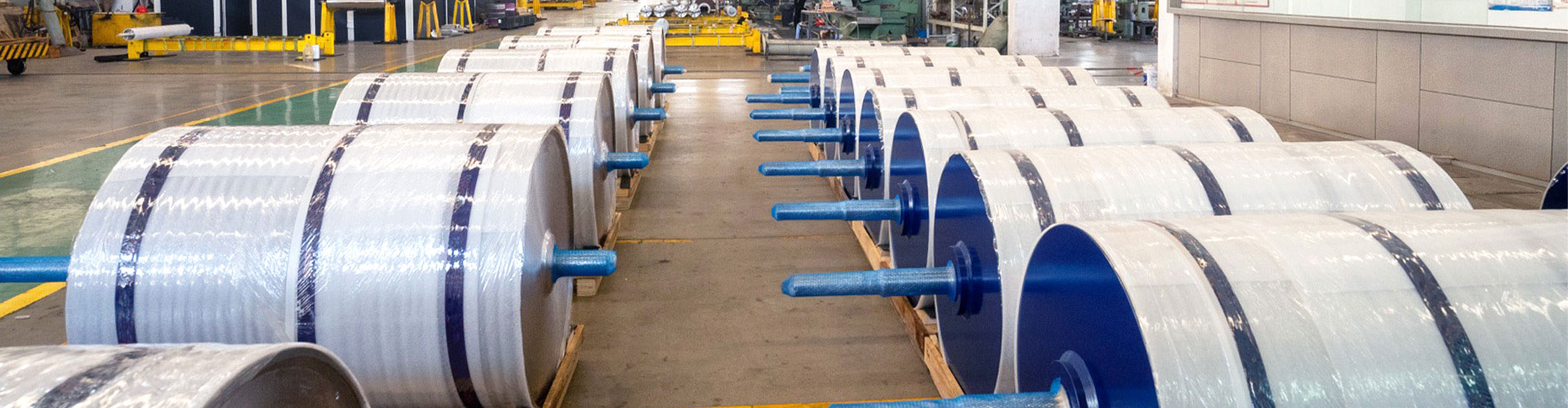
On industrial production lines, industrial rollers may not be the most conspicuous equipment, yet they are often critical components determining the stability of the entire line. Whether in film, plastics, printing, papermaking, textiles, steel, aluminum processing, coating, lamination, rubber, woodworking, or packaging industries, industrial rollers perform vital tasks such as conveying, traction, pressing, coating, cooling, heating, guiding, leveling, and surface treatment. To enable rollers to withstand high speeds, high pressures, high temperatures, corrosion, abrasive wear, and complex chemical environments, enterprises typically apply various functional layers to the roller surface—such as tungsten carbide coatings, hard chrome plating, rubber layers, ceramic layers, or nickel-based alloy layers.
However, a major headache for many manufacturers is not merely the presence of a coating, but rather why that coating might suddenly fail or detach. If a newly repaired or recoated roller exhibits localized peeling, flaking, cracking, blistering, or delamination after just a few days or weeks of operation, the resulting losses go far beyond the simple cost of refinishing the roller surface. Coating failure can alter the roller's diameter and surface roughness, leading to product defects such as streaks, uneven thickness, tension irregularities, printing flaws, or poor lamination quality. Furthermore, if detached fragments enter high-speed rotating zones, they can damage adjacent equipment, scratch the product, or even cause a complete production line shutdown.
To complicate matters further, the mechanisms behind coating failure vary depending on the type of roller. For tungsten carbide-coated rollers, issues often stem from interfacial bonding, residual stress, porosity, spraying parameters, and substrate pretreatment during the HVOF (High-Velocity Oxy-Fuel) process. Chrome-plated rollers involve factors such as pretreatment, current density, internal coating stress, micro-cracking, corrosion, and thermal cycling. Rubber rollers, meanwhile, are more susceptible to issues regarding the bond between the rubber and the metal core, vulcanization, temperature resistance, chemical resistance, and mechanical fatigue. Consequently, simply attributing all instances of "coating failure" to "poor application quality" often fails to address the root cause of the problem.
From the perspective of failure analysis, the delamination of industrial roller coatings is typically a systemic issue that may simultaneously involve the substrate material, surface pretreatment, coating material, application parameters, post-treatment, operating conditions, and maintenance practices. This article analyzes the causes of delamination in tungsten carbide-coated rollers, chrome-plated rollers, and rubber-covered rolls based on their actual operating environments, and further discusses strategies to mitigate the risk of coating delamination through design, manufacturing, inspection, and maintenance.
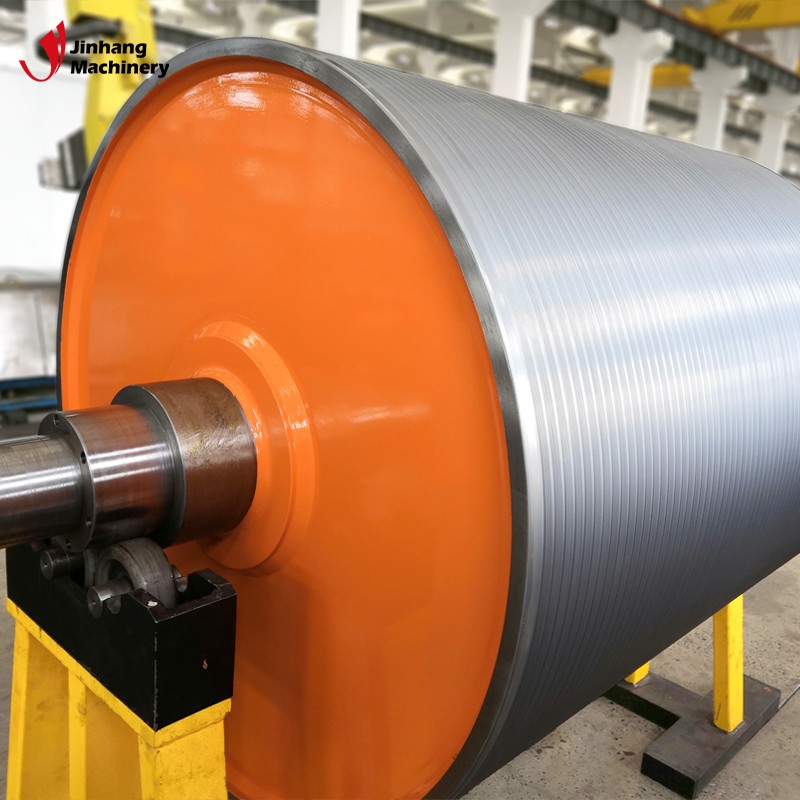
Why do industrial roller coatings delaminate?
The functional layer on the surface of an industrial roller is typically only tens to hundreds of microns thick. For certain thermally sprayed rolls, the final working layer—after spraying, grinding, and polishing—often falls within the 0.15–0.40 mm range; meanwhile, the actual thickness of hard chrome layers varies significantly depending on the application, repair allowance, and process requirements. Regarding thermal spray coatings, technical literature indicates that carbide coatings (such as WC-Co) can achieve hardness levels of approximately 1000–1500 HV, with typical thicknesses ranging from 50 to 500 μm.
However, industrial rollers are subjected to complex dynamic loads. During high-speed rotation, the coating must withstand friction, contact pressure, impact, vibration, temperature fluctuations, and exposure to chemical media. If issues such as oil contamination, oxides, residual old coating, surface porosity, or insufficient bonding strength exist at the interface between the coating and the metal substrate, the coating may appear hard on the surface while gradually failing at the interface.
This is particularly true for thermal spray coatings. Tungsten carbide coatings formed via HVOF (High-Velocity Oxy-Fuel) do not fuse with the substrate like a solid metal plate; instead, they are created through the high-speed impact, deformation, spreading, and layer-by-layer deposition of particles, resulting in a complex microstructure. Consequently, the bond between the substrate and the coating, the cohesive strength within the coating, and the state of residual stress all influence the roll's service life. Research indicates that the structural integrity of thermally sprayed carbide coatings depends not only on the coating itself but also heavily on the load-transfer capability and adhesion status at the coating-substrate interface; the state of residual stress also significantly affects the coating's mechanical properties. Therefore, the delamination of industrial roller coatings often begins not at the "hardest point," but at the "weakest interface."
Primary Cause: Inadequate Surface Preparation of the Industrial roller Substrate
In numerous cases of industrial roller coating failure, surface pretreatment is a critical area requiring close inspection. Whether dealing with tungsten carbide-coated rollers, chrome-plated rollers, or rubber rollers, the quality of the interface between the coating and the substrate directly determines the reliability of the final bond.
Taking tungsten carbide-coated rollers as an example, the roll surface typically requires degreasing, cleaning, grit blasting, or other roughening treatments prior to HVOF spraying. If oil, cutting fluids, dust, oxide layers, or moisture remain on the substrate surface, achieving a stable interfacial bond is difficult, even if the subsequent spraying parameters are perfectly set.
Technical data from TWI regarding thermal spray coating delamination clearly indicates that failure to adequately degrease and grit-blast the substrate prior to spraying can lead to delamination caused by surface contamination or improper surface roughness; factors such as blasting media, blasting parameters, spray distance, substrate temperature, and equipment calibration status must all be strictly controlled.
Industrial rollers are particularly susceptible to this issue because many projects involve the refurbishment of used rolls. Surfaces of used industrial rollers may harbor wear layers, adhesive residues, old coatings, corrosion products, and accumulated oil contaminants. A simple turning operation followed immediately by spraying does not guarantee that the surface has reached an acceptable condition. If an invisible layer of contamination remains on the substrate, it can result in a classic failure mode where the coating appears well-applied but subsequently delaminates in large sheets during operation.
Therefore, when recoating industrial rollers, one cannot focus solely on the spraying equipment; instead, a comprehensive process chain must be established—encompassing old coating removal, substrate inspection, degreasing, roughening, and dust removal—leading up to the actual spraying operation.
Second Major Cause: Improper Grit-Blasting Roughness and Surface Profile
For industrial roller coatings, a smoother surface does not necessarily ensure better adhesion. In many thermal spray processes, the substrate requires appropriate roughening to create a surface profile that facilitates mechanical interlocking and interfacial bonding. For HVOF-sprayed tungsten carbide coated rolls, the post-sandblasting surface profile—often cited in industrial process literature as being in the range of tens of microns (e.g., a profile height of approximately 30–80 μm)—varies depending on the substrate, abrasive media, coating system, and spraying process; thus, there is no single, universal standard applicable to all industrial rollers.
Insufficient surface roughening fails to provide the necessary conditions for mechanical interlocking, whereas excessive roughening can create sharp peaks and valleys, lead to localized stress concentrations, or damage the substrate surface. More importantly, there is an often-overlooked issue following sandblasting: residual dust.
Case studies on the failure of WC-Co coated industrial rollers indicate that residual sandblasting particles and subsequent atmospheric corrosion can contribute to coating delamination. Researchers have observed WC-Co coating delamination on failed industrial rollers and analyzed how residual particles and atmospheric corrosion influence coating failure.
Therefore, simply completing the sandblasting process does not equate to a satisfactory surface treatment. What truly matters is the cleanliness of the surface after sandblasting, the suitability of the roughness, the timely transition to the spraying stage, and whether the surface suffers from secondary contamination.
Third major cause: Mismatched spraying parameters leading to abnormal internal structure in the tungsten carbide coating
For tungsten carbide coated rolls, HVOF spraying parameters are critical determinants of coating quality. There are complex, coupled relationships among factors such as fuel type, oxygen supply, spray distance, powder particle size, powder feed rate, gun speed, workpiece rotation speed, spray gun traverse speed, and substrate temperature.
A key advantage of HVOF is the use of a high-speed combustion gas stream to accelerate powders—such as WC-Co or WC-CoCr—to high velocities, causing the particles to impact the substrate and form a dense coating. In industrial applications, particle velocities can reach hundreds of meters per second; typical ranges cited in process literature are approximately 600–900 m/s.
However, the notion that "higher energy is always better" is a misconception. Excessive spraying temperatures, particle overheating, or prolonged residence times can trigger decarburization and dissolution of the WC phase, as well as the formation of brittle phases such as W₂C. Relevant studies indicate that decarburization can still occur in WC-Co systems applied via HVOF spraying, particularly due to localized overheating of the powder within the high-temperature flame and the dissolution of WC.
Changes in the coating's microstructure can alter its hardness, toughness, wear resistance, and residual stress state. For industrial rollers, such changes may not be immediately visible to the naked eye after spraying; however, following continuous rotation, friction, and thermal cycling, cracks may gradually form in weaker zones, eventually leading to localized spalling.
Therefore, the key to managing tungsten carbide coated rolls lies in controlling the spraying parameters (the "spraying window") rather than simply pursuing higher flame temperatures, higher velocities, or greater coating thicknesses.
Reason No. 4: Excessive coating thickness increases the risk of delamination on industrial rollers
This is an issue often overlooked by procurement personnel.
Many assume that a thicker tungsten carbide coating equates to superior wear resistance for industrial rollers. However, increasing the coating thickness can also lead to an accumulation of residual stress, thermal stress, and internal defects. Research into thermal spraying has shown that residual stress is linked to both coating thickness and substrate geometry, and that it influences the coating's fatigue life and failure behavior.
For instance, consider an industrial roller that requires a final working layer of only 200–300 μm. If it is sprayed to a thickness of 600–800 μm in a single pass—ostensibly to extend its "wear life"—and then ground down to meet dimensional specifications, this design approach is not necessarily optimal. Factors such as internal heat accumulation, interlaminar stress, and shrinkage during cooling become more pronounced.
For HVOF-sprayed tungsten carbide rolls, the actual thickness should be determined based on the wear allowance, final machining allowance, substrate repair requirements, and specific operating conditions. While recent technical literature on industrial roller thermal spraying often cites a typical thickness range of 150–400 μm, this serves only as a reference for specific applications and cannot replace a tailored design.
In short, a thicker coating does not automatically mean a more durable industrial roller; the goal should be to maintain an appropriate thickness while meeting the required wear life.
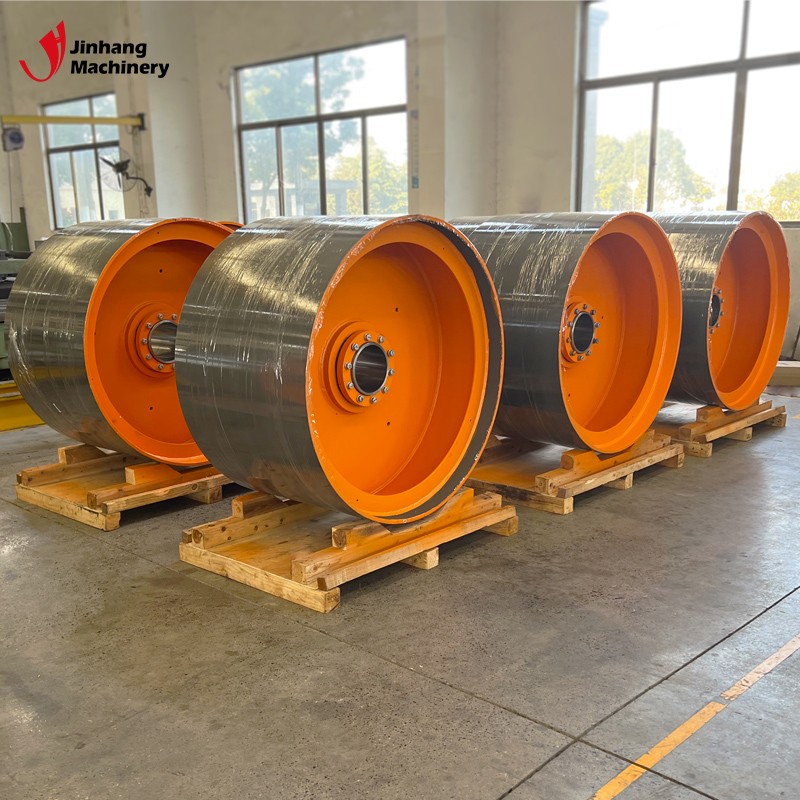
Reason No. 5: Excessive Residual Stress in the Coating
Residual stress is a highly technical yet critical factor in the delamination of industrial roller coatings.
During the HVOF (High-Velocity Oxy-Fuel) spraying process used for tungsten carbide (WC) coated rolls, powder particles undergo rapid heating, acceleration, impact, and cooling as the coating gradually forms. However, the thermal expansion behavior of the industrial roller substrate does not perfectly match that of the WC-Co or WC-CoCr coating. Consequently, residual stresses can develop between the coating and the substrate after spraying and cooling.
Residual stress is not necessarily detrimental; studies indicate that appropriate compressive residual stress can actually enhance the mechanical properties of thermally sprayed carbide coatings. However, if the residual stress state is poorly controlled, it can compromise interfacial stability and increase the risk of cracking and delamination.
Factors such as the roll's diameter, length, and wall thickness also influence heat transfer and cooling rates. During the spraying of large industrial rollers, if the temperature rises rapidly in one area of the roll surface while remaining low in others, significant thermal gradients can arise. These thermal gradients translate into thermal stresses; without proper control, this can lead to coating cracks, warping, or localized delamination.
Therefore, the spraying process for industrial rollers requires control not only of "spray gun parameters" but also of the roll body temperature and thermal cycling.
Reason No. 6: Thermal Expansion Mismatch Between Substrate and Tungsten Carbide Coating
Industrial rollers typically utilize steel, alloy steel, stainless steel, or other metals as substrates, whereas WC-based hard coatings exhibit different thermal expansion characteristics compared to steel substrates. When industrial rollers operate for extended periods at temperatures of 100°C, 200°C, or higher, both the substrate and the coating undergo thermal expansion; conversely, they contract when the equipment is shut down and allowed to cool.
Disparities in thermal expansion between the two materials generate interfacial stress. If a production line undergoes multiple heating-cooling cycles daily, the industrial roller coating is effectively subjected to continuous "thermal fatigue."
This consideration is equally important for chrome-plated rollers. Hard chrome itself is a high-hardness, relatively brittle surface layer; publicly available data typically cites hardness values in the range of approximately 60–70 HRC or 800–1000 HV. In industrial environments characterized by frequent temperature fluctuations, the difference in thermal expansion between the substrate and the chromium layer can cause micro-cracks to propagate continuously, eventually leading to spalling.
Therefore, when selecting coating materials for industrial rollers—such as heating, cooling, or hot-pressing rolls, as well as those subject to frequent thermal cycling—the actual temperature cycling conditions must be taken into account.
Reason No. 7: Excessive or uneven mechanical loading on industrial rollers
An industrial roller coating is not a load-bearing structure in isolation; it bears the production line loads in conjunction with the roll body itself.
For instance, calendering rolls may be subjected to high linear pressure; laminating rolls undergo continuous compression; guide rolls bear material tension; high-speed printing rolls experience cyclic contact; and rolls in the steel industry may face severe impact and thermo-mechanical loads.
Issues such as non-parallel roll axes, excessive roll deflection, abnormal bearing conditions, or uneven pressure across the roll face can cause localized areas of the coating to experience excessive contact stress. While a coating might withstand uniform loads under normal conditions, it is prone to cracking when subjected to localized stress concentrations.
This is a particular concern for chrome-plated rollers. Although hard chrome layers possess high hardness, this does not equate to high toughness. Technical literature on industrial chrome-plated rollers indicates that mechanical pressure, vibration, impact, and friction can induce micro-cracks in the hard chrome layer; these cracks then propagate, eventually leading to spalling.
Consequently, when localized coating detachment is observed on an industrial roller, one must not limit the inspection to the coating itself; it is also necessary to examine the bearings, couplings, parallelism, roll deflection, linear pressure, and the equipment's installation status.
Reason No. 8: Surface scratches leading to coating failure originating from localized defects
Once the surface coating of an industrial roller is scratched, that scratch can serve as the starting point for subsequent delamination.
For example, chrome-plated rollers used on printing or coating lines often employ doctor blades; if the blade pressure is excessive, hard foreign particles are present on the blade edge, or metal particles contaminate the ink, scratches may appear on the roll surface. While initial scratches might only affect surface roughness, the continuous rotation of the roll creates a zone of stress concentration at the base of the scratch, which can eventually propagate to the surrounding area.
A similar phenomenon can occur with tungsten carbide-coated rollers. Although tungsten carbide (WC) coatings possess extremely high hardness, localized defects can still form due to the presence of hard particles, abnormal impacts, or the use of improper cleaning tools.
Consequently, maintaining industrial rollers involves more than just "periodic cleaning"; it requires controlling foreign objects that might enter the nip or contact the roll surface. For high-speed industrial rollers, even a tiny metal shard can cause continuous impacts during rotation.
Reason No. 9: Coating failure originating from within due to chemical corrosion
Many industrial production lines utilize solvents, inks, coatings, acidic or alkaline cleaning agents, adhesives, and other chemical media.
Even if an industrial roller coating offers good corrosion resistance, this does not mean it is immune to attack by *all* chemicals. If corrosive media penetrate the coating via micropores, micro-cracks, or localized defects and reach the substrate, corrosion can develop beneath the coating.
Initially, only a few small spots may be visible on the roll surface; however, as corrosion progresses, the interface between the substrate and the coating loses stability, eventually leading to large-scale peeling.
This mechanism is particularly relevant for chrome-plated rollers. While hard chrome layers are corrosion-resistant, their micro-cracked structure can provide pathways for corrosive media to penetrate in certain environments. Technical literature on industrial chrome-plated rollers identifies acidic/alkaline environments, corrosive gases, and prolonged chemical exposure as risk factors for coating failure.
Therefore, when selecting an industrial roller coating, it is essential to provide accurate information regarding the chemical media involved, rather than simply stating that the "environment is relatively mild." For industries such as coating, printing, laminating, and chemical processing, the Safety Data Sheets (SDS) for cleaning agents, solvents, and process media provide valuable reference information.
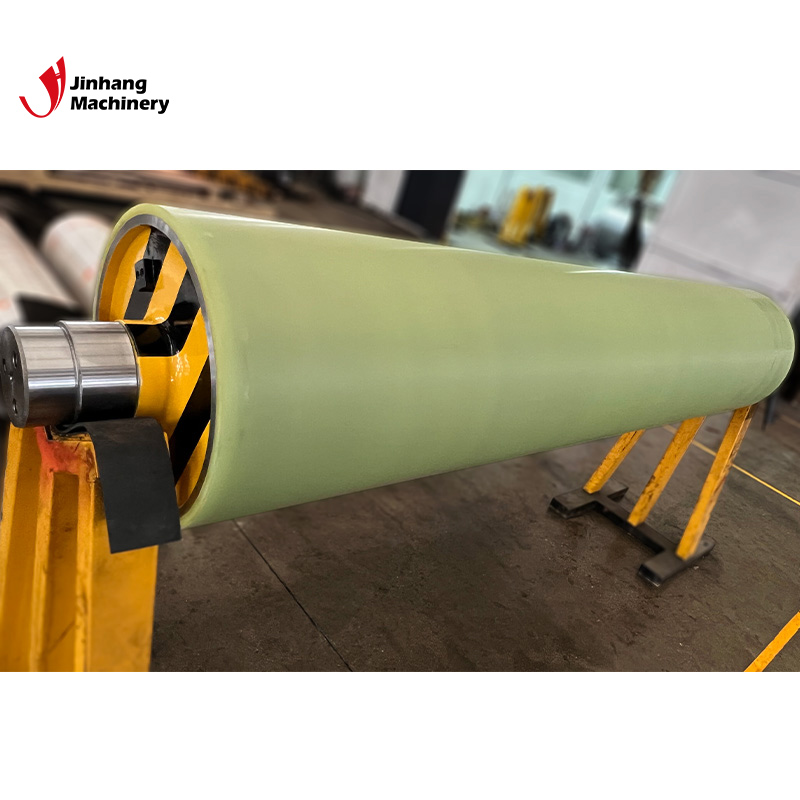
Reason No. 10: Delamination of rubber rollers follows a completely different logic than that of tungsten carbide-coated rollers
When discussing coating detachment on industrial rollers, people often lump rubber rollers into the same "coating detachment" category; however, a more accurate description for rubber rollers is the loss of adhesion, delamination, or peeling between the rubber covering and the metal core.
The structure of a rubber roller typically consists of a metal core, a bonding system, and a rubber covering. The primary difference between these and tungsten carbide-coated rollers lies in the nature of the material: rubber is a polymer exhibiting distinct viscoelastic properties. Its failure is influenced not only by mechanical stress but also by factors such as temperature, solvents, oils, ozone, humidity, the state of vulcanization, and the material formulation.
One of the most common causes of delamination in rubber rollers is inadequate surface preparation of the metal core. If the core retains oil, rust, residual old rubber, dust, or other contaminants, the adhesive cannot form a reliable bond; this can ultimately lead to edge lifting, localized blistering, or complete delamination. Technical literature on rubber-to-metal bonding identifies degreasing, sandblasting, primer application, the adhesive system, and the vulcanization process as critical factors determining bond reliability.
Consequently, solutions applicable to tungsten carbide-coated rollers cannot be directly applied to address coating detachment on rubber rollers.
Reason No. 11: Improper grinding after industrial roller coating
Many enterprises focus exclusively on the "coating" stage while neglecting the final grinding process.
In reality, tungsten carbide-coated rollers typically require precision grinding and polishing after HVOF spraying to meet final dimensional and surface roughness specifications. Technical data on the thermal spraying of industrial rollers indicates that precision grinding is essential post-coating to achieve the required final diameter and surface quality.
If the grinding process involves an unsuitable grinding wheel, insufficient cooling, excessive feed rates, or prolonged dwell times in specific areas, it can cause localized thermal damage, micro-cracking, or even edge chipping.
This is particularly critical for tungsten carbide coatings with hardness exceeding 1000 HV; they cannot be processed using standard grinding methods for ordinary steel rollers. Parameters such as the grinding process, wheel grit size, linear speed, feed rate, and cooling method must be tailored to the specific coating system.
Chrome-plated rollers similarly require precision grinding and polishing. Uneven plating thickness or localized overheating during grinding can cause existing micro-cracks to propagate further.
Reason No. 12: Rapid fluctuations in industrial roller operating temperature
When industrial rollers operate in high-temperature environments, the rates of both heating and cooling are critical. For instance, with an industrial heating roll operating at 200°C, rapid heating from room temperature can create a significant temperature gradient between the roll's surface and its interior; conversely, dousing the roll with large amounts of coolant immediately after a production line shutdown can subject it to severe thermal shock.
Such thermal cycling can accelerate micro-crack propagation in chrome-plated rollers, induce thermal stress variations between the coating and the substrate in tungsten carbide-coated rollers, and cause differential thermal expansion between the rubber and the core in rubber rollers.
Therefore, when using industrial rollers, it is essential to consider the "temperature change process" rather than focusing solely on the "maximum operating temperature."
How do you determine the specific type of delamination on an industrial roller?
In actual repair work, the most critical step is not immediately recoating the roll, but rather diagnosing the failure mode first.
If a tungsten carbide-coated roller exhibits large-scale, flake-like spalling—revealing a clean, relatively intact metal substrate in the detached area—then attention should focus on interfacial bonding, grit blasting quality, and substrate contamination. If the detached area shows extensive cracking, factors such as residual stress, thermal cycling, coating thickness, and mechanical loads must be examined. If the surface displays significant porosity, pitting, or signs of corrosion, the focus should shift to coating density and exposure to chemical media.
For chrome-plated rollers, if the surface develops increasingly dense "mud-cracking" (crazing) followed by localized peeling, key factors to consider include internal plating stress, mechanical loads, and thermal cycling. If rust appears beneath the delaminated area, further inspection for micro-cracks in the plating and the penetration of corrosive media is required.
If a rubber roller shows edge lifting, the bonding, edge design, and potential fluid ingress should be investigated. Localized blistering suggests issues with bond integrity, gas entrapment, temperature, or chemical exposure. If the entire rubber layer separates from the core, the bonding system and vulcanization process require analysis.
In short, observing the shape and nature of the detachment is a vital method for analyzing industrial roller failures.
FAQ
FAQ: Why does an industrial roller coating suddenly detach over a large area?
Sudden, large-scale detachment of an industrial roller coating usually indicates a severe failure of the interfacial bond. Common causes include oil or oxide layers on the substrate surface, inadequate grit blasting, abnormal spraying parameters, excessive residual stress, thermal shock, excessive mechanical loads, and the penetration of corrosive media to the interface. For tungsten carbide-coated rollers, HVOF spraying parameters and coating thickness should also be carefully checked.
FAQ: Why do tungsten carbide coatings on rolls delaminate?
Delamination of tungsten carbide coatings can be linked to factors such as substrate cleanliness, grit blasting (surface roughening), spray distance, spray gun speed, workpiece temperature, powder condition, coating thickness, and residual stress. Interfacial bonding strength can be significantly compromised, in particular, if oil or oxides are present on the substrate prior to spraying. Research on thermal spraying also indicates that residual stress within the coating and the difference in thermal expansion between the coating and the substrate can affect the coating's long-term reliability.
FAQ: Why are chrome-plated rollers prone to cracking and subsequent coating detachment?
Hard chrome coatings possess high hardness but are also somewhat brittle. Mechanical loads, vibration, thermal cycling, internal coating stresses, substrate defects, and corrosive media can all cause micro-cracks to propagate. Once cracks penetrate deep into the coating—or even lead to corrosion of the substrate—the result is often localized or extensive peeling.
FAQ: Does surface blistering on a rubber roller indicate delamination?
In many cases, yes. Localized blistering, edge lifting, or abnormal deformation of the rubber roller may indicate a loss of adhesion between the rubber covering and the metal core. Further inspection is required regarding the metal core's surface treatment, the adhesive used, the vulcanization process, operating temperatures, and any oils, solvents, or cleaning agents used on the production line.
FAQ: Can an industrial roller be re-sprayed immediately after the coating has peeled off?
This is generally not recommended. The failed coating must first be completely removed, and the roll's substrate inspected for cracks, corrosion, deformation, or other defects, before surface pre-treatment and coating application are performed again. If underlying issues are not addressed, simply applying a new coating over the old area is highly likely to result in premature delamination.