
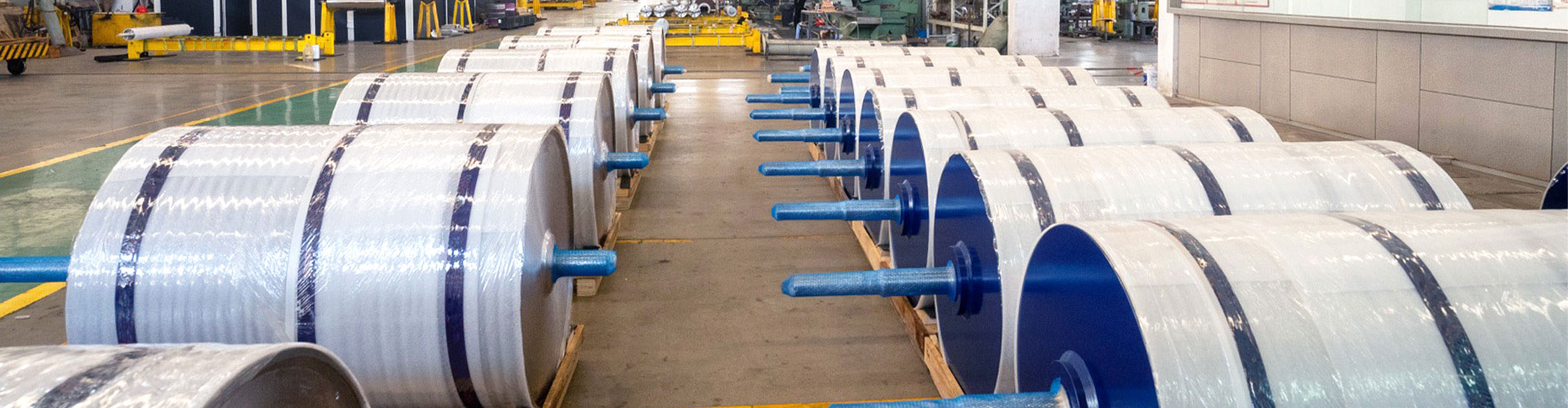
In printing, coating, laminating, papermaking, film production, textiles, steel processing, packaging, and conveying equipment, industrial rubber rollers may appear to be just ordinary mechanical components with a "metal core and rubber outer layer." However, in actual operation, they are often among the components subjected to the most complex combined operating conditions in the entire production line. Rubber-coated industrial rollers must withstand the mechanical stress from continuous rotation, as well as environmental factors such as pressure, friction, temperature, chemical media, solvents, oil, cleaning agents, and ozone.
From a materials engineering perspective, "weakening of the rubber coating" is actually a comprehensive concept. It may mean a decrease in tensile strength, tear strength, resilience, hardness drift, abrasion resistance, and increased compression set. It may also manifest as a decrease in the adhesive strength between the rubber layer and the metal core.
Therefore, to solve the problem of premature failure of industrial rubber rollers, one cannot only focus on cracks on the rubber surface but should analyze the entire rubber-coated industrial roller system.
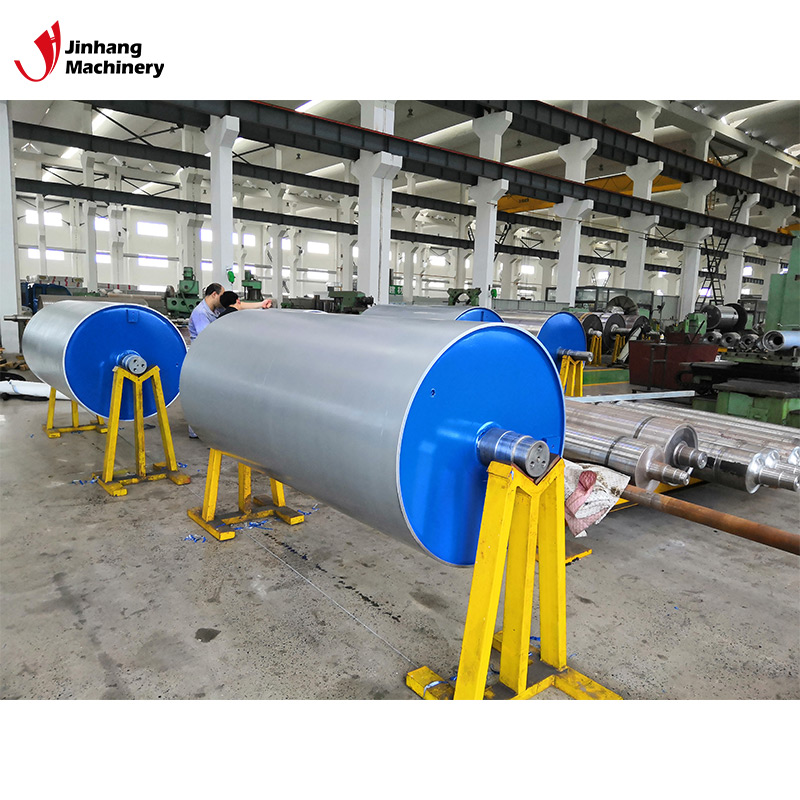
Why do industrial rubber rollers "weaken"?
The rubber layer of industrial rubber rollers is a polymer elastomer. Unlike ordinary steel, whose lifespan is primarily determined by yield strength, rubber-coated industrial rollers undergo continuous stretching, compression, shearing, bending, and recovery under long-term cyclic loading. Especially on continuous production lines, a single rubber-coated industrial roller may experience one or more cyclic compressions and releases per revolution. If the production line speed reaches 200–300 m/min, the roller surface is actually experiencing an extremely large number of stress cycles every day.
This long-term cycling causes internal fatigue. If combined with high temperature, excessive pressure, chemical media, or surface friction, the molecular structure of the rubber will further change, ultimately manifesting as hardening, softening, cracking, wear, and permanent deformation. Recent technical data on industrial rubber rollers also list continuous mechanical stress, temperature changes, chemical exposure, and oxidation as important factors contributing to cracking and performance degradation.
Therefore, "weakening of rubber-coated industrial rollers" cannot be simply interpreted as the rubber being worn thinner. Even if the change in rubber layer thickness is small, as long as there are significant changes in elasticity, hardness, compression recovery capacity, or adhesive strength, the industrial rubber roller may have already lost its original processing properties.
The Number One Factor: Excessive Temperature – A Hidden Killer of Industrial Rubber Roller Performance Degradation
If we were to pick the most easily underestimated problem among all factors, high temperature would usually be near the top.
Rubber materials exhibit significant temperature sensitivity. When exposed to high temperatures for extended periods, rubber undergoes thermo-oxidative aging, gradually altering its molecular chain structure. For some formulations, this manifests as increased cross-linking, material hardening, and decreased elongation; for other systems unsuitable for this temperature, softening, decreased strength, or even rubber layer instability may occur.
In actual production, a common misconception is focusing solely on the equipment's set temperature while ignoring the actual temperature of the industrial rubber roller itself. For example, if the equipment displays an operating temperature of 70°C, it doesn't mean the rubber roller surface is consistently at 70°C. Frictional heat generated during high-speed operation, internal hysteresis losses from continuous pressing, heat conduction, and radiation from nearby ovens or heating devices can all cause the actual rubber layer temperature to exceed the equipment's set value. Relevant industrial rubber roller data also specifically points out that friction during high-speed operation generates additional heat, potentially raising the actual roller surface temperature above the equipment's displayed value.
The effect of temperature on lifespan is often not linear. Assuming a typical rubber formulation is designed for an operating temperature of approximately 70-80℃, prolonged operation near 100℃, even if the production line can temporarily continue running, could significantly accelerate the aging of the rubber layer. For heat-resistant materials such as EPDM, silicone rubber, and FKM, the permissible range needs to be redefined based on the specific formulation and continuous operating temperature; it cannot be determined solely by the material name.
Some data, using EPDM rubber rollers as an example, indicate that if an EPDM rubber roller rated for approximately 120℃ operates continuously above 140℃, its lifespan may be shortened by 30%-60%. This data is an engineering reference under specific formulations and operating conditions and is not applicable to all EPDM rubber rollers, but it clearly illustrates that the difference between the material's rated temperature and the actual operating temperature directly translates into lifespan loss.
The second major factor: Excessive pressure will cause industrial rubber-coated rollers to be in a state of fatigue for extended periods
Industrial rubber rollers require a certain amount of pressure to complete pressing, conveying, traction, coating, or material contact, but "requiring pressure" does not mean that higher pressure is always better.
When industrial rubber rollers are subjected to linear or contact pressures exceeding their design limits for extended periods, the rubber layer undergoes significant compression and shear deformation. If this condition persists, permanent compression set (PSS) can easily occur.
Simply put, normal rubber should be able to return to its original shape after being compressed; however, after aging or prolonged overload, it becomes increasingly difficult to regain its original shape. Once the recovery ability of an industrial rubber roller decreases, the roller surface roundness, contact pressure distribution, and material conveying conditions will all change.
For example, assuming a rubber roller is designed with a hardness of 70 Shore A, but the actual process requires a significantly higher contact pressure, even if the 70 Shore A value itself is not problematic, the rubber layer may still rapidly undergo permanent deformation due to continuous compression. Conversely, if excessively high hardness rubber is chosen to achieve higher pressure resistance, it may lead to decreased material adhesion, increased contact stress, and surface damage to the product.
Therefore, the hardness of industrial rubber rollers cannot be discussed in isolation from pressure.
Industry data also indicates that prolonged pressure exceeding design limits, improper roller gap settings, and concentrated local pressure can all lead to permanent compression deformation, localized collapse, decreased roundness, and accumulation of surface microcracks in rubber rollers.
For rubber-coated industrial rollers, a truly reasonable design should involve a balance between hardness, rubber layer thickness, roller diameter, pressure, and speed, rather than simply increasing hardness.
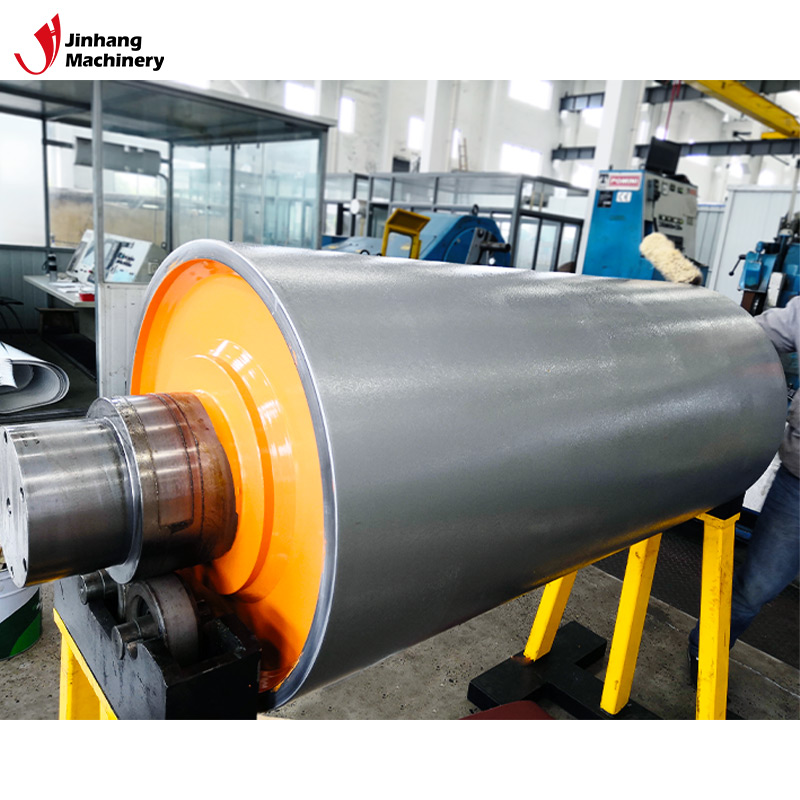
The third major factor: Chemical media, a primary cause of rubber softening, stickiness, and swelling
If high temperature and mechanical pressure represent physical attacks, then solvents, oils, adhesives, inks, cleaning agents, and acidic/alkaline media can directly alter the chemical and physical states of rubber materials.
The most typical chemical failure of industrial rubber rollers is "swelling."
When incompatible liquids enter the spaces between rubber molecular chains, the rubber may expand in volume, while simultaneously decreasing hardness, elasticity, and even becoming sticky. Industry data indicates that solvent molecules entering the rubber matrix widen the distance between polymer molecular chains, leading to volume expansion, softening, and a decline in structural properties.
This explains why the same industrial rubber roller, which runs well on a water-based coating production line, might quickly swell when transferred to a production line containing a certain organic solvent.
It's especially important to note that cleaning agents are also part of the production process.
Many companies only analyze what industrial rubber rollers come into contact with during normal production, neglecting to analyze what they come into contact with during shutdown cleaning. For example, if they come into contact with mild water-based materials during production, but the rubber surface is wiped with a strong solvent after daily shutdown, over time, the real damage to the rubber may not be caused by the production medium, but by the cleaning medium.
The fourth major factor: Choosing the wrong rubber material is more dangerous than "poor rubber quality."
There is no single universal rubber suitable for all scenarios for industrial rubber rollers.
NBR, EPDM, CR, FKM, silicone rubber, natural rubber, and other elastomers each possess different properties of oil resistance, solvent resistance, heat resistance, ozone resistance, abrasion resistance, and compression resistance.
For example, NBR is generally suitable for many oils, mineral oils, and some printing and industrial liquid environments; EPDM has advantages in water, steam, ozone, and some chemical environments, but is not suitable for certain petroleum-based oils; FKM is generally used for environments with higher requirements for heat, oil, and chemical resistance; and PU is often considered for industrial applications requiring high abrasion resistance and high load-bearing capacity. Related industrial roller material data also emphasizes that different rubber systems need to be selected specifically based on hardness, temperature, chemical media, and surface properties.
Therefore, a customer telling a manufacturer, "I want an 80 Shore A industrial rubber roller," is far from sufficient.
A professional technical inquiry should at least further clarify: What is the operating temperature? What is the maximum temperature? What is the production line speed? What liquids will it come into contact with? What is the cleaning agent? What is the pressure? Will it be subjected to long-term pressing? Is ozone present? Does the surface require high or low friction? Will it come into contact with food, films, paper, inks, adhesives, or metals?
These questions determine not the appearance of a roller, but the direction of the rubber formulation.
The fifth major factor: Ozone, oxygen, ultraviolet radiation, and environmental aging make rubber surfaces increasingly brittle
Industrial rubber rollers don't necessarily need contact with strong acids and alkalis to age.
Oxygen, ozone, and ultraviolet radiation in the air can also damage certain rubber systems.
Ozone cracking is particularly representative. For ozone-sensitive rubber materials, when tensile stress exists on the rubber surface, ozone can induce micro-cracks. These cracks may initially be micro-cracks invisible to the naked eye, but with continued development over time and mechanical cycles, they eventually form noticeable cracks.
Therefore, industrial rubber rollers installed near high-voltage electrical equipment, ozone generators, strong ultraviolet light sources, or ventilation openings require special attention to ozone and environmental aging issues. Relevant industrial data also list ozone, UV radiation, and oxidation as important environmental factors contributing to rubber surface hardening and cracking.
An important principle also applies: the more aged the rubber, the more pronounced the damage caused by mechanical stress; the greater the mechanical stress, the easier it is for cracks caused by environmental aging to propagate.
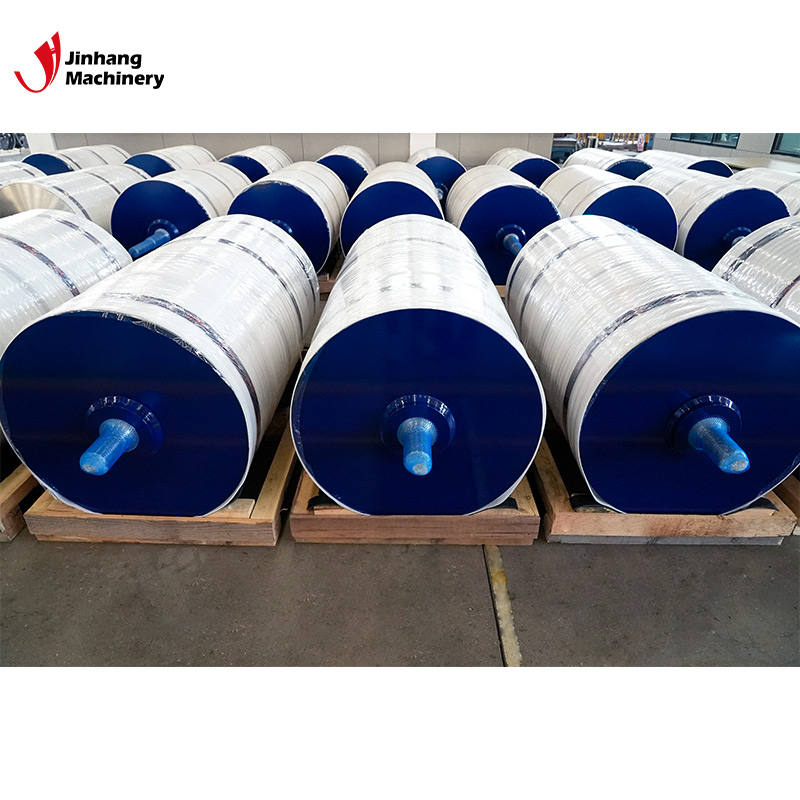
The Sixth Major Factor: Excessive Speed Causes Internal Heat Generation in Rubber Rollers
Many users believe that as long as the bearings and metal roller core can withstand linear speeds of 300 m/min or 500 m/min, the rubber rollers are fine.
This is not the case.
Rubber is a viscoelastic material, and energy loss occurs during high-speed cyclic deformation, some of which is converted into heat. This means that the higher the production line speed, the greater the pressure, the thicker the rubber layer, and the higher the rubber wear factor, the greater the risk of internal heat accumulation.
For example, increasing the production line speed from 100 m/min to 300 m/min does not mean that all the working conditions of the rubber roller simply increase threefold. With increased speed, frictional heating, dynamic deformation, vibration, and contact stability may all change.
Some industrial data shows that in continuous production, when the linear speed of EPDM industrial rubber rollers exceeds approximately 300 m/min, its surface wear rate may increase by more than 40% compared to low-speed conditions; this is also reference data under specific material and testing conditions, but it illustrates that the impact of high speed on the rubber surface cannot be ignored.
Therefore, if a company is upgrading its production line from 150 m/min to 300 m/min or even higher, it should not only check the motor, bearings, and metal roller core, but also re-verify the material, hardness, dynamic fatigue, and heat dissipation conditions of the industrial rubber roller.
The Seventh Factor: Poor adhesion between the rubber layer and the roller core can lead to "appearing fine, but actually already failed."
Another particularly dangerous failure mode for rubber-coated industrial rollers is delamination.
Even without obvious wear on the surface of an industrial rubber roller, adhesion failure can still occur between the rubber layer and the metal roller core. Once local delamination occurs, the high-speed rotation and periodic shearing during production will continuously amplify the defect, eventually resulting in bulges, bubbles, edge lifting, and in severe cases, even the entire rubber layer may detach.
Many factors can cause adhesion failure, including insufficient roller core surface treatment, oil or moisture contamination, inappropriate adhesive system selection, abnormal primer coating process, improper vulcanization temperature and time control, unreasonable rubber layer thickness, and periodic stress caused by the difference in thermal expansion between rubber and metal.
Therefore, evaluating industrial rubber rollers cannot solely rely on surface hardness and roughness testing; the bonding quality between the rubber layer and the roller core must also be considered. Industrial technical data also indicates that bonding failure is related to surface pretreatment, contamination, adhesive selection, insufficient curing, and the thermomechanical matching between the rubber layer and the roller core.
The Eighth Factor: Incorrect Hardness Selection Can Cause Industrial Rubber Rollers to Deteriorate Over Time
"Higher hardness equals greater durability" is a very common misconception in industrial rubber roller procurement.
For example, a customer initially used a 60 Shore A rubber roller and found it wore out quickly, so they requested the supplier to switch to 80 Shore A next time. While the wear problem might improve, new issues arise regarding product indentation, gripping ability, contact area, or surface damage.
The reason is simple: hardness is only one indicator of rubber performance.
For industrial rubber rollers requiring good adhesion, excessively high hardness can lead to a reduced actual contact area; excessively low hardness can easily result in excessive compression deformation. Some applications may be suitable for 35–50 Shore A, while others may require 70–90 Shore A or even higher, but these values must be determined in conjunction with linear pressure, roll diameter, rubber layer thickness, and material properties.
Therefore, the correct approach is not to "replicate a new roll based on the hardness of the old one," but to recalculate based on the actual failure mode.
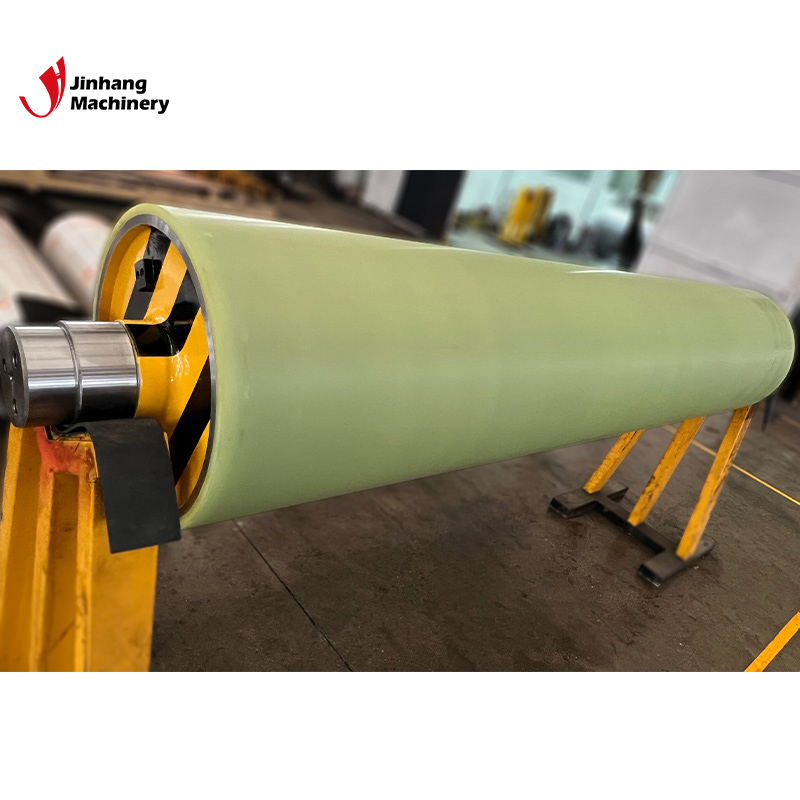
Why do some industrial rubber rolls last two years while others fail after only six months?
This is a question that companies in the industry should seriously consider.
Many purchasing personnel, when comparing industrial rubber rolls, first compare the unit price and hardness. However, what truly determines the total cost is often the service life per unit of production time.
Suppose one rubber-coated industrial roll costs 20,000 yuan and lasts for 12 months under normal use; another costs 28,000 yuan and can be used stably for 24 months. On the surface, the second one is 40% more expensive, but if you consider the number of replacements, downtime, reinstallation, debugging, material loss, and quality risks, its life cycle cost may actually be lower.
More importantly, the failure of industrial rubber rolls often does not only result in the cost of "replacing a roller."
If a roller surface begins to expand or deform, it can cause uneven product thickness, uneven coating, material misalignment, tension fluctuations, decreased printing quality, or lamination defects. For high-speed production lines, an unplanned downtime can be far more expensive than the purchase price of the rubber roller itself.
Therefore, what companies really need to optimize is not the "unit price of rubber rollers," but rather the "roller cost per million meters of product" or the "roller cost per 1000 hours of operation."
Frequently Asked Questions (FAQs) about Industrial Rubber Rollers and Rubber-Coated Industrial Rollers
Q1: Why do industrial rubber rollers become increasingly hard?
The most common causes include prolonged exposure to high temperatures, thermo-oxidative aging, ozone exposure, ultraviolet radiation, and unsuitable cleaning agents. As rubber ages, its elasticity decreases, usually accompanied by increased hardness, surface microcracks, and decreased resilience. If industrial rubber rollers are simultaneously exposed to high temperatures and high pressures for extended periods, the aging process may accelerate further.
Q2: Why do rubber-coated industrial rollers become increasingly soft and sticky?
First, check for chemical swelling. Oils, solvents, adhesives, inks, and some cleaning agents can penetrate the rubber, causing it to expand in volume, decrease in hardness, and become sticky. Pay particular attention to the chemicals used during shutdown cleaning, as cleaning agents may cause more damage to the rubber than the production medium.
Q3: Does higher hardness in industrial rubber rollers mean greater durability?
No. Higher hardness generally means increased resistance to compressive deformation, but it may reduce gripping ability, increase localized contact stress, or affect the product surface. Industrial rubber rollers should be selected based on pressure, speed, material, and contact method, rather than simply pursuing a high Shore A hardness.
Q4: How often should industrial rubber rollers be replaced?
There is no fixed lifespan. The lifespan of industrial rubber rollers can range from several months to several years, mainly depending on the rubber system, temperature, pressure, speed, chemical environment, and maintenance methods. Rather than simply stating "replace every 12 months," a more reasonable approach is to establish trend data on hardness, diameter, surface condition, and production quality, and determine the replacement cycle based on the actual degree of degradation.
Q5: Can a rubber-coated industrial roller with cracks continue to be used?
It is necessary to determine the type and depth of the crack. A few very shallow surface aging cracks pose a completely different risk than structural cracks that have penetrated the rubber layer and extended to the bonding interface. If the crack continues to expand and appears at the roller edge or the junction of the rubber layer and the roller core, it is generally not recommended to continue operating it with the defect, as high-speed rotation may further increase the risk of delamination.