
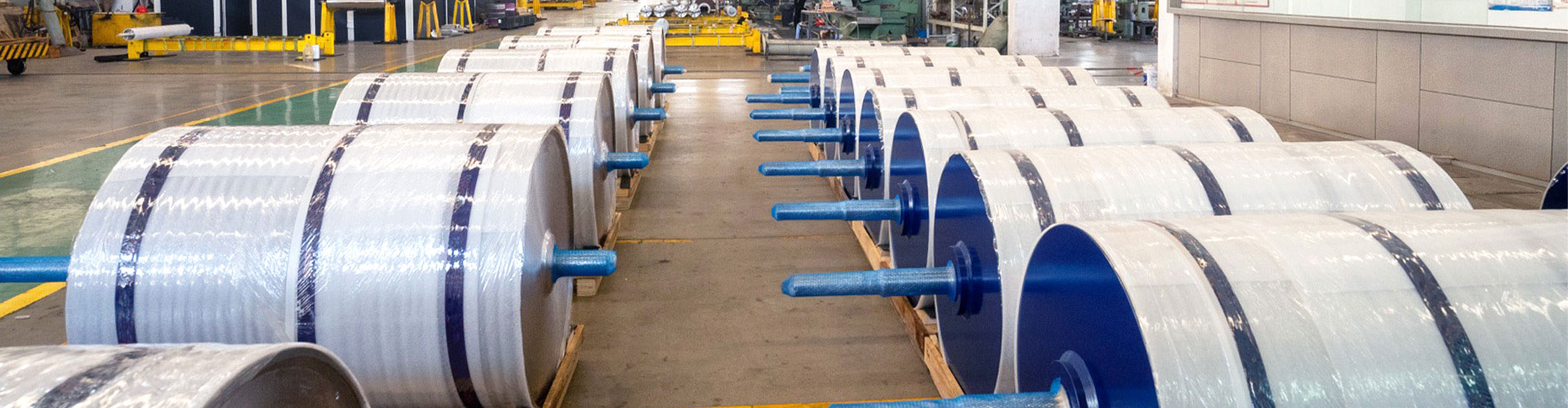
In printing, film, lamination, coating, steel processing, papermaking, textile, rubber processing and various continuous production lines, industrial nitrile rubber rollers are in a very special working state for a long time: they must withstand continuous rotation, pressure and friction, and may be exposed to oil, ink, adhesives, cleaning agents or other chemical media for a long time. The real problem that many companies encounter is not "not knowing that industrial nitrile rubber rollers need to be replaced", but "not knowing when the most appropriate time to replace them is."
Replacing it too early will result in unnecessary spare parts costs, downtime and labor costs; replacing it too late may cause the industrial NBR rubber roller to suddenly fail, further affecting the roll gap pressure, material tension, traction stability and product surface quality. Especially for high-speed continuous production lines, an industrial nitrile rubber roller that has entered the failure stage but is still barely used will cause losses that are often much higher than the purchase price of the rubber roller itself.
What's more noteworthy is that industrial nitrile rubber rollers do not have a fixed "service life" that applies to all working conditions. Also using NBR materials, some industrial NBR rubber rollers may run for several years and still remain in good condition, while others may swell, harden, crack, wear or degumm within a few months. This does not necessarily mean that there is a problem with the manufacturing quality of the rubber roller. To a large extent, it is because the NBR formula, acrylonitrile content, operating temperature, contact medium, roller surface pressure, line speed, load and maintenance methods jointly determine the actual life.
Therefore, the truly professional way to judge whether an industrial nitrile rubber roller should be replaced is not to simply look at "how many years it has been used", but to establish a comprehensive judgment system based on appearance, size, hardness, surface condition, operating performance and process quality. This article will focus on the typical failure mechanisms of industrial nitrile rubber rollers and industrial NBR rubber rollers, analyze in detail which signals mean that the rubber roller is approaching the end of its life, in which cases it can continue to be used through grinding or re-coating, and how companies should establish more scientific standards for industrial nitrile rubber roller replacement.
Why do industrial nitrile rubber rollers "look like they still work" but actually need to be replaced?
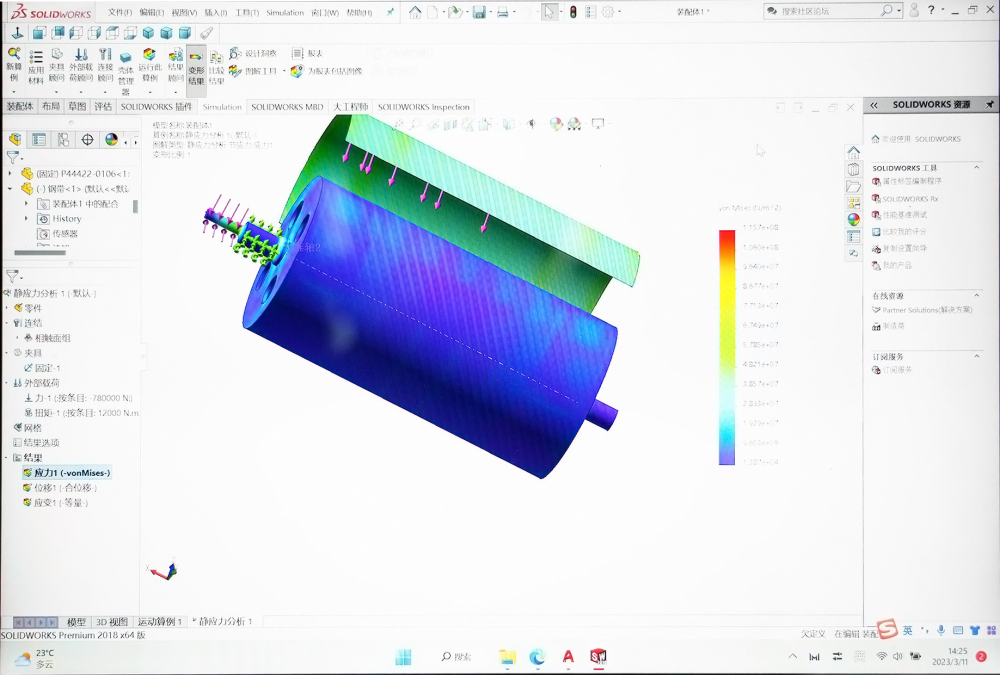
The most common management misunderstanding of industrial rubber rollers is to interpret "no obvious break" as "can still be used normally". In fact, the failure of rubber rollers is usually gradual. Industrial nitrile rubber rollers may still be intact in appearance, but the internal material properties have changed, ultimately manifesting as hardness shifts, reduced elasticity, dimensional changes, changes in surface friction characteristics, and reduced dynamic stability.
Especially for industrial NBR rubber rollers, one of the biggest advantages of NBR is its good resistance to mineral oil, lubricating oil and grease media, so it is often used in rollers that come into contact with oil, ink and related industrial media. The performance of different NBR formulas is not exactly the same. The acrylonitrile (ACN) content in NBR will significantly affect the oil resistance and low-temperature flexibility; Parker's material data points out that the ACN content of NBR can be in the range of approximately 18% to 50%. The higher the ACN, the better the mineral oil tolerance, but the low-temperature flexibility will decrease.
This means that "NBR is oil-resistant, so it will not break" is a misunderstanding in itself. Even if the correct material is selected for industrial nitrile rubber rollers, aging and performance degradation will still occur if they are exposed to temperatures, pressures or media environments outside the design range for a long time.
A more typical situation is that the size, hardness and friction performance of the industrial NBR rubber roller are normal when it is first used, but as the oil gradually penetrates into the rubber layer, the roller surface may expand and soften slightly. At this time, if the company only observes with the naked eye, it may not be able to detect the problem at all; but during high-speed operation, changes in roller diameter, increased compression deformation, and changes in friction coefficient will gradually transform into product quality problems.
Therefore, the judgment of industrial nitrile rubber roller replacement should be changed from "whether it is broken" to "whether it still meets the process requirements."
When something happens to an industrial nitrile rubber roller, it is basically certain that it should be replaced?
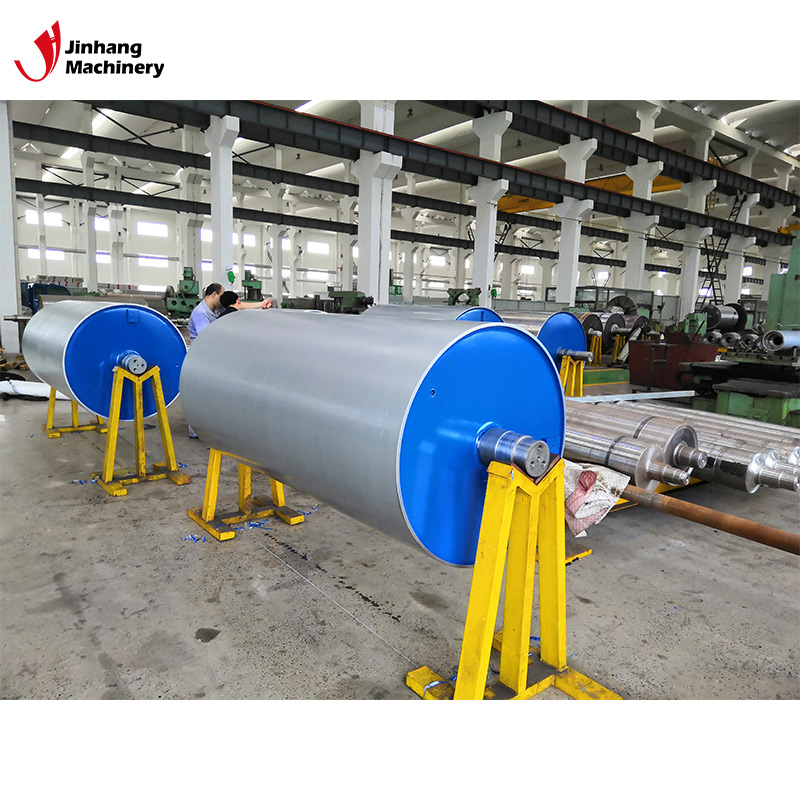
To determine whether industrial nitrile rubber rollers need to be replaced, you can focus on six types of signals: surface damage, hardness changes, dimensional changes, wear, bonding failure, and reduced operating performance. If one of the items has exceeded the allowable range of the process, repair or replacement evaluation should be carried out instead of relying solely on the use time.
The first type of signal: obvious cracks, cracks or peeling on the rubber surface
This is the most intuitive type of failure phenomenon. If there are penetrating cracks, circumferential cracks, longitudinal cracks, cracks, pieces falling off or partial peeling on the surface of industrial nitrile rubber rollers, it usually means that the rubber layer can no longer reliably bear the continuous operating load.
Slight surface texture changes do not necessarily mean immediate replacement is necessary, but if the crack continues to grow, or if the crack has penetrated deeper into the rubber layer, there is a risk of further tearing. Once the high-speed industrial NBR rubber roller partially falls off, it will not only cause product defects, but may also destroy the dynamic balance of the roller.
NBR itself has relatively limited weather resistance and ozone resistance. Parker's data clearly points out that NBR's weather resistance and ozone resistance are weak, so when exposed to ozone, sunlight or outdoor environments for a long time, special attention needs to be paid to surface cracks and aging.
If industrial nitrile rubber rollers mainly work indoors and in oil environments, the main failure factors may not be ozone, but oil, thermal aging and mechanical wear. Therefore, the causes of cracks must be analyzed based on actual working conditions.
The second type of signal: obvious changes in the hardness of industrial NBR rubber rollers
Hardness is a very valuable parameter to judge the condition of industrial nitrile rubber rollers.
For example, if the hardness of an industrial NBR rubber roller with a design hardness of 70 Shore A drops significantly after long-term operation, it may indicate that the rubber has absorbed oil or other media; if the hardness continues to rise, it may be related to factors such as thermal aging, oxidation, and plasticizer migration.
However, we cannot simply stipulate that "hardness changes of 5 Shore A must be replaced" because different processes have different tolerances for hardness deviations. For industrial nitrile rubber rollers that require precise control of lamination pressure, hardness changes may be more sensitive than ordinary conveyor rollers.
In actual management, baseline data can be established when a new roller is put into use, such as recording the Shore A hardness at different locations on the roller surface, and testing it regularly after 500 hours, 1,000 hours of operation or according to the company's maintenance cycle. The measured results are then trend compared to the initial values.
This "trend management" is more meaningful than a single measurement. For example, an industrial nitrile rubber roller gradually drops from 72 Shore A to 69, 66, and 63 Shore A. Even if there is no obvious damage on the surface, it should be a cause of alarm, because this indicates that the state of the material is continuously changing.
The specific hardness range of industrial rubber rollers can be very wide. The typical hardness of some industrial NBR roller products may be about 70 to 75 Shore A. In actual engineering, softer or harder formulas may also be selected based on contact pressure, traction requirements and product surface requirements. In the public technical data of industrial rubber rollers, you can see the typical data of NBR rubber roller hardness of about 75 Shore A, tensile strength of about 18 MPa, and elongation of about 375%.
Therefore, when judging whether industrial nitrile rubber rollers need to be replaced, the specific formula and initial technical standards should be used as the benchmark.
The third type of signal: significant changes in roller diameter or roundness
For high-speed industrial NBR rubber rollers, dimensional changes may be more dangerous than visible cracks.
After the rubber roller is subjected to compression, friction and heat load for a long time, it may undergo permanent deformation, local wear or media expansion, causing the roller diameter to change. If the entire roller surface wears unevenly, local diameter differences may occur.
For example, if an industrial nitrile rubber roller with an original diameter of 300 mm has obvious eccentric wear on the roller surface after long-term operation, the contact pressure may be unevenly distributed throughout the width direction. For film, printing and laminating equipment, this change may further manifest itself as material tension fluctuations, localized uneven lamination, coating thickness changes, or reduced print quality.
Therefore, for high-precision industrial NBR rubber rollers, you should not only check whether there are cracks in the rubber layer, but also regularly measure the roller diameter, cylindricity, circular runout, and dynamic balance if necessary.
The fourth type of signal: surface wear cannot be restored through normal grinding
Industrial nitrile rubber rollers do not necessarily have to be scrapped as soon as they become worn.
If the thickness of the rubber layer is still sufficient and there are no serious problems with the metal mandrel, bonding layer and rubber body, many industrial NBR rubber rollers can restore surface accuracy by regrinding.
For example, if an industrial nitrile rubber roller has slight grooves, local wear or changes in surface roughness on its surface after long-term operation, the appropriate cylindricity and surface state can be regained through precision grinding.
However, if the rubber layer is so thin that the designed thickness cannot be guaranteed, or the wear and tear has exposed the bonding layer, simple grinding cannot be continued. At this time, the more reasonable method is usually to re-cover or replace the entire industrial nitrile rubber roller.
Therefore, companies should establish a three-level maintenance strategy of "grinding, re-coating or replacing" instead of treating all old industrial NBR rubber rollers as scrap products.
Oil contact is the advantage of industrial nitrile rubber rollers, and it is also the most easily overlooked issue when judging life
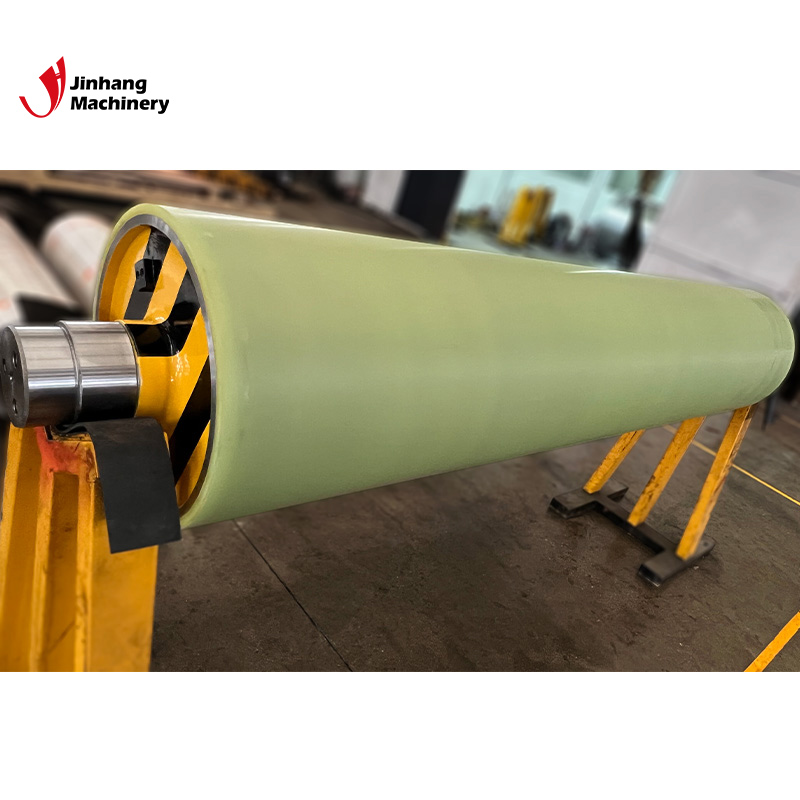
An important reason why industrial nitrile rubber rollers are widely used in industrial scenes is that NBR has good oil resistance. It is generally suitable for environments where mineral oils, lubricating oils, greases and some fuels are in contact. Parker data also points out that NBR is suitable for working conditions in contact with mineral oil, grease, wax, etc., and has good mechanical properties and wear resistance.
But "oil-resistant" does not mean "non-absorbent."
There may be significant differences in the degree of volume expansion of different NBR formulas in different oils. Influencing factors include ACN content, oil type, temperature, contact time and rubber formulation. Some technical data show that the volume expansion of NBR under specific standard oil conditions may range from a few percentage points to dozens of percentage points, and increasing the ACN content can usually enhance oil resistance.
Therefore, if the industrial nitrile rubber roller has phenomena such as "increased diameter, softer surface, changes in friction characteristics, and increased local viscosity", it should be checked to see if there is media absorption.
More importantly, companies cannot only consider the media they come into contact with during the production process, but also must consider cleaning agents. Certain inks, adhesives, solvents and cleaning fluids may have completely different effects on NBR than the working media. In other words, an industrial NBR rubber roller may be in good condition during normal production, but rapidly expand or soften due to the use of an incompatible cleaning agent.
Therefore, before replacing industrial nitrile rubber rollers, it is best to do a failure medium analysis. If the problem comes from cleaning agents or process fluids, and the media compatibility issue is not addressed, a new industrial NBR rubber roller may still fail repeatedly in a short period of time.
How will excessive temperature affect industrial nitrile rubber rollers?
Temperature is another core factor affecting the life of industrial nitrile rubber rollers.
Different NBR formulas have different temperature resistance capabilities, and one unified number cannot be used to judge all industrial NBR rubber rollers. For reference, some industrial NBR material data give a continuous operating temperature of about -16°C to 80°C; some of Parker's NBR materials give a heat resistance range of about 100°C, and point out that the service life will be shortened at higher temperatures.
This illustrates an important issue: the upper temperature limit is not a simple "can it run" number, but a lifespan issue.
Industrial nitrile rubber rollers may not be damaged immediately if they reach a high temperature in a short period of time; however, if they are close to the upper temperature limit of the material for a long time, the thermal aging rate will increase significantly. Especially when high temperature, oil, pressure and high-speed rotation exist at the same time, material aging tends to be further accelerated.
Therefore, for long-term operation of industrial NBR rubber rollers, if the on-site temperature continues to be close to the material's allowable upper limit, the inspection cycle should be shortened instead of continuing to follow the maintenance cycle in ordinary environments.
Should industrial nitrile rubber rollers be reground, re-coated or replaced directly?
This is a very important economic issue in actual maintenance of enterprises.
If the problem is simply a loss of surface accuracy, such as a minor scratch, localized wear, or a change in surface roughness, and the rubber body still performs well, then regrinding is usually the most economical solution.
If the rubber layer has obviously aged, the hardness has changed significantly, and there are deep cracks on the surface, but the metal mandrel is still intact, you can consider re-coating. Re-coating actually preserves the original mandrel, thereby reducing some of the manufacturing costs.
If the mandrel has been bent, the journal is severely worn, the keyway is damaged, or the industrial NBR rubber roller is severely degummed and the matrix has been damaged, then it may not be economical to continue repairing it. At this time, it is often more reasonable to directly remanufacture the entire industrial nitrile rubber roller.
Therefore, when a professional rubber roller supplier evaluates an old roller, he should not just answer "can it be re-coated?", but should also check the metal mandrel, bonding status, rubber material, coating thickness, roller surface accuracy and actual working conditions.
When should you stop using industrial nitrile rubber rollers immediately?
If the industrial nitrile rubber roller has severe cracks, peeling of the rubber layer, obvious degumming, large-scale local block loss, abnormal vibration, severe eccentricity or has caused continuous quality defects to the product, you should not wait for "complete breakdown".
Especially in high-speed rotating equipment, rubber rollers are not ordinary static rubber products. Roller body quality, dynamic balance, circular runout and rubber covering integrity will directly affect equipment safety and product quality.
Therefore, if the industrial NBR rubber roller has shown obvious signs of structural failure, priority should be given to shutting down the machine for professional inspection, rather than reducing the production speed to "make do" for a long time.
FAQ: Frequently Asked Questions about Industrial Nitrile Rubber Roller Replacement
1. How long can industrial nitrile rubber rollers generally be used?
There is no uniform fixed life span. Actual life depends on NBR formulation, hardness, temperature, oil, line speed, load, pressure, surface condition and maintenance conditions. Rather than specifying a fixed number of years, condition maintenance standards can be established through hardness, roll diameter, surface condition and running quality.
2. The surface of the industrial NBR rubber roller is slightly worn. Does it need to be replaced immediately?
uncertain. If the performance of the rubber body is normal, the wear does not reach the allowable limit of the process, and the thickness of the rubber coating is still sufficient, the roller surface accuracy can be restored by re-grinding. Whether to replace it needs to be judged based on the roller diameter, circular runout, hardness and actual product quality.
3. What is the reason why industrial nitrile rubber rollers become soft?
Common causes include oil or solvent absorption, excessive temperature, material aging, and a mismatch between the formulation and the actual media. Although NBR has good oil resistance, the oil resistance of different formulas varies. It cannot be considered that all NBR can adapt to all oils for a long time.
4. Does the industrial NBR rubber roller have to be replaced when it becomes hard?
Not necessarily, but needs to be checked. Hardening may be related to thermal aging, oxidation, or long-term environmental exposure. If changes in hardness have resulted in a decrease in lamination performance, friction performance or product quality, repair or replacement should be scheduled.
5. Can the industrial nitrile rubber roller continue to be used if it has cracks?
The depth and location of the cracks need to be looked at. Superficial, non-expanding small cracks can be decided after professional inspection whether to continue operation, but deep cracks, circumferential cracks, through cracks and cracks accompanied by rubber layer peeling usually mean a higher risk of failure and should be stopped in time for evaluation.