
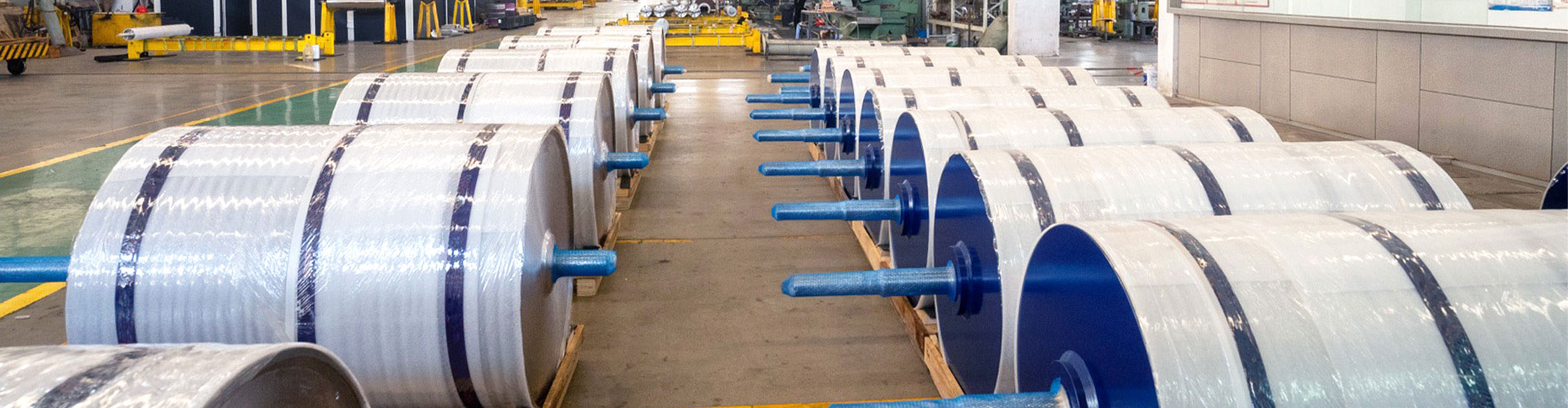
In modern industrial production, industrial rollers, as key transmission and processing components in continuous production equipment, have long undertaken important tasks such as material conveying, pressing, traction, coating, heating, cooling, and surface treatment.
However, in actual production, "rapid surface wear of industrial rollers" has been a persistent problem for many manufacturing companies. Many companies have found that newly installed industrial rollers perform well initially, but after several months or even less of continuous production, problems such as wear, scratches, pitting, changes in surface roughness, and localized peeling begin to appear on the roller surface. Some industrial rollers even experience unstable material conveying, product surface defects, and reduced production speed due to severe surface wear, ultimately forcing premature shutdown and replacement.
Rapid surface wear of industrial rollers not only means increased replacement costs, but more importantly, it affects the continuity of the entire production system.
Therefore, solving the problem of industrial roller surface wear cannot simply rely on replacing with more expensive industrial rollers; it requires analysis of the entire process from design, manufacturing, installation, and use. Professional industrial roller manufacturers need to provide tailored solutions based on customers' actual working conditions. Through material optimization, structural design, surface strengthening, and precision manufacturing, they can improve the service life of industrial rollers and help companies reduce long-term production costs.
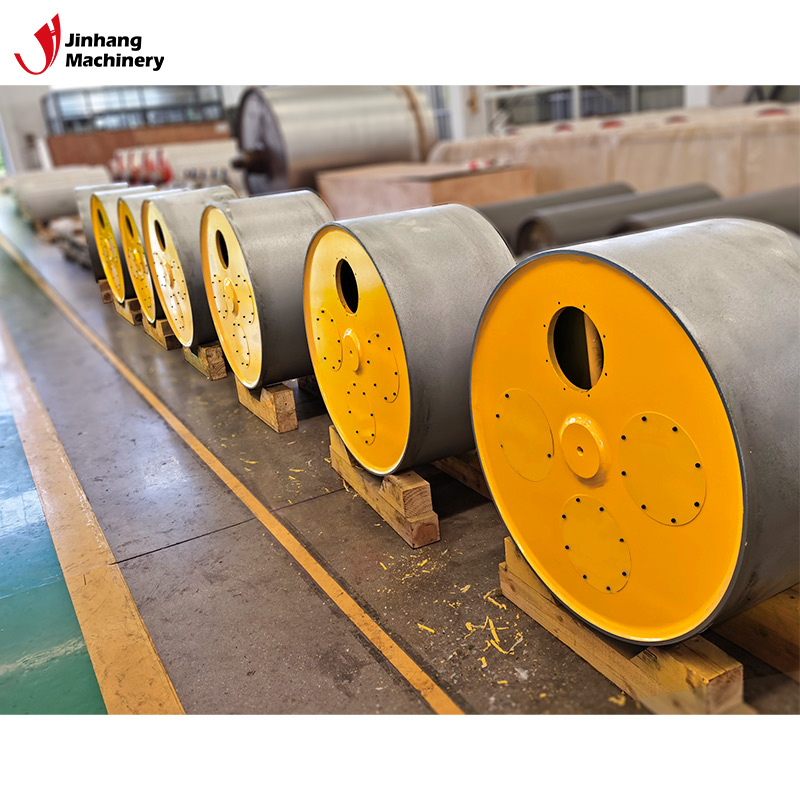
Why is surface wear of industrial rollers a common pain point for manufacturing companies?
The surface wear problem of industrial rollers has received widespread attention because industrial rollers are typically operated in high-load, continuous environments. Unlike ordinary mechanical parts, industrial rollers not only need to withstand mechanical loads but also face the combined effects of friction, high temperatures, chemical media, and high-speed rotation over long periods.
In traditional manufacturing companies, some enterprises often only focus on whether the dimensions match when purchasing industrial rollers, such as whether the diameter, length, and shaft diameter meet equipment requirements, while ignoring the actual working conditions of the industrial rollers. For example, an industrial roller of the same specifications may be able to be used stably for many years if installed on a low-speed conveyor; however, if installed on a high-speed coating production line, its wear rate may increase significantly due to the completely different operating speed, pressure, and material contact conditions.
Excessive surface wear of industrial rollers usually leads to the following problems:
First, product quality deteriorates. The surface of industrial rollers is the area that directly contacts the processed material. Once the surface wears down, the originally uniform contact pressure changes, leading to inconsistent product thickness and increased surface defects.
Secondly, equipment operating efficiency decreases. Worn industrial rollers may experience slippage, increased vibration, and material misalignment, preventing the equipment from maintaining optimal operating conditions.
Thirdly, maintenance costs increase. Frequent replacement of industrial rollers not only increases procurement costs but also causes production downtime, affecting order delivery.
Based on the operating experience of some industrial equipment, in high-speed continuous production environments, if the material and surface treatment of industrial rollers are not properly selected, their service life may only be 30% to 50% of the designed life. However, by optimizing materials, surface strengthening, and matching operating parameters, it is entirely possible to increase the service life of industrial rollers by more than 50%.
Therefore, for enterprises that rely on the stable operation of industrial rollers, analyzing the causes of wear and implementing scientific solutions is a crucial step in improving production efficiency.
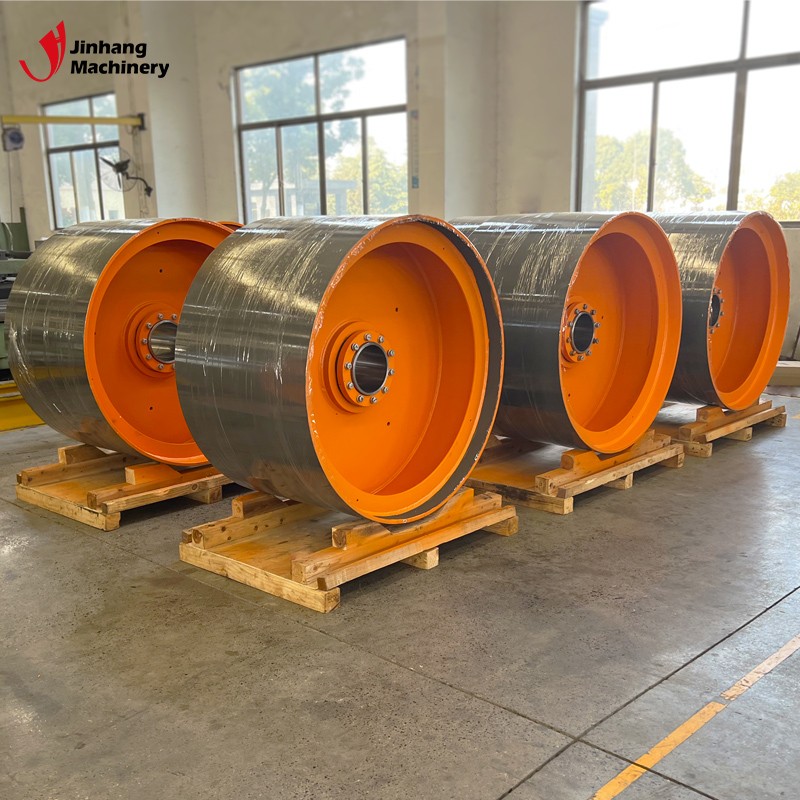
Analysis of the Main Causes of Rapid Surface Wear of Industrial Rollers
I. Inappropriate Selection of Industrial Roller Materials Leading to Insufficient Wear Resistance
The material of industrial rollers is the fundamental factor affecting the surface wear rate. Different production environments place varying demands on the performance of industrial roller materials. Even with high manufacturing precision, incorrect material selection can compromise long-term service life.
Common industrial roller materials include carbon steel, stainless steel, alloy steel, and surface-strengthened materials. Different materials possess different mechanical properties.
For example, carbon steel industrial rollers typically meet basic requirements in ordinary conveyor equipment. However, in high-friction, high-pressure environments, the surface of ordinary carbon steel may wear out rapidly. In industries such as steel processing and glass processing, where materials have higher hardness and industrial rollers are subjected to long-term impact and friction, higher-strength alloy materials or special surface treatments are required.
The selection of industrial roller materials needs to consider the following factors:
• Hardness of the contact material;
• Production speed;
• Operating pressure;
• Temperature environment;
• Presence of corrosive media;
• Continuous operating time.
For example, plastic film production lines typically prioritize surface smoothness and stability, while steel plate processing production lines prioritize wear resistance and impact resistance. If industrial roller manufacturers do not fully understand the application environment and produce using conventional materials, premature wear of the industrial rollers is likely to occur.
II. Insufficient Surface Treatment of Industrial Rollers Leads to Wear-Resistant Layer Failure
Besides the roller material, surface treatment is also a crucial factor affecting the service life of industrial rollers.
Many companies believe that industrial roller wear mainly depends on the substrate, but in reality, the surface area of the industrial roller is the first to be subjected to friction. Therefore, surface treatment technology is of great importance in improving wear resistance.
Common surface treatment methods for industrial rollers include:
1. Chrome Plating
Chrome-plated industrial rollers have high surface hardness and good corrosion resistance, making them suitable for precision machining equipment.
Their surface hardness can typically reach approximately 800HV to 1000HV, effectively improving wear resistance.
2. Tungsten Carbide Coating
Tungsten carbide-coated industrial rollers are currently a common choice for high wear-resistant applications.
Due to the extremely high hardness of tungsten carbide, it is suitable for:
• Steel processing;
• Glass processing;
• High-speed conveyor equipment;
• High-wear environments.
On some heavy-duty production lines, the service life of industrial rollers can be increased several times after adopting a tungsten carbide coating.
3. Rubber Coating Treatment
For production equipment requiring flexible contact, such as film, paper, and packaging equipment, industrial rollers typically employ a rubber-coated structure.
Rubber materials provide cushioning and friction, but improper selection of rubber hardness can accelerate wear.
For example, excessively low hardness can lead to surface deformation and increased wear, while excessively high hardness may reduce cushioning capacity.
Therefore, industrial roller surface treatment must be integrated with the production process, rather than simply choosing the most expensive option.
III. Excessive Working Pressure Leading to Fatigue Wear on Industrial Roller Surfaces
Industrial rollers are subjected to certain pressures during operation; for example, equipment such as pressing, traction, and coating applies continuous loads to the rollers.
If the pressure exceeds the industrial roller's design range, it can lead to:
• Surface indentation;
• Material fatigue;
• Coating peeling;
• Increased localized wear.
For example, in laminating equipment, if the pressure between two industrial rollers is set too high, the roller surface will be under excessive compression for a prolonged period, accelerating material fatigue.
Proper pressure control is a crucial measure to extend the lifespan of industrial rollers. Typically, pressure needs to be adjusted based on material thickness, hardness, and production speed, rather than simply increasing pressure to improve processing results.
High-speed operation leads to increased temperature rise and fatigue in industrial rollers.
With increasing automation in production, more and more equipment adopts high-speed continuous operation.
High-speed operation increases frictional heat on the surface of industrial rollers. If heat dissipation is insufficient, the roller temperature will continue to rise, leading to a decline in material properties.
For example:
• Rubber industrial rollers may harden;
• Coated industrial rollers may experience decreased adhesion;
• Metal industrial rollers may undergo thermal deformation.
Some high-speed production lines operate at speeds exceeding 300 meters per minute. Industrial rollers not only need high wear resistance but also good thermal stability.
Therefore, high-speed industrial rollers typically require:
• Dynamic balancing;
• Precision machining;
• Temperature control design.
IV. IV. Insufficient Installation Precision Leads to Abnormal Wear of Industrial Rollers
Many companies, when discovering wear on industrial rollers, only focus on the quality of the rollers themselves, neglecting the issue of equipment installation.
In fact, even if the industrial rollers are of excellent manufacturing quality, insufficient installation precision can still lead to abnormal wear.
Common installation problems include:
• Misalignment of bearings at both ends;
• Insufficient parallelism of industrial rollers;
• Abnormal bearing clearance;
• Uneven installation pressure.
These problems lead to uneven stress on the industrial rollers during operation, causing certain areas to bear greater friction for extended periods, resulting in rapid localized wear.
Therefore, precise calibration is required during industrial roller installation to ensure the equipment's centerline is aligned.
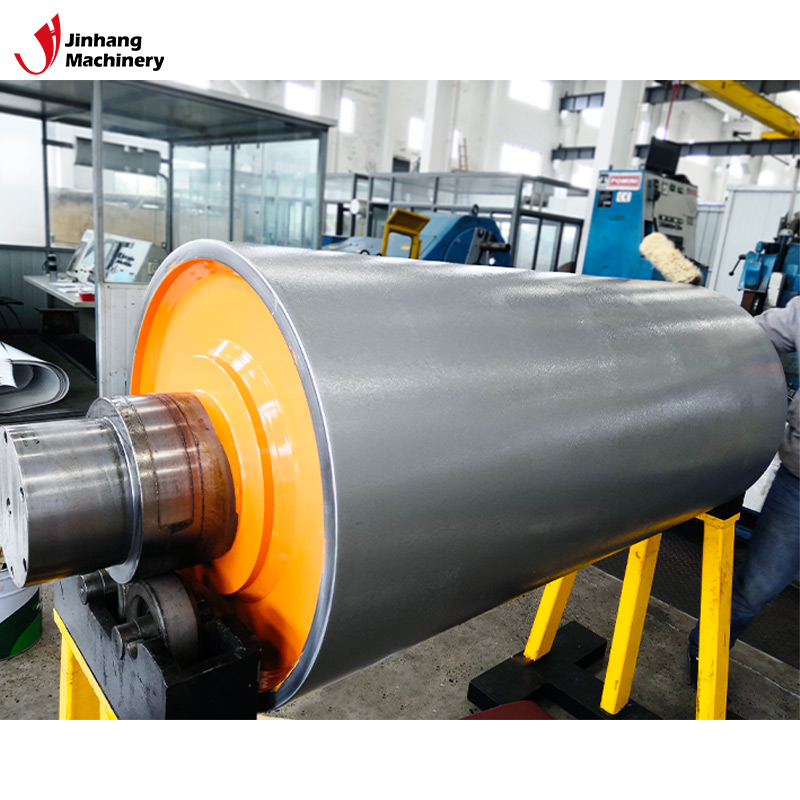
How to solve the problem of excessively rapid surface wear on industrial rollers?
I. Improving Wear Resistance by Selecting Appropriate Industrial Roller Materials
The first step in solving the problem of industrial roller wear is to select the correct material based on the actual working conditions.
If the production environment has high wear issues, you can choose:
• Alloy steel industrial rollers;
• Tungsten carbide coated industrial rollers;
• High-hardness surface-treated industrial rollers.
If the environment has corrosive issues, you can consider:
• Stainless steel industrial rollers;
• Anti-corrosion coated industrial rollers.
If flexible contact is required, you can choose:
• PU industrial rubber rollers;
• NBR industrial rubber rollers;
• EPDM industrial rubber rollers.
Professional industrial roller manufacturers typically offer material recommendations based on the customer's production environment, rather than directly recommending fixed products.
II. Extending Industrial Roller Life Through Advanced Surface Strengthening Technology
Surface strengthening is an effective way to improve the wear resistance of industrial rollers.
For example, tungsten carbide spraying can significantly increase surface hardness, making industrial rollers more suitable for high-speed, high-pressure environments.
Furthermore, precision grinding can reduce surface defects and improve material contact stability.
For high-precision production lines, the surface roughness of industrial rollers usually needs to be strictly controlled, for example, reaching a range of Ra 0.4μm to 3.2μm, with specific requirements depending on the application industry.
III. Reducing Mechanical Wear by Optimizing Industrial Roller Structural Design
Industrial roller wear is not only related to the surface but also to the overall structure.
Professional industrial roller manufacturers need to improve the rigidity and stability of industrial rollers through structural optimization.
For example:
• Increasing appropriate wall thickness;
• Optimizing shaft core design;
• Controlling weight distribution;
• Improving dynamic balance performance.
For high-speed industrial rollers, good dynamic balance can reduce vibration, thereby reducing bearing and roller surface wear.
IV. Establishing a Scientific Maintenance System to Reduce Abnormal Wear
Besides manufacturing quality, proper maintenance also affects the lifespan of industrial rollers.
Companies should regularly inspect:
• Roller surface condition;
• Surface wear;
• Temperature changes;
• Operating noise;
• Vibration.
If obvious scratches, cracks, or changes in hardness are found on the surface of the industrial roller, they should be addressed promptly.
Proper maintenance helps companies detect problems early and avoid production downtime caused by sudden roller failure.
Why does choosing a professional industrial roller manufacturer reduce long-term costs?
Many companies prioritize price when purchasing industrial rollers. However, the true cost of industrial rollers includes not only the purchase price but also the service life, maintenance costs, and downtime losses.
Low-priced industrial rollers with short service lives may require frequent replacements, ultimately resulting in higher overall costs.
Professional industrial roller manufacturers can provide industrial roller manufacturing solutions more suitable for customers' production lines through:
• Operating condition analysis;
• Material recommendation;
• Structural design;
• Precision machining;
• Surface treatment optimization.
Jinhang Machinery®, a professional industrial roller manufacturer in China, has long focused on the R&D and production of industrial rollers and is ISO9001 quality management system certified. Our company can design and manufacture industrial rollers with different structures and applications according to customer equipment requirements, including high-precision industrial rollers, heating rollers, cooling rollers, calendering rollers, and industrial rollers with special surface treatments.
In the industrial roller manufacturing process, Jinhang Machinery® emphasizes full-process control from design to production. Through reasonable material selection, precision machining technology, and strict quality testing, we help customers solve problems such as rapid wear, unstable operation, and high maintenance costs of industrial rollers.
For enterprises requiring long-term continuous production, choosing an experienced industrial roller manufacturer not only provides an industrial roller but also a customized industrial roller solution tailored to their actual production needs.
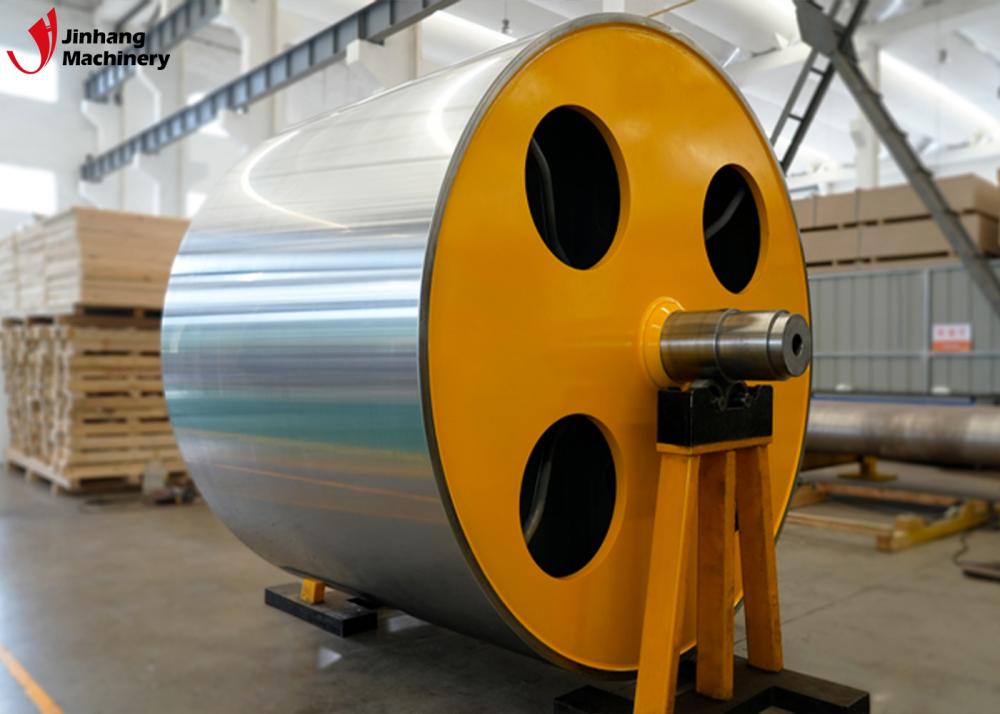
Common FAQs about Industrial Roller Surface Wear
Q1: What are the most common causes of rapid surface wear on industrial rollers?
The most common causes include inappropriate material selection, insufficient surface treatment, excessive working pressure, excessive operating speed, and insufficient installation accuracy. In reality, multiple factors usually contribute to the problem.
Q2: How to improve the wear resistance of industrial rollers?
The wear resistance of industrial rollers can be improved by selecting more suitable materials, adding surface strengthening treatments, optimizing structural design, and improving maintenance methods.
Q3: Which industries are suitable for tungsten carbide coated industrial rollers?
Tungsten carbide coated industrial rollers are suitable for high-wear environments, such as steel processing, glass manufacturing, high-speed conveyor equipment, and heavy industrial production lines.
Q4: How often should industrial rollers be replaced?
The service life of industrial rollers is closely related to the working environment. They may last for several years in normal environments, while high-speed, high-temperature, and high-load environments require regular inspections based on actual conditions.
Q5: Why do industrial rollers of the same specifications have such different service lives?
Because the service life of industrial rollers depends not only on size but also on materials, processing precision, surface treatment, installation method, and production environment.