
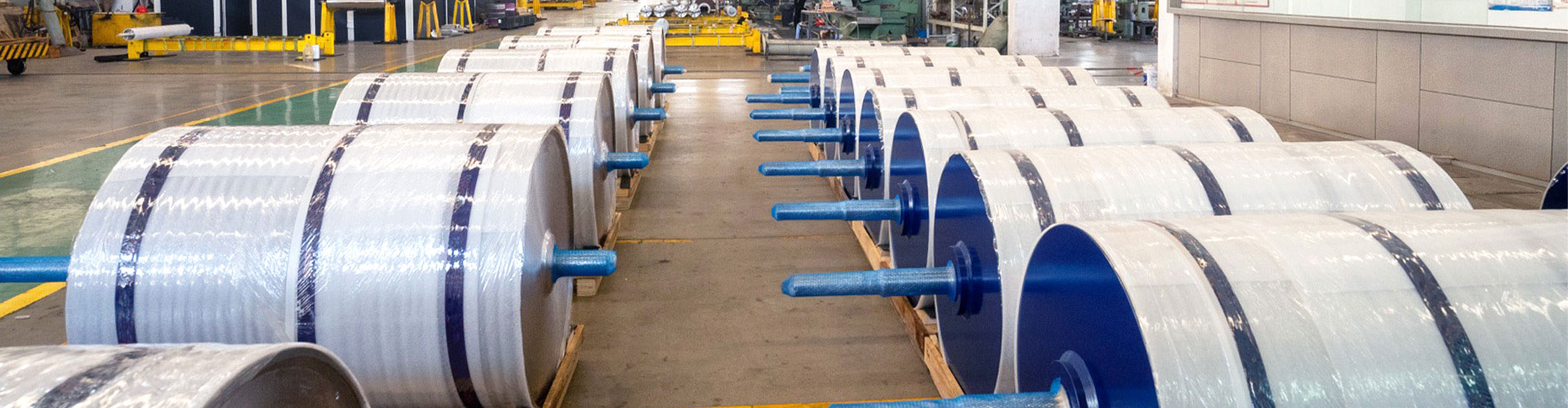
Rubber rollers in industrial production are essential yet often neglected components. If production is running smoothly and product quality remains the same, many companies tend to ignore the state of their industrial rubber rollers. However, production problems like irregular coating, misaligned materials, unstable conveying, material indentation imprints, or unexpected machine shutdowns usually lead companies to find out that the cause lies in an unnoticeable part of the equipment—the rubber roller. Particularly in sectors such as printing, film, packaging, furniture board manufacturers, coating/lamination, textile, leather and metal processing, industrial rubber rollers are under great strain by constant speed, pressure, heat, friction, and chemical changes. One small fault can over time cause a machine to stop working.
In the industry, surface cracking in industrial rubber rollers is one of the most common problems besides being a long-standing and frustrating maintenance problem for the manufacturers. When many industrial users find cracks on the rubber rollers, most of their first thoughts revolve around the quality of the rubber or the roller manufacturing process. However, in most instances rubber crack is a result of several variables including rubber material, operating conditions, equipment settings, handling/installation, and maintenance routines.
For instance, if industrial rubber roller, made of typical nitrile rubber is used in conjunction with very aggressive solvents and strong high-temperature coatings, even the best manufacturing will not be enough to prevent premature aging due to incompatibility of rubber compounds.
Similarly, a well-designed rubber roller might develop cracks over time if the unit gets run at higher pressures than the roller is rated for over long periods of time without maintenance.
On the other hand, even if a good standard rubber roller is used, without proper maintenance and cleaning, it is likely to be covered with adhesive materials, ink residues, and other chemical deposits leading to significant deterioration of rubber properties.
Therefore, cracking of rubber roller in terms of solving this problem cannot just be addressed as a matter of frequent replacement of these components. Rather, it is crucial to understand the underlying factors and, by selecting the best suited material, carefully designing the rubber roller, following correct usage, and implementing sound maintenance strategies, to prolong the life of rubber rollers. Normally industrial roller producers make special design of rubber rollers based on customer's machines operating speed, working pressure, materials that are in contact, the temperature environment, and customer’s production processes which in the end help the customer avoid any mistakes and losses caused by incorrect choice of material.
Why are industrial rubber rollers susceptible to cracking?
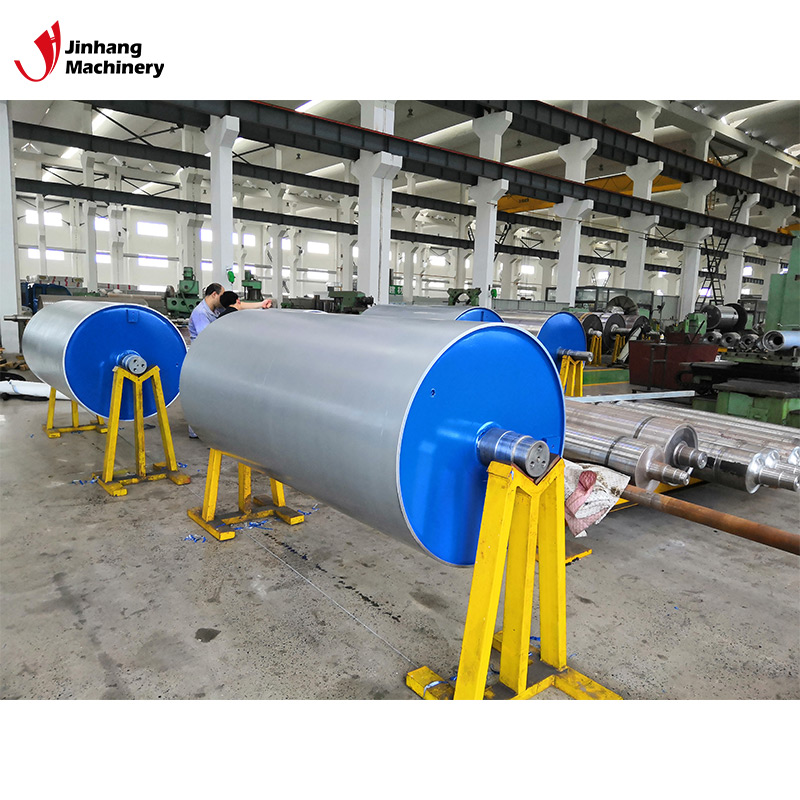
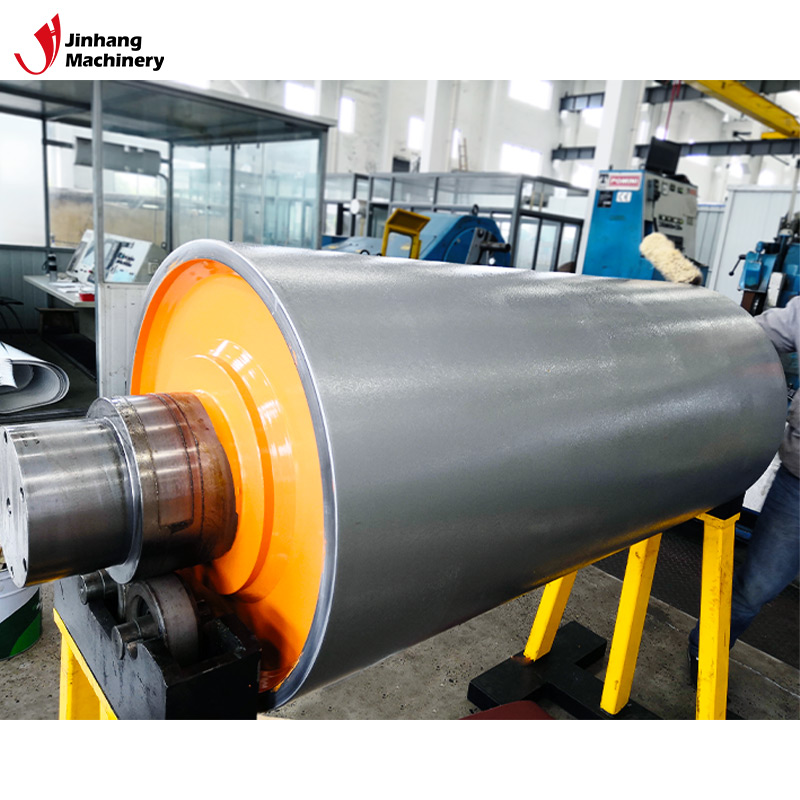
In general, industrial rubber rollers are made up of a metal core and a rubber surface layer.
The metal core of the roller is responsible for structural strength and the rubber surface layer serves different applications by directly contacting the product. Rubber is well renowned for its qualities of elasticity, cushioning, and high friction which effectively protect materials from damage and maintain even pressure distribution in the production process.
Yet rubber, being a high-molecular-weight elastic material is highly susceptible to alterations of its properties due to long-term mechanical stress exposure and changes of temperature, chemical exposure, and especially oxidation.
So to speak, an industrial rubber roller that operates continuously, undergoes a sequence of "stretching-compression-relaxing" which results in internal fatigue.
Once fatigue gets accumulated internally, it can be seen from the outside as cracks on the surface, brittle cracks, cracks running into each other, hardening, or even complete detachment of the rubber layer.
The cracking of industrial rubber rollers is mainly divided into different types:
The first is surface aging cracks, which are mostly fine and distributed in a mesh-like form. These cracks are essentially related to long-term exposure of the material to oxidation, ozone, high temperature, and uv rays.
The second one is mechanically induced fatigue cracking. It is a type of crack that usually develops under high-stress areas of the roller: the center, corners, or other spots that have a higher concentration of pressure. The third problem is cracking by chemical degradation. Often the main cause of such cracking would be a long period of exposure of the rollers to chemicals, such as inks, solvents, adhesives, and cleaning agents.
The fourth case is structural cracking, for example, due to weak adherence between the rubber and roller core, incorrect rubber thickness dimensioning, or processing defects that led to the creation of inhomogeneous materials inside.
In conclusion, to determine what the main cause of the cracking of an industrial rubber roller is, one can't look only at what is visible to the eye but has to do a thorough assessment combining data on the working environment and operation mode.
Analysis of the Main Causes of Cracking in Industrial Rubber Rollers
1. Unsuitable Rubber Material Selection for the Actual Working Environment
There are many types of industrial rubber roller materials, each with different performance characteristics. Many industrial rubber rollers crack prematurely not because of manufacturing quality issues, but because the material selection is incompatible with the usage environment.
Common industrial rubber roller materials currently include natural rubber (NR), nitrile rubber (NBR), chloroprene rubber (CR), ethylene propylene diene monomer (EPDM), silicone rubber, and fluororubber (FKM), etc.
Natural rubber has excellent elasticity and impact resistance, making it suitable for applications requiring flexible contact, such as general conveying, cushioning, and some pressing equipment. However, natural rubber has weak oil resistance; prolonged contact with oils, solvents, or special chemicals can easily lead to swelling, softening, and cracking.
Nitrile rubber is a commonly used material in industrial rubber rollers. It has good oil resistance and is frequently used in printing, coating, and machining equipment. However, if the operating temperature consistently exceeds the material's design range, aging will be accelerated.
EPDM rubber has good ozone resistance, aging resistance, and weather resistance, making it suitable for high-temperature or outdoor environments. While silicone rubber has excellent high-temperature resistance and can withstand high temperatures, its mechanical strength and tear resistance are relatively limited, making it unsuitable for all high-pressure applications.
Therefore, professional industrial roller manufacturers need to fully understand the customer's actual operating conditions when designing industrial rubber rollers, rather than simply manufacturing according to the dimensions provided by the customer. For example, the rubber formulation required for a 200mm diameter industrial rubber roller used in printing equipment may be completely different from that required for metal processing equipment.
2. High-Temperature Environments Cause Premature Aging of Industrial Rubber Rollers
Temperature is one of the important factors affecting the lifespan of industrial rubber rollers.
When rubber materials are exposed to high-temperature environments for extended periods, thermo-oxidative aging occurs. As temperatures rise, the rate of change in the internal chemical structure of rubber accelerates, causing the material to gradually lose elasticity and eventually harden and crack.
For example, ordinary industrial rubber rollers are typically suitable for working environments of around 60–80°C, while EPDM rubber rollers or silicone rubber rollers manufactured with special formulas can withstand even higher temperatures.
However, in actual production, many companies easily overlook one problem: the temperature displayed on the equipment does not necessarily equal the actual temperature of the industrial rubber roller.
For example, during high-speed rotation, the continuous friction between the industrial rubber roller and the material generates additional heat; if the production line speed and pressure are high, the roller surface temperature may be much higher than the equipment's set temperature.
After prolonged exposure to temperatures exceeding the material's tolerance range, industrial rubber rollers may experience:
loss of surface gloss;
increased hardness;
decreased elasticity;
formation of fine cracks;
and ultimately, significant cracking.
Therefore, in high-temperature production environments, selecting industrial rubber roller materials with better temperature resistance is crucial.
3. Excessive Working Pressure Leads to Rubber Fatigue Damage
Industrial rubber rollers need to withstand certain pressures during operation, such as coating pressure, pressing pressure, and conveying pressure.
Appropriate pressure ensures sufficient contact between the material and the roller surface, but if the pressure exceeds the design range of the industrial rubber roller, the rubber layer will be under excessive compression for a prolonged period.
Prolonged high-pressure operation will cause:
Increased internal stress in the rubber;
Molecular fatigue;
Decreased elastic recovery;
Surface cracking.
For example, an industrial rubber roller designed for a hardness of 60 Shore A, if operated for a long time in an environment exceeding its design pressure, may experience internal structural fatigue even without obvious surface damage.
Pressure control is particularly critical for the lifespan of industrial rubber rollers, especially in sheet metal laminating equipment, heavy-duty conveying equipment, and high-load production lines.
4. Chemical Media Corrosion Causes Cracking of Industrial Rubber Rollers
In modern industrial production processes, industrial rubber rollers frequently come into contact with various chemical substances, including:
Inks;
Coatings;
Adhesives;
Cleaning fluids;
Organic solvents.
Different rubber materials have different tolerances to these chemical substances.
For example, in the printing industry, if industrial rubber rollers are exposed to inks containing strong solvents for extended periods without selecting materials with good solvent resistance, the rubber may swell. When the solvent evaporates, the rubber shrinks again. This repeated change causes internal structural damage, eventually leading to cracks.
In the furniture coating industry, industrial rubber rollers may be in prolonged contact with various coatings. If the correct rubber type is not selected, surface softening, adhesion, and cracking can easily occur.
Therefore, when purchasing industrial rubber rollers, companies need to specify the actual contact medium to the manufacturer in advance to ensure appropriate material selection.
5. Installation Errors and Equipment Operation Problems Leading to Localized Cracking
Besides material and environmental factors, equipment installation problems are also a significant cause of cracking in industrial rubber rollers.
For example: Roller shafts not parallel; Bearing misalignment; Uneven pressure at both ends; Equipment centerline deviation.
These problems all cause uneven stress on the industrial rubber roller.
If one side consistently bears greater pressure, the rubber layer in that area will experience abnormal wear, eventually forming localized cracks.
Therefore, when installing industrial rubber rollers, it is necessary to check the equipment calibration and ensure that the roller's rotation center is aligned with the production line.
How to establish the exact root cause of cracks in rubber rollers for industry?
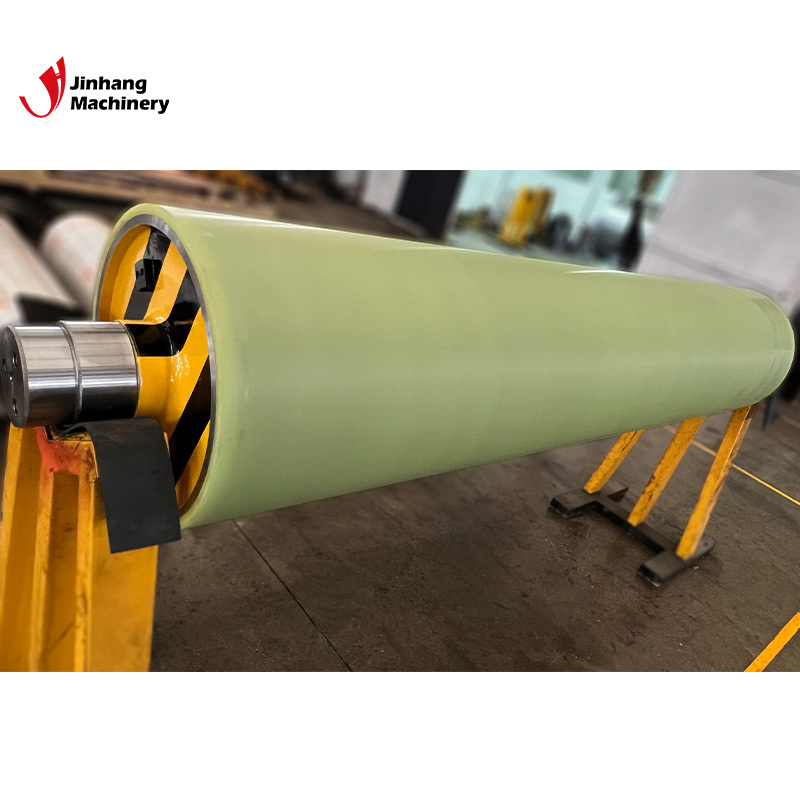
The nature of cracks generally reveals various issues.
The fact that many tiny, almost like a net of cracks appear on the surface of a rubber roller used industrially can mostly imply that the rubber is aging. Usually, this will happen due to high temperature, ozone, or long-lasting storage/keeping under the sun.
If the cracks occur only in one section of the roller face, checking to see if the equipment is causing an uneven pressure is generally necessary.
Long, parallel, running cracks are usually related to installation stress or the rubber layer's structure.
If the rubber layer is peeling, the cause may be insufficient adhesion of the bonding agents or that the chemical attack over a long period has weakened the connection between the roller core and the rubber cover.
Good quality rubber roller suppliers in their factories are usually able to find the reason for cracks just by crack pattern, hardness testing, and environment inspection rather than merely advising the replacement of product.
How to effectively maintain industrial rubber rollers and extend their service life?
1. Select the correct industrial rubber roller based on the application environment
The first step in maintaining industrial rubber rollers is actually completed during the procurement stage.
Companies should provide industrial roller manufacturers with detailed information, including:
Equipment model;
Operating speed;
Operating temperature;
Contact materials;
Pressure level;
Chemical environment.
Only after this information is clear can the appropriate rubber material and hardness be selected.
For example: The printing industry typically focuses on ink adaptability and elasticity recovery; the coating industry focuses on surface uniformity; the furniture industry focuses on chemical resistance; and the high-speed conveyor industry focuses on abrasion resistance.
2. Controlling Equipment Operating Parameters
Industrial rubber rollers have designed operating ranges, and companies should avoid prolonged overloading.
During daily production, it is necessary to monitor:
Roller surface temperature changes;
Abnormal vibration;
Pressure changes;
Surface wear.
If abnormal operating sounds are detected or product quality suddenly declines, the condition of the industrial rubber rollers should be checked promptly.
3. Properly Cleaning Industrial Rubber Rollers
After prolonged use, industrial rubber rollers easily accumulate contaminants such as ink, glue, and dust on their surface.
These contaminants not only affect product quality but may also accelerate rubber aging.
However, strong solvents should not be used indiscriminately for cleaning, as some chemicals may damage the rubber surface.
The correct approach is to select an appropriate cleaning method based on the material type of the industrial rubber roller.
4. Regularly Testing Industrial Rubber Roller Performance
Companies can establish a regular inspection system.
For example:
Check for surface cracks;
Measure changes in rubber hardness;
Observe the degree of wear;
Check the roller's operating condition.
If a significant increase in the hardness of the industrial rubber roller is found, it usually means the material has begun to age and requires early maintenance.
How do professional industrial roller manufacturers get industrial rubber roller cracking under control?
First and foremost, professional manufacturer is to replace the defective product only on the problem of cracking of industrial rubber roller but also to offer the entire solution.
As an example Jinhang Machinery® during the design stage of the rollers does a wide spectrum investigation based on the customer's real application conditions and these are the factors they usually take into consideration: rubber material selection, the hardness of the roller, rubber layer thickness, the structure of the roller shaft (whether it is solid, hollow or composite) and even surface treatments requirements.
High-speed running devices require rubber rolls to be both wear-resistant and dimensionally stable; in the case of coating production lines, uniformity and resistance to chemical of the rubber roll surface are the main issues; when it is to do with printing devices the essential thing is elasticity and performance for transferring the ink.
Customized design of the machine roller will definitely reduce the possibility that an industrial rubber roller cracks early; which in turn will make the production equipment more reliable.
FAQ: Common Problems with Industrial Rubber Roller Cracking
Q1: Can an industrial rubber roller continue to be used after cracks appear?
It depends on the severity of the crack. If the cracks are only minor surface aging cracks, continued observation is sufficient. However, if the cracks have penetrated the rubber layer or show signs of delamination, timely repair or replacement is recommended to avoid impacting production quality.
Q2: Why do industrial rubber rollers crack after only a few months of use?
If industrial rubber rollers crack within a short period, it's usually necessary to check if the material is suitable for the working environment and to confirm whether there are issues such as excessive temperature, pressure, chemical corrosion, or equipment installation problems.
Q3: How to improve the service life of industrial rubber rollers?
Improving the service life of industrial rubber rollers requires attention to multiple aspects, including material selection, equipment adjustment, proper cleaning, and regular maintenance. Choosing industrial rubber rollers suitable for the operating conditions is the most crucial step.
Q4: Does higher hardness in industrial rubber rollers mean greater durability?
No. Hardness is only one performance indicator of industrial rubber rollers. Excessive hardness may reduce elasticity and contact performance; therefore, an appropriate hardness should be selected based on the actual application.
Q5: Should cracked industrial rubber rollers be repaired or replaced?
If it is only a minor surface damage, you can consider re-grinding or repairing it; if the rubber layer has been severely aged, peeled off, or the internal structure is damaged, it is recommended to remanufacture the industrial rubber roller.