
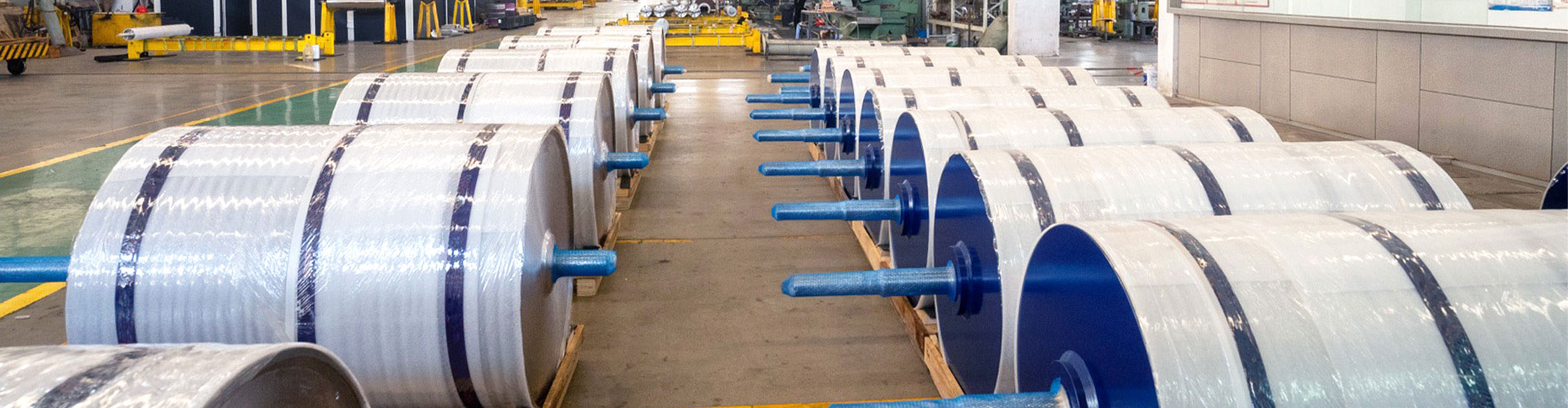
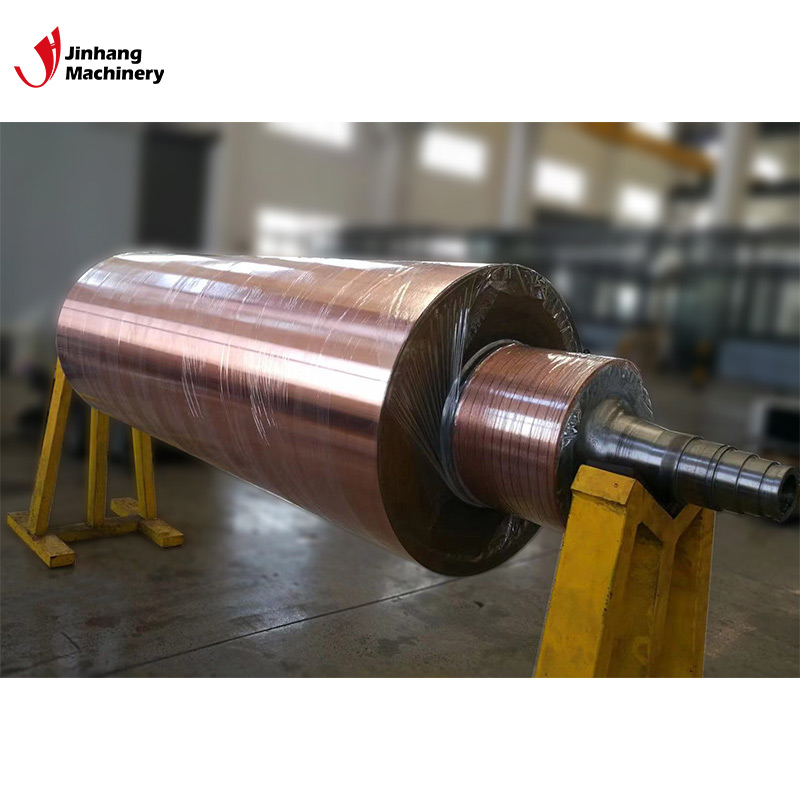
Industrial mirror rollers are considered key components in a vast number of high-precision industrial manufacturing processes, primarily due to their influence on the surface quality of the end product. These rollers contribute significantly not only in manufacturing materials like plastic films or cast films where the rollers are used for hot pressing, flattening, and leveling the material to an even texture but also in composite material manufacturing, leather embossing, and coating applications. Moreover, in printing and packaging operations, optical film production, furniture panel surface treatment, etc., mirror roller technology is of great importance.
Negative changes in roller finish due to roller hazing are a commonly seen phenomenon when companies switch from one process to another after a few months or even years of production. In this case, roller surfaces, which were originally mirror polished to very high standards, get a bit of 'haze' or 'whitish' in appearance over time, as if the mirror had gone slightly out of balance. The roller manufacturers have been accused of poor quality, especially of poor polishing and a low surface hardness of rollers, but the reality is more or less that a hazy roller surface cannot just be explained as a manufacturer's fault. There are a variety of causes leading directly to the appearance on the roller of the so-called haze.
Making the surface clean and smooth by machining, selecting of suitable material, maintaining surface roughness, the working temperature, the system of cooling, getting rid of all possible contamination from factory production substances, proper ways of cleaning, and finally a correct system of maintenance are a combination of factors that lead to the appearance of haziness of the roller.
It is the quality of the product that is primarily at stake, but manufacturers have an equally important consideration, and that is appearance. An instance of how appearance affects quality is in the optical films production business: if the roller surface even slightly increases, it can lead to the reduction of film light transmitting. If a roller surface gets changed in plastic films production it may cause an increase in product haze. Surface flatness and adhesion quality are two things that may suffer if the surface of rollers used in composite manufacture is not perfect.
In other words, there is much to the fixing of the roller haze other than just re-polishing or replacement of roller; instead of focusing solely on such solutions, a proper analytical method of investigating the problem has to be employed that first gets to the underlying cause and subsequently develops thermal, mechanical, chemical, and material-contact processes in the optimal condition. This article discusses in detail: - how the industrial mirror-finish rollers get a look of "a hazy" or "a foggy" finish - what techniques can be used if the cause has been identified in different ways - how through process optimization, mirror finish can be restored, and as a result, it offers more systematic solutions on how to deal with the problem to industrial customers.
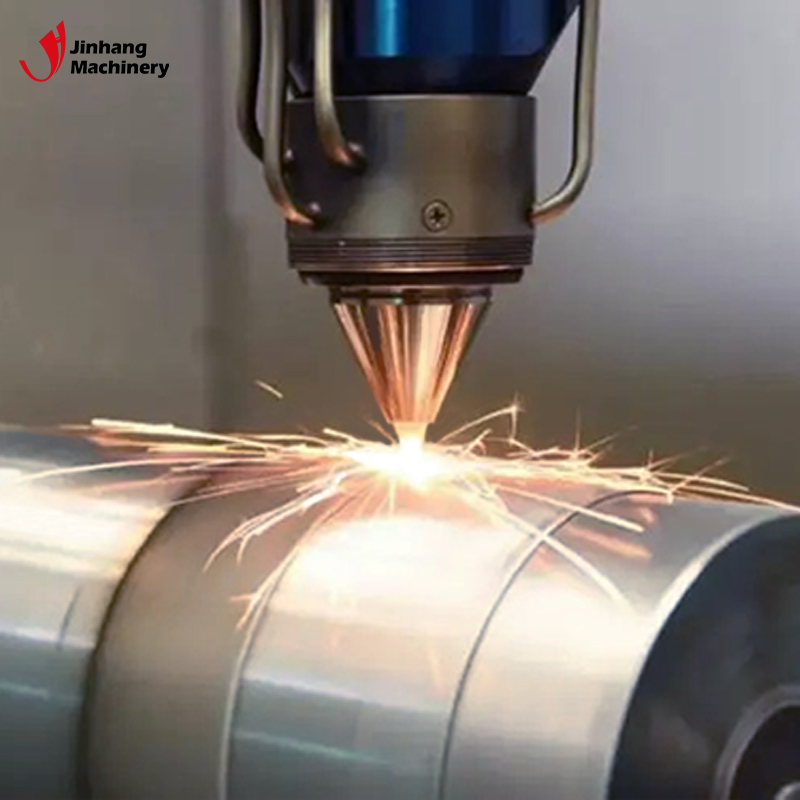
What is hazing on industrial mirror-finish rollers, and why is this issue attracting increasing attention?
Industrial mirror-finish rollers are rollers precision-machined to achieve extremely low surface roughness and high reflectivity. Depending on the application, surface roughness requirements typically range from Ra 0.05 μm to 0.2 μm or lower; some optical-grade applications even demand surface control at the nanometer level.
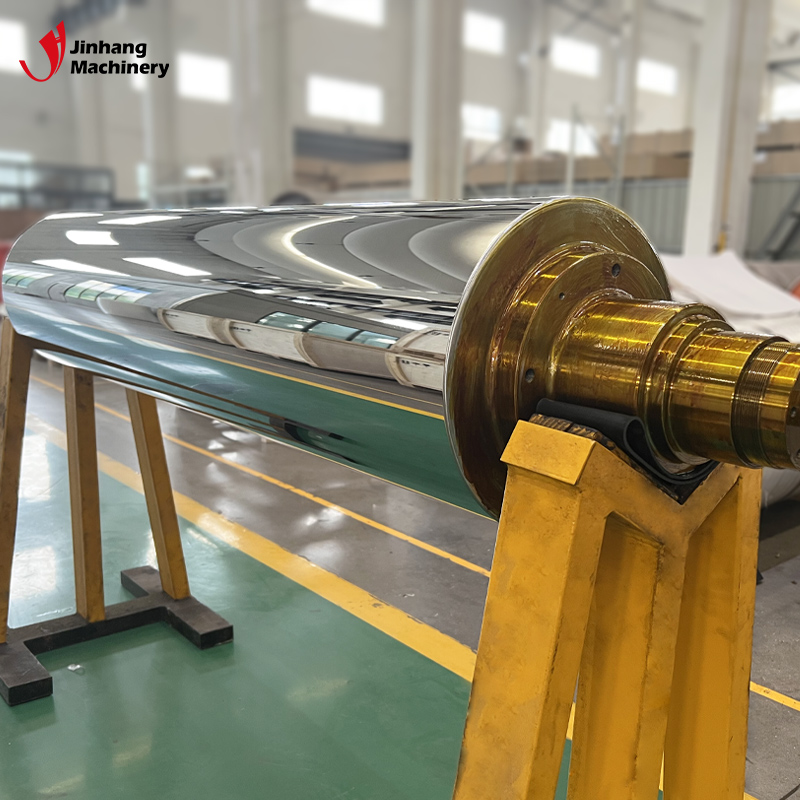
Ideally, the surface of an industrial mirror-finish roller should exhibit:
•A high-brightness, metallic mirror finish;
•Uniform reflectivity;
•Stable surface roughness;
•High dimensional accuracy;
•Surface stability during long-term operation.
However, in actual operation, industrial mirror-finish rollers may exhibit the following types of hazing:
The first type is general loss of luster (uniform hazing). This manifests as a drop in brightness across the entire roller surface, resembling a thin, grayish film. This condition is usually associated with material residue, oxidation, or long-term friction.
The second type is localized hazing. This appears as color variations or inconsistent brightness in specific areas of the roller surface, often caused by uneven heat distribution or abnormal localized pressure.
The third type is scattering-induced hazing caused by micro-scratches. While it looks like hazing to the naked eye, it is actually caused by light scattering from a multitude of tiny scratches.
The fourth type is chemically induced hazing. The roller surface may show signs of mild corrosion, pitting, or alterations in surface structure.
The common characteristic of these issues is that the roller's original, orderly optical reflection state is disrupted, causing light to scatter and creating the visual appearance of a "hazy" surface.
As modern industry moves toward higher speeds and greater precision—with faster production rates and thinner materials—the demands for surface stability in industrial mirror-finish rollers have intensified. For instance, some high-speed film production lines operate at speeds of 100–500 m/min; if the surface condition of the mirror-finish roller changes, it can rapidly compromise the quality of a large volume of products. Consequently, maintaining the long-term mirror finish of industrial mirror rollers has become a critical concern for many manufacturing enterprises.
What are the main reasons for hazing on industrial mirror rollers?
Besides an isolated factor, haze formation on mirror rollers at industrial scale rarely happens because it is the combined effect of various factors together. Production knowledge suggests these can generally be divided into five categories: mechanics, heat, substances, chemistry and service-related factors.
1. Surface roughness fluctuations result in fading
Surface roughness is one of the key qualities of mirror rollers intended for use in industry.
In most cases:
Industrial rollers as standard can have surface roughness (Ra) up to 0.8 μm;
Very accurately industrial mirror rollers usually require Ra value 0.1 μm and below;
Affordable mirror rollers, optical-grade, could be required surface roughness (Ra) 0.05 μm or even less.
In the long run, the roller surface undergoes changes as a consequence of the repeated contact and friction between the material being processed and the roller.
Typically:
• Hard inclusions in plastic resins;
• Filler particulates in coatings;
• Dust particulates;
• Metal filings.
This tiny particles at such high pressures may scratch the roller surface.
Although such marks may not be noticeable to eyes, their presence changes the direction of light and reduces mirror finish until a cloudy look takes the place.
Thus, most occurrences of hazing on industrial mirror rollers are the result of degradation at a microscale level of the surface quality.
Why does contamination from production materials cause hazing on industrial mirror rollers?
In many cases, the industrial mirror roller itself shows no obvious damage, yet hazing appears after a period of operation. This phenomenon is often linked to material residues.
For instance, during plastic film production, substances within the material—such as:
•Plasticizers;
•Additives;
•Low-molecular-weight substances;
•Adhesive residues.
—may leach out at high temperatures and gradually adhere to the surface of the industrial mirror roller.
These residues form an extremely thin coating that alters the optical reflection characteristics of the roller surface.
This condition typically manifests in the following ways:
•The finish is restored briefly after a shutdown and cleaning;
•The effect becomes more pronounced at higher processing temperatures;
•The issue worsens during high-speed production. For instance, within the operating temperature range of 120°C to 180°C, certain plastic materials are more prone to releasing volatile substances. If the surface temperature of the industrial mirror-finish roller is high, these substances can easily form deposits.
The key to resolving such issues lies not in refinishing the roller surface, but in improving:
•material formulations;
•production temperatures;
•cleaning cycles;
•anti-fouling measures for the roller surface.
How does temperature fluctuation impact industrial roller mirror finish?
Production processes usually run heating and cooling operations which is why mirror finish industrial rollers are frequently the main components. Temperature control is therefore an essential factor.
It might come as a surprise that most companies are aware of what kind of damage temperature changes do to the material but are not aware that it could damage the roller as well.
As a simple illustration, take a 3,000mm-long industrial mirror-finished roller. If, for example, the temperature is higher at the center and cooler at the ends, then:
the thermal expansion is inhomogeneous;
micro-deformations are appearing even on the roller’s surface;
pressure exerted against the product also varies.
Eventually, this may cause localized changes on the roller's surface due to the fact that temperature remains unstable over time.
Besides the previously mentioned consequences, abnormally high temperature levels may lead to, among others:
faster and more frequent material adhesion;
acceleration of some reactions;
a rise in the number
The latter are among many other factors that contribute to the speed of such processes and the occurrence at one and the same time of a great number of chemical reactions. For instance, when a mirror finish stainless steel roller is placed in a high temperature-high humidity chamber and the coolant is not working properly, you may witness a breakdown of the surface oxide layer, hence the shiny appearance will be lost.
Industrial high-quality mirror finish rollers need:
well-calibrated temperature control equipment;
dependable oil or water circulation systems;
consistent internal flow channels designs.
The most accurate temperature control is sometimes essential, especially when precision is required to be within ±1°C to ±2°C; otherwisefinal surface qualitymay be degraded.
Can the materials and surface treatments of industrial mirror-finish rollers be responsible for the formation of haze?
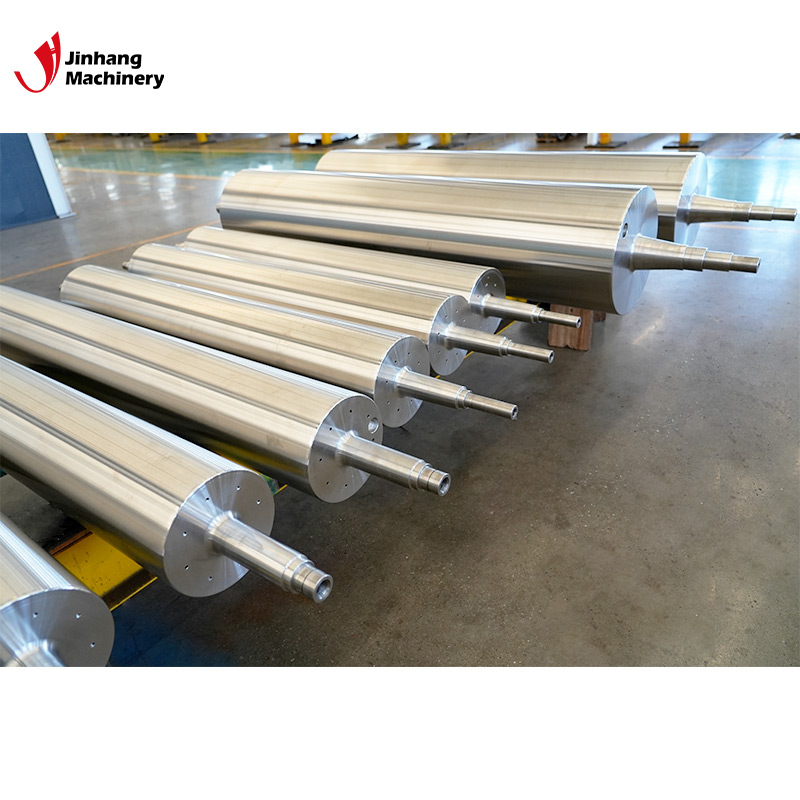
The kind of material industrial mirror finish roller are mostly made of influences the roller’s durability and surface changes over time.
Industrial mirror-finish roller are usually made of the following types of material:
alloy steel;
stainless steel;
rollers made with the coating of hard chrome;
rollers covered by a special type of alloy coating.
Different types of material come with their own pros and cons.
Take the case of a mirrored stainless steel production roller, the roller has high corrosion resistance and it will perform very well in humid environments or chemical ones at most.
Another example: the kind of surface treatment a roller is subjected to, e.g. hard chrome plating, makes it possible for the roller surface to withstand the pressure of scratches and resist wear. Normally, the coating hardness of such a high-quality hard chrome plater ranges from 800 to 1000 HV.
On the other hand, microcracks or insufficient adhesion of the coat which is a consequence of the machining may cause gradual deterioration of the surface and therefore loss of mirror properties.
Rollers with mirror finishes, however, besides high-quality polishing, should also undergo appropriate selection processes of the materials and treatments of the surface.
Why do incorrect cleaning methods damage industrial mirror-finish rollers?
Improper cleaning is a common issue during the maintenance of industrial mirror-finish rollers.
To quickly remove residues, many companies use:
•Metal scrapers;
•Coarse abrasive cloth;
•Highly corrosive cleaning agents.
While effective in the short term, these methods can easily damage the roller's mirror-finish surface.
For rollers with a surface roughness (Ra) of less than 0.1 μm, even minute scratches can compromise the mirror-like quality.
Maintenance methods should be selected based on the type of contamination:
For oily residues, use a suitable solvent;
For resin residues, employ specialized softening treatments;
For dust contamination, avoid abrasion from hard particles.
The core principle of maintaining industrial mirror-finish rollers is to remove contaminants without compromising surface precision.
How can the issue of hazing on industrial mirror-finish rollers be systematically resolved?
Addressing hazing requires establishing a comprehensive analysis process.
First, identify the type of hazing.
If brightness is restored after cleaning, the issue is likely contamination.
If cleaning is ineffective but brightness returns after re-polishing, the issue may be a change in surface roughness.
If the problem persists in specific areas, inspect the following:
•Temperature uniformity;
•Pressure distribution;
•Roller body roundness.
Next, examine production conditions.
These include:
•Operating temperature;
•Running speed;
•Material composition;
•Cleaning cycles;
•Environmental dust levels.
Finally, optimize equipment maintenance.
For example:
Regularly measure roller surface roughness;
Control cleaning frequency;
Prevent contact with hard objects;
Inspect the thermal circulation system.
Only through these measures can the service life of industrial mirror-finish rollers be truly extended.
How can we increase the longevity and stability of mirrors on industrial rollers?
For the industrially produced goods, the main principle is prevention. You are better off preventing damage than just putting bandages on the roller if it starts looking blurred.
First things first when purchasing the industrial roller mirror finish; don’t get carried away by the price and forget about other essential qualities such as:
• The roller body material;
• Precision of machining;
• Degree of surface roughness;
• Dynamic balance ability;
• Heat treatment steps.
Second, the roller is to be chosen according to the production environment that is going to be used for example:
High-temperature plastic processing requires the heat resistance and anti-stick property;
Precision film making is concerned with surface roughness levels;
Corrosive environments need material corrosion resistance.
On the other hand, the equipment maintenance standard should be clearly developed;
Among these maintenance procedures there is:
• The roller surface status being checked frequently;
• Measuring operational temperatures;
• Quality change of products being a reason for product investigation;
• Quick removal of contamination that is the source of the problem.
Industrial mirror-finish rollers are not just a piece of equipment. They are an important piece of the puzzle, as a whole, that affects the stability of the production line.
FAQ: Common Questions About Hazy Surfaces on Industrial Mirror-Finish Rollers
1. Why do industrial mirror-finish rollers become hazy after a period of use?
Primary causes include surface contamination, micro-scratches, temperature anomalies, material residue, and changes in surface roughness. The specific cause must be determined based on the situation; it should not be automatically assumed to be a roller quality issue.
2. Can a hazy surface on an industrial mirror-finish roller be restored by polishing?
In some cases, yes. If the issue is merely minor surface contamination or slight changes in roughness, professional cleaning and precision polishing can restore the surface. However, if deep scratches or surface damage have occurred, re-machining may be required.
3. Is lower surface roughness always better for industrial mirror-finish rollers?
Not necessarily. Different applications require different roughness levels. For instance, optical film production might require an Ra value below 0.05μm, whereas standard calendering applications may not require such high precision. The key is meeting the specific process requirements.
4. Can excessive temperatures cause a hazy surface on industrial mirror-finish rollers?
Yes. Excessive temperatures can lead to material precipitation, surface oxidation, or the adhesion of contaminants, all of which compromise the mirror-finish quality. Therefore, maintaining stable temperature control is essential.
5. How can the service life of industrial mirror-finish rollers be extended?
Select suitable materials and manufacturing processes, and ensure proper temperature management, correct cleaning and maintenance, and regular inspections. Avoiding impacts from hard objects and improper cleaning methods is crucial for maintaining the mirror-like finish.
6. What should be checked first if an industrial mirror roller develops a hazy or matte appearance?
It is recommended to first inspect the roller surface for contamination, then measure any changes in surface roughness, while also analyzing production temperatures, material residues, and pressure conditions. A systematic investigation will help pinpoint the actual cause more accurately.