Industry News

  • What is Industrial Nitrile Rubber Roller? How to tell if the rubber is nitrile rubber?
    21
    2025-03
    When burning, nitrile rubber will produce a very unique and pungent smell, which usually makes workers on the scene feel uncomfortable. Because nitrile rubber contains acrylonitrile, its combustion products include harmful substances such as hydrogen cyanide, so smelling a smell similar to "bitter almonds" or "burning plastic" is a significant sign to identify nitrile rubber.

  • Why does the glass manufacturing industry need a water quench roller?
    20
    2025-03
    The rapid cooling characteristics of the water quench roller enable it to remove heat from the glass surface in a very short time, ensuring that the glass maintains a uniform temperature gradient during the cooling process and avoiding material stress caused by excessive temperature differences.
  • What is Chrome Anilox Roller?
    19
    2025-03
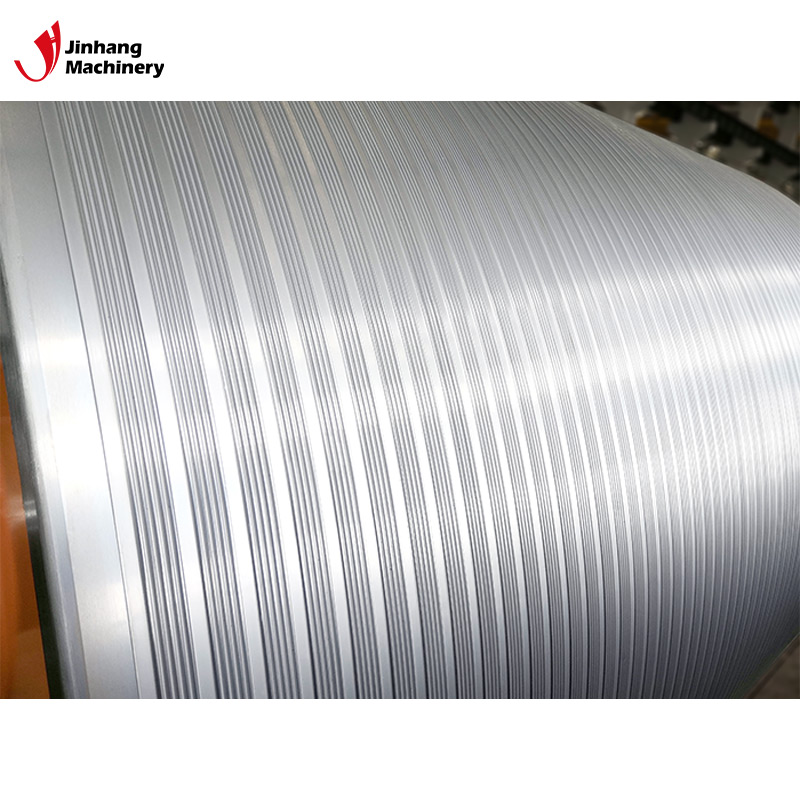
    Chrome Anilox Roller uses a chrome plating process to form a very hard chrome layer on the surface of the roller, and on this basis, a regular mesh groove structure is formed by engraving or etching. The main purpose of these mesh structures is to carry and transfer precise amounts of liquids such as inks, coatings or adhesives during the printing or coating process.
  • What can scratch an industrial tungsten carbide coated roller?
    18
    2025-03
    Due to the Mohs hardness of diamonds being 10, which is a cut higher than tungsten carbide, diamond-like materials can easily scratch tungsten carbide coatings. In some high-precision manufacturing processes, diamond tools are used as tools for cutting and processing materials.
  • Why choose electroplating to treat the surface of industrial water quench roller?
    17
    2025-03
    Improve wear resistance Industrial water quench rollers usually operate under high load and high speed working conditions, and the surface often wears. Electroplating, especially hard chrome plating, can significantly improve the wear resistance of the roller.
  • Industrial Chrome Roller Vs. Non-chrome Roller: What are the Benefits?
    14
    2025-03
    Industrial chrome roller refers to roller equipment that is plated with a uniform layer of chrome on the surface of the roller body through an electroplating process. The thickness of this chrome coating is generally between a few microns and hundreds of microns, depending on the specific application requirements. Non-chrome rollers are roller equipment that has not been electroplated with chrome.
  • What are the cell types of ceramic anilox roller?
    13
    2025-03
    The main types of cells of ceramic anilox rollers: 1. Diamond Pattern 2. Hexagonal Pattern 3. Square Pattern 4. Cellular Pattern 5. Pyramidal Pattern 6. Grooved Pattern
  • How does an industrial cooling roller work?
    12
    2025-03
    The working principle of industrial cooling rollers is mainly to transfer heat from the processed material to the surface of the industrial cooling roller, and further to the internal cooling medium, such as water or coolant. The whole process follows the principles of heat transfer by conduction and convection to maintain the appropriate temperature of the processed material.
  • How to detect the porosity and thickness of ceramic anilox roller?
    11
    2025-03
    Gas adsorption method is a commonly used method for detecting the porosity of ceramic anilox rollers, especially for porosity analysis of porous materials. By measuring the amount of gas (such as nitrogen) adsorbed on the surface of ceramic anilox roller, its porosity can be calculated.
  • What is the efficient cavity structure of ceramic anilox roller?
    10
    2025-03
    The "efficient cavity structure" of the ceramic anilox roller refers to the design of the roller surface mesh and the special design of the pore structure. By optimizing the shape, arrangement and distribution of the mesh, the ink transfer efficiency can be greatly improved, and unnecessary ink waste can be reduced.
  • What is the chrome plating standard for chrome plated rollers?
    07
    2025-03
    For chrome plated rollers for general industrial use, the thickness of the chrome plating layer is usually required to be between 20-50 microns. This thickness is sufficient to provide good wear resistance and corrosion resistance and is suitable for most conventional processes.
  • What is the best industrial roller material for chrome plating?
    06
    2025-03
    Stainless steel has become the preferred substrate for many high-end industrial rollers due to its excellent corrosion resistance and good mechanical properties. The main alloying element in stainless steel is chromium, which generally ranges from 10.5% to 30%, which makes stainless steel have excellent oxidation resistance and corrosion resistance.

40px

80px

80px

80px

Get the latest price? We will reply as soon as possible (within 12 hours)

40px

40px

40px

40px