
Which Is Better, NBR or EPDM Rubber Rollers?
In industrial production, rubber rollers are indispensable core components of mechanical equipment, undertaking important functions such as conveying, pressing, traction, support, coating, and tension control. Among them, NBR rubber rollers (nitrile butadiene rubber rollers) and EPDM rubber rollers (ethylene propylene diene monomer rubber rollers) are two widely used materials, each with specific properties and applications. Therefore, many users ask: "Which is better, NBR or EPDM rubber rollers?"
To answer this question, a simple "which is better" answer is not possible, because different rubber materials are designed for different operating environments. The real key is: what properties are required for the specific working conditions? Which rubber roller is more suitable for your application?
This blog will provide an in-depth and comprehensive comparison of NBR and EPDM rubber rollers to help you clarify which rubber roller to choose for different operating environments.
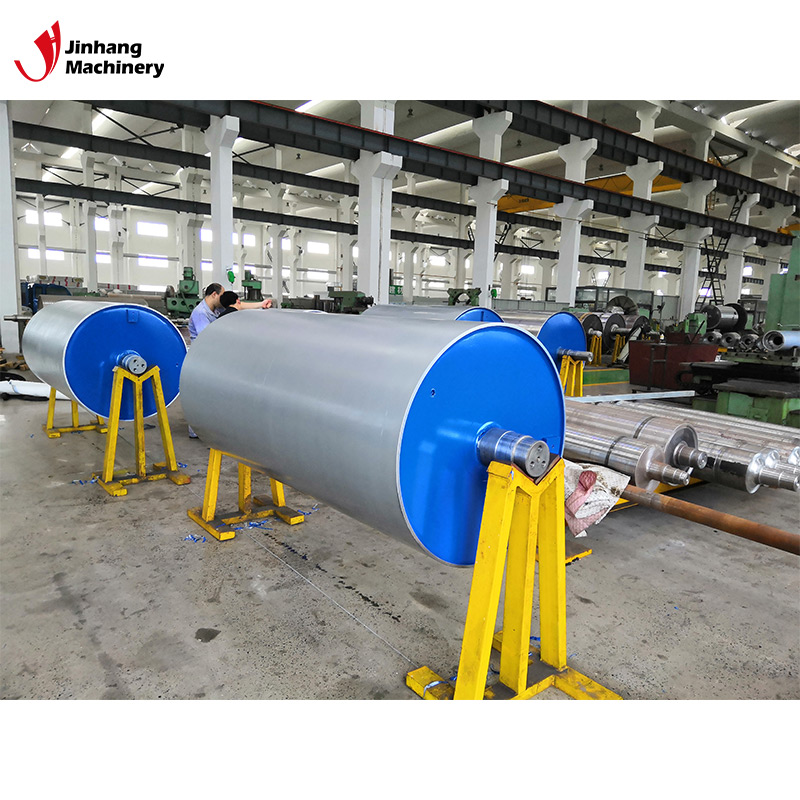
What are the fundamental differences in material properties between NBR and EPDM rubber rollers?
NBR (Nitrile Butadiene Rubber) and EPDM (Ethylene Propylene Diene Monomer Rubber) are two types of rubber materials with completely different performance focuses, therefore their performance in rubber roller applications also differs significantly.
EPDM Rubber Roller Material Characteristics:
• Excellent heat resistance
• Superior ozone and weather resistance
• Excellent aging resistance
• Good electrical insulation properties
• Strong stability in steam environments
• No polar groups in its chemical structure, therefore weaker resistance to polar solvents
Because EPDM's molecular chain structure is a non-polar saturated structure, it can resist high-temperature oxidation and aging, and is not damaged by ultraviolet light.
Material characteristics of NBR rubber rollers:
• Belongs to polar rubber
• Particularly resistant to oils, fuels, and greases
• High frictional properties
• Good mechanical strength
• However, its ozone resistance and aging resistance are weaker than EPDM
• Its heat resistance is also inferior to EPDM
It can be seen that the differences between the two are very obvious:
EPDM rubber rollers are superior in heat resistance, aging resistance, and ozone resistance.
NBR rubber rollers are superior in oil resistance, fuel resistance, and grease resistance.
Therefore, which one is better depends on the type of working environment.
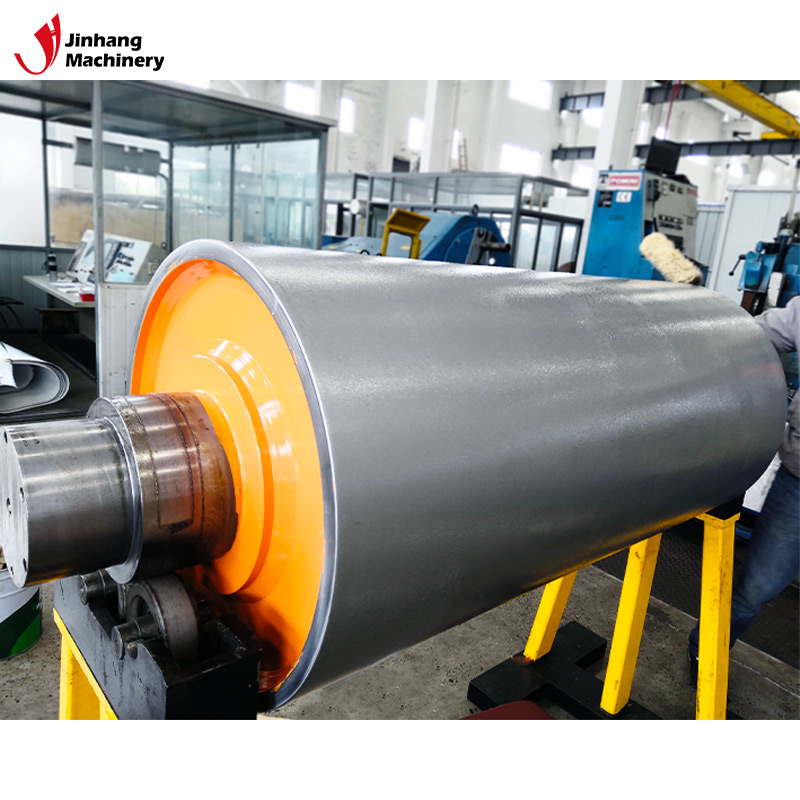
In terms of heat resistance, does EPDM rubber roller perform better than NBR?
The answer is: EPDM rubber rollers are far superior to NBR rubber rollers.
EPDM Rubber Roller Heat Resistance:
• Typical temperature resistance: 120°C–150°C
• Excellent stability in hot air
• Can even withstand higher temperatures for short periods
• Performs exceptionally well in steam environments
EPDM's heat resistance stems from its saturated structure, unlike unsaturated rubber which oxidizes and decomposes rapidly.
NBR Rubber Roller Heat Resistance:
• Typically withstands temperatures around 100°C
• Easily hardens, cracks, and ages rapidly beyond these temperatures
• Not suitable for prolonged high-temperature processing environments
Therefore, in high-temperature applications:
✔ EPDM rubber rollers are significantly better
✘ NBR rubber rollers are not suitable for high-temperature applications
If your production equipment operates under high-temperature or steam conditions year-round, EPDM is the only reliable choice.
Is EPDM rubber roller more resistant to aging than NBR?
Absolutely.
EPDM rubber rollers perform exceptionally well under aging conditions such as oxidation, weathering, and UV exposure, while NBR ages more easily.
Advantages of EPDM rubber rollers in terms of aging resistance:
• Excellent ozone resistance
• Excellent UV resistance
• Not prone to hardening or cracking
• Maintains elasticity even after prolonged use
• The preferred rubber roller material for outdoor equipment and weather-resistant applications
Weaknesses of NBR rubber rollers:
• Sensitive to ozone (prone to cracking)
• Aging faster in sunlight and air
• Prone to hardening and performance degradation
Therefore, in terms of lifespan stability and long-term weather resistance:
✔ EPDM rubber rollers clearly outperform NBR rubber rollers.

So, is NBR rubber roller better than EPDM in terms of oil resistance?
Yes, this is NBR's core advantage.
Oil resistance of NBR rubber rollers:
• Excellent resistance to various mineral oils, lubricants, and fuels
• Will not swell or soften due to grease immersion
• Reliable for long-term use in the oil processing industry
NBR's polar structure makes it more compatible with oils, thus exhibiting significant oil resistance.
EPDM rubber rollers have insufficient oil resistance:
• EPDM is a non-polar rubber
• It has poor resistance to oils and solvents
• It easily swells or loses its mechanical properties in oily environments
Therefore, if the equipment is in prolonged contact with oils, lubricants, or fuels:
✔ NBR rubber rollers are a better choice
✘ EPDM rubber rollers are not suitable for oily environments
Which is better in terms of chemical resistance, EPDM rubber rollers or NBR rubber rollers?
Both have their advantages in chemical resistance, but they are suitable for different types of chemicals.
EPDM rubber rollers perform excellently in the following chemical environments:
• Acidic solutions
• Alkaline solutions
• Water vapor
• Alcohol
• Hot water
• Cleaning agents
• Weathering environments
EPDM's chemical structure is particularly stable to polar solutions, thus exhibiting broad chemical resistance.
Chemical resistance range of NBR rubber rollers:
• Excellent performance to oily chemicals
• Stable to non-polar solvents
• However, weaker performance to acid and alkali solutions
Therefore, in most industrial chemical environments:
✔ EPDM rubber rollers have more comprehensive chemical stability
✔ NBR rubber rollers are only superior in oily chemical environments
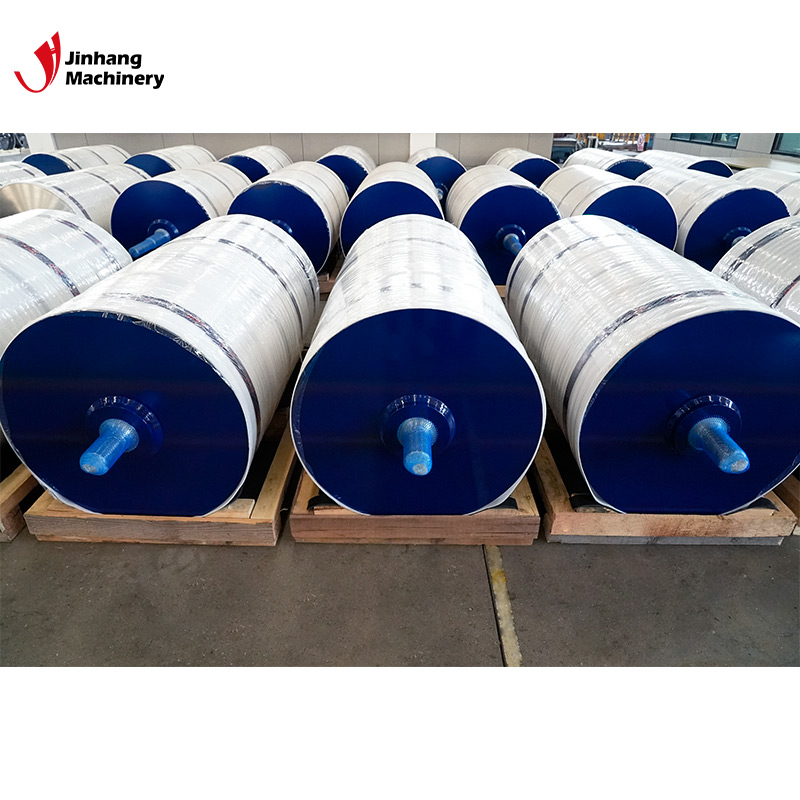
From a mechanical performance perspective, which rubber roller is more wear-resistant?
Mechanical properties include tear resistance, abrasion resistance, elasticity, and hardness stability.
Mechanical performance advantages of NBR rubber rollers:
• Higher coefficient of friction
• Strong abrasion resistance
• Superior mechanical strength compared to most general-purpose rubbers
• Good performance under high-speed or high-load conditions
Therefore, NBR is a common material for many printing, conveying, and traction rubber rollers.
Mechanical Properties of EPDM Rubber Rollers:
• Moderate mechanical strength
• Good elasticity
• Maintains stable performance even at high temperatures
• Abrasion resistance is generally lower than NBR
Therefore, if equipment requires high friction, high strength, or abrasion resistance:
✔ NBR rubber rollers are more suitable
For environments with large temperature variations, outdoor environments, or environments affected by chemical media:
✔ EPDM rubber rollers offer superior overall durability
Which applications are more suitable for EPDM rubber rollers?
EPDM rubber rollers are suitable for applications requiring:
• High heat resistance
• Steam resistance
• Ozone resistance
• Weather resistance
• UV resistance
• Aging resistance
• Resistance to acid and alkali chemical media
• Long-term outdoor use
This makes EPDM rubber rollers widely used in:
• Paper conveyor rollers
• Textile machinery rollers
• High-temperature equipment rollers
• Steam and hot water related machinery
• Outdoor equipment rollers
• Conveyor rollers in chemical plants
Especially in environments with large temperature variations or long-term exposure to air, the lifespan of EPDM rubber rollers is significantly better than that of NBR.
Which applications are best suited for NBR rubber rollers?
NBR rubber rollers are best suited for:
• Machinery requiring oil resistance
• Equipment with significant lubricant contact
• Production lines with fuel exposure risks
• High-friction, high-load scenarios
• Printing, winding, and traction operations
Typical industries include:
• Printing equipment rollers
• Packaging machinery rollers
• Metalworking pressure rollers
• Conveying machinery friction rollers
• Fuel-related equipment rollers
• Oil-processing machinery
In short, NBR is the preferred choice whenever grease or oil is involved.
Which is more durable, NBR or EPDM rubber rollers?
"Durability" depends on the usage environment.
EPDM rubber rollers have a longer lifespan in the following conditions:
• High-temperature environments
• Outdoor or weather-sensitive environments
• Steam environments
• Acid/alkali environments
• UV radiation conditions
NBR rubber rollers have a longer lifespan in the following conditions:
• Oily environments
• High-friction, high-mechanical-pressure environments
Therefore:
✔ EPDM rubber rollers are more durable in harsh environments
✔ NBR rubber rollers are more durable in oily and mechanically-loaded environments
Which is better, NBR or EPDM rubber rollers?
The real answer is:
There is no absolutely "better" rubber roller, only rubber rollers more suitable for specific applications.
• If your equipment is in high-temperature, steam, outdoor, chemical, weather-sensitive, or ozone-laden environments →
✔ EPDM rubber rollers are better
• If your equipment must be in prolonged contact with oils, greases, fuels, or high-friction conditions →
✔ NBR rubber rollers are better