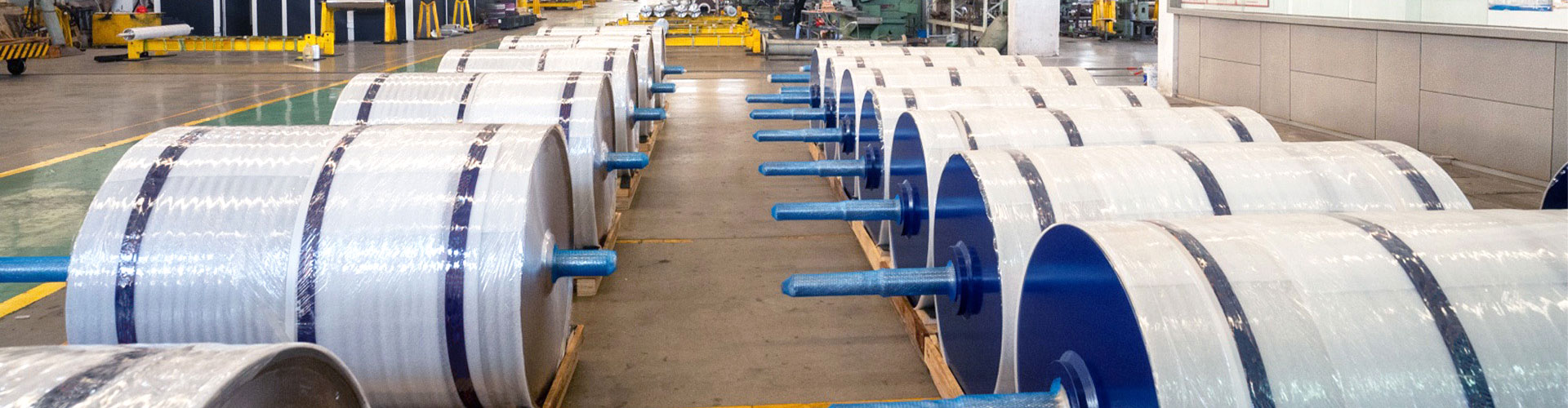
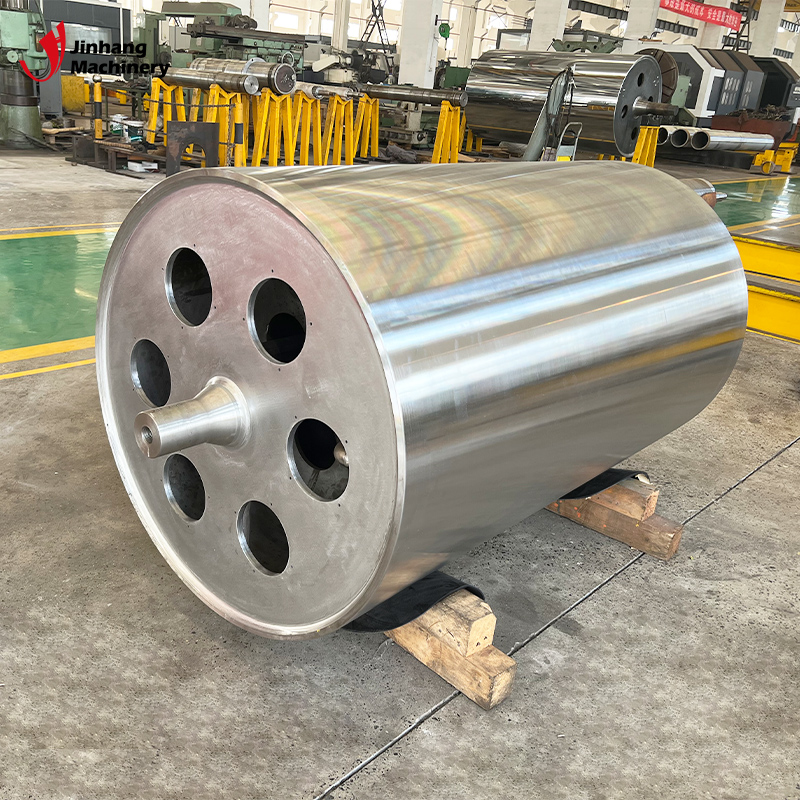
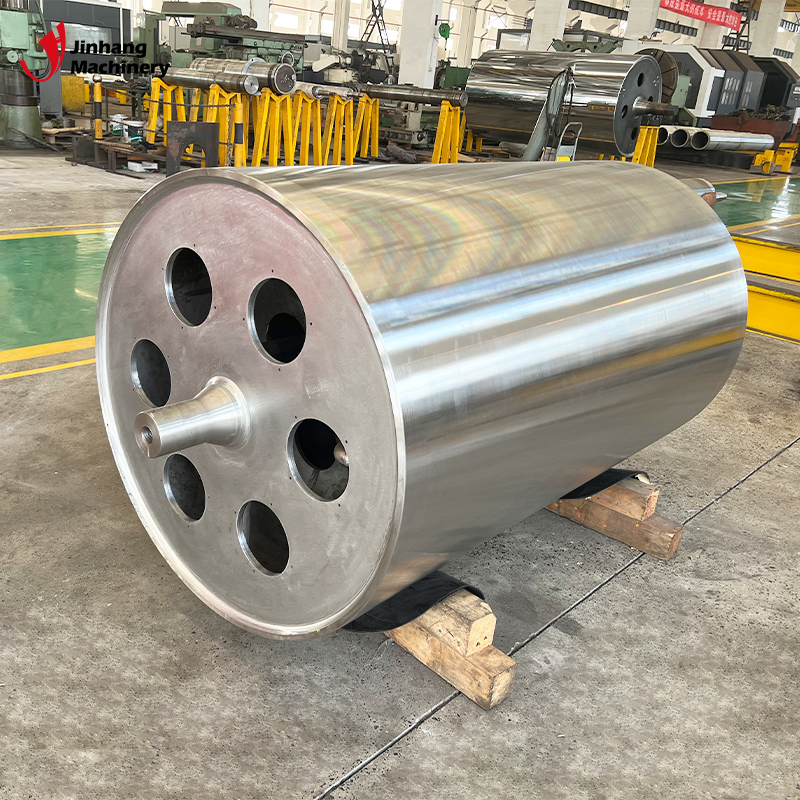
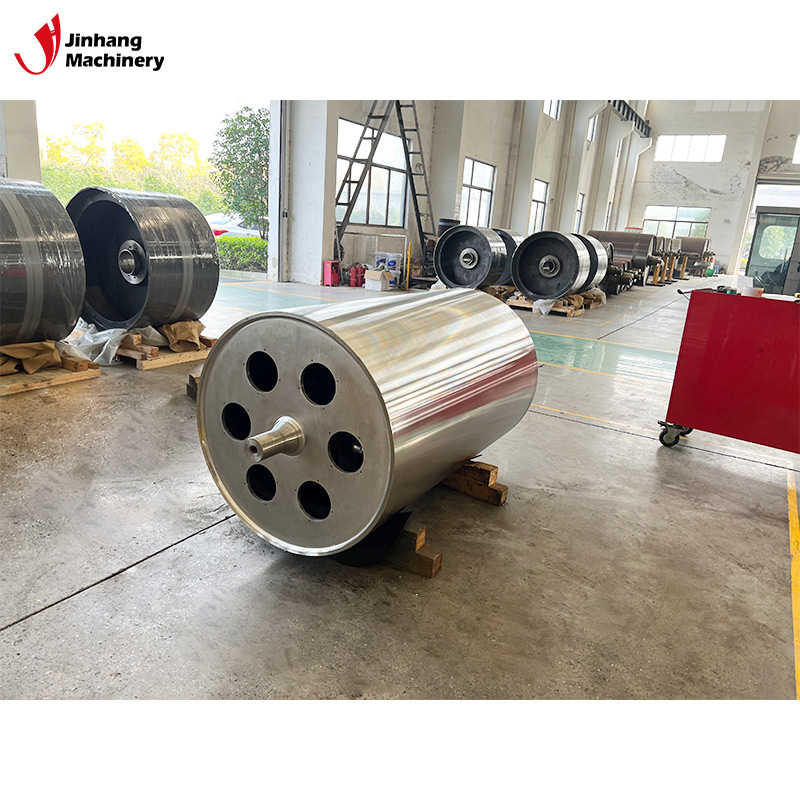
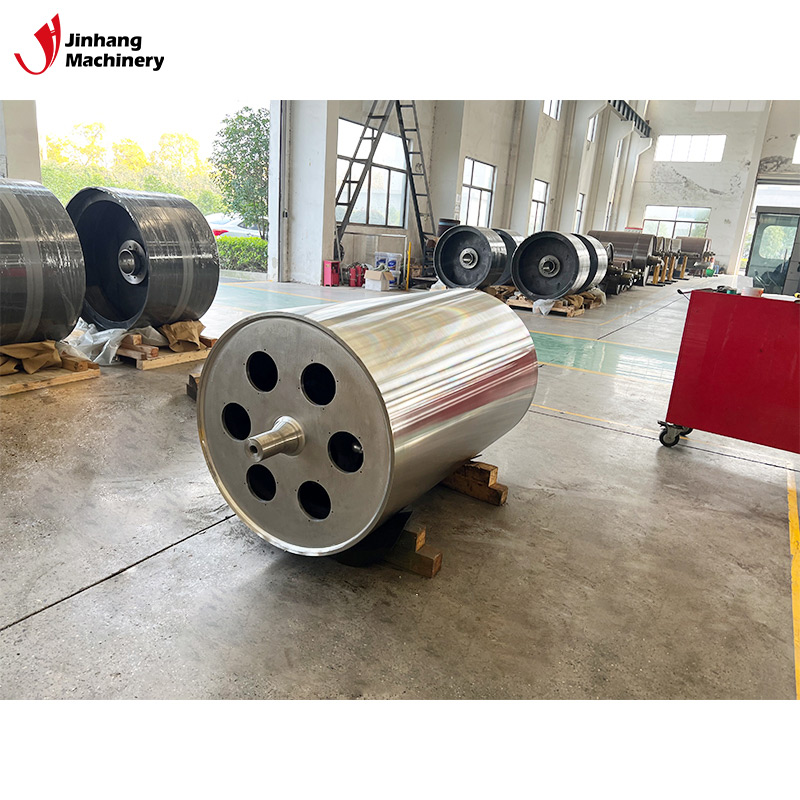
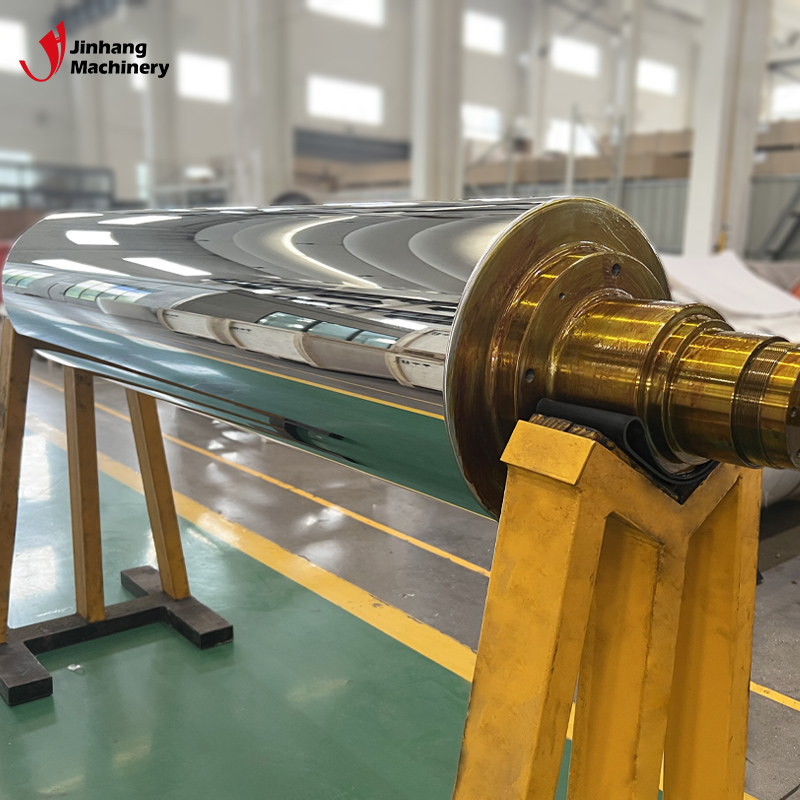
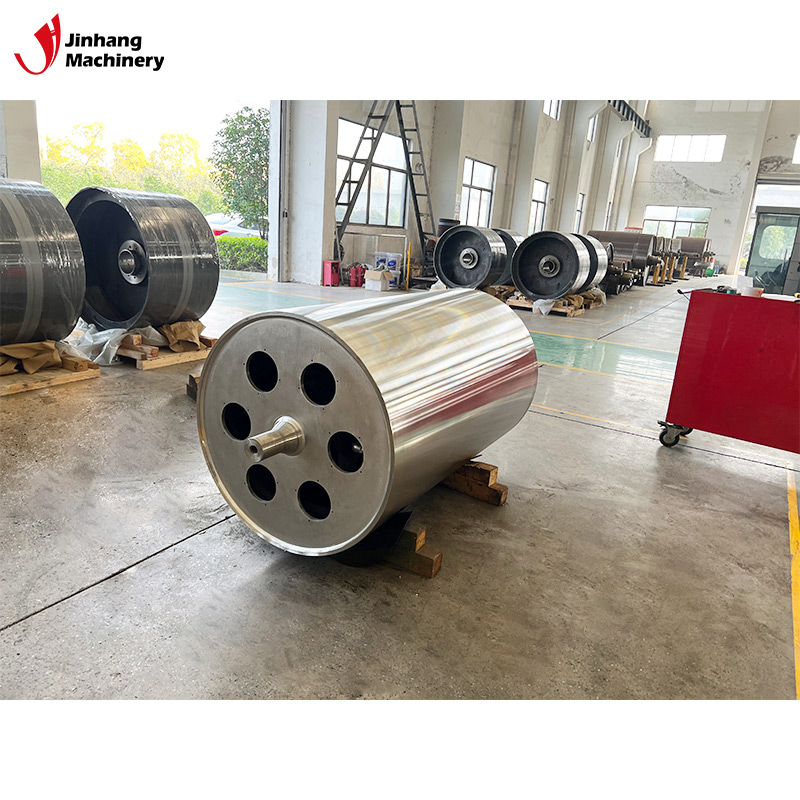
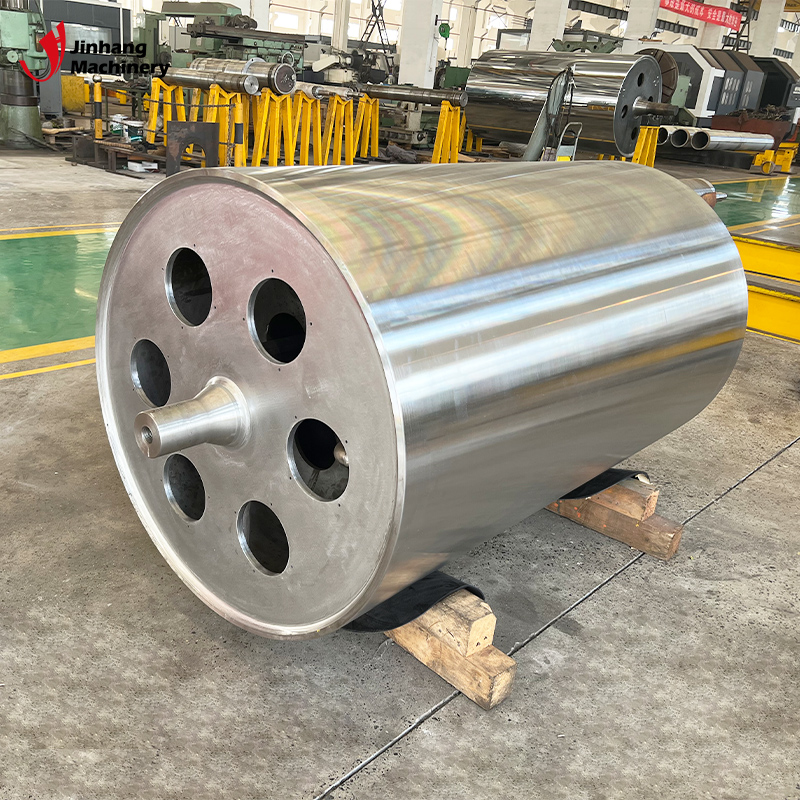
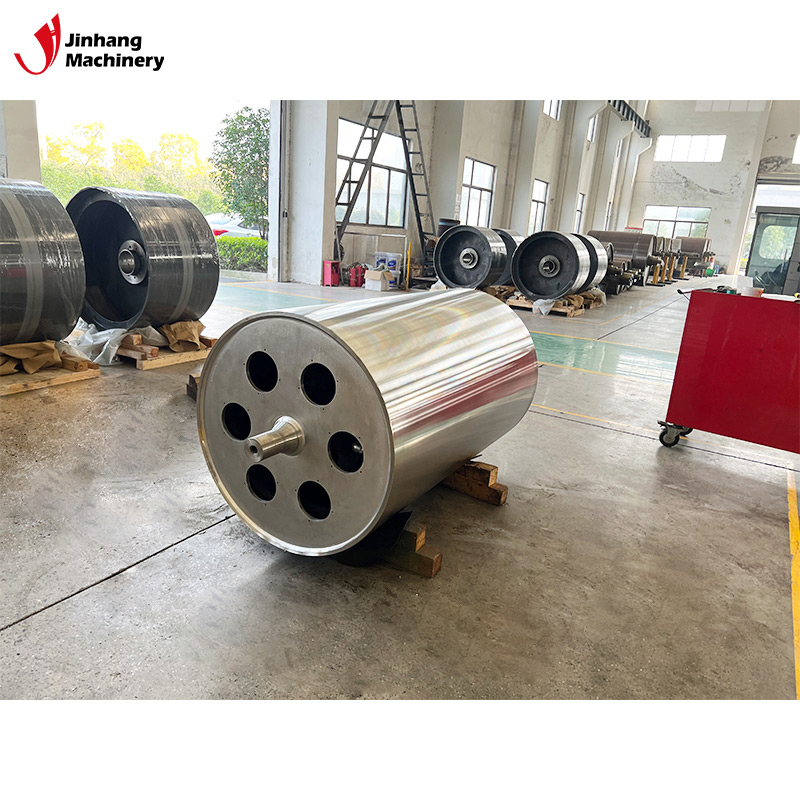
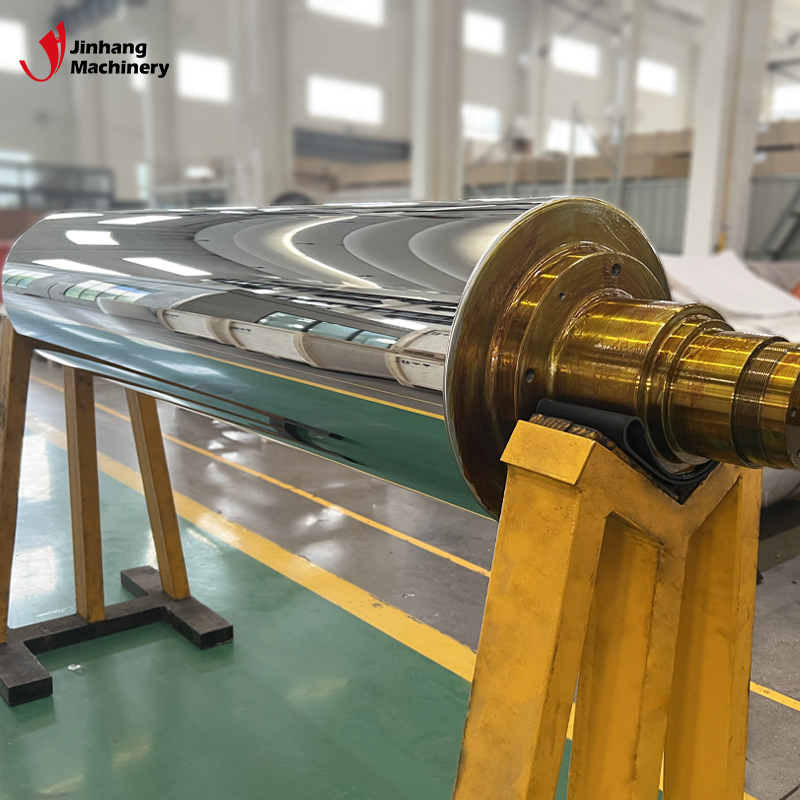
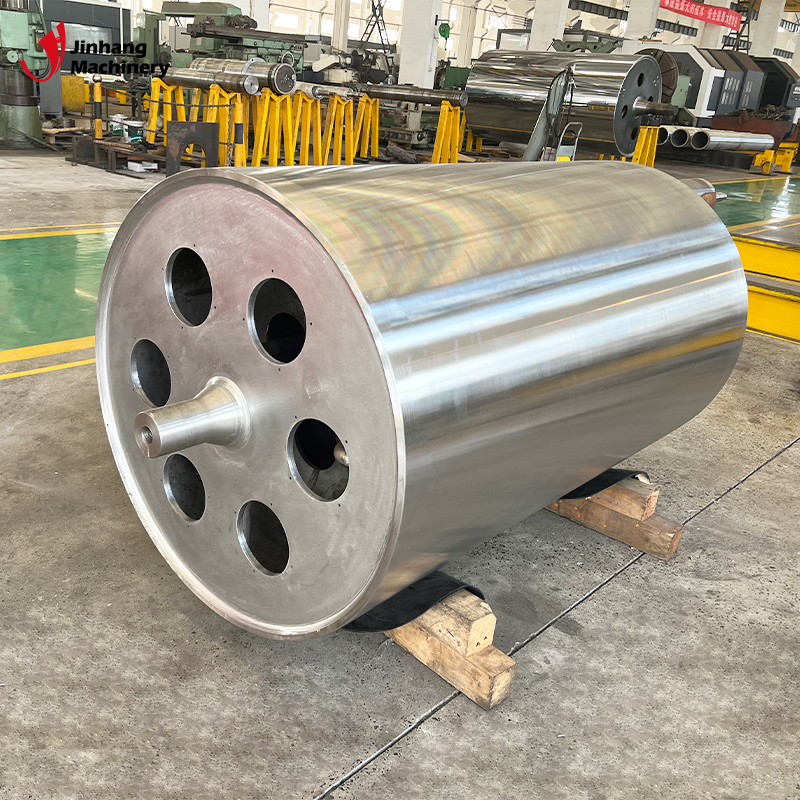
Film, sheet, and plate materials are typically in a soft or semi-molten state after processes such as heating, extrusion, coating, and calendering. Without the precise control of cooling rate by cooling rollers, the following cannot be achieved:
• A smooth surface
• Stable thickness
• Uniform molecular structure
• Stable mechanical properties
The fastest cooling speed generally refers to: Cooling rollers with a bidirectional spiral flow channel + thin-walled structure + high thermal conductivity material + mirror finish + low-temperature chilled water medium.
Cooling roller helps packaging materials maintain their mechanical properties and appearance characteristics by rapid and uniform cooling. For example, plastic film can avoid warping or shrinkage caused by thermal stress under the action of cooling roller, thereby ensuring the thickness uniformity and flatness of the film.
Plastic extrusion and film production are among the most common applications for industrial chill rollers. In these production processes, plastic materials are usually extruded by heating and then need to be quickly cooled before forming and final shaping to ensure a smooth surface and uniform thickness of the product.
The application links of cooling rollers in the solar cell industry include: silicon wafer manufacturing link, photovoltaic thin film manufacturing link, battery module manufacturing link, and thin film battery winding link
The production process of pharmaceutical packaging materials includes extrusion, coating, printing and lamination. Each link has very high requirements for temperature control and material handling. The chill roller plays a vital role in these links.
In the papermaking industry, Chill Roller plays an important role in many key links, mainly used in pulp dewatering and forming, paper coating and drying, paper calendering and finishing.
In the production process of optical films, Chill Roller plays an important role in several key links. These links include extrusion molding (fast and uniform cooling), coating (preventing coating defects), lamination (improving lamination quality) and winding (controlling film temperature).