Product News

  • Industrial Hot Oil Rollers vs. Water-Heated Rollers: What Are the Disadvantages?
    01
    2026-07
    One of the most immediate disadvantages of oil-heated industrial rollers is the high cost of procurement and installation. During the project planning phase, enterprises often face the challenge of the oil-heated system's initial investment being far higher than that of a water-based system.
  • What types of carbide-coated rollers can we customize?
    26
    2026-06
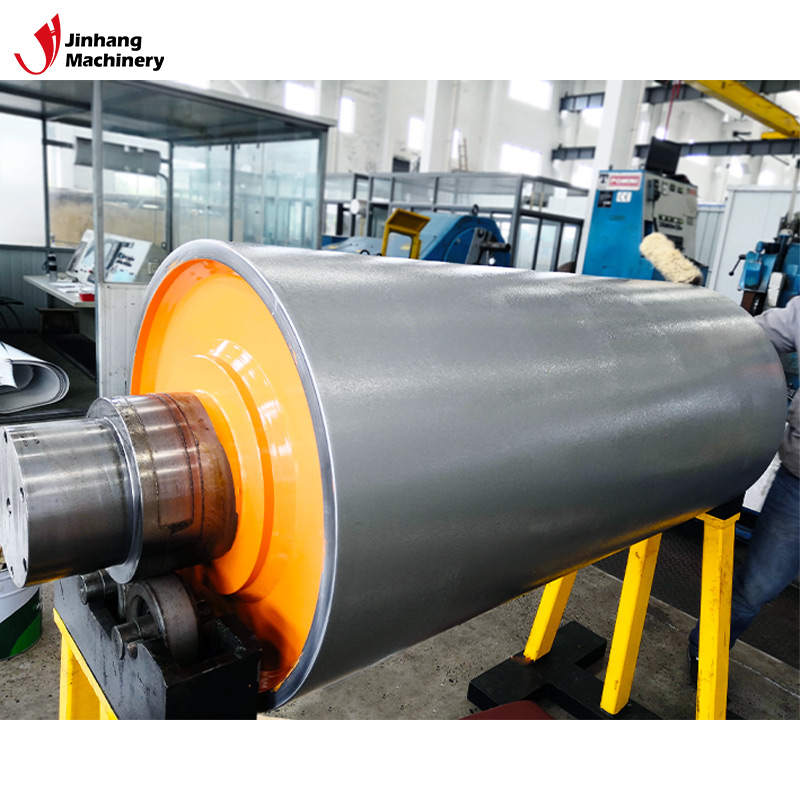
    As a supplier deeply rooted in the roll manufacturing industry, Jinhang Machinery offers customized carbide-coated rollers with outer diameters up to 2000mm, lengths up to 8000mm, and machining precision as fine as 0.002mm.
  • Which coating offers the greatest hardness for industrial rollers?
    25
    2026-06
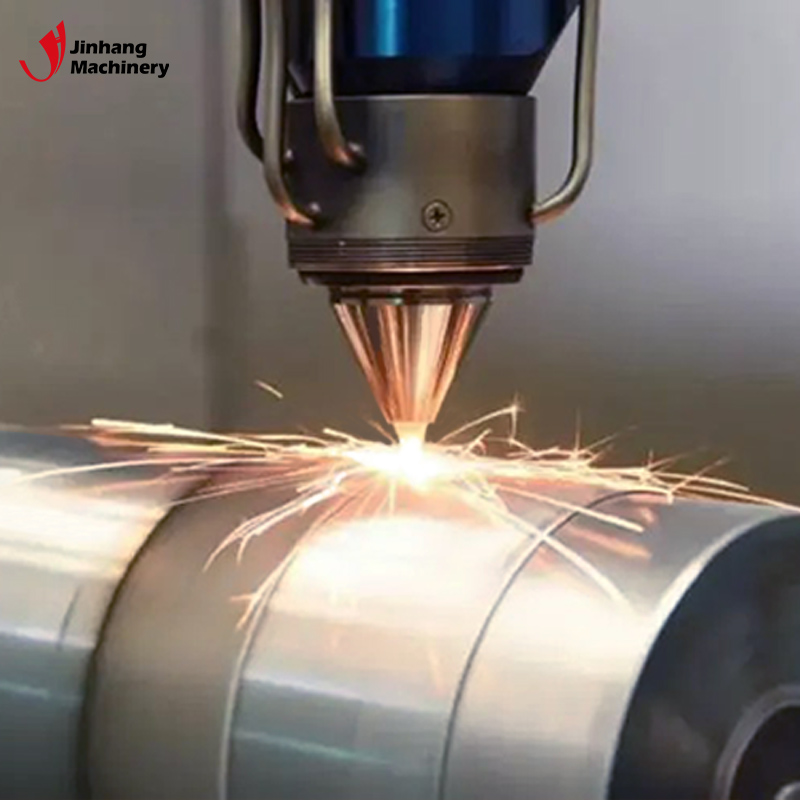
    The Hardest Industrial Roller Coating: Tungsten Carbide Excluding laboratory-grade diamond materials, tungsten carbide is generally considered one of the hardest and most practical coating materials for industrial rollers.
  • What are the differences between industrial NBR and EPDM rubber rollers?
    24
    2026-06
    In fact, the differences between NBR and EPDM rubber rollers go far beyond surface-level specifications. They differ significantly across multiple dimensions, including molecular structure, chemical stability, resistance to media, hardness retention, compression set, and service life.
  • Why Do Industrial Hot Oil Rollers Require High Precision in Temperature Uniformity?
    23
    2026-06
    The fundamental reason lies in the increasingly stringent requirements of modern manufacturing regarding dimensional accuracy and material property consistency. Temperature variations across the roll surface essentially translate into performance discrepancies during material processing.
  • Which Industrial Rollers Can Be Chrome-Plated? Types of Rollers and Their Suitability
    22
    2026-06
    Commonly used steels include 45 steel, 40Cr, 42CrMo, stainless steel, and alloy tool steel. These rolls generally possess excellent mechanical strength and machinability, allowing them to withstand the precision turning, grinding, and polishing processes required prior to plating.
  • How Long Do Industrial Mirror Finish Rollers Last?
    27
    2026-05
    The typical service life for most standard chrome-plated mirror rollers is: •2–5 years (under normal operating conditions) •In some cases, with excellent usage and care, this can extend to over 8 years. The actual duration depends specifically on the degree of wear and the maintenance practices employed.
  • Does the Surface of an EPDM Rubber Roller Swell Upon Contact with Water?
    25
    2026-05
    Even after prolonged contact with water, the surface of an EPDM rubber roller will not exhibit significant swelling, softening, or deformation. The reason for this lies in the fact that EPDM (Ethylene Propylene Diene Monomer) rubber possesses exceptional resistance to both water and steam.
  • How Large Can a Roller Manufacturer Fabricate?
    18
    2026-05
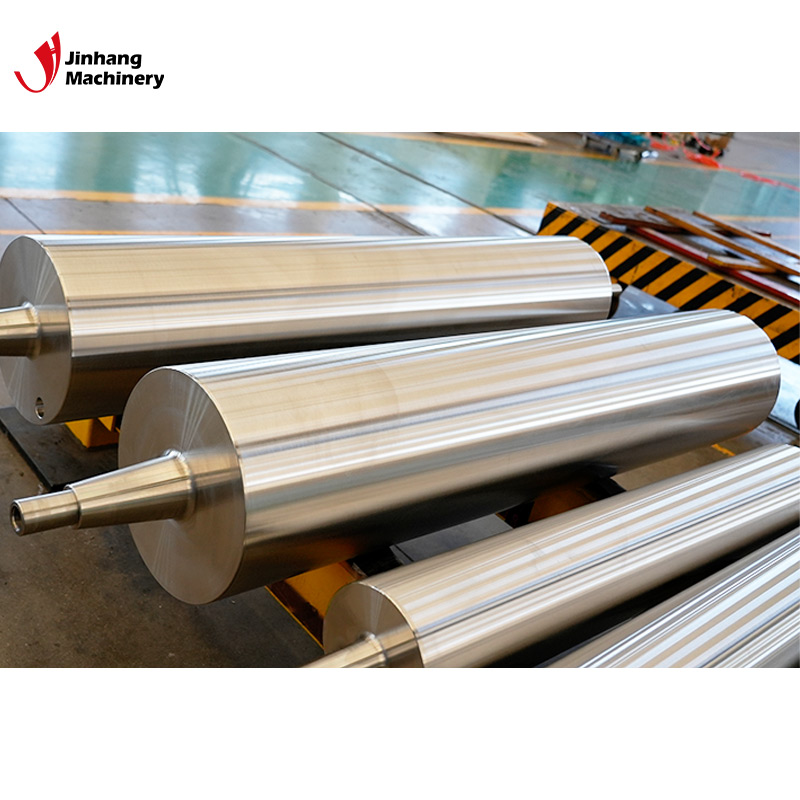
    Among the multitude of roller manufacturers, Jinhang Machinery—based in China—stands out as a specialized manufacturer possessing advanced capabilities for large-scale, high-precision machining. Their dimensional capabilities for roller bodies are as follows: •Maximum Outer Diameter: 2,000 mm •Maximum Length: 8,000 mm •Maximum Machining Precision: 0.002 mm
  • What is an Industrial Casting Film Roller?
    25
    2026-03
    An industrial casting film roller is a high-precision industrial roller used in the casting process to achieve cooling, shaping, and surface replication by contacting molten or semi-molten material.

40px

80px

80px

80px

Get the latest price? We will reply as soon as possible (within 12 hours)

40px

40px

40px

40px