News

  • Which is better, chrome plated roller or stainless steel roller?
    25
    2025-06
    Stainless steel itself has higher tensile strength and toughness, but compared with chrome plated roller, the hardness of stainless steel roller may be slightly inferior. Therefore, stainless steel rollers may suffer certain wear and tear when operating for a long time or facing high-intensity pressure.
  • How long can the chrome plating of industrial chrome plated rollers last?
    09
    2025-05
    The thickness of the industrial chrome plating layer is usually between 20 and 100 microns, and the specific thickness depends on the purpose and working environment of the chrome plated roller. The greater the thickness, the stronger the wear resistance and corrosion resi
  • What is the difference between chrome plated roller and mirror roller?
    07
    2025-05
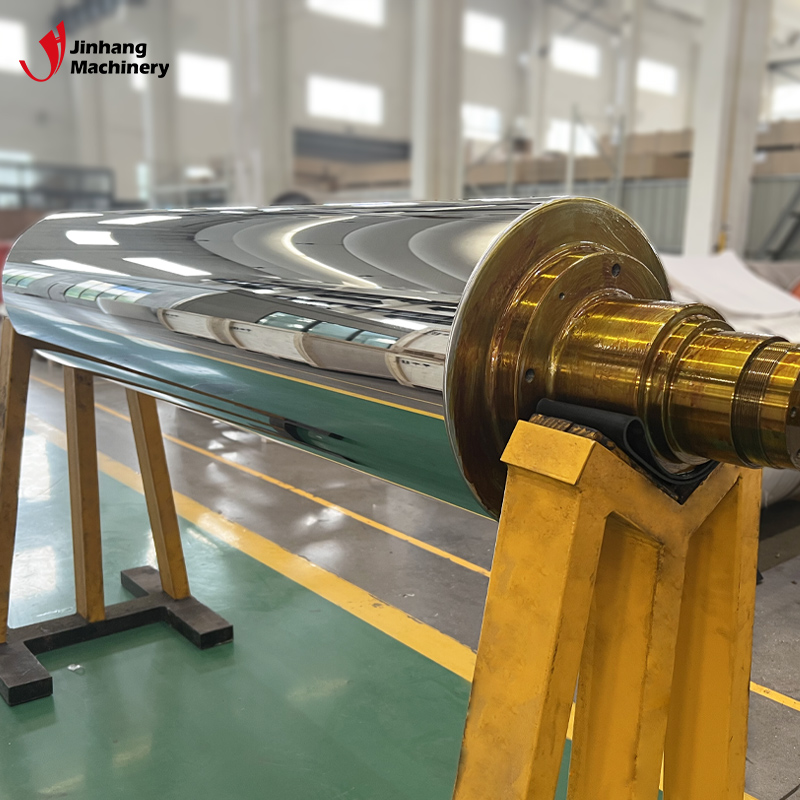
    Chrome plated roller is a common industrial surface treatment technology that mainly deposits a layer of metal chromium on the surface of the roller through an electroplating process. Mirror roller is a surface treatment technology that uses mechanical polishing and grinding processes to make the surface of industrial rollers extremely smooth.
  • What can I use to polish an industrial chrome plated roller?
    01
    2025-05
    The purpose of the rough grinding stage is to remove large scratches, oxide layers and other obvious stains on the surface of the industrial chrome plated roller. Use coarser sandpaper (such as 200 mesh or lower) and a polishing machine for preliminary grinding.
  • Why does the chrome plating of industrial chrome plated roller fall off?
    24
    2025-04
    If the roller surface is not clean enough or there are pollutants such as oxide layer and oil before electroplating, it is difficult for the chrome layer to firmly bond with the substrate. In this case, the chrome layer of the chrome plated roller is prone to shedding during use.
  • Is the industrial chrome plated roller durable?
    23
    2025-04
    The high hardness of the chrome plating layer enables it to maintain a good surface state when facing high-intensity friction, and it is not easy to be worn or scratched. Even after long-term use, the surface of the chrome plated roller can still remain smooth and uniform.
  • What is the melting point of industrial chrome plated roller?
    11
    2025-04
    The melting point of chromium is 1907°C, which means that the chrome plating can remain solid below this temperature and will not melt. However, in industrial applications, the operating temperature of the roller is usually much lower than this melting point, so the chrome plating rarely faces the risk of melting in actual use.

  • What are the reasons for cracking of industrial chrome plated rollers?
    09
    2025-04
    Mechanical stress is one of the main reasons for the cracking of the chrome plating layer. In actual use, chrome plated rollers often bear large mechanical loads, especially in high-intensity working environments. The accumulation of mechanical stress can cause microcracks or large-scale cracking of the chrome plating layer.
  • Are there any cheaper alternatives to industrial chrome plated rollers?
    26
    2025-03
    Carbon steel rollers Carbon steel rollers are a common roller material in industry. Compared with chrome plated rollers, carbon steel rollers are significantly cheaper to manufacture and can still provide sufficient hardness and strength under general low-wear conditions.
  • What is the chrome plating standard for chrome plated rollers?
    07
    2025-03
    For chrome plated rollers for general industrial use, the thickness of the chrome plating layer is usually required to be between 20-50 microns. This thickness is sufficient to provide good wear resistance and corrosion resistance and is suitable for most conventional processes.

40px

80px

80px

80px

Get the latest price? We will reply as soon as possible (within 12 hours)

40px

40px

40px

40px