News

  • Cooling Rollers: What Problems Can Improper Temperature Control Cause?
    12
    2026-05
    Common defects include: • Softening of the product surface, making it difficult to stabilize its shape • Inaccurate dimensional control, with fluctuations in thickness or width • Surface stretching marks or slight deformation
  • Do industrial cooling rollers have temperature difference requirements?
    08
    2026-04
    From a thermal perspective, the greater the temperature difference, the more uneven the heat exchange on the cooling roller, and the worse the cooling quality. Therefore, most precision processes require the cooling roller temperature difference to be as small as possible, usually controlled within a very strict range.
  • What are the uses of industrial cooling rollers?
    26
    2026-02
    Film, sheet, and plate materials are typically in a soft or semi-molten state after processes such as heating, extrusion, coating, and calendering. Without the precise control of cooling rate by cooling rollers, the following cannot be achieved: • A smooth surface • Stable thickness • Uniform molecular structure • Stable mechanical properties

  • What is the cooling temperature of an industrial cooling roller?
    23
    2025-12
    Plastic films (such as PE, PP, PET, PA, PVC) are most sensitive to cooling roller temperature. • PE/PP film cooling roller temperature: 20–40℃ • PET film cooling roller temperature: 10–25℃ • PA (Nylon) film cooling roller temperature: 15–30℃ • PVC film cooling roller temperature: 30–45℃
  • Which Industrial Cooling Roller Cools Down the Fastest?
    02
    2025-12
    The fastest cooling speed generally refers to: Cooling rollers with a bidirectional spiral flow channel + thin-walled structure + high thermal conductivity material + mirror finish + low-temperature chilled water medium.
  • What is the manufacturing process of industrial cooling roller?
    13
    2025-06
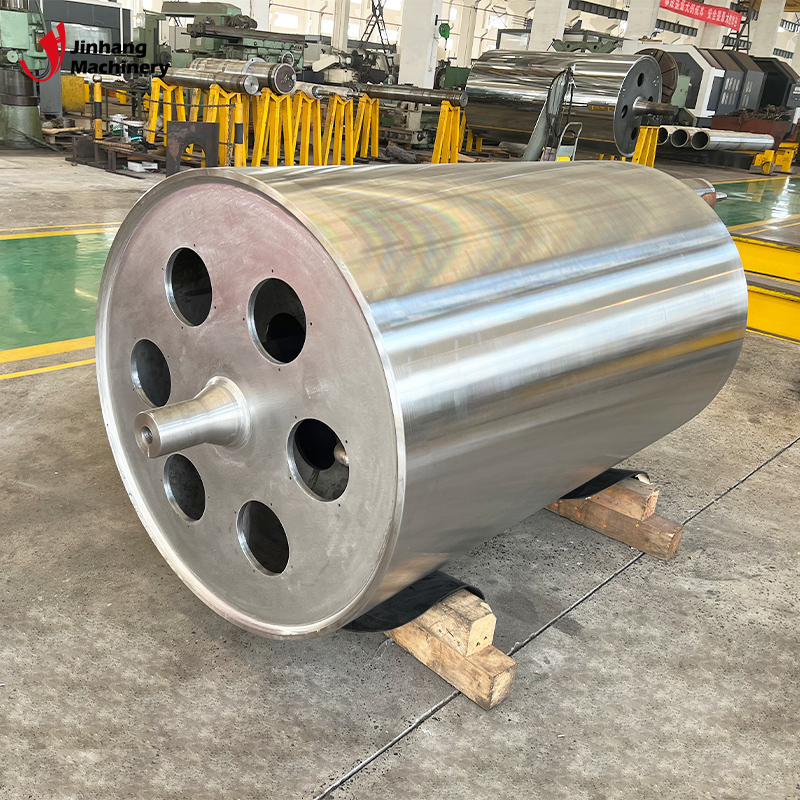
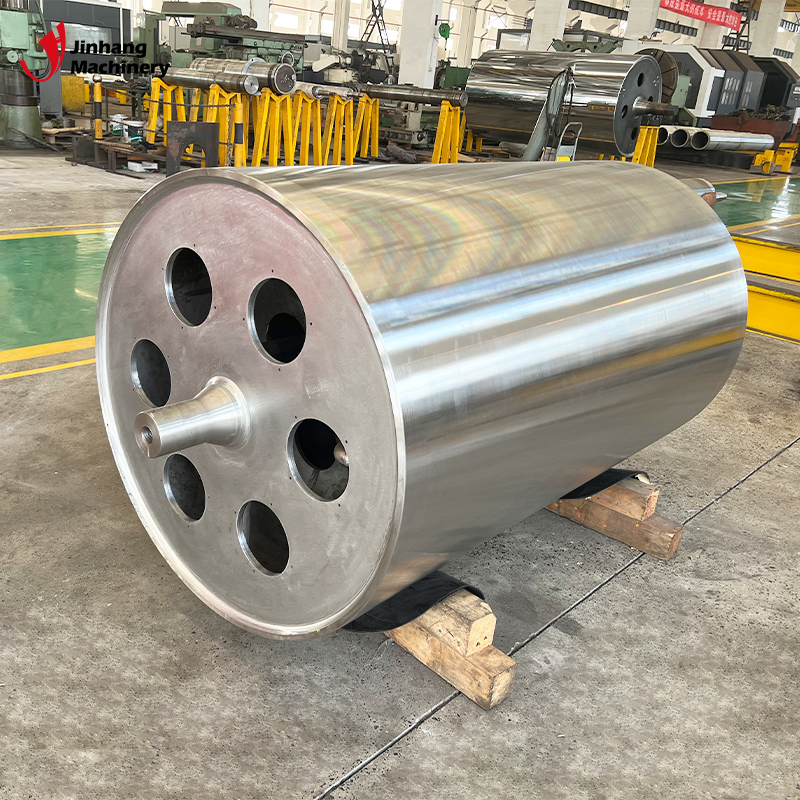
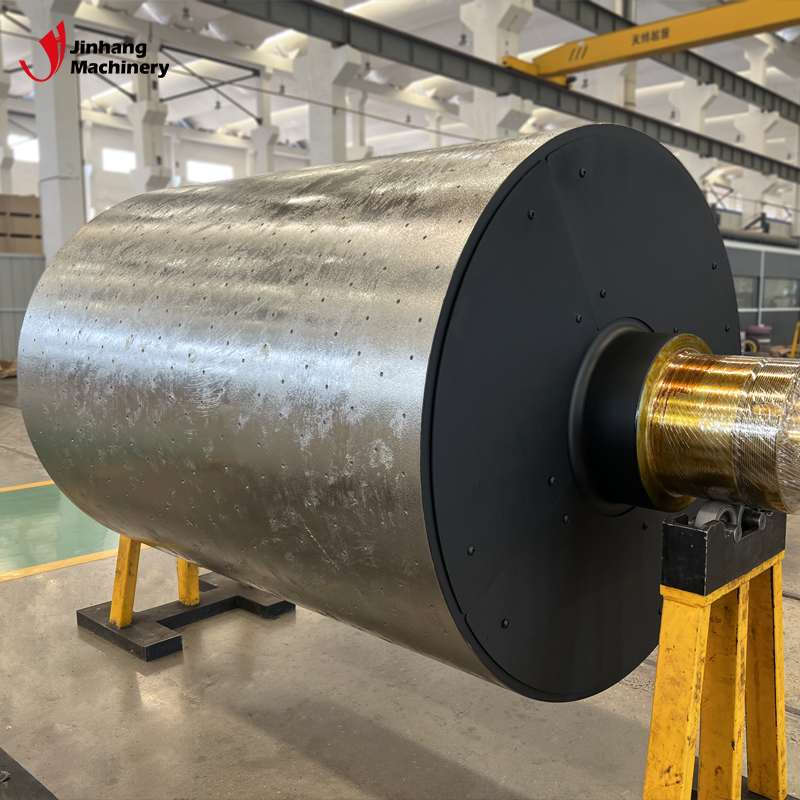
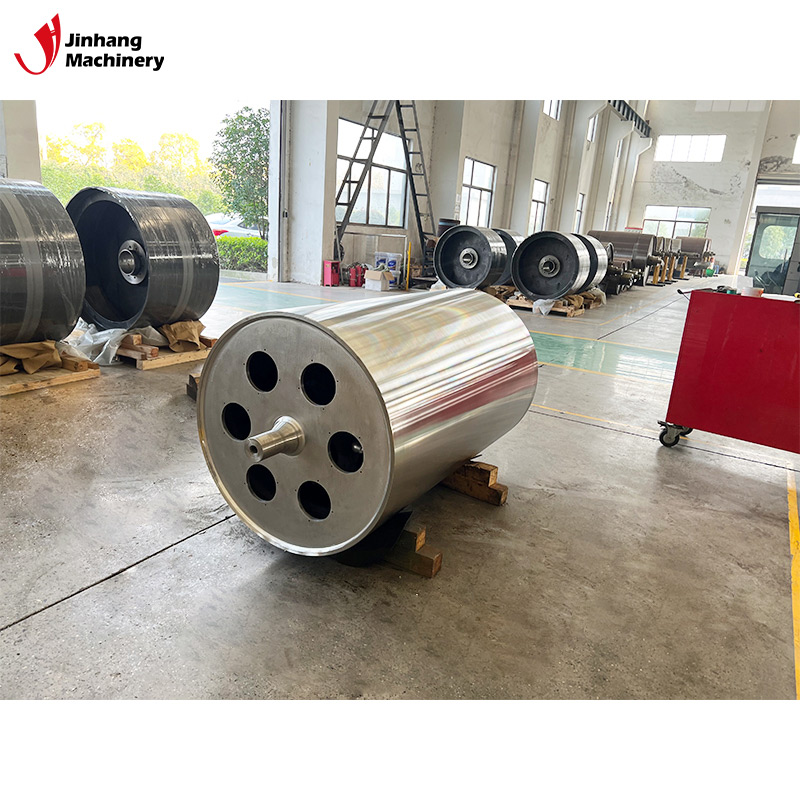
    The manufacturing process of industrial cooling roller mainly includes material selection, cylinder forming, internal channel design, surface treatment and precision machining.
  • How does an industrial cooling roller work?
    12
    2025-03
    The working principle of industrial cooling rollers is mainly to transfer heat from the processed material to the surface of the industrial cooling roller, and further to the internal cooling medium, such as water or coolant. The whole process follows the principles of heat transfer by conduction and convection to maintain the appropriate temperature of the processed material.

    40px

    80px

    80px

    80px

    Get the latest price? We will reply as soon as possible (within 12 hours)

    40px

    40px

    40px

    40px