News

  • Who needs an Oil Guide Heating Roller?
    21
    2025-02
    The oil guide heating roller is an industrial-grade equipment. The industries that need it are: printing industry, textile industry, plastic processing industry, papermaking industry, woodworking industry, food processing industry, and chemical industry.

  • What is the role of rubber rollers in the textile industry?
    07
    2025-02
    One of the main roles of rubber rollers in the textile dyeing process is to ensure that the dye can penetrate evenly into every fiber of the fabric. The dyeing process usually involves contacting the fabric with the dye by dipping or coating, at which time the rubber roller helps the dye to fully penetrate the fabric by applying uniform pressure.
  • What are the material compositions of polyurethane rollers?
    21
    2025-01
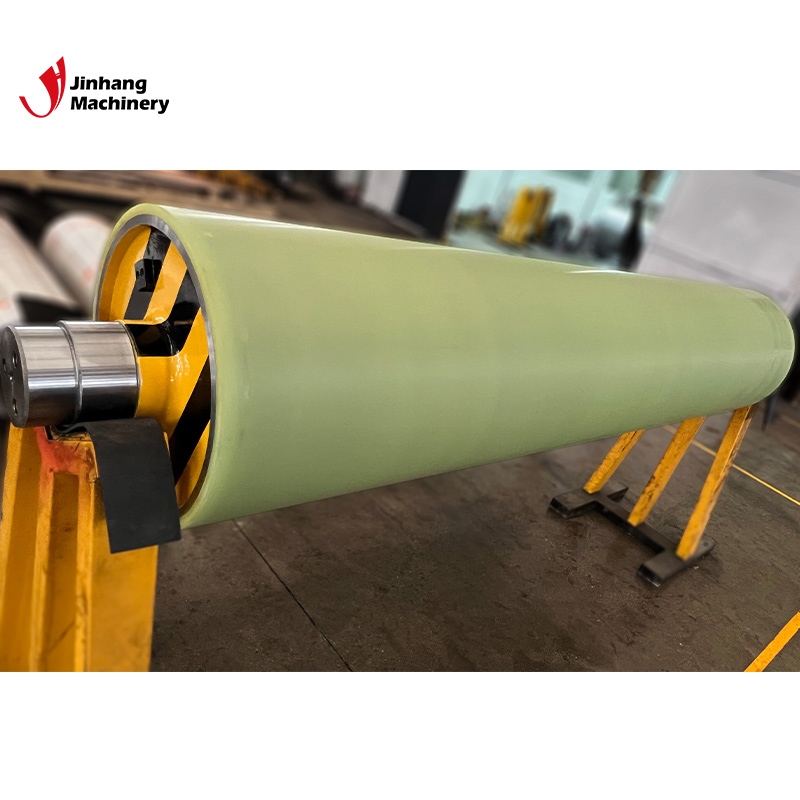
    Polyurethane is a polymer material synthesized by chemical reaction between isocyanates and polyols. The composition of polyurethane has great flexibility due to different production processes, uses and performance requirements.
  • Why does the packaging industry need to use rubber rollers? Which links need to use it?
    01
    2025-01
    Rubber rollers can firmly grasp and transmit various materials, including paper, plastic film and metal foil, through their elasticity and friction. The elasticity of the rubber roller adapts to the thickness and surface characteristics of different materials, ensuring that there is no slipping, displacement or damage during the transmission process.
  • Why does the electronics industry need to use Corona Roller?
    27
    2024-12
    As a highly efficient surface treatment equipment, the corona roller can significantly increase the surface energy of the material and enhance its bonding with other materials, thereby improving the quality and reliability of the product.
  • What is the purpose of using industrial water quenching rollers?
    25
    2024-12
    Water quenching rollers are mainly used to quickly cool metal workpieces that have been heated. Its basic structure includes rollers, cooling water distribution system and conveying device. The metal workpiece is heated to the austenite phase region (usually between 800°C and 900°C) in a high temperature environment, and then cooled by water quenching rollers to quickly cool it down.

    40px

    80px

    80px

    80px

    Get the latest price? We will reply as soon as possible (within 12 hours)

    40px

    40px

    40px

    40px