News

  • Industrial Hot Oil Rollers vs. Water-Heated Rollers: What Are the Disadvantages?
    01
    2026-07
    One of the most immediate disadvantages of oil-heated industrial rollers is the high cost of procurement and installation. During the project planning phase, enterprises often face the challenge of the oil-heated system's initial investment being far higher than that of a water-based system.
  • Industrial Heating Rollers: Oil-Heated vs. Water-Heated—Which is Better?
    19
    2026-06
    If you need very high temperature control precision (within ±1°C) Choose: Oil-heated roller. If you want to reduce long-term maintenance costs Choose: Oil-heated roller. If your equipment is for low-temperature, high-volume drying Choose: Water-heated roller.
  • What is an Industrial Mirror-Surface Water-Cooled Roller?
    20
    2026-03
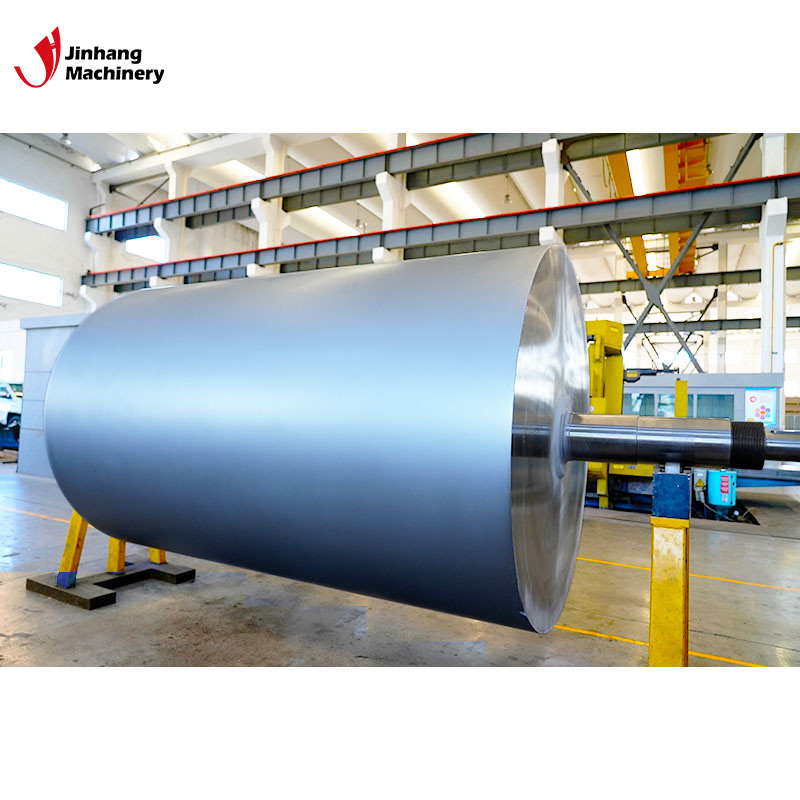
    An industrial mirror-surface water-cooled roller is a high-precision roller device specifically designed for material cooling, shaping, flattening, and surface treatment.
  • Industrial Heated Rollers: Who Needs Oil or Water Guiding?
    05
    2026-03
    If the process requires high temperature, high precision, and high stability, then an oil-guided heating roller must be selected. If the process requires low temperature, is cost-sensitive, and has lower requirements for thermal stability, then a water-guided heating roller is more suitable.
  • Why are industrial mirror rollers divided into heated and water-cooled types?
    26
    2025-12
    To maintain a stable and controllable surface temperature during the processing of different materials, mirror rollers are typically designed into two types: • Heated Mirror Roller • Water-Cooled Mirror Roller
  • Water-Guiding and Oil-Guiding Heating Rollers: Which Heats up Faster?
    05
    2025-12
    Hot water typically heats up faster in the low-temperature range (≤150℃). • Hot water heating roller → The medium transfers heat to the roller body more quickly → The roller body heats up faster. • Oil-guided heating roller → Heat transfer is slower → The heating rate is naturally slower.
  • What is the electroplating process of water quench roller?
    23
    2025-06
    The electroplating process of water quench roller usually includes the following key steps: 1. Pretreatment · Degreasing · Pickling · Water washing · Electrolytic cleaning 2. Electroplating layer deposition · Nickel plating · Chrome plating · Copper plating · Composite plating 3. Post-treatment · Passivation treatment · Drying · Polishing treatment · Hardening treatment 4. Quality inspection and testing · Thickness detection · Adhesion detection · Hardness test · Corrosion resistance test
  • How to detect the surface quality of industrial water quench rollers?
    12
    2025-05
    Visual inspection is the most direct and common surface quality detection method. By visually observing the surface of the water quench roller, technicians can initially find obvious defects on the surface, such as cracks, peeling, pores, etc. This method is suitable for rapid screening and can detect some large defects.
  • What are the differences between different types of water quenching rollers?
    06
    2025-05
    The classification of industrial water quenching rollers can be distinguished according to multiple standards, mainly including the material, structure, cooling method and application field of the roller body. The following are several common types of water quenching rollers and their main differences:
  • Which industries need to use water quench roller?
    28
    2025-03
    The main application industries of water quench roller are: 1. Steel industry 2. Aluminum processing industry 3. Glass manufacturing industry 4. Nonferrous metal industry 5. Quenching heat treatment industry 6. Chemical industry

    40px

    80px

    80px

    80px

    Get the latest price? We will reply as soon as possible (within 12 hours)

    40px

    40px

    40px

    40px