
Are Rubber-Coated Industrial Rollers Better Than Plastic Rollers?
In industrial manufacturing, rollers are key functional components of many mechanical devices. Whether in packaging, printing, textiles, papermaking, metal processing, or food conveying industries, roller performance directly impacts equipment efficiency, product quality, and cost control for businesses.
With advancements in materials technology, the surface materials of industrial rollers are constantly being upgraded, and the differences between rubber-coated and plastic rollers have become a common topic of discussion within the industry.

Why are rubber-coated industrial rollers more favored in many industries?
Rubber rollers have a long history of use in industry, evolving from traditional natural rubber to modern synthetic rubbers (such as nitrile rubber, neoprene rubber, and silicone). Continuous material optimization has resulted in modern rubber-coated industrial rollers possessing excellent physical and chemical properties.
In contrast, while plastic rollers offer advantages such as lightweight and low cost, they often cannot fully match rubber rollers in key indicators such as wear resistance, elasticity, impact resistance, and surface friction.
To determine whether "rubber-coated industrial rollers are better than plastic rollers," it is necessary to analyze the performance differences between the two individually.
How crucial is the elasticity advantage of rubber rollers?
Elasticity is one of the core advantages of rubber-coated industrial rollers. In industrial transmission, pressing, traction, and lamination applications, equipment typically requires a certain degree of surface flexibility to ensure material adhesion and uniform pressure.
The elasticity advantages of rubber rollers are reflected in:
• Absorbing minor vibrations, making equipment operation more stable.
• The surface can undergo micro-deformation under pressure, increasing the contact area.
• More scratch-resistant for easily scratched materials, such as films, paper, and textiles.
• Reducing material slippage and improving traction performance.
• Excellent resilience, less prone to deformation during high-speed operation.
In contrast, plastic rollers (such as those made of POM, PE, and PVC) have weaker elasticity and often perform worse than rubber rollers when dealing with uneven materials or applications requiring extremely high traction.
This means that rubber rollers are more advantageous in many industries that rely on "stable pressing" and "flexible bonding."
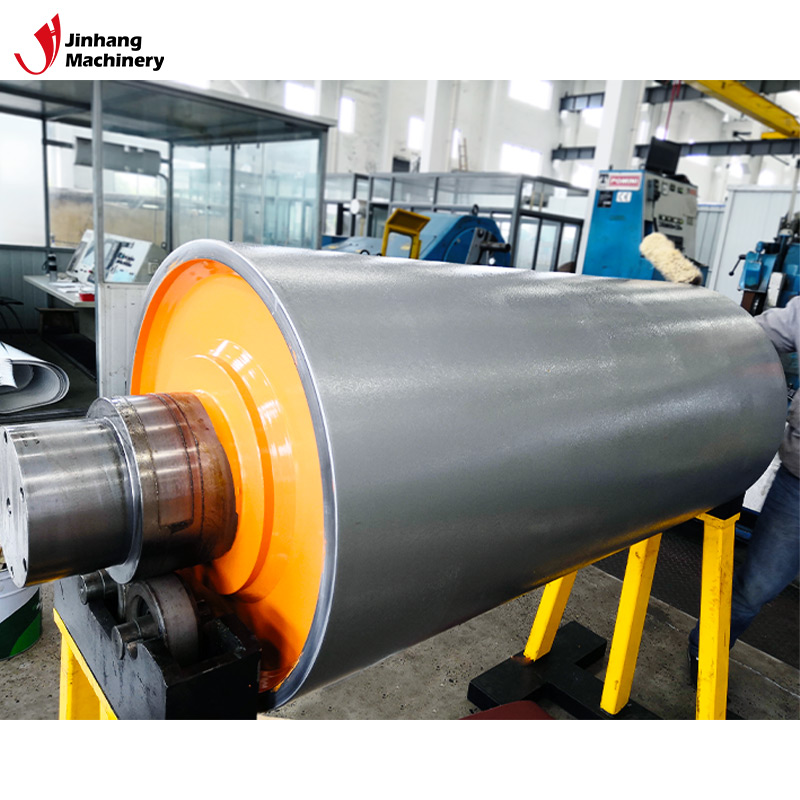
Do rubber rollers also outperform plastic rollers in terms of abrasion resistance?
Abrasion resistance depends on the material's hardness, molecular structure, impact resistance, etc.
The wear-resistant characteristics of rubber-coated industrial rollers include:
• Adjustable hardness of synthetic rubber, ranging from Shore A30 to A95
• Good fatigue resistance to repeated friction
• Less prone to stress cracking
• Maintains a stable coefficient of friction even under high load conditions
• Wear resistance can be improved through formulation
Plastic rollers perform well under "light load," "low speed," and "discontinuous friction" environments, but are more prone to accelerated wear, surface hardening, cracking, and deformation under:
• High-speed operation
• High-pressure pressing
• Prolonged large-area friction
• Continuous production across multiple shifts
In industries with extremely high wear resistance requirements, such as printing presses, laminating machines, calendering equipment, and metal winding and unwinding equipment, rubber-coated industrial rollers are generally preferred.
Do rubber-coated industrial rollers have better chemical resistance than plastic rollers?
Different rubber materials possess varying chemical resistances. For example:
• Nitrile rubber: oil and solvent resistant
• Chloroprene rubber: ozone and aging resistant
• EPDM: acid and alkali resistant
• Silicone rubber: high temperature and weak acid/alkali resistant
• Polyurethane rubber: abrasion resistant, cut resistant, and tear resistant
This structured material selection allows rubber rollers to be precisely matched to different industrial liquid environments.
While plastic rollers offer some chemical resistance, common problems include:
• decreased strength at high temperatures
• surface swelling in strong solvents
• embrittlement from prolonged exposure to acids and alkalis
• significant performance degradation after friction and heating
Therefore, rubber rollers are clearly more advantageous in scenarios involving contact with chemicals, such as heavy solvent printing, metal handling, and chemical transportation.
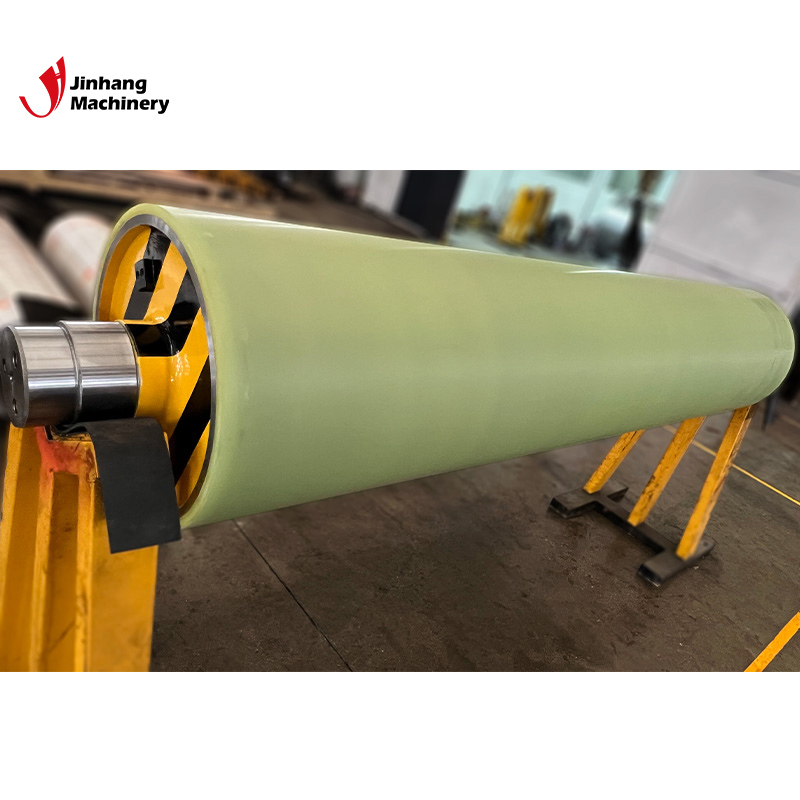
Do rubber rollers have a longer service life?
The service life of rubber-coated industrial rollers is affected by factors such as material formulation, processing, and operating environment. Under good maintenance and proper material selection, the service life of rubber rollers is generally significantly longer than that of plastic rollers.
The advantages of rubber rollers in terms of lifespan are:
• Less prone to cracking
• Less prone to deformation due to frictional heating
• Less prone to permanent compression due to continuous pressure
• Can be re-ground and re-coated
• Maintains high friction and elasticity even after long-term use
The lifespan limitations of plastic rollers mainly stem from:
• High coefficient of thermal expansion
• Localized heating due to friction
• Uneven surface hardness leading to inconsistent wear
• Rapid aging
Especially in high-speed, heavy-duty industrial applications, the lifespan of plastic rollers is significantly shorter than that of rubber rollers.
What are the advantages of rubber-coated industrial rollers in terms of equipment compatibility?
Industrial equipment typically requires precise configuration of rollers based on material thickness, material composition, and friction requirements. Rubber rollers offer high compatibility in this regard.
Why do equipment manufacturers prefer to use rubber rollers?
• Wide adjustable hardness range for rubber rollers
• Surface friction can be optimized for specific applications
• Customizable textures (e.g., smooth, embossed, diamond, spiral)
• Tight fit with metal shafts
• Buffers equipment vibration
• More suitable for high-speed equipment
Plastic rollers offer less customization, primarily limited by the material itself, which makes extensive adjustments difficult. Their surface treatment capabilities and friction control are less flexible than rubber rollers.
Are rubber rollers more cost-effective than plastic rollers?
Many companies initially believe that plastic rollers are cheaper and therefore more economical. However, from a total cost of ownership (TCO) perspective, rubber-coated industrial rollers are often more cost-effective.
Why are rubber rollers more cost-effective overall?
Reasons include:
• Longer service life, reducing replacement frequency
• Recyclable (grinding, coating), reducing maintenance costs
• Less impact on equipment, reducing equipment wear and tear
• High surface stability, reducing quality problems during production
• Less prone to dimensional inaccuracies due to temperature changes
Although some high-performance rubber rollers are more expensive than plastic rollers, their total lifecycle cost is often lower.
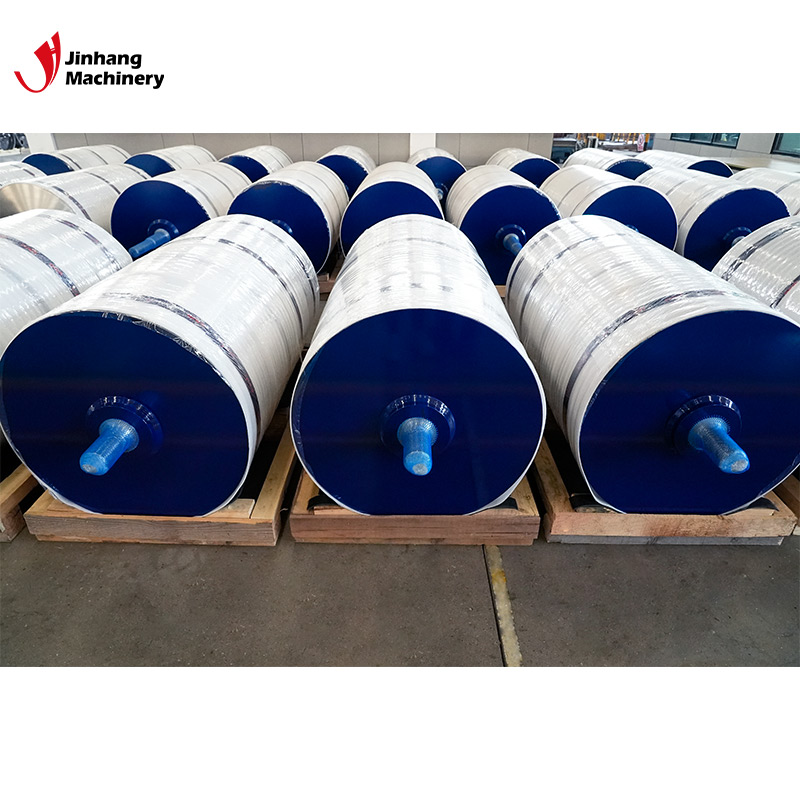
Which applications are best suited for rubber-coated industrial rollers?
Rubber rollers are generally superior to plastic rollers if your equipment meets any of the following characteristics:
• Requires stable friction
• Requires pressing, traction, or guiding
• Requires abrasion resistance and high pressure resistance
• Surfaces of materials that are easily damaged, such as films, paper, and textiles
• Requires withstanding high temperatures
• Requires long-term high-speed operation
• Requires use in solvent, oil, acid, or alkali environments
Therefore, rubber rollers are almost the default choice in industries such as printing, papermaking, packaging, metal processing, food conveying, and textiles.
Do plastic rollers still have their value?
Absolutely. While rubber-coated industrial rollers perform better in most scenarios, plastic rollers still offer some advantages:
• Lower cost
• Lighter weight
• Unaffected by the aging issues inherent in some rubber materials
• Stable performance under light loads, low speeds, and dry conditions
• Suitable for conveying applications where high friction is not required
Therefore, plastic rollers are suitable for low-cost or light-industry environments, especially in non-critical or auxiliary conveying equipment.
What key parameters should be considered when selecting rubber rollers?
To better leverage the advantages of rubber-coated industrial rollers, the following aspects can be evaluated:
1. Hardness (Shore hardness selected based on application)
2. Material type (nitrile, silicone, EPDM, polyurethane, etc.)
3. Surface texture (smooth, textured, uneven)
4. Temperature range
5. Chemical resistance
6. Resilience
7. Adhesion characteristics
8. Whether the formulation is suitable for long-term continuous operation
These factors will determine the actual performance of the rubber roller on the equipment.
Are rubber-coated industrial rollers better than plastic rollers?
In most industrial applications, rubber-coated industrial rollers are indeed superior to plastic rollers.
Their advantages include:
• Better elasticity
• More stable friction
• Higher wear resistance
• Longer service life
• Capable of handling more demanding working environments
• Wider range of industry applications
• Greater material customization
• Reprocessable and reusable
• Better equipment compatibility
While plastic rollers still have value in light-load, low-speed, and low-cost applications, rubber rollers are undoubtedly the more advantageous choice if your production demands high efficiency, stability, and quality control.