
What rollers are better than tungsten carbide coated rollers?
In modern industrial manufacturing, roller components play a crucial role in key processes such as calendering, coating, guiding, cooling, heating, and transfer printing. The material and surface wear resistance directly impact the efficiency and stability of the entire production line.
Tungsten carbide coated rollers, due to their high hardness, strong wear resistance, and excellent corrosion resistance, are widely used in industries such as film production, papermaking, lithium batteries, electroplating, textiles, and metal processing.
However, when users seek to further improve production efficiency or extend equipment life, a key question often arises: Are there industrial rollers better than tungsten carbide coated rollers?
This article will delve into this core question, analyzing the advantages and disadvantages of tungsten carbide rollers, and introducing several types of industrial rollers considered superior in specific applications.
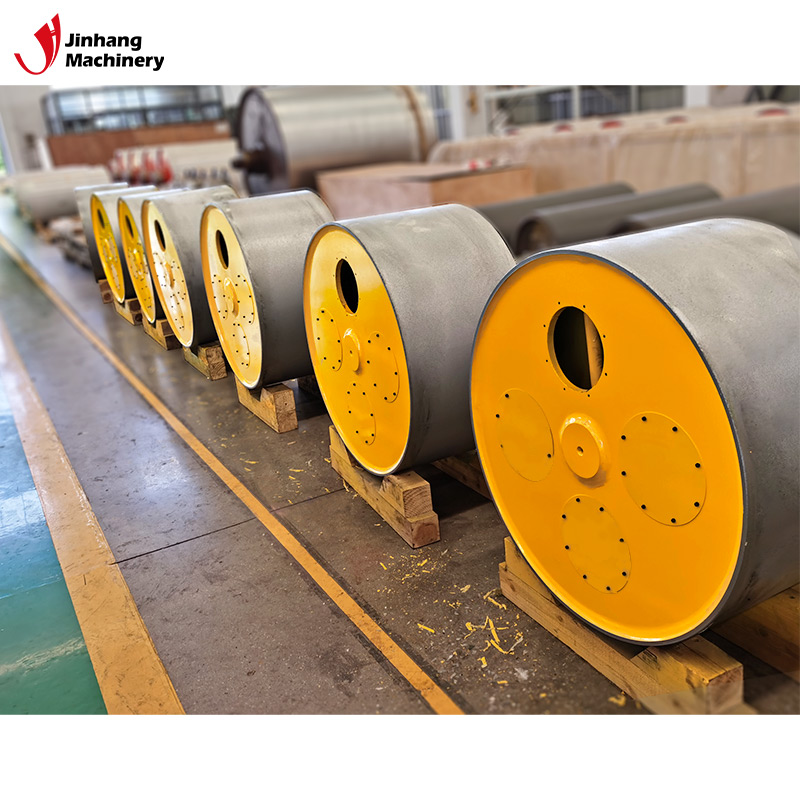
Are tungsten carbide coated rollers truly strong enough?
What are their unavoidable limitations?
Tungsten carbide-coated rollers have a dense tungsten carbide layer formed on their surface using HVOF (High-Speed Flame Offset) or plasma spraying techniques. Typically achieving a hardness of HV1200 or higher, they are one of the most common high-performance solutions for industrial rollers.
They offer:
• Extremely high abrasion resistance
• Good corrosion resistance
• High surface hardness
• Robust durability
• High surface roughness control
• Suitable for high-speed production lines
However, some unavoidable physical limitations remain:
1. Tungsten carbide coatings may develop microcracks under impact loads
High hardness means relatively high brittleness; microcracks may form at the coating edges under impact or abnormal localized pressure.
2. Performance degradation at high temperatures
Tungsten carbide coatings are generally suitable for temperatures below 500℃; performance degradation may occur above this range.
3. Inferior to some ceramic or chrome plating processes for ultra-high mirror finish requirements
Although polishable, the microporous structure of tungsten carbide coatings limits the achievement of higher levels of surface precision in some ultra-precision mirror applications.
4. Inferior Performance to Some Ceramic Materials in Solvent-Induced Corrosive Environments
For example, in strong acid and alkali environments, the cobalt-based binder of tungsten carbide coatings may be corroded.
For these reasons, several industrial rollers have emerged that are considered "superior to tungsten carbide coated rollers" in certain dimensions.
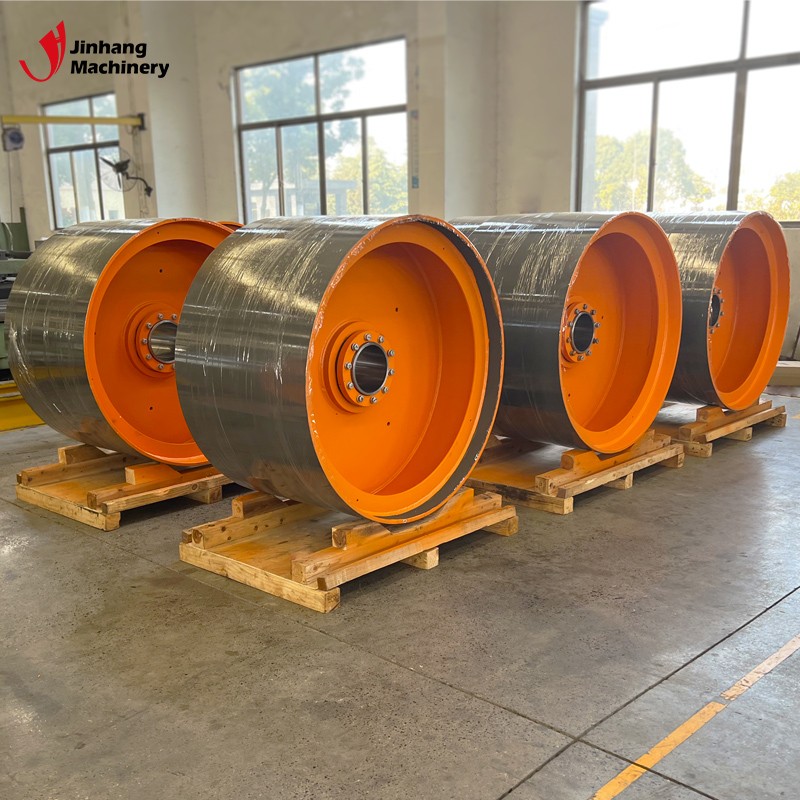
What materials are more durable than tungsten carbide rollers in highly corrosive environments?
In severely corrosive environments such as strong acids, alkalis, solvents, and salt spray, the following types of industrial rollers are often considered superior to tungsten carbide coated rollers:
1. Zirconia Ceramic Rollers (ZrO₂)
Features:
• Extremely strong corrosion resistance
• Not corroded by cobalt binder
• Surface can be polished to a very high mirror finish
• Strong chemical stability
In contrast, tungsten carbide rollers are more prone to binder corrosion in highly corrosive environments.
2. Alumina Ceramic Rollers (Al₂O₃)
Features:
• Stable corrosion resistance
• Long service life
• Good thermal stability
Suitable for production lines coating highly corrosive chemical solvents.
In ultra-high precision machining, which rollers offer superior surface properties compared to tungsten carbide rollers?
While tungsten carbide coatings can be polished to very high levels, the following two types of rollers offer advantages in certain ultra-precision machining applications:
1. Mirror-finish chrome-plated rollers (high-hardness chrome)
Features:
• Achieves extremely high precision (Ra 0.005–0.015 μm)
• Extremely high surface uniformity
• Extremely fine polishing
Suitable for:
• High-gloss films
• Optical films
• Precision embossing
• Advanced coatings
For certain ultra-gloss surface requirements, chrome-plated rollers still outperform tungsten carbide rollers.
2. Glass-ceramic rollers
Features:
• Highly uniform surface
• Achieves extremely high optical-grade precision
Primarily used in the optical industry.
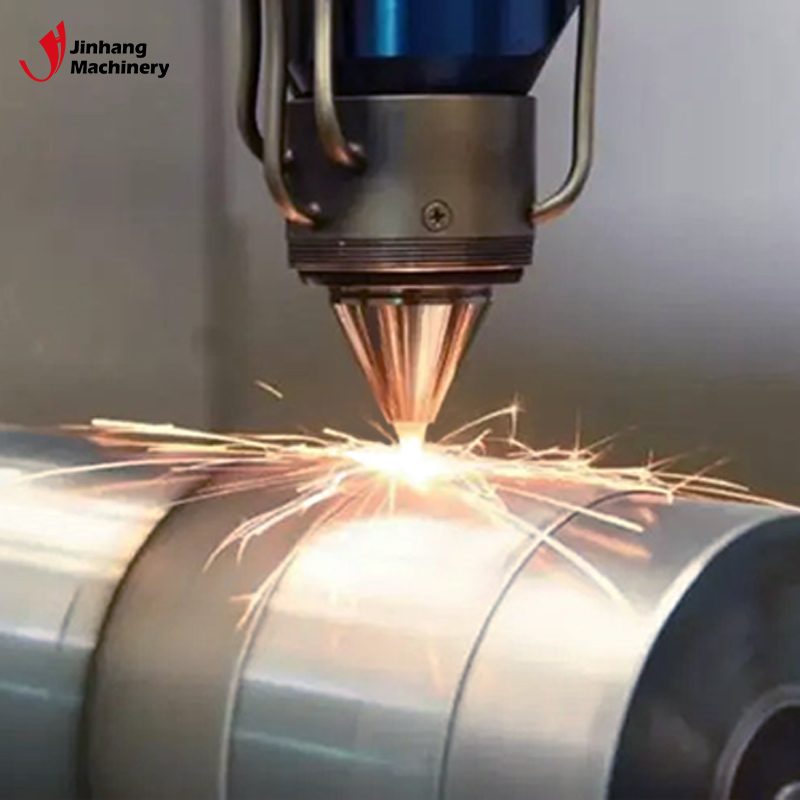
Under high-temperature conditions, which rollers offer better stability than tungsten carbide rollers?
Tungsten carbide coatings typically begin to degrade in performance above 500℃. Therefore, for extreme high-temperature conditions, the following types are superior:
1. Silicate ceramic rollers (such as SiC rollers)
Temperature resistance up to:
• 1000–1400℃
Features:
• No deformation
• Low thermal expansion
• Structural stability
Commonly used in:
• High-temperature annealing lines
• High-temperature drying systems
2. Quartz glass rollers
Features:
• Ultra-low coefficient of thermal expansion
• High temperature resistance
Used in high-temperature industries such as photovoltaics and glass processing.
Why are ceramic rollers considered "stronger" than tungsten carbide rollers in extreme wear-resistance requirements?
While tungsten carbide coated rollers have high hardness, ceramic rollers offer superior wear resistance in certain applications because:
1. Ceramic rollers are made of a single material, while tungsten carbide rollers only have a surface layer
The integral ceramic structure eliminates the risk of coating peeling.
2. Ceramic hardness is generally higher than tungsten carbide coating
For example, alumina and zirconium oxide can both achieve a hardness of HV1500–2000.
3. Lower coefficient of friction
Improved wear resistance and reduced heat generation.
Therefore, in extremely abrasive environments (such as processing sandy materials or high-hardness metal powders), ceramic rollers are often more durable than tungsten carbide coated rollers.
In processing flexible materials, what rollers are less likely to damage the material than tungsten carbide rollers?
When processing films, composites, and soft materials, surface smoothness and uniformity are very important.
The following types outperform tungsten carbide coated rollers:
1. Rubber-coated rollers
Features:
• Smooth surface
• Protects films and paper
• Prevents indentations and scratches
2. Polyurethane rollers
Features:
• High elasticity
• Also suitable for high-speed lines
• Controllable friction
3. Chrome-plated mirror-finish rollers for coating
High mirror finish, more film-friendly.
Therefore, tungsten carbide rollers are not the optimal choice in terms of protective materials.
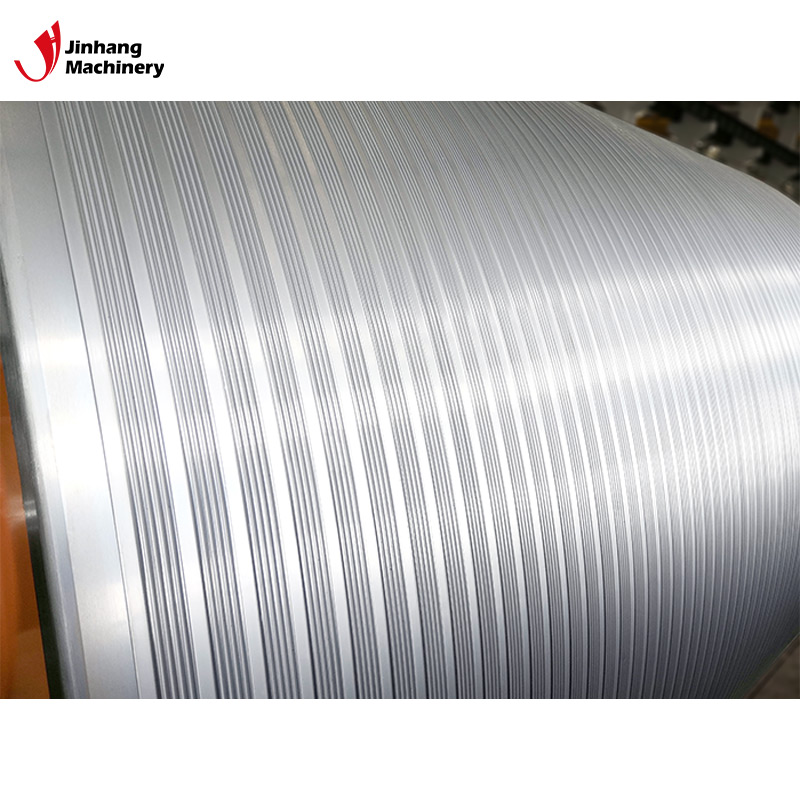
So what is the final answer? Is there an industrial roller that is "absolutely better than tungsten carbide rollers"?
The conclusion is:
There is no roller that is "absolutely better than tungsten carbide coated rollers".
There are only rollers that are more suitable for specific operating conditions.
The following are the choices that are superior to tungsten carbide coated rollers under different operating conditions:
Operating Conditions | Rollers More Suitable Tungsten Carbide Coated Rollers
Highly Corrosive Environments | Zirconia Ceramic Rollers, Alumina Ceramic Rollers
Super Mirror Optical Processing | Mirror-Plated Chrome Rollers, Glass Ceramic Rollers
High Temperature Environments | SiC Rollers, Quartz Rollers
Extreme Wear Resistance | Solid Ceramic Rollers
Flexible Material Protection | Polyurethane Rollers, Rubber Rollers
Requirements for Low Friction or High Insulation | Ceramic Rollers, Glass Rollers