
What are the advantages of an industrial hot oil roller?
In various industrial heat treatment equipment, the "heating roller" is a crucial core component in the heat processing of products such as films, paper, metal foils, rubber materials, and polymer sheets. The heating roller provides a stable, uniform, and controllable temperature environment, allowing materials to maintain necessary physical properties and dimensional stability during heating.
Among the types of heating rollers, one of the most widely used and highest-performing structures is the industrial hot oil roller (also known as a thermal oil roller).
Many people wonder:
Since heating rollers can also use steam heating, electric heating, water heating, etc., what are the advantages of a hot oil roller compared to other heating methods?
Why do many high-end production lines prefer to use thermal oil as the heating medium?
This article will delve into the key technical aspects of the hot oil roller, including its structural principles, temperature performance, thermal stability, energy consumption, operating characteristics, and applicable scope, to analyze its key advantages compared to other heating methods.
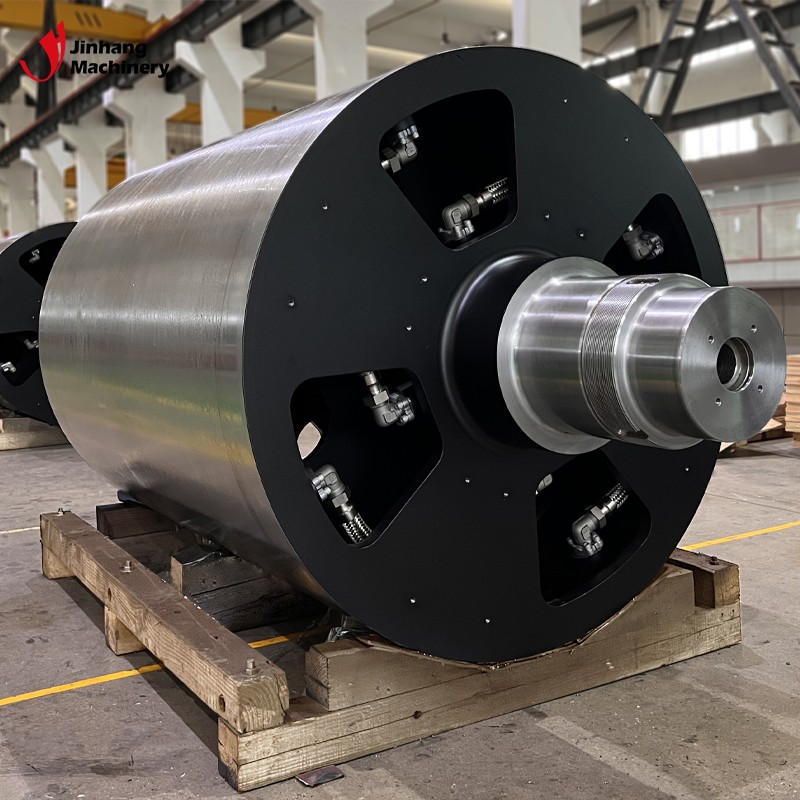
Where do the differences between a hot oil roller and other heating methods mainly lie?
Before comparing hot oil rollers with other types of heated rollers, let's clarify the common heating methods used in industry:
• Steam-heated rollers
• Electric-heated rollers
• Thermal oil-heated rollers
• Water-heated rollers (primarily for cooling)
• Gas-fired or infrared-heated rollers (rarely used inside the roller body)
Different heating principles result in completely different performance in terms of thermal efficiency, temperature range, stability, and control precision.
The reason hot oil rollers are widely used in high-end equipment and demanding heat treatment industries is precisely because the characteristics of their heat transfer medium make their overall advantages more prominent.
Why is thermal oil more suitable for the high-temperature working environment of heated rollers?
The core advantage of hot oil rollers comes from a substance—thermal oil. Thermal oil, as a heat transfer medium, has the following characteristics:
1. High boiling point, not easily vaporized
It can work stably in high-temperature environments of 180–350℃ without producing vapor-liquid two-phase fluctuations like water or steam.
2. Large heat capacity, strong heat retention
It can store more heat energy, keeping the temperature of the heated roller highly stable.
3. Good fluidity, facilitating uniform heat transfer
The oil guiding system can form a stable circulation, resulting in a more uniform temperature distribution inside the heating roller.
4. Low pressure, high system safety
Even at temperatures above 300℃, the heat transfer oil system operates at low pressure, far lower than the high pressure of a steam system.
These characteristics of heat transfer oil give hot oil rollers unique industrial advantages.
Why do hot oil rollers offer superior temperature uniformity?
The uniformity of the heating roller's temperature directly affects the product's:
• Thickness stability
• Surface quality
• Mechanical strength
• Physical property distribution
• Stress control
Hot oil rollers rely on an internal spiral oil path structure, allowing the heat transfer oil to flow continuously along a spiral or serpentine channel, thus achieving highly uniform heat transfer.
Advantages compared to other heating methods:
1). Compared to steam-heated rollers
Steam undergoes condensation changes, resulting in "temperature difference zones," meaning uneven temperature distribution between high and low temperature zones. Heat transfer oil, however, does not undergo phase change, resulting in more stable temperature.
2). Comparison with Electric Heated Rollers
Electric heating relies on resistance wires for single-point heating; if the distribution is imperfect, localized overheating can easily occur. In contrast, the internal oil channels of a hot oil roller evenly cover the entire roller.
Therefore, the temperature difference of a hot oil roller can be controlled within ±1~2℃, a level that is difficult to achieve with other methods.
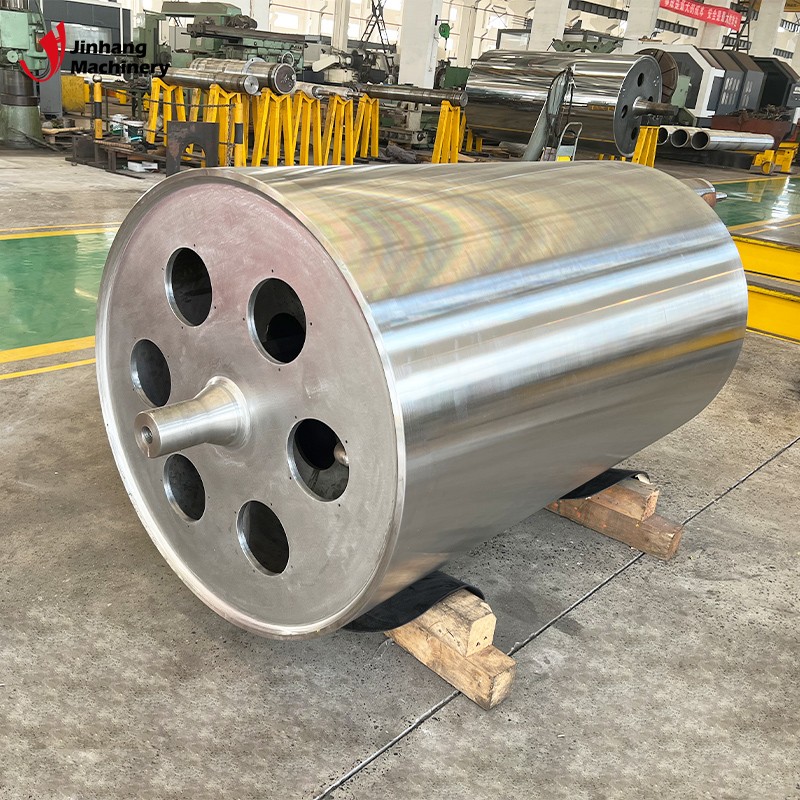
Why is the temperature control precision of a hot oil roller higher?
Temperature control precision is an important indicator for evaluating the performance of a heated roller.
Hot oil rollers achieve:
• Precise temperature control (±0.5℃~±1℃)
• Wide temperature range control (80℃~350℃)
• Stable heating and gradual cooling
This is because:
1. Heat transfer oil systems are typically equipped with PID control
2. Hot oil circulation equipment includes thermostatic valves and proportional control valves
3. Hot oil systems heat up gradually, without temperature spikes
4. There are no temperature fluctuations caused by gas-liquid phase changes
In contrast:
• Electric heating temperature control is affected by resistance wires, sometimes resulting in temperature spikes
• Steam heating temperature stability is affected by steam pressure fluctuations
• Water heating is not suitable for high-temperature ranges
Therefore, hot oil rollers are more competitive in the high-precision heat treatment industry.
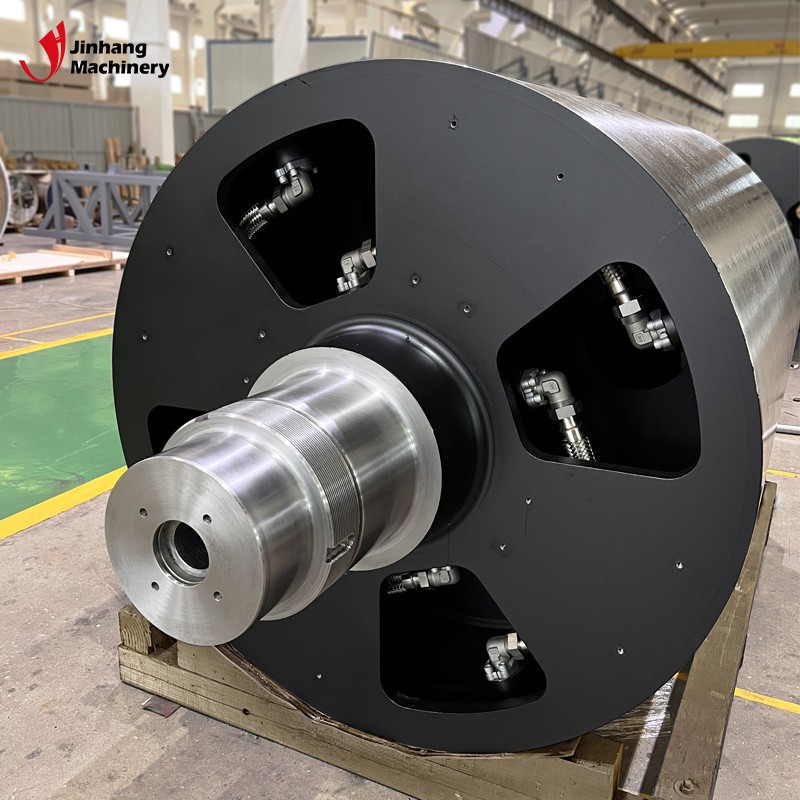
What are the energy advantages of hot oil rollers?
Many users wonder: Does using hot oil equipment increase energy consumption?
However, in reality, the thermal efficiency of hot oil rollers is usually higher than that of steam and electric heating.
Reasons include:
1. High heat capacity and strong heat retention
The power required to maintain the temperature after a single heating cycle is relatively low.
2. Low flow resistance of heat transfer oil
The energy consumption of pump circulation is much lower than that of steam boilers.
3. Low-pressure operation of the hot oil system
Reduces heat loss due to steam depressurization and vaporization.
4. No phase change loss
Steam condensation and revaporization processes result in significant energy loss, while heat transfer oil does not undergo phase change, making it more energy-efficient.
Therefore, hot oil rollers are generally more energy-efficient than other methods in long-cycle production.
Why are hot oil rollers considered more reliable in terms of safety?
Safety is an indispensable factor for all industrial heat treatment equipment.
The safety advantages of the hot oil roller system include:
1. Low-pressure operation
Even when operating above 300℃, only low-pressure circulation is required, eliminating the risk of high-pressure explosion associated with steam systems.
2. No equipment corrosion from heat transfer oil
Unlike steam, which can cause pipeline corrosion and pressure vessel aging.
3. No scaling
Water and steam easily form scale at high temperatures, while heat transfer oil does not have this problem, avoiding a decrease in thermal efficiency.
4. Stable system, less prone to shocks
Steam heating can cause shocks when pressure fluctuates, while the oil-conducting system is relatively stable.
Therefore, from the perspective of long-term production stability and safety, using heat transfer oil for heating rollers is more reliable.
Can a hot oil roller achieve a wider temperature range?
Yes. A major advantage of hot oil rollers is their wide temperature range.
Hot oil rollers support temperatures of:
80℃ to 350℃ or even higher
Compared to other heating methods:
Heating Type | Available Temperature Range | Limiting Reasons
Heat-conducting oil heating roller | 80–350℃ | Oil has a high boiling point
Steam heating roller | 120–180℃ | Steam pressure limitation
Electric heating roller | 0–250℃ (standard) | Resistance wire life limitation
Water heating roller | 0–90℃ | Water boiling point limitation
Therefore, hot oil rollers are suitable for:
• High-temperature curing
• High-temperature bonding
• Heated calendering
• High-temperature setting
• High-temperature heat treatment
Its applicability is far greater than other heating methods.
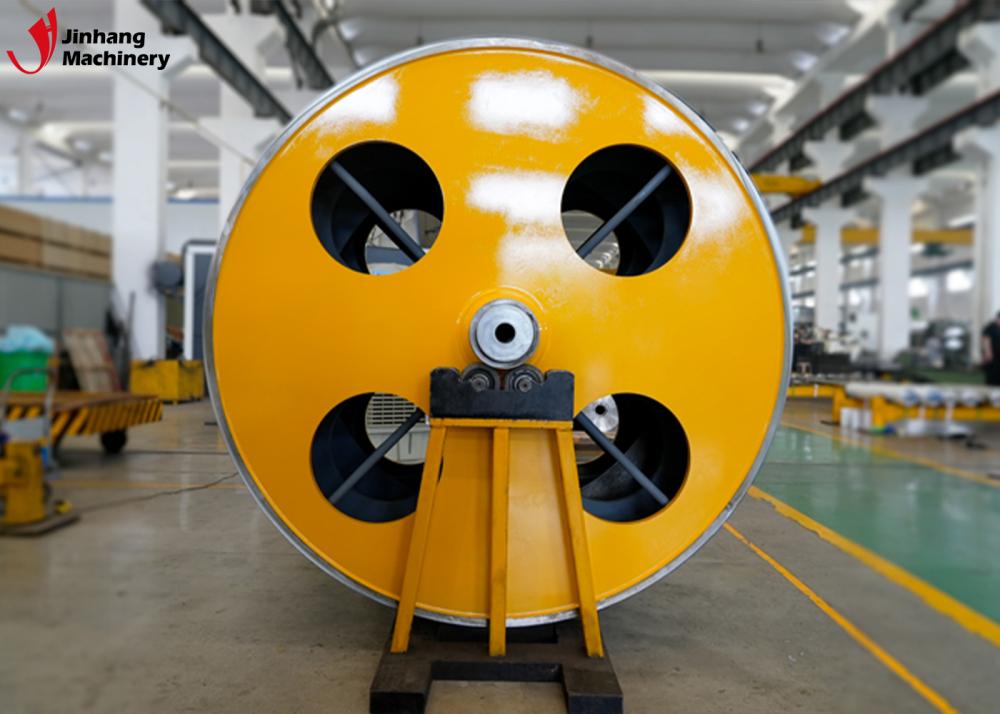
What are the advantages of the hot oil roller's roller structure design?
The internal structure of the heating roller determines its temperature uniformity and thermal efficiency.
Hot oil rollers typically employ:
• Spiral internal oil passages
• Double-spiral circulation structure
• Multi-loop distributed heat conduction design
These structures help to:
• Ensure uniform distribution of heat transfer oil within the roller body
• Improve thermal balance
• Reduce temperature difference ranges
• Reduce thermal resistance loss
• Improve overall temperature control response speed
In contrast:
• Electric heating rollers cannot achieve such complex heat flow distribution internally
• Steam-heated rollers have difficulty achieving uniform condensate return
• Water-heated rollers have flow rates significantly affected by thermal expansion and contraction
Therefore, hot oil rollers are designed to achieve better uniform heat transfer.
What are the aspects of the long-term stability of hot oil rollers?
Hot oil rollers have significant stability advantages under long-term operation:
1. Less prone to thermal shock cracks
The heat transfer oil heats up smoothly, unlike steam which experiences sudden temperature changes.
2. No scaling of the heat transfer oil
Ensuring stable long-term thermal efficiency.
3. Less impact on the roller structure
Low-pressure operation extends the roller's lifespan.
4. The roller body is less prone to internal corrosion
The heat transfer oil is a closed-loop system, free of corrosive agents.
These factors make hot oil rollers a crucial choice for high-load production lines.
Why is hot oil heating preferred in demanding equipment?
Summarizing the core advantages of hot oil rollers, their superiority over other heating methods is primarily reflected in:
✔ High temperature uniformity
High stability within ±1–2℃ meets the needs of high-precision industries.
✔ Precise temperature control
Suitable for temperature-sensitive materials.
✔ Wide temperature range
Capable of handling high-temperature processes.
✔ Low power consumption
More energy-efficient during long-term operation.
✔ High safety
Low-pressure system reduces the risk of bursting.
✔ Stable thermal circulation
Suitable for production lines operating 24 hours a day.
✔ Non-corrosive and non-scaling
Lower maintenance costs and longer lifespan.
Because of these advantages, hot oil rollers have become the mainstream choice for:
• Film processing
• Coating equipment
• Rubber and plastic calendering
• Bonding equipment
• Composite material processing
• Battery material baking production line
and other industries.