
Casting Film Roller vs. Cooling Roller: What's the Difference?
In industrial roller equipment, different types of rollers perform different process functions. Among them, casting film rollers and chilling rollers are two very common functional rollers in hot processing and material forming processes.
Because both involve the "cooling" process, they are often confused in practical applications and are even considered different names for the same equipment.
Failure to correctly distinguish between them during equipment selection or design can lead to performance mismatches and difficulties in process control.
So, what exactly is the difference between a casting film roller and a chilling roller?
This article will systematically analyze the differences from the perspectives of definition, function, structure, thermal characteristics, and applications to help you build a clear and professional understanding.
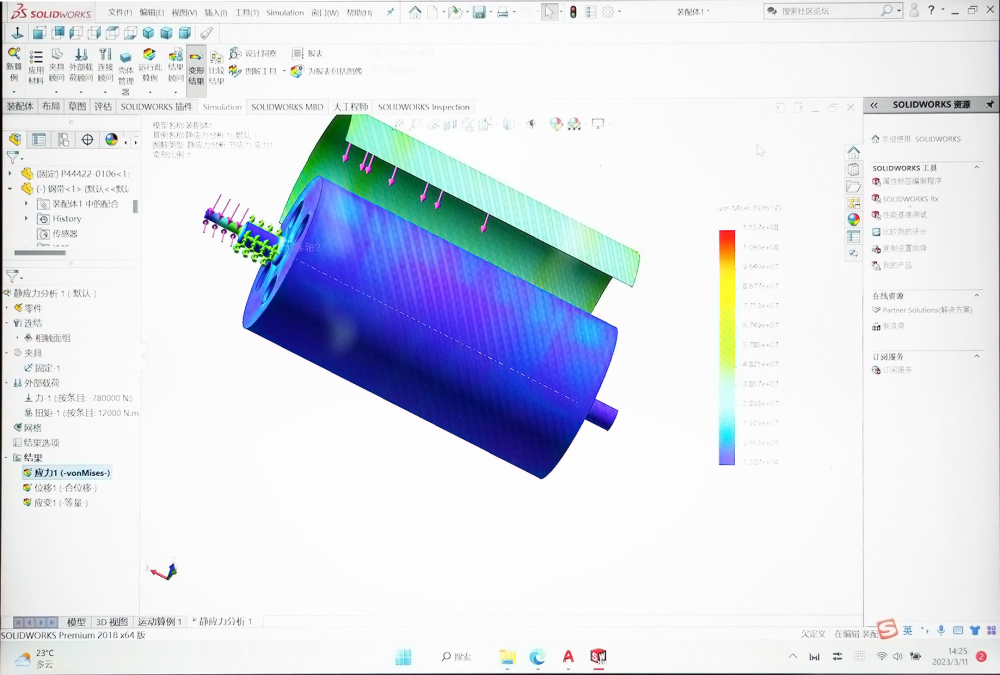
What are the basic differences in the definitions of casting film rollers and chilling rollers?
What is a casting film roller?
A casting film roller is a high-precision industrial roller used in the casting process to directly contact the molten material, achieving rapid cooling, shaping, and surface replication. Its core characteristics are:
• Directly participates in the material forming process
• Controls film thickness and surface quality
• Requires extremely high temperature uniformity
What is a cooling roller?
A cooling roller is a broader type of industrial roller whose main functions are:
• Cooling processed or semi-processed materials
• Controlling material temperature
• Providing a stable cooling environment
Cooling rollers typically do not directly participate in the initial forming of the material, but rather play a supporting cooling role.
What are the differences in process positioning between casting film rollers and cooling rollers?
Positional Characteristics of Cast Film Rollers
In a casting production line, cast film rollers are typically located at:
• The first contact point after the melt leaves the die.
This position dictates that the cast film roller must perform:
• Initial cooling
• Initial shaping
• Surface forming
Positional Characteristics of Cooling Rollers
Cooling rollers are typically located at:
• Subsequent cooling section
• After conveying or shaping
Therefore, the main functions of cooling rollers are:
• Supplemental cooling
• Temperature stabilization
• Prevention of material deformation
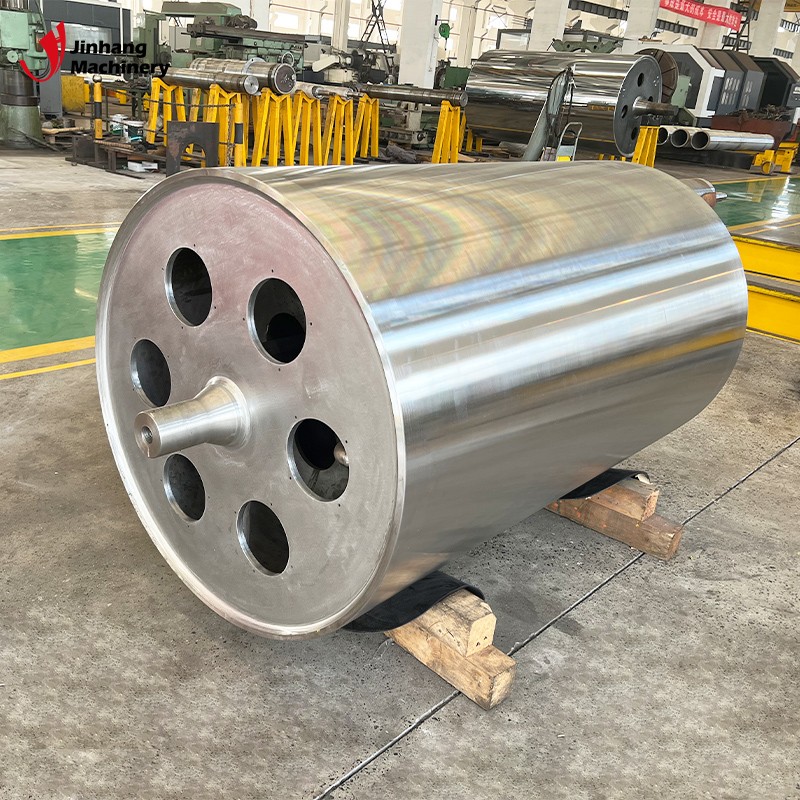
What are the fundamental differences in the functional roles of cast film rollers and cooling rollers?
Functional Role of Cast Film Rollers
Casting film rollers are "forming rollers," whose core functions include:
• Cooling the melt
• Controlling thickness
• Imparting surface properties
• Determining the initial structure of the product
Functional Role of Cooling Rollers
Cooling rollers are "auxiliary rollers," whose main functions are:
• Reducing material temperature
• Preventing overheating
• Stabilizing the process
Therefore, we can summarize:
Casting film rollers determine "what it will look like," while cooling rollers are primarily responsible for "cooling it down."
What are the differences in thermal requirements between casting film rollers and cooling rollers?
Thermal Requirements for Cast Film Rollers
Cast film rollers need to meet the following requirements:
• Highly efficient and rapid heat exchange
• Extremely high temperature uniformity
• Precise temperature control
Because any temperature fluctuation will directly affect:
• Film thickness
• Surface quality
• Forming stability
Thermal Requirements for Cooling Rollers
Thermal requirements for cooling rollers are relatively less stringent, typically focusing on:
• Cooling capacity
• Temperature stability
• Continuous operation capability.
Temperature accuracy requirements are generally lower than for cast film rollers.
What are the structural design differences between cast film rollers and cooling rollers?
Structural Characteristics of Cast Film Rollers
Cast film rollers typically feature:
• High-precision thin-walled structure (common in thin-walled roller designs)
• Optimized internal cooling channels
• High thermal conductivity materials
• Precision-machined surfaces
Their design goals are:
• Improved thermal response speed
• Ensured temperature uniformity
• Provided a stable contact surface
Structural Characteristics of Cooling Rollers
Cooling rollers have a relatively simple structure, typically including:
• Standard hollow or solid structure
• Conventional cooling channels
• General machining precision
Their design focuses more on:
• Durability
• Stability
• Economy
What are the differences in surface requirements between cast film rollers and cooling rollers?
Surface Requirements for Cast Film Rollers
The surface of a cast film roller directly affects the product, therefore it requires:
• Extremely high gloss or specific texture
• Defect-free surface
• Uniform surface condition The surface quality of a cast film roller is usually replicated on the product.
Surface Requirements for Cooling Rollers
The surface requirements for cooling rollers are relatively low, typically only requiring:
• Ensuring basic flatness
• Meeting conveying or contact requirements
They do not directly determine the product's appearance quality.
Are the temperature uniformity requirements the same for casting film rollers and cooling rollers?
Temperature Uniformity Requirements for Casting Film Rollers
Casting film rollers must ensure:
• Consistent axial temperature
• Stable circumferential temperature
• Minimal internal and external temperature difference
Because uneven temperature directly leads to:
• Film thickness fluctuations
• Surface defects
Temperature Uniformity Requirements for Cooling Rollers
While cooling rollers also require temperature uniformity, their requirements are generally lower than those for casting film rollers because they do not directly participate in the forming process.
What are the differences in manufacturing precision between casting film rollers and cooling rollers?
Manufacturing Precision Requirements for Casting Film Rollers
Casting film rollers require:
• Extremely high roundness and coaxiality
• Excellent dynamic balance performance
• Strict dimensional control
This is the foundation for ensuring product consistency.
Manufacturing Precision Requirements for Cooling Rollers
While manufacturing precision is important for cooling rollers, a wider tolerance range is generally permissible.
What are the differences in operational stability between casting film rollers and cooling rollers?
Operating Requirements for Cast Film Rollers
Casting film rollers must maintain:
• Constant rotational speed
• Stable temperature
• Precise positioning. Any slight fluctuation can affect product quality.
Operating Requirements for Cooling Rollers
Cooling rollers prioritize:
• Stable continuous operation
• Basic temperature control
• Mechanical reliability
Can casting film rollers and cooling rollers be substituted for each other?
This is a question of great concern to many engineers.
Can casting film rollers replace cooling rollers?
In some cases, casting film rollers can perform some cooling functions, but this is not their primary design objective.
Can cooling rollers replace casting film rollers?
Generally, no. The reasons are:
• Cooling rollers cannot provide sufficient temperature accuracy
• Surface quality cannot meet molding requirements
• Structural design is not suitable for initial shaping.
Why are casting film rollers more complex to design?
Cast film rollers are not merely cooling components, but rather a comprehensive system:
• Thermal system
• Structural system
• Surface engineering system
Their design must consider:
• Thermal conduction
• Mechanical strength
• Surface properties
Therefore, the complexity of cast film rollers is far greater than that of ordinary cooling rollers.
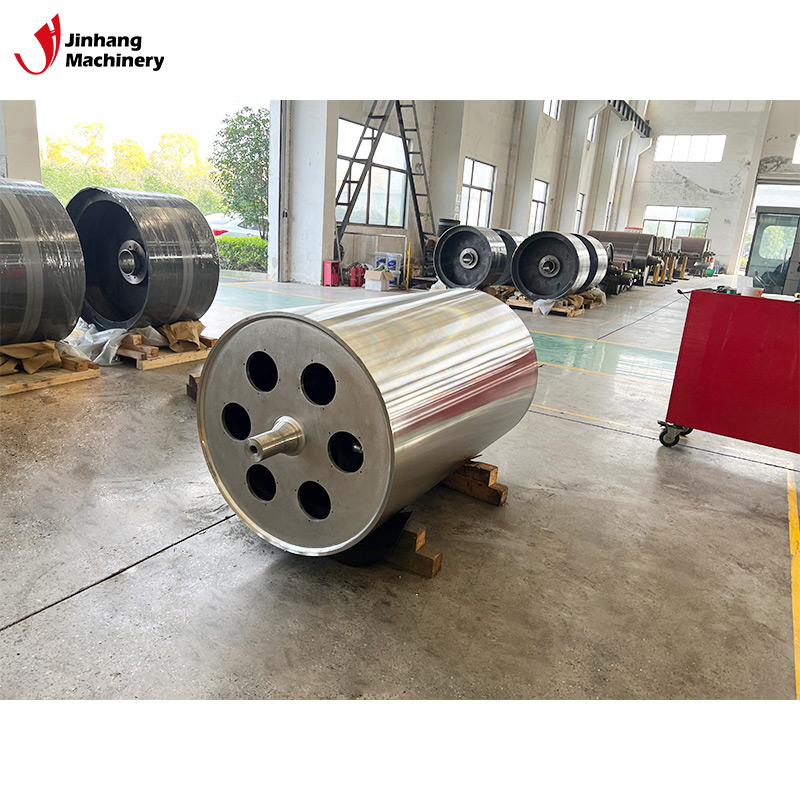
How to quickly distinguish between cast film rollers and cooling rollers from an engineering perspective?
This can be determined by the following key points:
• Does it directly participate in material forming? → Cast film roller
• Is it mainly used for cooling? → Cooling roller
• Does it have extremely high requirements for surface quality? → Cast film roller
• Does it have extremely strict requirements for temperature uniformity? → Cast film roller
What are the differences between cast film rollers and cooling rollers?
Cast film rollers are the core rollers that directly participate in material forming and determine product quality, while cooling rollers are mainly used to reduce material temperature and assist in stabilizing the process. There are fundamental differences between the two in terms of functional positioning, design requirements, and engineering complexity.
Understanding this is crucial for correctly selecting equipment, optimizing processes, and improving product quality.
Can you manufacture tungsten carbide coated rollers?
Yes. As an experienced carbide coated roller manufacturer, we produce rollers with extremely hard and wear-resistant surfaces using high-performance carbide spraying technology. These rollers are suitable for harsh environments such as steel processing, high-pressure calendering, mineral equipment, and heavy-duty tension systems.
Our carbide coatings significantly extend roller lifespan and improve production stability. We ensure uniform coating density and hardness through advanced inspection procedures.