Can EPDM rubber rollers be used in steam environments?
Among the many roller materials used in industrial equipment, EPDM rubber rollers are widely used in production environments involving high temperatures, high humidity, and drastic climate changes due to their excellent heat resistance, steam resistance, aging resistance, and outstanding ozone resistance.
However, for many engineers, equipment maintenance personnel, or purchasing managers, a key question is:
Can EPDM rubber rollers be used stably in steam environments for extended periods?
The answer is yes.
EPDM (ethylene propylene rubber), with its saturated molecular structure and special formulation system, possesses "excellent steam resistance," "high-temperature stability," and "excellent aging resistance." Data shows that after nearly 100 hours in a superheated steam environment at 230°C, the appearance of EPDM material remains stable, without cracking, deformation, or powdering. This is a key reason why EPDM rubber rollers excel in steam-intensive working conditions.
This article will delve into the performance of EPDM rubber rollers in steam environments from multiple perspectives, including steam resistance mechanisms, thermal properties, material structure, electrical properties, environmental adaptability, and stability in high-humidity environments, helping you determine if they are suitable for your equipment.
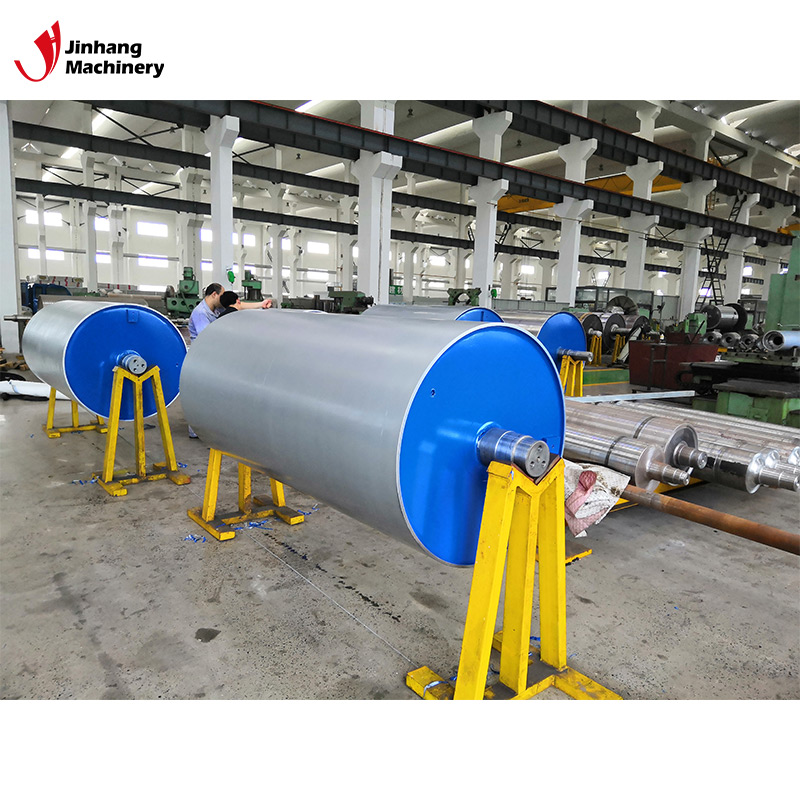
Why can EPDM rubber rollers adapt to high-temperature steam environments?
From a materials science perspective, the molecular structure of EPDM determines its natural resistance to steam. Steam environments are typically characterized by high temperature, humidity, and high pressure, which often manifests as:
• Expansion
• Softening
• Surface cracking
• Chain breakage due to air oxidation
• Accelerated aging
However, EPDM can withstand these conditions because its skeleton has a highly saturated structure, making it less prone to thermo-oxidative reactions, thus ensuring the physical stability of EPDM rubber rollers in steam environments.
It is particularly noteworthy that: EPDM material maintains its appearance unchanged after nearly 100 hours in superheated steam at 230°C, which is extremely rare among rubber materials.
This means that EPDM rubber rollers can withstand not only high temperatures but also the dual challenges of high humidity and high pressure.
What is the heat resistance mechanism of EPDM rubber rollers?
EPDM's heat resistance stems from:
1. High molecular chain saturation – virtually no double bonds that can react with oxygen.
2. Stable crosslinking system – compact structure after vulcanization, not easily thermally decomposed.
3. Strong resistance to high-temperature oxidation – not easily corroded in hot and oxygen environments.
4. Low thermal expansion – not easily dimensionally abnormal due to heat.
5. Low water absorption – no hydration expansion even in a steam environment.
Therefore, EPDM rubber rollers can withstand not only short-term high-temperature impacts but also long-term high-temperature operation.
Other common rubber materials, such as nitrile rubber, natural rubber, and styrene-butadiene rubber, tend to age rapidly in steam or high-temperature environments.
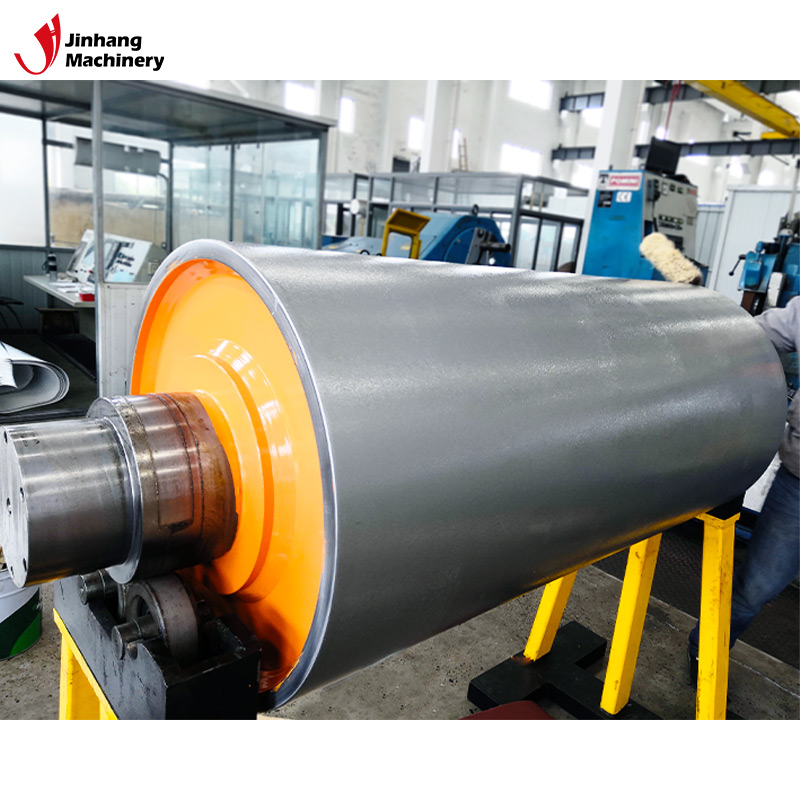
Will EPDM rubber rollers expand or degrade in steam?
Many rubbers experience significant water absorption and expansion in steam, leading to dimensional errors, surface delamination, or decreased strength. However, EPDM rubber rollers almost never exhibit these problems.
The reasons are as follows:
1. EPDM has extremely low water absorption
EPDM does not easily absorb water, therefore it will not swell due to steam erosion.
2. EPDM is stable to hot water and saturated steam
EPDM exhibits high chemical stability in saturated steam and will not undergo hydrolysis.
3. EPDM's cross-linked structure remains robust even in high humidity environments
Water vapor will not attack its cross-linking points, thus preventing surface delamination.
4. EPDM is not easily damaged by oxygen, nitrogen, or heat in steam
Steam environments often involve oxidation risks, but EPDM has extremely strong oxidation resistance.
Therefore, EPDM rubber rollers can operate stably in long-term steam conveying equipment, high-temperature drying terminals, and hot water treatment units.
Will the mechanical properties of EPDM rubber rollers decrease in a steam environment?
Generally, steam easily causes rubber surfaces to soften, lose elasticity, or crack, but the opposite is true for EPDM.
EPDM rubber rollers offer the following advantages in steam environments:
• Strong resistance to thermal fatigue
• Maintains stable elasticity, without becoming sticky or hardened due to humidity and heat
• Excellent resistance to compression set
• High resilience, less prone to fatigue cracking
• Good tear resistance, less susceptible to damage from steam erosion
This means that even when the equipment is operating in a steam environment, the roller surface and the material maintain stable contact, ensuring uniform traction, guiding force, and pressing.
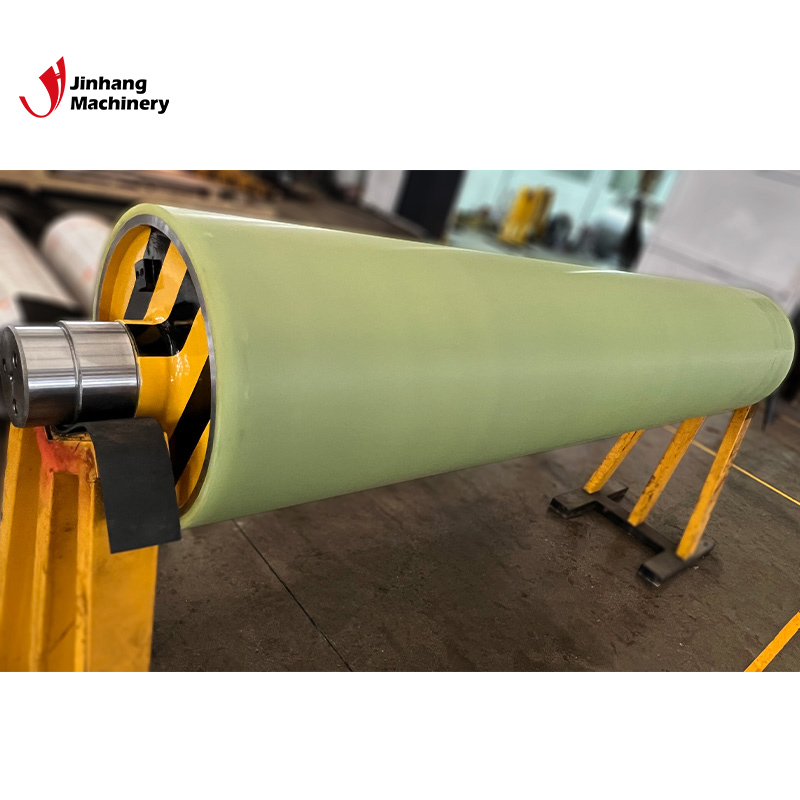
Is the electrical insulation performance of EPDM rubber rollers still reliable in steam environments?
Humid and hot environments significantly reduce the electrical insulation capacity of many materials. However, EPDM is an exception.
EPDM inherently possesses excellent electrical insulation and anti-corona properties, maintaining stable electrical performance even in steam, mist, or humid environments.
Its insulation properties are superior to or approach those of the following materials:
• Styrene-butadiene rubber (SBR)
• Chlorosulfonated polyethylene (CSM)
• Polyethylene (PE)
• Cross-linked polyethylene (XLPE)
Therefore, EPDM rubber rollers can not only withstand steam but also maintain safety in humid and hot environments involving high-voltage equipment, making them particularly suitable for:
• Cable manufacturing equipment
• Electrical heat treatment machinery
• Telecommunications and optoelectronics industries
• Processing equipment near current sources
This makes EPDM rubber rollers a rare material in steam equipment that is both heat-resistant and insulating.
Why are EPDM rubber rollers better suited for steam environments than other materials?
The following are the key advantages of EPDM rubber rollers compared to other rubber materials in steam environments:
1. Superior heat resistance
EPDM can withstand temperatures above 150°C, while natural rubber and nitrile rubber begin to age below 100°C.
2. Excellent Steam Resistance
Tests show that EPDM maintains stable appearance after 100 hours in superheated steam at 230°C, a feat many rubbers cannot achieve.
3. Outstanding Anti-aging Properties
High-temperature steam often accelerates aging, but EPDM exhibits excellent anti-aging properties and does not crack even after long-term use.
4. Strong Ozone Resistance
Steam environments are often accompanied by highly oxidizing ozone; EPDM does not develop ozone cracks.
5. High Stability in Humid and Hot Environments
EPDM does not absorb water or expand, and its dimensional accuracy is not affected by changes in humidity and heat.
6. Stable Electrical Insulation Properties
Even in humid environments, EPDM rubber rollers maintain high insulation properties, a feat many rubbers struggle to achieve.
These characteristics collectively constitute the core competitiveness of EPDM rubber rollers in steam environments.
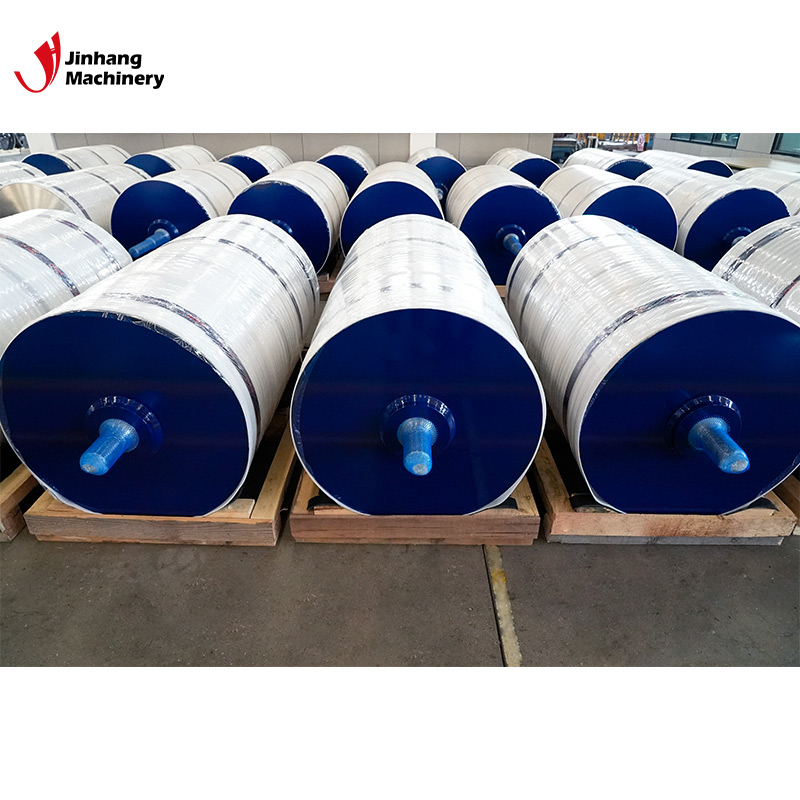
What types of steam environments can EPDM rubber rollers withstand?
EPDM rubber rollers are suitable for various steam-related operating conditions, such as:
• Saturated steam environment: EPDM has low moisture absorption and can be used for extended periods in saturated steam.
• Superheated steam environment: EPDM maintains a stable structure even at 230°C, making it suitable for high-temperature and high-pressure conditions.
• Intermittent steam shock: EPDM exhibits excellent thermal stability under rapid temperature changes and is not prone to thermal fatigue.
• High humidity and heat environment: EPDM is not easily hydrolyzed or swells in either high-temperature and low-temperature humid environments.
• Continuous cleaning or high-temperature rinsing scenarios: EPDM will not suffer surface damage from frequent contact with hot water and steam.
Therefore, EPDM rubber rollers are widely used in steam processing, drying sections, hot water washing, and air conditioning heating equipment.
Summary of the Practical Advantages of EPDM Rubber Rollers in Steam Environments
To better understand the performance of EPDM rubber rollers in steam environments, we can summarize their advantages as follows:
1. Stable long-term operation in high-temperature steam
2. High temperature resistance without expansion, softening, or cracking
3. Far superior anti-aging properties compared to general rubber materials
4. Extremely strong ozone resistance, suitable for oxidizing environments
5. Strong electrical insulation properties even in humid and hot environments
6. Resistant to water vapor erosion, without hydration degradation
7. Stable mechanical properties, with consistently consistent surface friction
8. Weather and wind resistance, suitable for outdoor steam conditions
As can be seen, EPDM rubber rollers not only function effectively in various steam environments but also perform exceptionally well, making them an ideal choice for many industries facing the dual environmental requirements of "high temperature + steam".