
Can Industrial Stainless Steel Heating Rollers Be Damaged by High Temperatures?
Among the vast array of industrial thermal processing equipment, the stainless steel heating roller stands out as one of the most common and critical functional components. It is utilized in processes such as plastic film extrusion, coating and drying, composite material calendering, textile preheating, paper drying, and metal foil processing. By heating, softening, drying, or stabilizing materials as they pass through the system, these rollers facilitate processes such as shaping, flattening, bonding, or structural transformation.
In these operational environments, stainless steel heating rollers are frequently required to withstand sustained high temperatures, cyclical heating, localized temperature fluctuations, surface pressure, and continuous high-speed rotation.
Consequently, many users frequently raise a common question:
“Can industrial stainless steel heating rollers be damaged by high temperatures?”
While this question may appear simple on the surface, it actually involves a complex interplay of factors, including material properties, thermal stress dynamics, roller manufacturing precision, temperature control methodologies, and environmental conditions.
Drawing upon a professional perspective, this article will provide an in-depth analysis of this topic—covering fundamental principles, material characteristics, temperature tolerance limits, and damage mechanisms—to help you gain a comprehensive understanding of the actual performance and operational limits of stainless steel heating rollers under high-temperature conditions.
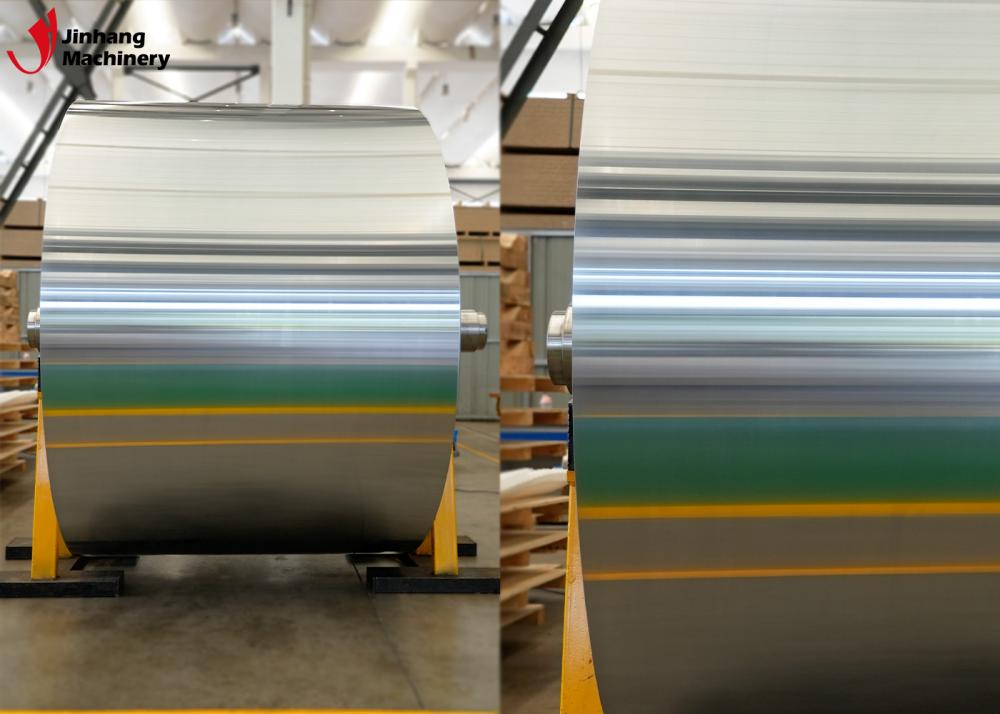
Just how high do the operating temperatures of stainless steel heating rollers actually get?
Typically, the operating temperature ranges for industrial stainless steel heating rollers are as follows:
•Low-Temperature Conditions: 50°C – 150°C
Used for plastic film printing, general drying applications, light-duty coating, etc.
•Medium-Temperature Conditions: 150°C – 300°C
Used for rubber processing, composite material preheating, calendering processes, paper drying, etc.
•High-Temperature Conditions: 300°C – 450°C
Used for metal foil processing, specialized film stretching, high-temperature calendering, etc.
In standard industrial applications, stainless steel heating rollers most commonly operate at temperatures below 300°C; scenarios involving temperatures exceeding 350°C are typically associated with specialized or advanced processes.
Only after establishing this context can we effectively address the question: “Can stainless steel heating rollers be damaged by high temperatures?”
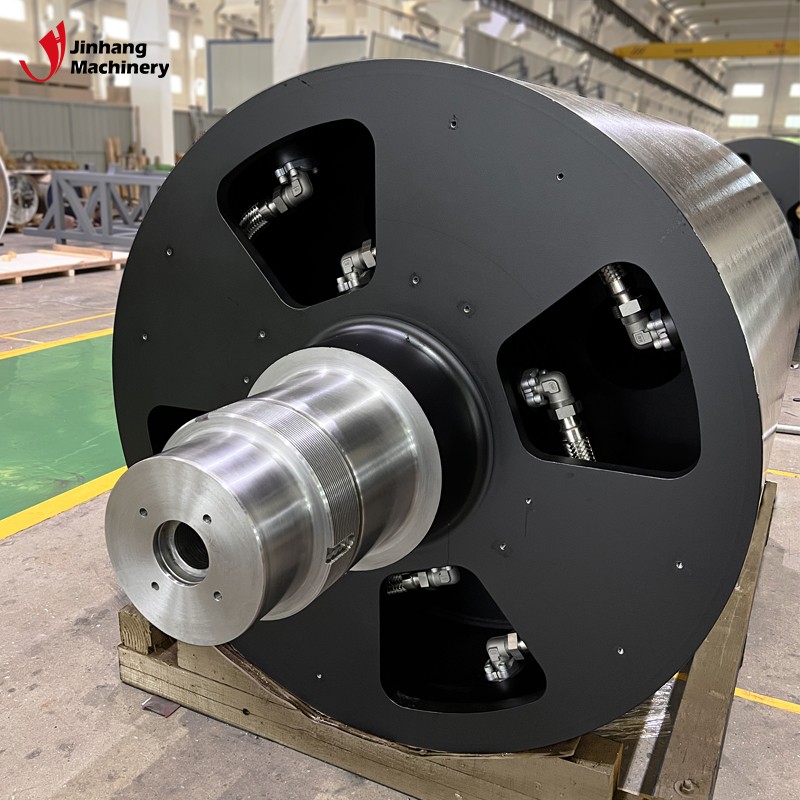
Which specific grades of stainless steel are commonly used for heating rollers, and what are their temperature tolerance limits?
Common materials used for stainless steel heating rollers include:
•304 Stainless Steel (Applicable temperature: ≤ 350°C)
•316L Stainless Steel (Applicable temperature: ≤ 400°C)
•310S Stainless Steel (Applicable temperature: ≤ 900°C)
•Special Heat-Resistant Stainless Steel / Alloy Steel (Applicable temperature: ≥ 1000°C)
These materials are capable of withstanding continuous heating across medium-to-high temperature ranges, allowing the stainless steel heating roller to maintain high stability under prolonged thermal cycling.
From this perspective:
The stainless steel heating roller itself is designed for high-temperature environments; generally, it will not be easily damaged simply due to high temperatures.
However, this does not mean it is immune to problems. Let us explore this in greater depth.
Can a stainless steel heating roller be damaged by high temperatures?
The short answer:
Yes, it is possible, but only under specific conditions.
Damage to a stainless steel heating roller caused by high temperatures is not the norm; it typically requires the presence of certain extreme factors, such as:
•Operating temperatures exceeding the material's permissible range
•Rapid temperature fluctuations leading to thermal fatigue
•Runaway internal heating elements or external heaters causing localized overheating
•Manufacturing defects within the roller body resulting in insufficient heat resistance
•Heat-intolerant surface coatings peeling off
•Internal pressure within the roller body exceeding its structural limits
From a truly professional standpoint, temperature itself is not the most dangerous factor; rather, "uneven temperature distribution" is the root cause of damage.
The following section will provide a systematic explanation of this phenomenon.
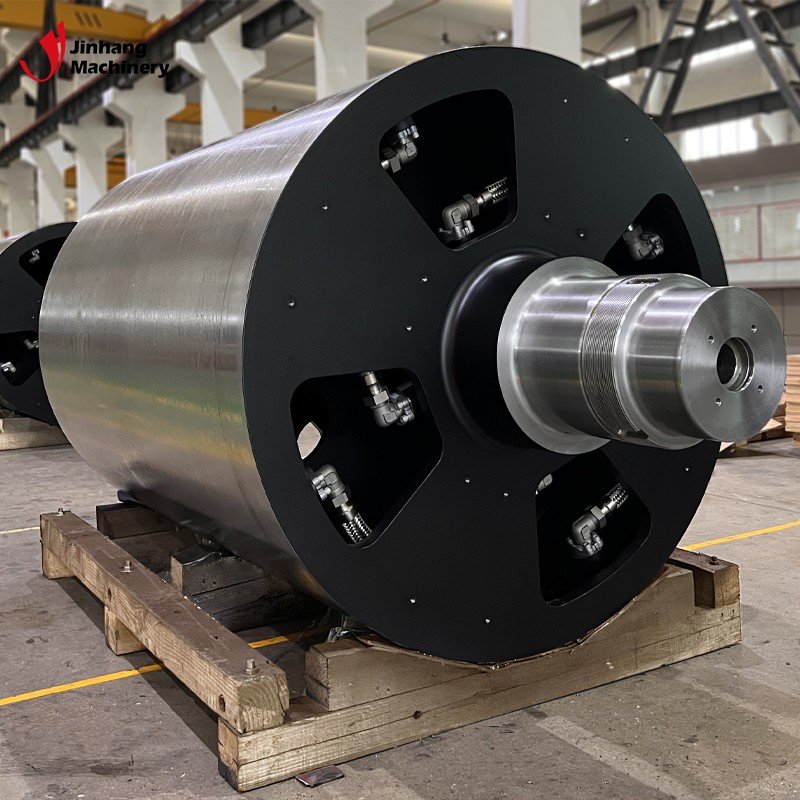
Why do stainless steel heating rollers get damaged by temperature differentials?
A stainless steel heating roller is essentially a large, hollow structure that may house the following internal components or systems:
•Electric heating elements
•Thermal oil circulation systems
•Steam heating systems
•High-temperature thermal fluid systems
Temperature fluctuations induce stress within the roller body; when these stresses are unevenly distributed, the following issues may arise:
•Cracking
•Deformation
•Internal wall fissures
•Coating delamination
•Loosening of the shaft ends
This phenomenon is known as:
Thermal Fatigue Failure.
Even if the temperature does not exceed the stainless steel heating roller's maximum heat resistance limit, temperature differentials can still subject specific areas of the roller body to excessive localized loads.
This explains why "stainless steel heating rollers can still sustain damage even when operating within their specified temperature range."
Under what conditions can a stainless steel heating roller be damaged by high temperatures?
The most common mechanisms of high-temperature damage are listed below:
1. Exceeding the material's maximum temperature limit
For example:
•Grade 304 stainless steel will oxidize and soften during prolonged use above 350°C.
•Grade 316L stainless steel will experience a reduction in strength during prolonged use above 400°C.
•Grade 310S stainless steel does not enter the softening zone until temperatures exceed 1000°C.
•Generic industrial roller materials are generally more susceptible to fatigue when subjected to overheating.
If the user is unaware of the specific material grade, damage may result.
2. Uneven temperature distribution (the most dangerous factor)
For example:
•One section of the roller surface is at 200°C, while another section has already reached 350°C.
•Insufficient flow of thermal oil leads to localized heat accumulation.
•Heater malfunctions result in the formation of "hot spots."
•Heating elements positioned too close to a specific area cause localized overheating.
The greatest threat to a stainless steel heating roller is this type of localized temperature anomaly, which can lead to:
•Uneven thermal expansion.
•Bending or warping of the roller body.
•Cracking of surface coatings or plating.
•Fatigue of the inner wall structure.
•Misalignment of the shaft ends.
This constitutes the primary source of high-temperature-related damage.
3. Rapid heating or rapid cooling (Thermal Shock)
Thermal shock scenarios include:
•A sudden, rapid rise in temperature during the initial heating phase.
•Exposure of the hot roller to cold water or cold air (e.g., during cleaning or cooling operations).
•Attempting to rapidly cool the roller immediately after a shutdown.
Thermal shock induces instantaneous stress within the stainless steel heating roller, potentially leading to:
•Cracks.
•Micro-fractures.
•Delamination of the outer layer.
•Peeling or blistering of surface coatings/plating.
This represents another typical mode of damage.
4. Improper internal structural design
Issues regarding the internal structure of the heating roller—such as:
•Uneven wall thickness of the material.
•Asymmetrical support structures.
•Deficiencies in the thermal circulation system design.
•Poor quality of internal cavity welding.
—can easily lead to the following issues under high-temperature conditions:
•Stress concentration.
•Inconsistent thermal expansion.
•Structural instability.
This type of damage is typically triggered by underlying, latent design flaws.
5. Insufficient Heat Resistance of the Coating
Common surface coatings for stainless steel heating rollers include:
•Hard Chrome (heat resistance: approx. 400°C)
•Ceramic Spray (heat resistance: 800°C–1200°C)
•Tungsten Carbide (heat resistance: 500°C–700°C)
If the coating is unsuitable for high-temperature environments, the following issues may arise:
•Coating discoloration
•Surface cracking
•Peeling
These constitute types of high-temperature-induced damage to the roller surface.
6. Fatigue of Shaft Ends or Welded Areas Under High Temperatures
The shaft ends of stainless steel heating rollers are typically not made of stainless steel, but rather of alloy steel.
If the temperature becomes excessively high, it can lead to:
•Softening of the shaft ends
•Stress-induced deformation
•Weld fatigue
•Loosening of connections
These constitute types of structural damage.
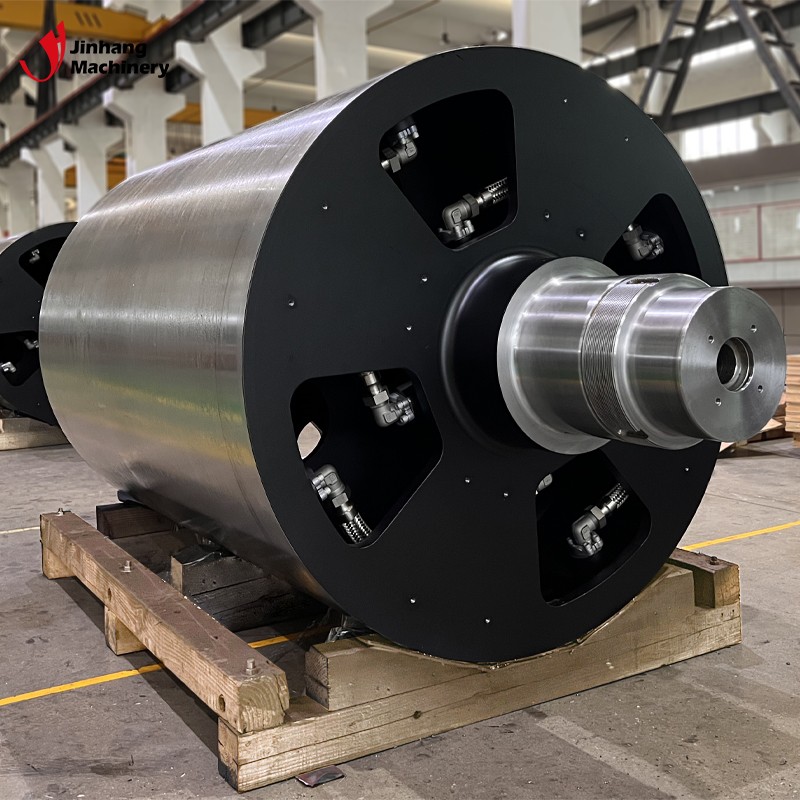
What is the real danger for stainless steel heating rollers during high-temperature operation?
To summarize the core concept in a single sentence:
High temperature itself is not the enemy of the stainless steel heating roller; rather, temperature non-uniformity and thermal fatigue are the true adversaries.
In other words, provided that temperature control remains stable, heating is uniform, and the thermal conduction system functions correctly, a stainless steel heating roller can operate stably under high temperatures for extended periods.
At what temperature threshold will a stainless steel heating roller sustain damage?
Criteria for assessing the risk of high-temperature damage to stainless steel heating rollers typically include:
1.Whether the material's maximum temperature limit has been exceeded.
2.Whether the roller body structure can withstand thermal expansion.
3.Whether the heating method causes localized overheating.
4.Whether the surface coating is suitable for high-temperature environments.
5.Whether the heating and cooling rates are excessively rapid.
General industry experience suggests the following:
•304 Rollers: Prolonged use above 350°C carries a risk of material fatigue.
•316L Rollers: Certain performance characteristics begin to degrade above 400°C.
•310S Rollers: These do not truly enter the "danger zone" until temperatures exceed 900°C.
•Electrically Heated Rollers: If localized hot spots exceed the design temperature, the internal heating elements may be damaged.
•Ceramic Coatings: These remain stable at temperatures up to 1000°C; however, rapid quenching (sudden cooling) can lead to cracking.
Therefore, the safe operating temperature for a stainless steel heating roller depends on:
•The specific material grade.
•The type of surface coating applied.
•The heating method employed.
•The structural design of the roller.
•The specific operating environment.
This explains why different manufacturers often specify varying temperature ranges for their products.
How can high-temperature damage to stainless steel heating rollers be prevented?
The following are industry-recognized standard measures:
1. Select the Correct Stainless Steel Material Grade:
You must select the appropriate material—such as 304, 316L, 310S, or a heat-resistant alloy—based on the specific process temperature requirements.
2. Control Temperature Uniformity:
Achieve this by:
•Implementing a precise temperature control system.
•Optimizing the distribution of heating elements.
•Designing an efficient internal flow channel system (for thermal oil or steam circulation).
These measures help prevent the formation of localized hot spots.
3. Avoid Rapid Heating or Cooling:
This is particularly critical in the following scenarios:
•Applying maximum power immediately upon initiating the heating process.
•Suddenly exposing a high-temperature roller to cold water (quenching).
•Allowing the roller to cool down too rapidly after shutting down operations.
Such practices are extremely hazardous.
4. Select a Surface Coating with the Appropriate Temperature Rating:
For example, use a hard chrome coating for temperatures up to 350°C, a ceramic coating for temperatures up to 800°C, and so on.
5. Conduct Regular Inspections:
Monitor the following parameters:
•Radial runout (concentricity).
•The integrity of the surface coating.
•Any misalignment or deviation of the shaft ends.
•Whether internal flow channels are obstructed.
Regular monitoring allows for the early detection of potential hazards.