
What Are the Different Types of Heat Transfer in Industrial Heating Rollers?
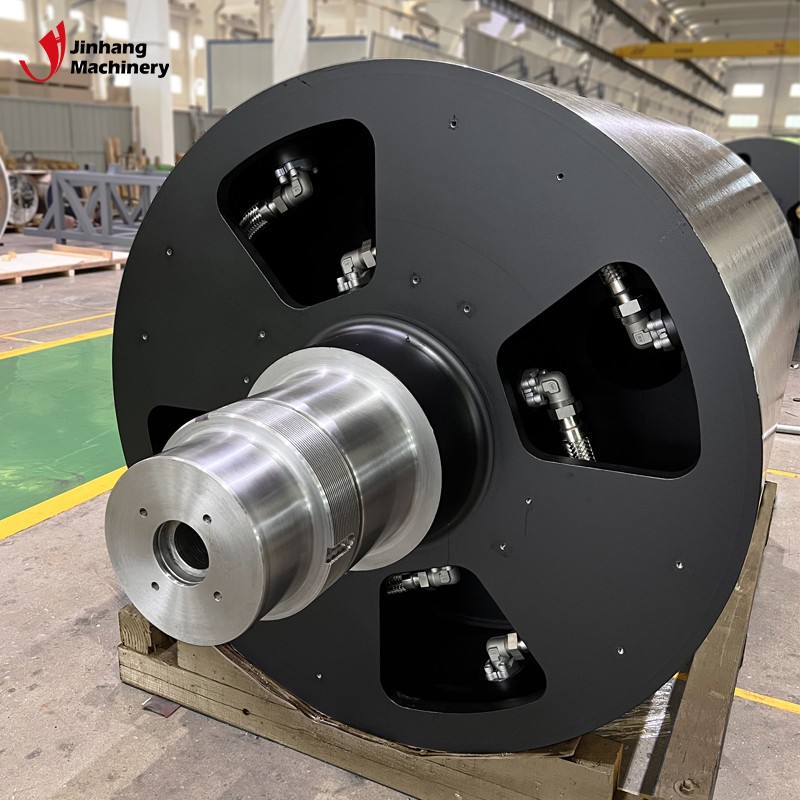
In modern industrial production, the "heating roller" has become one of the critical components in thermal processing operations. Whether the material being processed is film, paper, fabric, rubber, metal foil, or any other material requiring thermal treatment on a roller surface, the heating roller must continuously and efficiently transfer heat from its interior to its surface, and subsequently to the material itself, through a stable and highly efficient heat transfer mechanism.
From a manufacturer's perspective, the roller's structural design, heating medium, temperature control system, and surface treatment methods all directly influence heat transfer efficiency. From a user's perspective, the type and efficiency of the heating roller's heat transfer mechanism directly determine the material's heating rate, temperature uniformity, and—ultimately—the thermal stability and physical properties of the finished product.
Therefore, understanding the various types of heat transfer involved in industrial heating rollers is a fundamental prerequisite for any enterprise operating within thermal processing industries.
This article will provide a systematic explanation of the heat transfer mechanisms within heating rollers and address several of the most common critical questions raised within the industry.
Why is it essential to understand the different types of heat transfer in industrial heating rollers?
The reason is simple:
The specific mode of heat transfer determines the heating roller's operating temperature, efficiency, energy consumption, material compatibility, process stability, and product quality.
For example:
•The film industry, which demands extremely high levels of temperature uniformity.
•The calendering industry, which requires exceptionally rapid heating rates.
•The coating industry, which imposes strict requirements on surface temperature control.
•The rubber vulcanization industry, which is highly sensitive to precise high-temperature control.
The stability of all these processes is inextricably linked to the specific heat transfer mechanism employed by the heating roller.
In other words:
Understanding the types of heat transfer = Grasping the core logic behind the heating roller's stable and reliable operation.
What are the three fundamental types of heat transfer in industrial heating rollers?
Heat transfer within industrial heating rollers is primarily categorized into three types:
1. Conduction: The most fundamental mode of heat transfer occurring within the body of the heating roller.
2. Convection: The primary driving force generated by the circulation of the internal heating medium.
3. Radiation: A mode of heat propagation that cannot be overlooked, particularly in high-temperature operating environments.
Each of these mechanisms plays a distinct role within the heating roller; however, collectively, they constitute the roller's complete heat transfer system.
We will now analyze each of these mechanisms in depth, one by one.
Conduction: How does this—the most core and direct—mode of heat transfer function within a heating roller?
Among all modes of heat transfer, conduction can arguably be considered the fundamental basis for the operation of a heating roller.
This raises the question:
1. Why is conduction the most critical mode of heat transfer for a heating roller?
The answer lies in the structural characteristics of the heating roller:
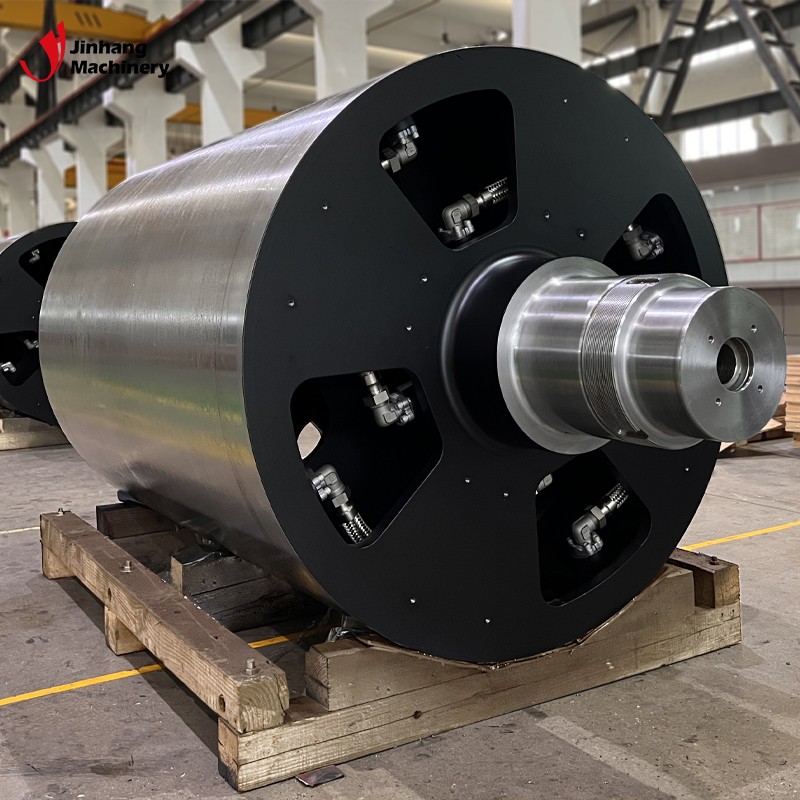
•The interior features a hollow cavity designed to be filled with a heat transfer medium.
•The core consists of a roller body made of steel, cast iron, or stainless steel.
•The outer layer is the roller surface, which comes into direct contact with the material being processed.
Heat must be transferred—via conduction—from the internal heat transfer medium, through the metal roller body, to the surface.
Consequently, any discussion regarding the operation of a heating roller is inextricably linked to the process of heat conduction within its metal structure.
The material composition of the heating roller determines its heat conduction efficiency; in turn, this efficiency dictates the overall speed of temperature response and the uniformity of temperature distribution.
Factors that influence conduction efficiency include:
•The material of the roller body
•Wall thickness
•The type of heat transfer medium used
•The temperature of the heating medium
•Surface treatment methods (e.g., electroplating, thermal spraying, etc.)
•The internal flow channel structure
Therefore, conduction serves as the indispensable core of heat transfer within a heating roller.
Convection: How does the internal heat transfer medium efficiently transfer heat to the roller wall?
Inside a heating roller, the heat transfer medium (typically thermal oil or hot water) is in constant motion. It is precisely this flow that generates convective heat transfer.
1. What drives the convection within a heating roller?
The answer lies in:
•The heat transfer medium circulation pump
•Pressure differentials within the heating system
•Temperature-driven forces within the flow channels
•Temperature gradients generated by the heat source
The Role of Convection in Heating Rollers
•Accelerating the heating rate
•Enhancing the temperature uniformity of the roller body
•Mitigating surface irregularities caused by temperature differentials
•Increasing the effective surface area for heat exchange
•Ensuring a continuous replenishment of heat throughout the entire roller body
For example:
In a thermal oil heating roller, convection acts as the driving force that circulates the high-temperature oil through the internal channels, thereby facilitating a continuous transfer of heat to the roller wall.
2. What factors influence convection efficiency?
•Heat transfer fluid viscosity
•Flow rate
•Internal flow channel design (helical, serpentine, straight-channel, etc.)
•Heat transfer fluid pump power
•Heating source power
•Temperature gradient
If convection is insufficient, it will result in:
•Uneven temperature distribution across the roller surface
•Surface temperature fluctuations
•Thermal marks appearing on the processed material
Therefore, convection is the key to temperature control stability in heating rollers.
Radiation: What is the often-overlooked mode of heat transfer in high-temperature heating rollers?
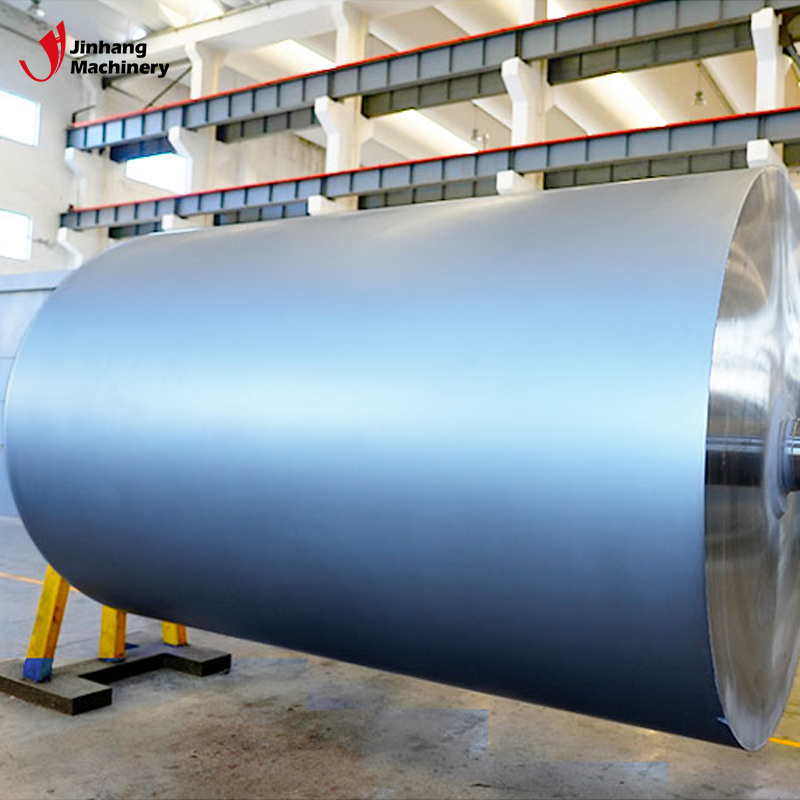
When the temperature of a heating roller exceeds a certain threshold (typically above 150°C), the metal roller body begins to emit significant thermal radiation.
1.To what extent does radiation play a role in heating rollers?
The answer depends on the temperature.
For heating rollers:
•Low-temperature conditions (≤120°C): The impact of radiation is negligible.
•Medium-temperature conditions (120–200°C): Radiation begins to contribute to heat transfer.
•High-temperature conditions (>200°C): Radiation becomes a significant and indispensable mode of heat output.
This is particularly true in the following scenarios:
•High-temperature film calendering
•High-temperature rubber vulcanization
•Metal composite hot rolling
•High-temperature coating
In these cases, radiation can significantly affect the local temperature of the material.
Characteristics of radiation in heating rollers:
•It is a non-contact mode of heat transfer.
•It is influenced by surface roughness and emissivity.
•It is exponentially proportional to the fourth power of the temperature (Stefan-Boltzmann Law).
•Its effect becomes more pronounced as the temperature increases.
This is also why the surface of high-temperature heating rollers must undergo precision surface treatments, such as:
•Mirror finishing
•Chrome plating
•Oxide ceramic thermal spraying
These treatments alter the surface emissivity, thereby influencing the overall thermal equilibrium.
How do the three modes of heat transfer in heating rollers work together?
True industrial heating rollers do not rely on a single mode of heat transfer; rather, they depend on the synergistic interaction of all three.
Specifically, the process is as follows:
Internal: Convection + Conduction
1.The circulation of the heat transfer medium generates convection.
2.Heat from the medium is transferred to the metal body of the roller.
3.Within the metal structure, heat is uniformly distributed to the roller surface via conduction.
Surface: Conduction from roller surface to material + Contribution from Radiation
1.The roller surface transfers heat to the contacting material through conduction.
2.Simultaneously, the high-temperature roller surface radiates heat toward the surrounding material.
Therefore, heat transfer within a heating roller constitutes a complex yet stable system.
Why must industrial heating rollers be designed with internal flow channels?
This is because:
•Without flow channels, the rate of heat transfer would be significantly reduced.
•The heat transfer medium would be unable to circulate efficiently.
•Extreme temperature differentials would develop across the roller body.
•The heating rate would slow down.
•Hot and cold "stripes" (temperature streaks) would appear on the surface.
•The temperature control system would be difficult to regulate.
In short:
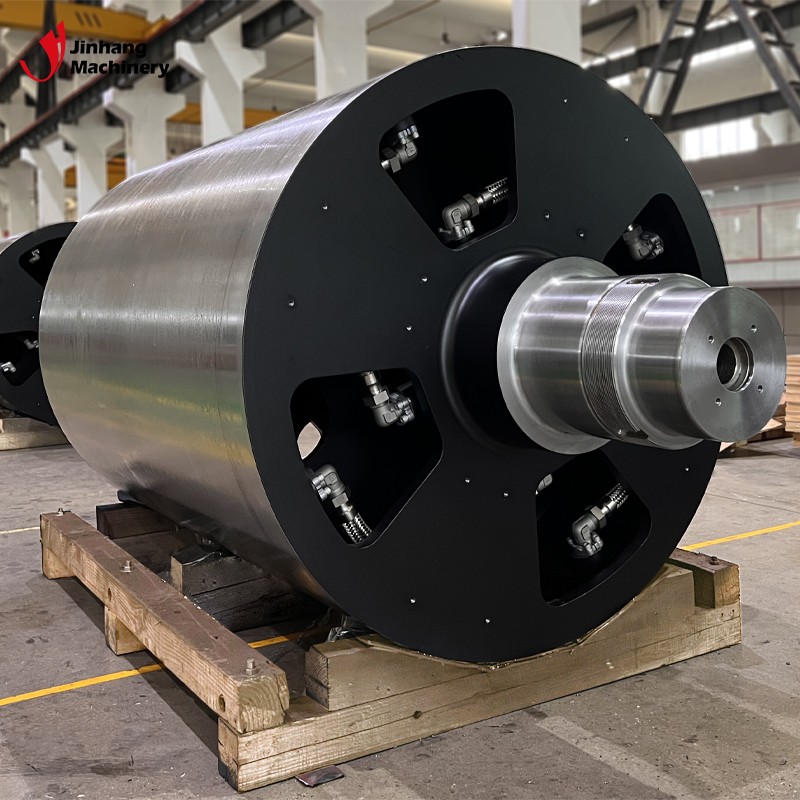
The design of the flow channels determines the efficiency of convection, and the efficiency of convection determines the overall performance of the heating roller.
Common flow channel designs include:
•Spiral channels
•Straight-groove channels
•Cross-flow channels
•Single-layer vs. double-layer channels
•Multi-zone segmented channels
Different flow channel structures can significantly impact convective efficiency.
To what extent does the choice of internal heat transfer medium affect the nature of heat transfer within a heating roller?
There are two primary types of heat transfer media:
•Thermal water (Hot water)
•Thermal oil (Heat transfer oil)
The impact on heat transfer is as follows:
Thermal Water:
•Offers high convective efficiency.
•Suitable for low-temperature heating applications.
•Radiation effects are minimal.
Thermal Oil:
•Capable of withstanding higher temperatures.
•Radiation effects are more pronounced.
•Conduction efficiency is influenced by the viscosity of the specific oil used.
Therefore, the choice of heat transfer medium ultimately determines the heat transfer capacity of the roller.
How can one determine whether a heating roller is achieving good heat transfer efficiency?
Assessment can be made based on the following points:
1. Is the roller surface temperature uniform?
The smaller the temperature difference → the more stable the conduction and convection.
2. Do heat marks or discoloration appear on the material surface?
This indicates uneven contact conduction or radiation.
3. Is the heating rate stable?
This reflects the vigor of the convective circulation.
4. Is energy consumption excessively high?
This signifies low heat transfer efficiency.
5. Does the temperature control system fluctuate frequently?
This suggests anomalies in internal convection or conduction.
These indicators demonstrate whether the heat transfer process is functioning normally.