Does EPDM Rubber Roller Absorb Water?
In industrial roller applications, whether a rubber material absorbs water is a key indicator determining its service life, stability, and process consistency. When dealing with steam, humid heat, cleaning agents, water washing cycles, or extreme humidity environments, many factory engineers ask: Does EPDM rubber roller absorb water?
The answer is clear—EPDM rubber rollers do not absorb water. Its inherent properties determine its excellent water and steam resistance.
This article will comprehensively explain why EPDM exhibits extremely low water absorption and extremely high steam stability in industrial roller applications, and illustrate its significant differences from ordinary rubber in humid environments.
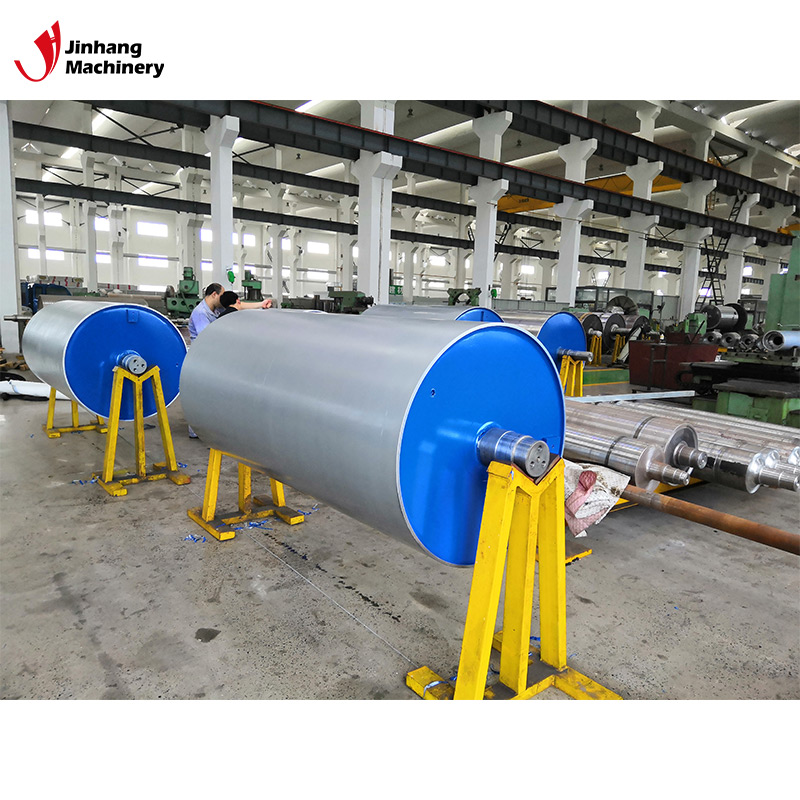
Why does EPDM rubber roller have the characteristic of "not absorbing water"?
To understand why "EPDM rubber rollers do not absorb water," we must start with the molecular structure of EPDM.
1. EPDM has a highly saturated structure and is naturally hydrophilic
EPDM (ethylene propylene diene monomer rubber) is composed of ethylene, propylene, and a small amount of a third monomer. Its molecular chain has a saturated structure.
The characteristics of a saturated structure are:
• The molecular chains do not contain polar groups that can strongly interact with water molecules.
• Water molecules cannot penetrate between the molecular chains to form "bound water".
• The structure is dense, resulting in extremely weak water absorption.
Therefore, the water absorption rate of EPDM rubber rollers is generally below 1%, sometimes even as low as 0.2–0.5%.
2. Non-absorbent = High dimensional stability
Industrial rollers are most susceptible to moisture damage, which can cause:
• Volume expansion
• Decreased hardness
• Surface softening or blistering
• Uneven interlayer pressure
• Roller surface loss of roundness and runout
EPDM's water and steam resistance ensures that the roller maintains stable dimensions even under repeated wet cycles or long-term steam environments, without affecting processing accuracy.
Will EPDM rubber rollers expand in a steam environment?
Many rubber materials expand, soften, or even crack when exposed to steam, but EPDM is one of the very few rubbers that can remain stable in high-temperature steam.
1. EPDM can withstand long-term steam and high humidity environments
EPDM's steam resistance is far superior to common rubbers such as NR, SBR, and NBR. This is due to several reasons:
• Saturated main chain, not easily damaged by oxygen in steam
• Extremely low water absorption, does not swell
• Stable molecular cross-linking structure
• Not easily hydrolyzed at high temperatures
Material data shows that EPDM can:
• Be stable in hot water or saturated steam at 120°C–150°C for extended periods
• Maintain stable appearance even after short-term operation in superheated steam at 200°C–230°C
Therefore, EPDM rubber rollers are particularly suitable for processes involving steam drying, wet-end treatment, hot washing, boiling, or repeated hot water circulation.
2. Why are other rubbers unsuitable for steam?
For example:
• Nitrile butadiene rubber (NBR): Expands and delaminates upon exposure to steam.
• Natural rubber (NR): Aches rapidly under steam.
• Styrene-butadiene rubber (SBR): High water absorption, softens easily.
• Chloroprene rubber (CR): Insufficient steam resistance.
Therefore, EPDM rubber rollers are preferred for processes sensitive to steam.
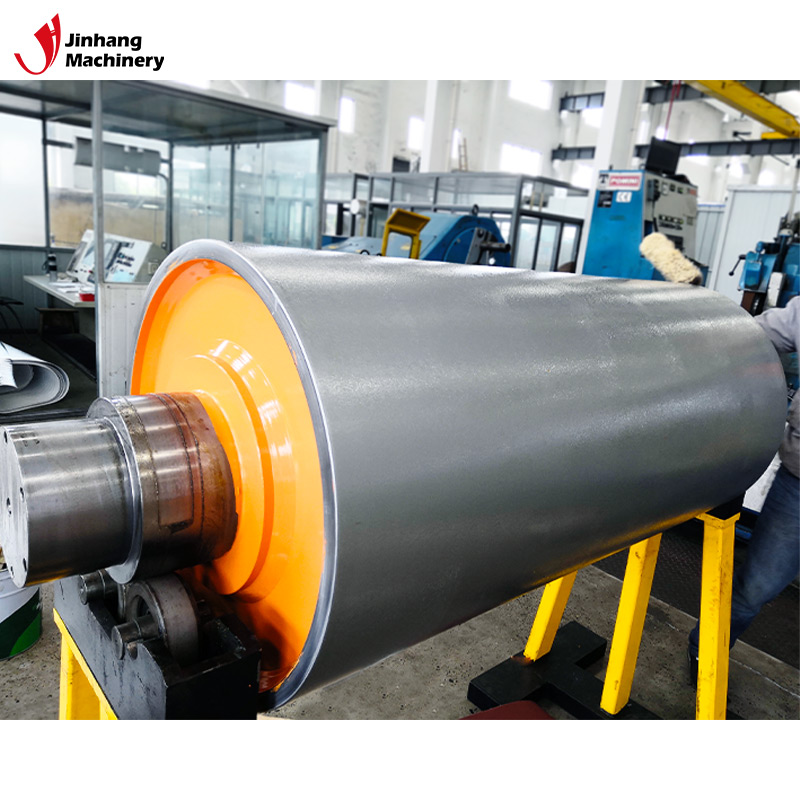
Are EPDM rubber rollers with low water absorption more suitable for high humidity environments?
The answer is yes.
1. Low water absorption makes EPDM more reliable in water-immersed, humid, and condensation environments
EPDM does not exhibit volume changes in the following humid environments:
• Washing sections
• Areas where condensation accumulates
• High-humidity textile and film workshops
• Wet ends in papermaking
• High-humidity stages in food production
This means that EPDM rubber rollers can maintain:
• Stable hardness
• Stable circumference
• Unchanged surface elasticity
• No edge warping or delamination
• No bulging caused by water penetration
This stability is irreplaceable for production lines requiring precise tension, constant pressure forming, and continuous conveying.
2. Low water absorption reduces frequent maintenance
Ordinary rubber rollers in humid environments require:
• Regular drying
• Checking for expansion
• Adjusting pressure
• Recalibrating tension
EPDM rubber rollers, because they do not absorb water, therefore:
• Less routine maintenance
• Longer service life
• Less prone to batch-to-batch process fluctuations
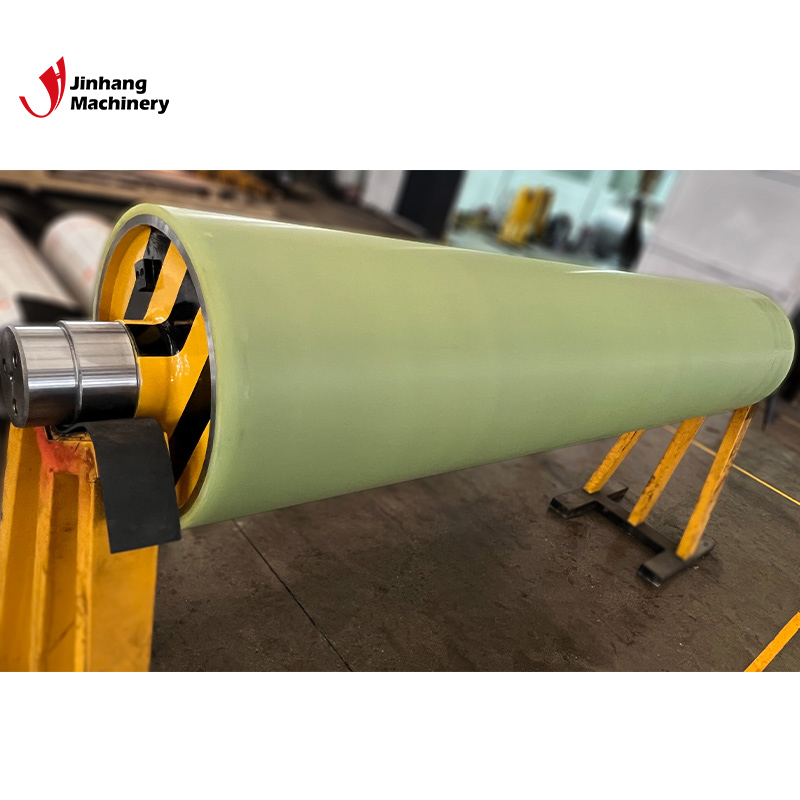
Why are EPDM rubber rollers more corrosion-resistant than other rubber rollers?
Water resistance isn't EPDM's only advantage; it also boasts excellent corrosion resistance.
1. EPDM has strong resistance to polar liquids
Resistant to:
• Hot water
• Steam
• Acidic cleaning agents
• Alkaline cleaning agents
• Alcohols
• Ketones (partially)
• Salt water
These liquids are often used in:
• CIP (Cleaning in Line)
• High-temperature water washing
• Wet chemical treatment
• Coating cleaning systems
Therefore, EPDM rubber rollers are very stable in wet chemical systems.
2. Why is EPDM not oil-resistant, but still suitable for most processes involving water?
EPDM is not suitable for petroleum-based media, but water-based, steam-based, and polar liquids constitute the vast majority of industrial wet processing solutions, especially in:
• Papermaking
• Textiles
• Food packaging
• Coating wet processing
• Water-based cleaning equipment
These industries prioritize resistance to water, steam, and polar chemicals, making EPDM rubber rollers highly suitable.
Will EPDM rubber rollers harden or soften under prolonged immersion in water or steam?
In high humidity, hot water, or steam environments, many rubbers will experience:
• Decreased hardness
• Elasticity degradation
• Material hydrolysis
• Molecular chain breakage
• Surface stickiness or cracking
EPDM, however, behaves entirely differently.
1. EPDM maintains stable hardness in humid environments
Its structure does not change due to water molecule binding, therefore:
• It does not soften after prolonged immersion.
• It does not harden under steam impact.
• Hardness changes are minimal.
This is especially important for equipment requiring strict hardness stability, such as:
• Pressure rollers
• Tension rollers
• Coating rollers
• Packaging conveyor rollers
2. High-temperature steam does not damage the elasticity of EPDM
EPDM's heat and steam resistance give it a much better elasticity retention than ordinary rubber, thus maintaining roller surface elasticity during continuous wet cycling.
Why are EPDM rubber rollers widely used in industries involving water, steam, and cleaning processes?
Because its material properties perfectly match the requirements of these processes.
The following industries extensively use EPDM-coated rollers:
• Papermaking wet end and steam drying sections
• Film and textile wet processing sections
• Food sterilization, cleaning, and steam sterilization equipment
• Chemical cooking, cleaning, and washing sections
• High-humidity conveyor lines
• Production lines requiring frequent washing and steam cleaning
Key reasons include:
• Non-absorbent
• Non-expanding
• Non-softening
• Non-delaminating
• Not damaged by steam
This makes EPDM rubber rollers ideal for all water-based, steam-based, and high-humidity environments.
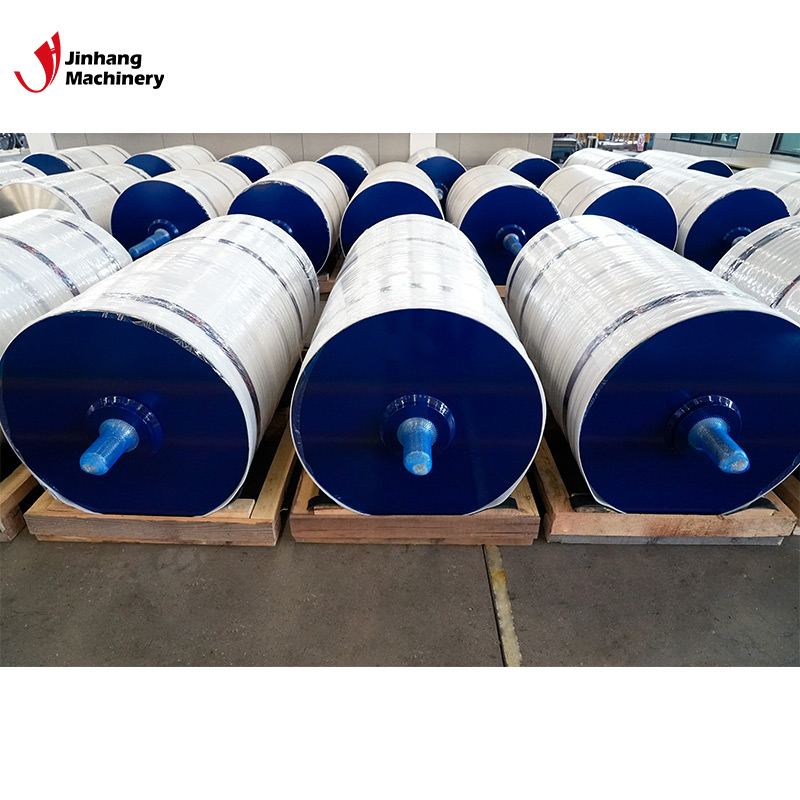
Does the excellent water and steam resistance of EPDM rubber rollers improve equipment efficiency?
1. Stable dimensions and elasticity help to:
• Maintain consistent roller tension
• Reduce material misalignment
• Prevent indentations and wrinkles
• Maintain uniform pressure
• Maintain production line stability
• Reduce downtime for adjustments
Therefore, the water resistance of EPDM rubber rollers indirectly improves the continuity and reliability of the entire production system.
2. Low maintenance reduces equipment downtime
Because EPDM does not absorb water, expand, or soften, frequent:
• Drying
• Pressure adjustment
• Calibration
• Roller replacement
Reduced maintenance means increased production efficiency.