
EPDM Rubber Rollers: Will Performance Decrease After Repair?
In industrial production, EPDM rubber rollers are widely used in coating, conveying, pressing, laminating, and various continuous production equipment due to their excellent ozone resistance, aging resistance, heat resistance, and good environmental stability. With prolonged use, even stable EPDM rubber rollers may require repair due to surface wear, localized damage, or changes in operating conditions.
During this process, many users have a core question: Will the performance of industrial EPDM rubber rollers decrease after repair?
This is a very specialized and crucial question. The answer is not a simple "yes" or "no," but depends on the material properties of the EPDM rubber roller, the degree of damage, the repair method, and whether the repair process is standardized.
This article will systematically analyze the essential reasons for performance changes in EPDM rubber rollers after repair from the perspectives of materials science and industrial roller structure, helping readers establish clear and rational judgment criteria.
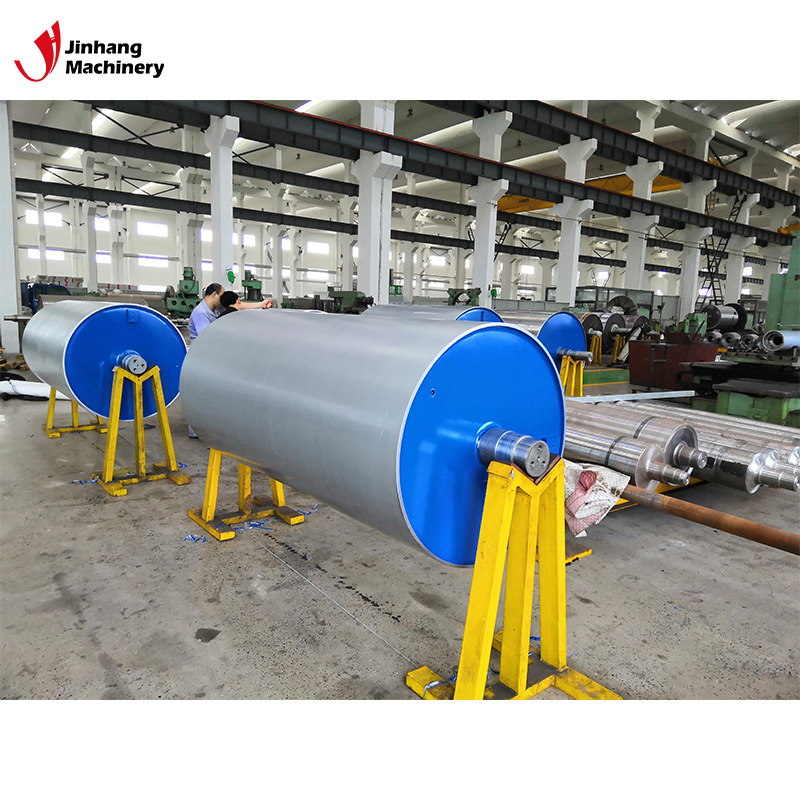
When do industrial EPDM rubber rollers need repair?
Before discussing the performance after repair, it is essential to clarify why EPDM rubber rollers need repair in the first place.
Common issues include:
• Uniform surface wear
• Localized scratches or minor chips
• Surface roughness no longer meeting process requirements
• Decreased elasticity after long-term operation
• Insufficient surface rubber thickness, but the metal core remains intact
In these cases, if the metal core structure, journal, and overall concentricity of the EPDM rubber roller are still within a controllable range, repair is a reasonable and feasible technical choice.
Are the material properties of EPDM rubber rollers suitable for repair?
From a material perspective, EPDM rubber rollers are a type of rubber roller very suitable for repair, mainly due to:
• Stable molecular structure of EPDM rubber
• Better aging resistance than most general-purpose rubbers
• Insensitive to ozone, hot air, and environmental factors
• Controllable adhesion between the rubber layer and the metal core
This means that within a reasonable service life, the aging of EPDM rubber rollers is often gradual and predictable, rather than sudden failure, providing a material basis for repair.
Will the performance of industrial EPDM rubber rollers necessarily decrease after repair?
This is the most crucial question, and the answer depends on the specific circumstances. From a theoretical perspective: Performance does not necessarily decline.
If the repair process meets the following conditions:
• The original rubber layer is completely removed.
• The metal core is tested and found to have no structural problems.
• The re-coated EPDM rubber formulation is appropriate.
• Vulcanization, grinding, and concentricity control are in place.
Then, the repaired EPDM rubber roller can be restored to near-new roller performance in most indicators, including:
• Surface hardness
• Elasticity
• Friction properties
• Heat resistance
• Ozone resistance and aging resistance
Therefore, from the perspective of materials and process principles, EPDM rubber roller repair is not equivalent to performance degradation.
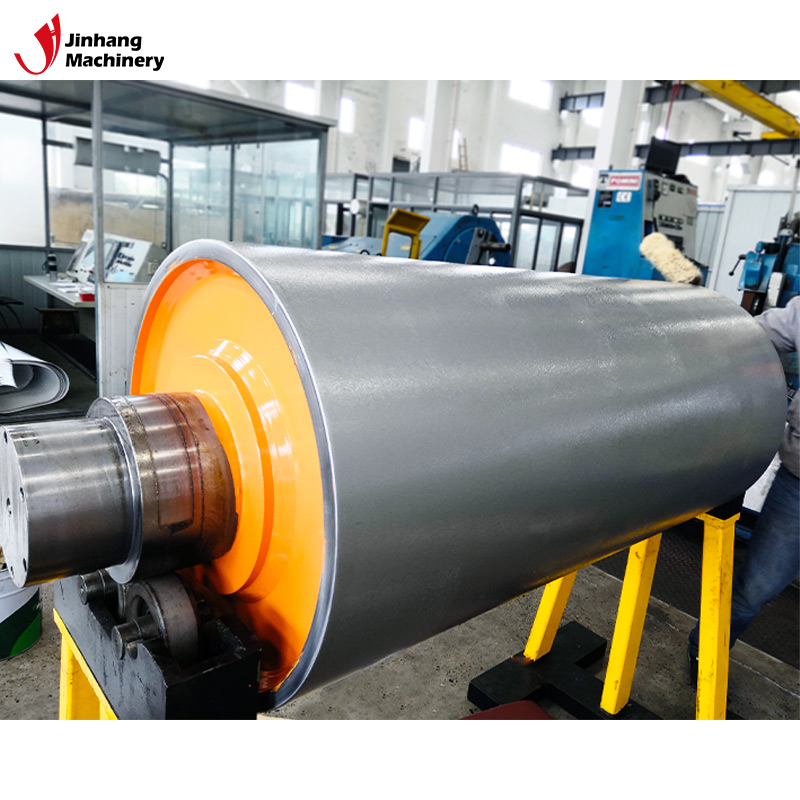
Which performance indicators are most easily monitored after repair?
When judging the effect of EPDM rubber roller repair, the following core performance dimensions are usually considered:
1. Has the surface hardness changed?
If, during repair:
• An EPDM rubber formulation consistent with the original design is used
• Vulcanization conditions are controlled stably
Then the surface hardness of the repaired EPDM rubber roller can be strictly controlled and is not necessarily lower than its original state.
2. Will elasticity and resilience decrease?
Elasticity mainly depends on:
• Rubber formulation
• Crosslinking density
• Vulcanization uniformity
Under standard repair processes, the elasticity of the EPDM rubber roller can be fully restored to the design level.
3. Can the surface roughness meet the usage requirements?
Through precision grinding, the repaired EPDM rubber roller can regain the required surface roughness range, which is essentially no different from a new roller.
Why are some EPDM rubber rollers considered to have "degraded performance" after repair?
In practical use, feedback does exist regarding "performance not meeting expectations after repair." The reasons are usually not related to the EPDM material itself, but rather to the following aspects:
1. Non-standard repair process
If, during the repair process:
• Residual aged rubber layer
• Incomplete surface treatment
• Inadequate adhesive layer treatment
These will all affect the long-term stability of the repaired EPDM rubber roller.
2. Use of an incompatible rubber formulation
EPDM rubber is not a single formulation; different operating conditions require different proportions.
If the original operating conditions are not considered during repair, it may lead to:
• Insufficient heat resistance
• Elasticity and friction properties deviating from requirements
3. Hidden problems in the metal core itself
If the metal core of the EPDM rubber roller already exhibits:
• Deformation
• Localized stress concentration
• Concentricity deviation
Even with recoating, performance may be unstable during use.
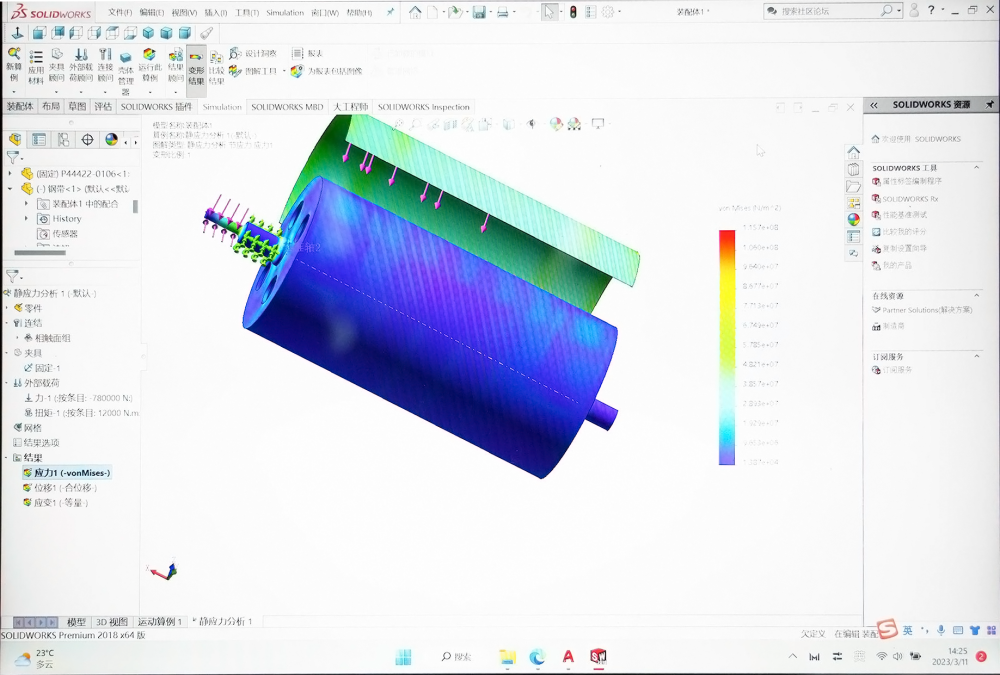
Where is the performance boundary between EPDM rubber roller repair and replacement?
It is important to emphasize that repair is not always equivalent to "completely new roller."
The performance of repaired EPDM rubber rollers may indeed be limited under the following conditions:
• Structural damage to the metal core
• Insufficient dimensional allowance due to repeated repairs
• Original design parameters no longer suitable for current operating conditions
In these cases, the performance degradation is not "caused by the repair," but rather because the roller as a whole has approached its structural limits.
Will the aging resistance of a repaired EPDM rubber roller change?
This is a major concern for many users.
From a materials perspective
The aging resistance of EPDM rubber mainly depends on:
• Molecular structure
• Formulation system
• Degree of vulcanization
If the EPDM rubber system used during repair still conforms to industrial standards, then the repaired EPDM rubber roller will not inherently be inferior to its original state in terms of ozone resistance, heat resistance, and environmental aging resistance.
The key is whether "repair is equivalent to remanufacturing the rubber layer."
As long as the repair process is equivalent to a complete overmolding and vulcanization process, its aging resistance is controllable.
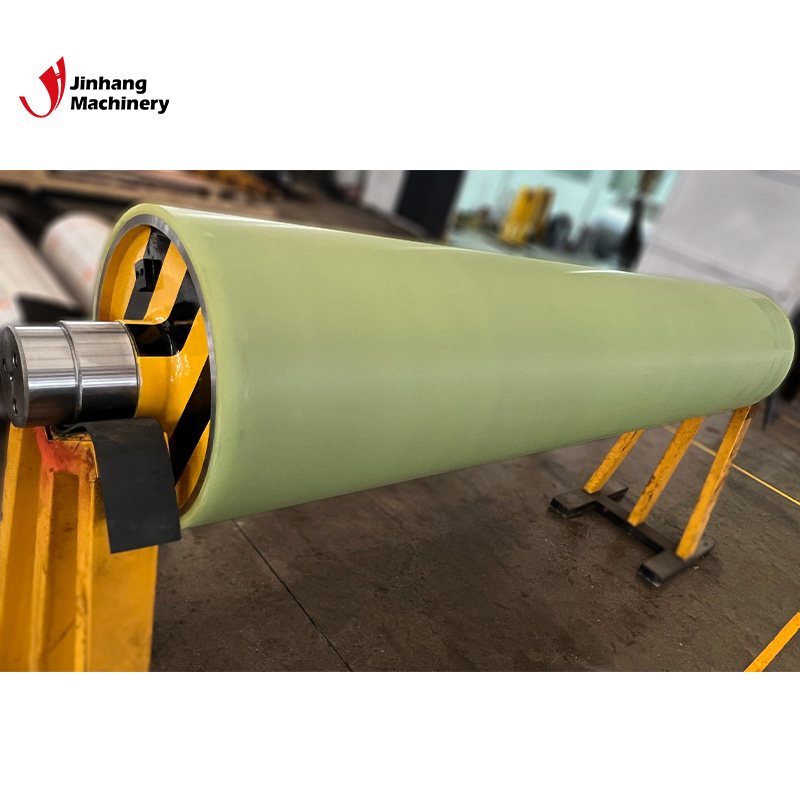
Does the number of repairs affect the performance of EPDM rubber rollers?
Theoretically, the performance impact primarily stems from the metal core, not the rubber layer itself.
• Each repair essentially "regenerates" the rubber layer.
• The metal core may gradually approach its dimensional or strength limits during repeated processing.
Therefore, when repairs are repeated too many times, the performance risk does not originate from the material of the EPDM rubber roller, but from changes in the fundamental structure.
How to rationally view the "performance of repaired EPDM rubber rollers"?
In summary, the following clear understandings can be formed:
• EPDM rubber rollers are inherently very suitable for repair.
• Whether performance degrades after repair depends on the process, not the material.
• Under proper repair conditions, most core properties can be restored.
• So-called "performance degradation" often originates from mismatched or incomplete repair processes.