
How Many Coating Layers Does a Tungsten Carbide Coated Roller Have?
In modern industry, whether in paper calendering, plastic film calendering, metal sheet surface treatment, or lithium battery separator pressing, tungsten carbide coated rollers are irreplaceable key roller equipment in high-wear, high-load, and high-precision scenarios.
They are renowned for their extremely high wear resistance, corrosion resistance, and stability, all of which stem from their unique coating structure.
Therefore, many people ask a common and crucial question:
"How many coating layers does an industrial tungsten carbide coated roller actually consist of?"
This article will help readers gain a comprehensive understanding of the coating structure of tungsten carbide coated rollers and its importance.
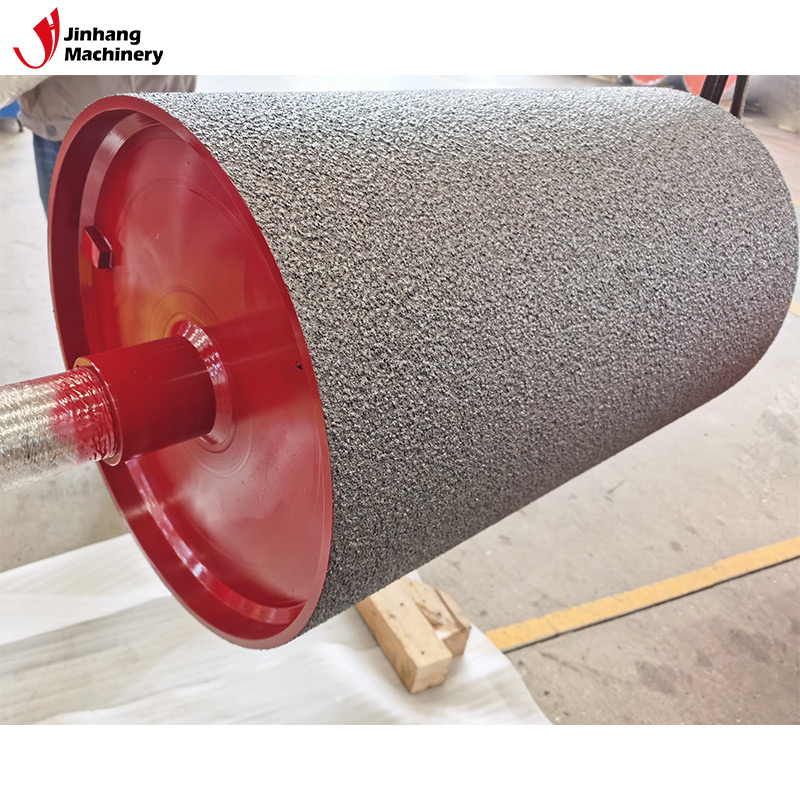
How many coating layers are typically composed of on an industrial tungsten carbide coated roller?
Standard industrial tungsten carbide coated rollers typically consist of 2-3 coating layers:
1. Bond Coat → Improves adhesion to the base metal
2. Interlayer (optional) → Enhances coating stability or buffers stress
3. Top Coat → Provides final hardness, abrasion resistance, and corrosion resistance
The most common structure is: Bond Coat + Top Coat (2 layers)
In high-load conditions, a 3-layer structure (Bond Coat + Interlayer + Top Coat) is used.
Whether it's a 2-layer or 3-layer structure, each layer of a tungsten carbide coated roller has a very specific function and is indispensable.
Why can't tungsten carbide coated rollers use a single-layer structure?
Many people mistakenly believe that "a tungsten carbide coated roller is simply one layer of tungsten carbide coating sprayed onto the roller surface," but this is actually not feasible.
The main reasons include:
1. Tungsten carbide powder cannot directly and firmly bond to the metal substrate.
Due to its extremely high melting point and hardness, direct spraying onto a steel substrate will result in:
• Difficulty in melting the coating
• Weak adhesion to the substrate
• Prone to peeling
• Large porosity
• Numerous microcracks
Therefore, a metal bonding layer (undercoat) is necessary to provide stable adhesion.
2. Single-layer coatings cannot meet stress buffering requirements.
Tungsten carbide coatings have high hardness but limited toughness, while steel substrates have high ductility.
Without a buffer between the two, this will lead to:
• Stress concentration
• Coating cracking
• Significantly shortened service life
This is why some high-end tungsten carbide coating rollers require an intermediate layer.
3. Single-layer structures struggle to balance precision, thickness, and coating quality.
Industrial requirements include:
• Low surface roughness
• Uniform coating thickness
• High surface hardness
• Non-peeling coating
Single-layer structures cannot simultaneously meet these requirements. Therefore, tungsten carbide coating rollers must employ a multi-layer structure.
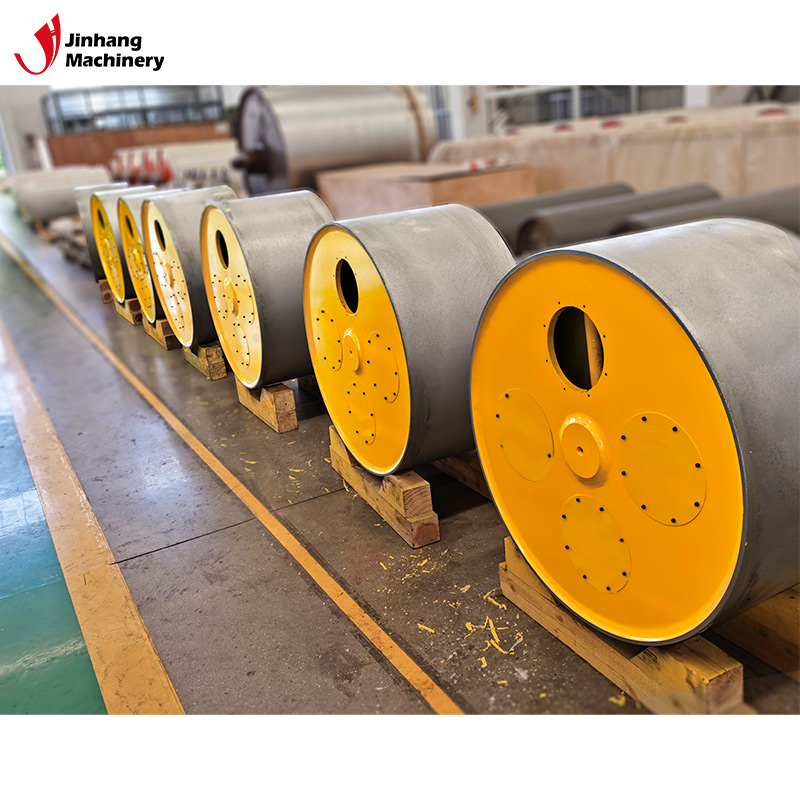
Why is the bottom layer of a tungsten carbide coating roller so important?
The technical name for the bottom layer is the bond coat.
Its main functions include:
1. Enhancing the bonding strength with the base metal
Bottom layer materials generally used are:
• NiCr
• CoCr
• NiAl
• NiCrAl
• Other metal binder powders
These materials have:
• Lower melting point
• Good wettability
• Strong adhesion to steel
Therefore, they form a robust "transition structure," ensuring the upper tungsten carbide layer adheres firmly.
2. Resisting thermal and mechanical stress
During operation, the coating will experience:
• Thermal expansion (temperature changes)
• Vibration
• Pressure
• Frictional impact
The bottom layer acts as a buffer, preventing the tungsten carbide surface layer from becoming brittle due to excessive hardness.
3. Improve Overall Coating Lifespan
The lifespan of a tungsten carbide coated roller without a base coat will be:
• Significantly shortened
• Prone to peeling
• Prone to cracking
• Difficult to achieve a mirror finish
Therefore, a base coat is an indispensable foundation in the coating structure.
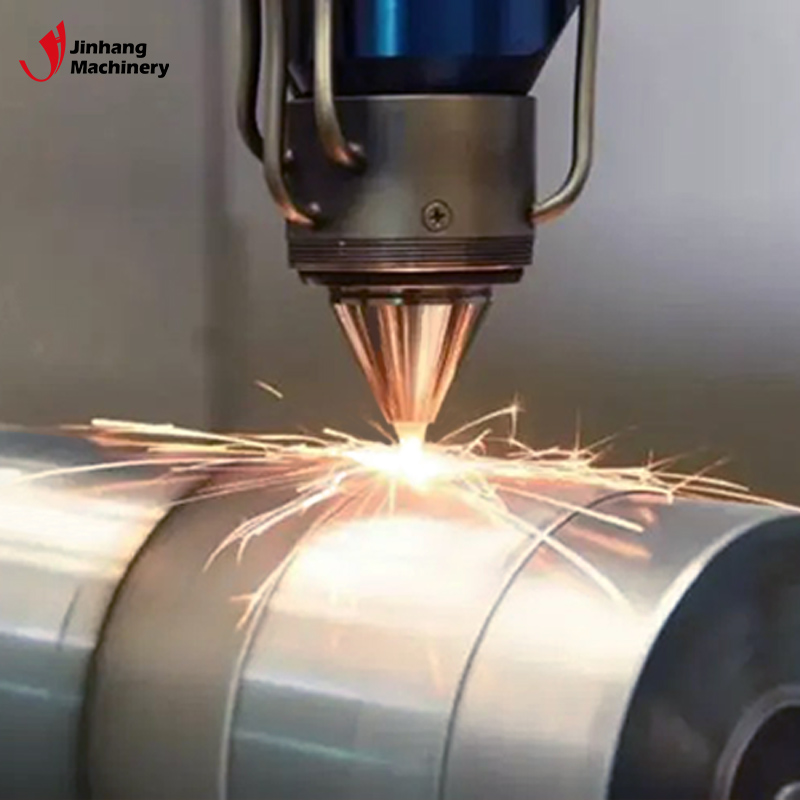
Is an intermediate layer necessary for tungsten carbide coated rollers?
Many high-strength tungsten carbide coated rollers use an intermediate layer, but it is not necessary for all applications.
When is an intermediate layer needed?
Suitable for:
• High-load scenarios
• High-frequency impact scenarios
• Extreme wear resistance requirements
• Rollers requiring precision mirror finishes
• Applications with large roller diameters, long lengths, and significant thermal expansion and contraction
What is the function of the intermediate layer?
Functions include:
✔ Buffering thermal stress
Absorbing differences in thermal deformation between the substrate and tungsten carbide.
✔ Improving coating gradient structure
Breaking hardness differences, making the coating more stable.
✔ Enhancing overall coating toughness
Preventing brittle cracks in the surface tungsten carbide due to stress.
The intermediate layer typically uses:
• NiCr
• NiCrAl
• CoCr
• Alloy powder with moderate viscosity
The intermediate layer makes the coating structure safer and more stable.
What is the composition of the top coat of a tungsten carbide coated roller?
This is the most critical layer in the entire system.
The top coat is the core source of the tungsten carbide coated roller's performance. Top coat materials are typically:
• WC-12Co
• WC-10Co-4Cr
• WC-NiCr
The WC content is generally 80–88%, determining the coating's key properties:
• Ultra-high hardness (HV 1100–1600)
• Excellent wear resistance
• Excellent corrosion resistance
• Long service life
• High surface quality (up to RA0.02 μm)
This is also a key reason why tungsten carbide coated rollers are widely used.
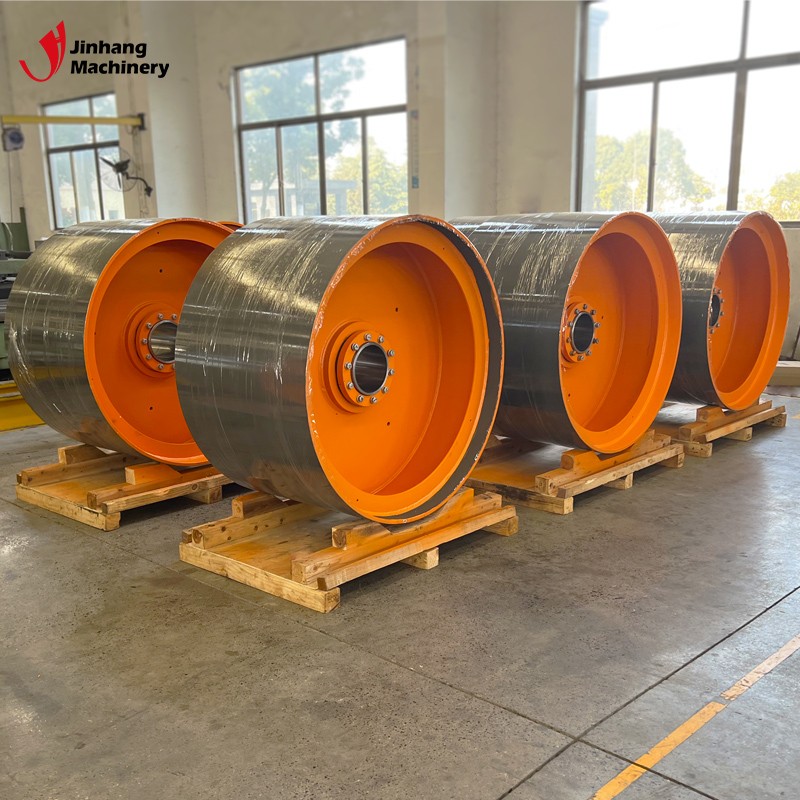
What is the typical thickness of the top coat on a tungsten carbide coated roller?
Thickness varies depending on the application, but is typically:
• 150–350 μm (0.15–0.35 mm)
If too thin:
• Shortened coating life
• Easily wears through
• Difficult to polish
If too thick:
• Prone to stress
• May cause peeling
• Increased processing costs
Therefore, a reasonable range must be maintained.
What are the advantages of the multi-layer structure of tungsten carbide coated rollers?
The multi-layer structure design of tungsten carbide coated rollers offers the following performance advantages:
1. Higher bonding strength
The bottom and intermediate layers result in stronger coating adhesion and are less prone to peeling.
2. Better wear resistance
The tungsten carbide top layer provides high hardness, extending the roller's service life.
3. Lower stress risk
The interlayer gradient structure alleviates stress concentration problems.
4. Higher corrosion resistance
The metallic bonding layer blocks the penetration of corrosive media.
5. Improved Surface Finish
Multi-layer structure ensures:
• High mirror finish
• Stable surface roughness
• Good flatness
• Less prone to roller surface deformation
This is why many precision equipment manufacturers choose tungsten carbide coated rollers.
How many coating layers should an industrial tungsten carbide coated roller have?
Depending on the operating conditions:
✔ Standard operating conditions (general industry use)
→ Two-layer coating structure: Base layer + Top layer
Applicable industries:
• General printing
• General plastic calendering
• Textile processing
• Medium-to-low load rollers
✔ High-intensity operating conditions (heavy load, high wear, high precision)
→ Three-layer coating structure: Base layer + Intermediate layer + Top layer
Applicable scenarios:
• Metal calendering
• Thin film calendering
• Lithium battery separator production
• Precision mirror rollers
• Paper calendering rollers
This structure significantly improves coating stability and lifespan.
Why must the process for each layer of a tungsten carbide coated roller be strictly controlled?
Because:
• Complex coating structure
• Inconsistent material hardness and toughness
• Different coefficients of thermal expansion and contraction
• Numerous processing steps
• Extremely high requirements for interlayer bonding strength
Any error in any step can lead to:
• Cracking
• Peeling
• Accelerated wear
• Reduced overall lifespan
Therefore, a rigorous multi-layer process is crucial to ensuring the performance of tungsten carbide coated rollers.
Do you manufacture rolls with special geometric structures?
Yes. As an adaptable custom roller manufacturer, we can manufacture crowning rollers, grooved rollers, segmented rollers, tapered rollers, and rollers with complex internal channels. Using advanced CNC machining and grinding systems, we ensure precise geometry and structural strength.
These rollers are widely used in tension control, forming systems, coating lines, and high-precision industrial applications requiring non-standard roller shapes.