
How do you verify if a tungsten carbide coated roller meets quality standards?
In modern industrial manufacturing, tungsten carbide coated rollers are widely used in equipment for lithium-ion battery separators, thin-film materials, papermaking, metal processing, adhesive tape production, and coating machinery. Their high hardness, wear resistance, and corrosion resistance make them a vital type of high-performance industrial roller. However, a tungsten carbide coated roller cannot simply be put into service immediately after spraying; its quality directly impacts the stability of the entire production line, product consistency, and service life.
Therefore, understanding how to verify the quality of these rollers is essential for equipment manufacturers, plant engineers, and procurement professionals.
To provide a systematic understanding of the quality criteria for tungsten carbide coated rollers, this article offers a comprehensive overview covering aspects such as coating thickness, hardness, bonding strength, and surface roughness.
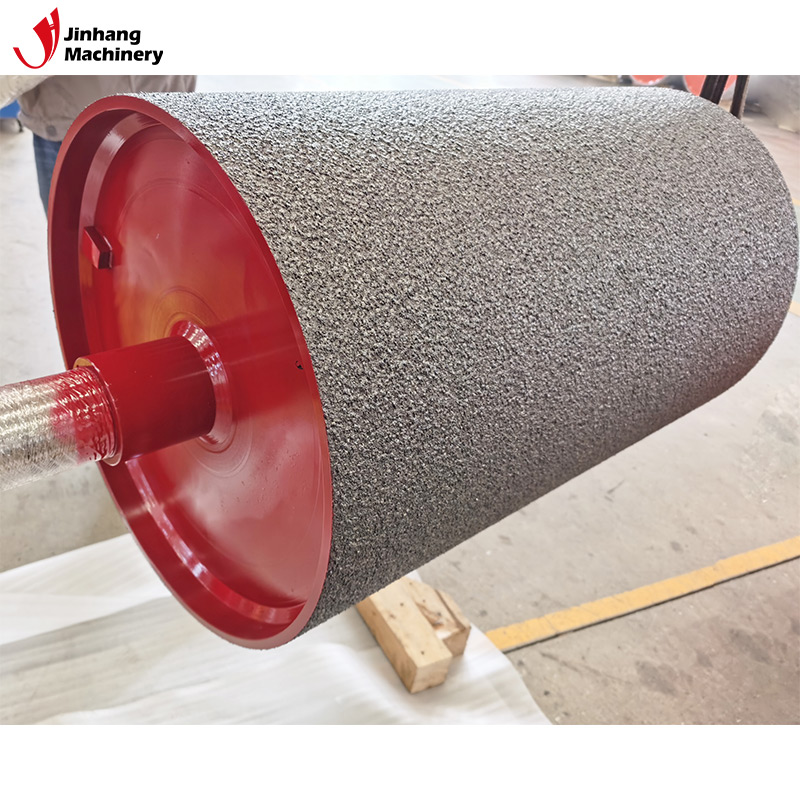
How is the coating thickness of a tungsten carbide coated roller measured?
Coating thickness is a critical indicator affecting the roller's service life and wear resistance. A coating that is too thin reduces wear resistance, while one that is too thick may crack or delaminate; therefore, accurate measurement is essential.
Common methods for measuring coating thickness:
1.Cross-sectional microscopy (most accurate)
Observing the actual coating thickness via a cross-section; suitable for laboratory testing.
2.Ultrasonic thickness gauge
A non-destructive testing method suitable for use on the production floor.
3.Magnetic measurement method
Used when the roller body is made of iron-based material, though its applicability to tungsten carbide coatings is limited.
4.Eddy current thickness measurement
Suitable for non-magnetic substrates.
Typical industry thickness ranges:
•General industrial use: 150–300 μm
•High-wear applications: 250–400 μm
•High-precision rollers: 150–250 μm
Uniform thickness with minimal variation is the fundamental criterion for determining whether a tungsten carbide coated roller meets quality standards.
What hardness level is required for a tungsten carbide coated roller to be considered qualified?
The hardness of the tungsten carbide coating determines the roll's wear resistance and is a critical parameter during inspection.
Common methods for testing the hardness of tungsten carbide-coated rollers:
1.Micro-hardness tester (HV) — Most common method
2.Rockwell hardness tester (HRC) — Used for larger surface areas
3.Nano-indenter — Used for high-precision testing
Target hardness range for tungsten carbide-coated rollers:
•HV1100–HV1500 is considered the acceptable range
•Excessively low hardness (e.g., below HV900) indicates insufficient coating density or abnormal spraying parameters
•Excessively high hardness accompanied by increased brittleness is also considered a failure
High hardness is a core advantage of tungsten carbide-coated rollers, making strict inspection essential.
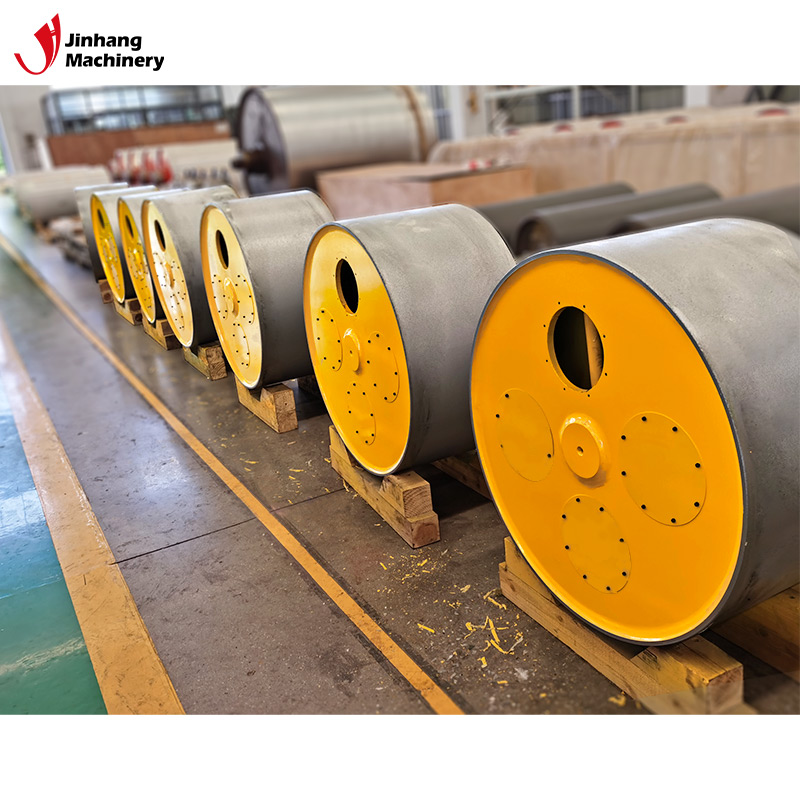
How is the bond strength of tungsten carbide-coated rollers tested?
The bond strength between the coating and the roller body determines the risk of delamination or peeling and is one of the most critical coating parameters.
Common methods for testing the bond strength of tungsten carbide-coated rollers:
1.Tensile bond strength test (ASTM C633 standard)
The most widely used method in the industry; the value should generally be ≥70 MPa.
2.Cross-cut test
Used for rapid adhesion assessment, though precision is lower.
3.Acoustic emission testing
Detects micro-cracks and delamination.
4.Ultrasonic bond strength testing
Detects internal voids or delamination.
Acceptance criteria:
•No coating cracking or delamination
•Tensile bond strength meets or exceeds the specified value
•Area of detachment remains below industry standard limits
Tungsten carbide-coated rollers with insufficient bond strength are considered non-conforming products.
How do you determine if the surface of a tungsten carbide-coated roller meets standards?
Surface roughness requirements vary by equipment; for instance, coating machines, calenders, and glossy film processing equipment are extremely sensitive to surface parameters.
1. How is roughness measured?
Measured via scanning using a roughness tester (Ra, Rz). Common roughness standards:
•Super-mirror finish rollers: Ra 0.02–0.05 μm
•Coating rollers: Ra 0.1–0.3 μm
•Functional embossing rollers: Designed according to specific process requirements
Key inspection points:
•Uniformity of roughness
•Absence of protrusions caused by spray particles
•Absence of surface ripples or grooves
Failure to meet surface roughness standards directly affects coating thickness, film quality, or the coefficient of friction.
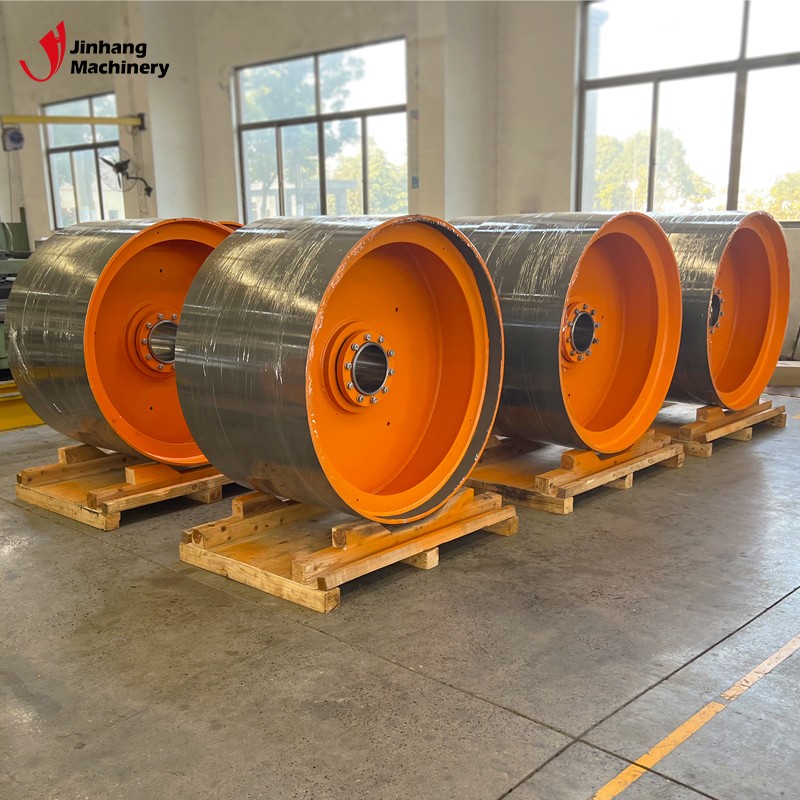
How are roller body radial runout and coaxiality inspected? What precision levels meet industry standards?
Even if the tungsten carbide coating quality is acceptable, the roller cannot be used in production if its geometric precision fails to meet requirements.
Radial runout inspection methods:
•Using a digital dial indicator
•Using a Coordinate Measuring Machine (CMM) (higher precision)
•Inspecting while rotating the roller body on V-blocks
Common acceptance standards:
•High-precision rollers: ≤0.002 mm
•General industrial rollers: ≤0.01 mm
Coaxiality requirements:
•General requirement: ≤0.005 mm
•Stricter requirements for high-end equipment
Excessive radial runout leads to vibration, uneven coating, and unstable pressure.
How is the dynamic balance of tungsten carbide-coated rollers tested? Does significant deviation directly affect performance?
Dynamic balance affects roller stability during high-speed rotation and is a critical indicator for high-speed equipment.
Inspection method:
•Dynamic balancing machine test (G1–G6.3 standard grades)
Common standards:
•High-speed coating machine rollers: G1–G2.5
•General rollers: G6.3
Signs of non-compliance:
•Vibration
•Increased noise
•Accelerated bearing wear
•Material tracking issues (misalignment)
Dynamic balance directly impacts production line safety and product quality; it is a crucial step in inspecting tungsten carbide-coated rollers.
How is coating uniformity assessed? How can obvious defects in the spray coating be identified?
High-quality tungsten carbide-coated rollers must maintain uniform coating thickness; otherwise, issues such as uneven friction, unstable pressure, or deviations in coating thickness may occur.
Inspection methods:
1.Multi-point thickness measurement to determine the range of thickness variation
2.Microscopic surface examination
3.Circumferential uniformity test
4.Longitudinal uniformity test
Typical characteristics of non-conforming parts:
•Significant local thickness deviation
•Agglomeration of sprayed particles on the surface
•Areas of sparse coating coverage
•Uneven color (indicating compositional inconsistency or abnormal spraying temperature)
Poor uniformity is considered a major quality issue.
Are tungsten carbide coated rollers suitable for various chemical media?
Corrosion is a factor that cannot be overlooked for tungsten carbide coated rollers in certain industries (such as chemical coating and new materials for lithium batteries).
Corrosion resistance test methods:
•Chemical immersion test
•Salt spray test
•pH tolerance test
•Chemical stability assessment of the coating binder
Key inspection points:
•Whether the coating is corroded by the chemical medium
•Whether binder failure occurs
•Whether pitting corrosion appears on the surface
Although tungsten carbide coatings are corrosion-resistant, verification testing is still required for exposure to strong acids or alkalis.
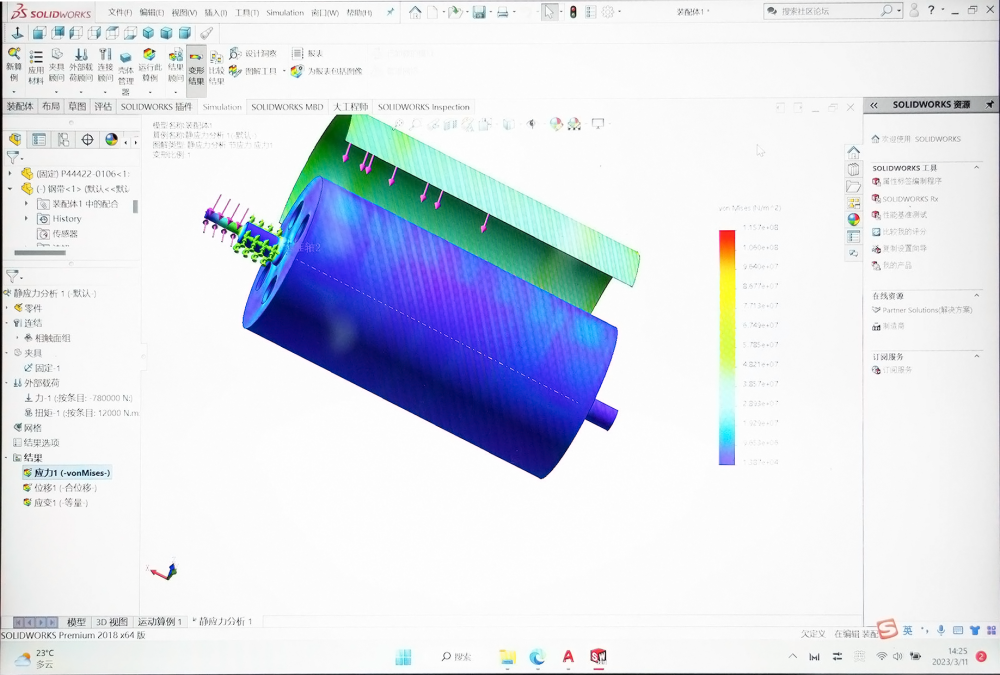
How is the overall dimensional and precision conformity of the tungsten carbide coated roller finally confirmed?
Precision grinding is required after spraying; therefore, the final dimensions must meet design specifications.
Inspection items include:
•Outer diameter
•Journal diameter
•Effective length
•End face runout
•Crown/Concavity (camber)
•Surface straightness
Dimensional conformity standards (typical ranges):
•Outer diameter tolerance: ±0.01–±0.03 mm
•Journal diameter tolerance: ±0.005–±0.02 mm
•Effective length tolerance: ±0.05–±0.1 mm
Failure to meet dimensional specifications results in a non-conforming status.