
Why must industrial mirror rollers be heated to a uniform temperature?
On industrial production lines—such as those for films, coating, calendering, paper products, lamination, lithium-ion batteries, and rubber/plastic extrusion—the mirror-surface roller is a critical piece of equipment influencing product quality. Characterized by precision construction and an ultra-smooth surface finish, these rollers perform vital functions including forming, setting, cooling, calendering, and surface finishing.
However, among all factors affecting the performance of industrial mirror-surface rollers, temperature uniformity is the most frequently overlooked yet most significant determinant of final product quality.
Many production defects—such as uneven thickness, "orange peel" texture, haze, streaks, indentations, and gloss variations—may appear to stem from material issues or mechanical errors, but the root cause is often uneven surface temperature across the mirror-surface roller.
So, why must mirror-surface rollers maintain uniform temperature? What specific product defects result from temperature differentials? This article provides a professional, in-depth analysis from the perspectives of thermodynamics, material processing mechanisms, and roller construction.
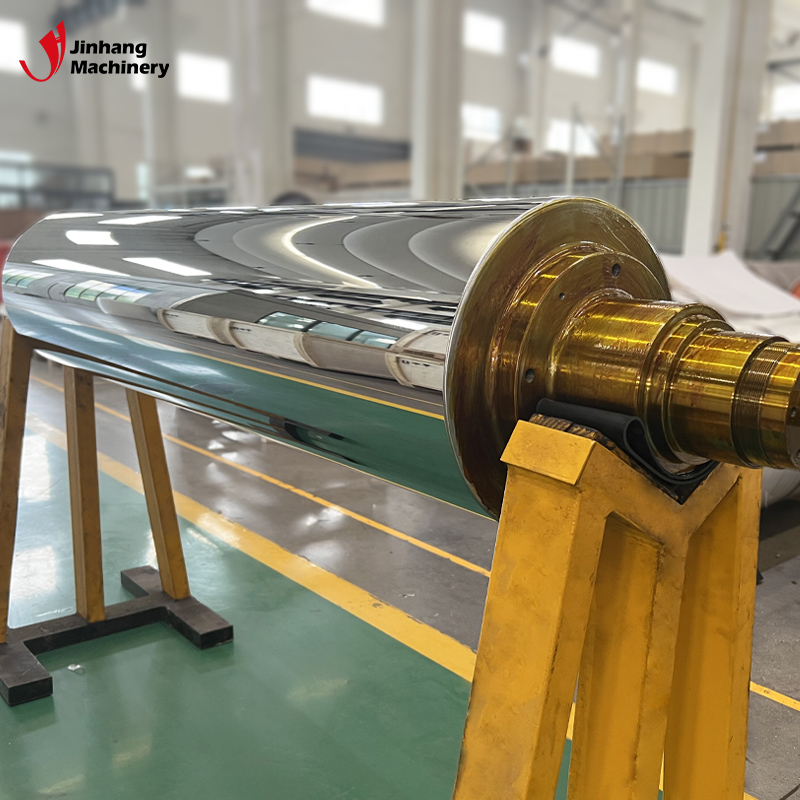
Why do mirror-surface rollers demand such high temperature uniformity?
Temperature uniformity in industrial mirror-surface rollers is a decisive factor for product surface quality, thickness stability, and processing precision.
These rollers are responsible for:
•Cooling or heating the material
•Achieving consistent shaping/setting
•Maintaining a stable material crystalline structure
•Controlling gloss and flatness through heat exchange
Since mirror-surface rollers typically maintain extensive contact with the material, even a localized temperature difference of just 1°C can cause uneven cooling during contact, resulting in visible or invisible defects.
Once the thermal balance of an industrial mirror-surface roller is disrupted, the roller body undergoes:
•Differential thermal expansion
•Deformation of surface micro-topography
•Uneven heat transfer
•Variations in local cooling rates
These issues directly compromise the product's flatness and transparency.
Therefore, temperature uniformity in industrial mirror-surface rollers is not merely an option; it is a fundamental prerequisite for ensuring product quality.
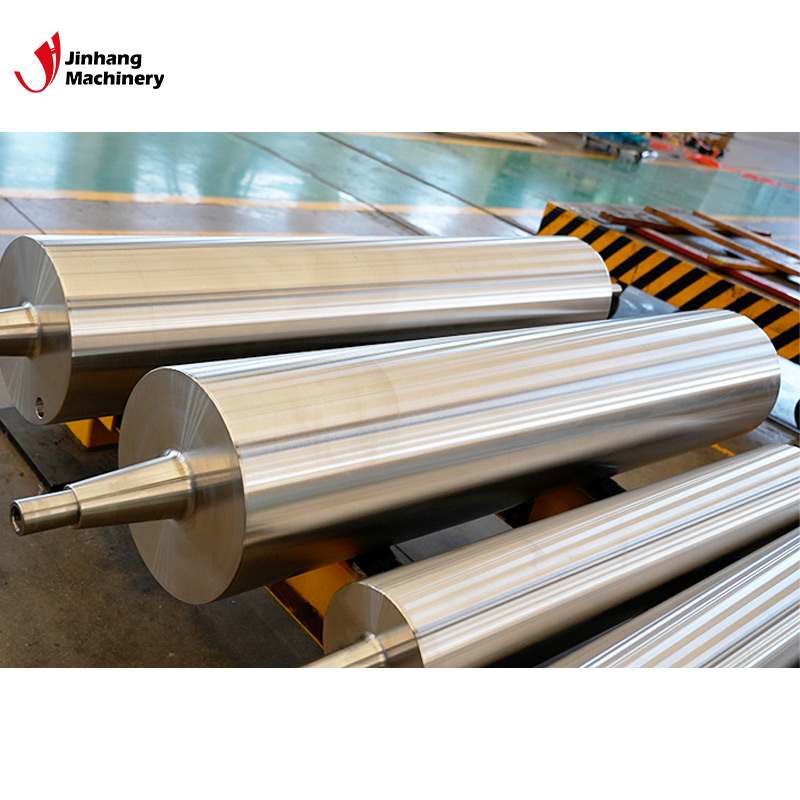
What defects are caused by temperature differences in industrial mirror-surface rollers?
Uneven temperature in industrial mirror-surface rollers leads to a range of issues, spanning from microstructural changes to visible defects. The following is a step-by-step analysis from an industrial perspective.
1. Can temperature differences across a mirror roller lead to uneven product thickness?
Answer: Yes, and the effect is significant.
Cooling rates vary depending on the temperature of specific zones:
•High-temperature zones cool slowly → Higher material elongation → Thinner product sections
•Low-temperature zones cool quickly → Lower material elongation → Thicker product sections
This ultimately results in the following issues across the transverse or machine direction:
•Localized thickness deviations
•Transverse thickness fluctuations (CD thickness variation)
•Surface instability
•Uneven depressions in calendered film
Even a slight temperature deviation at a single point on the industrial mirror roller alters the heat exchange behavior when the material contacts that point, ultimately amplifying the thickness difference.
2. Can mirror roller temperature differences cause orange peel, haze, or uneven gloss?
Answer: Yes; this is one of the most typical manifestations of temperature differences on mirror rollers.
Industrial mirror rollers control product surface gloss through heat pressing or cooling.
When temperatures are uneven:
•Rapid cooling in a zone → Haze formation, poor leveling
•Slow cooling in a zone → Smooth but overly bright surface
•Varying crystallization rates → Uneven light refraction effects
Common surface defects include:
•Inconsistent gloss
•Streaks of light and dark areas
•Hazy patches
•Orange peel texture
•Localized dull or overly shiny spots
Such defects often stem not from the material itself, but from localized changes in crystallization behavior caused by minute temperature differences on the mirror roller.
3. Can uneven mirror roller temperatures lead to inconsistent internal material stress?
Absolutely, and the impact is profound.
When cooling rates vary, the following internal material properties differ:
•Molecular chain alignment
•Shrinkage rate
•Crystallinity
•Residual tensile stress
The consequences include:
•Curling or deformation
•Delamination of composite materials
•Increased tendency for cracking
•Difficulty stabilizing product tension
•Edge curling in films
These issues are difficult to eliminate completely through subsequent adjustments, as they originate from the thermal behavior occurring at the point of contact with the industrial mirror roller.
4. Can temperature differences in mirror rollers cause surface defects such as streaks, shadows, and scratch-like marks?
Yes, and these defects are often misidentified as mechanical issues.
Even slight temperature variations in industrial mirror rollers can lead to:
•Uneven thermal expansion → minute fluctuations in surface profile
•Variations in material adhesion → formation of shadows
•Differences in local cooling rates → formation of light and dark streaks
Manifestations include:
•Water-ripple patterns
•Transverse dark bands
•Longitudinal bright streaks
•Marks that resemble scratches but cannot be wiped away
Such defects are often wrongly attributed to poor cleaning or contamination, when the root cause is actually an uneven temperature distribution across the roller.
5. Can inconsistent temperatures damage the mirror roller itself?
Yes.
Key requirements for industrial mirror rollers include:
•A stable surface profile
•Minimal radial runout
•Consistent surface roughness
If the internal temperature is uneven, the roller body may experience:
•Micro-bending
•Localized expansion
•Formation of surface high and low spots
Long-term operation can lead to:
•Fatigue of the chrome plating
•Localized surface stress concentration
•Micro-cracking of the coating
•Reduced service life
Therefore, temperature uniformity affects not only the product but also the integrity and condition of the mirror roller itself.
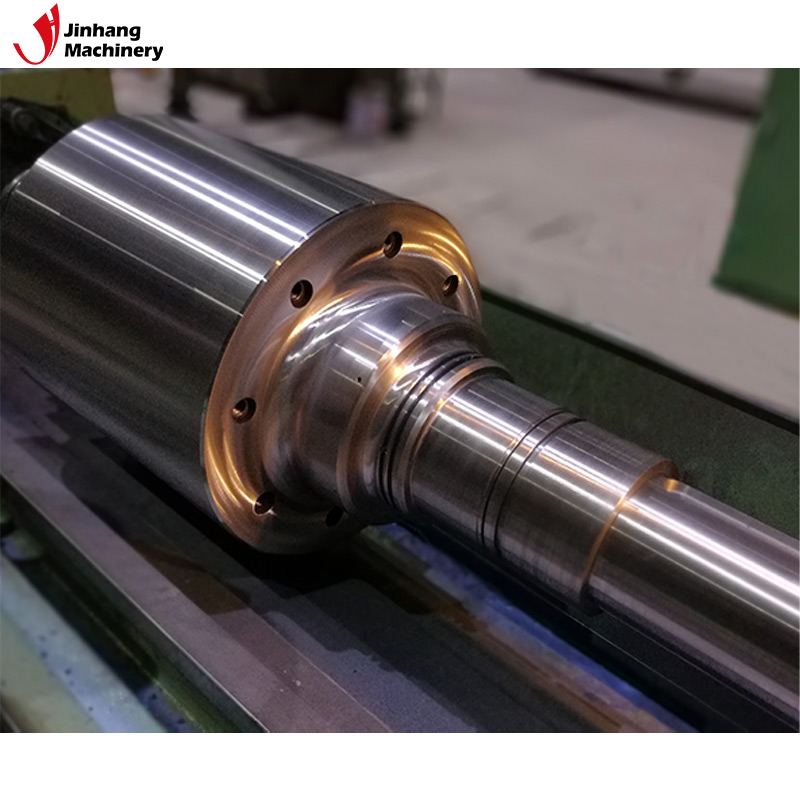
Why are industrial mirror rollers so sensitive to temperature differences?
To answer this, we must look at the fundamental structure and manufacturing processes of mirror rollers.
1. Mirror rollers have extremely low surface roughness and are highly sensitive to thermal deformation.
Industrial mirror rollers typically require:
•Ra ≥ 0.01 μm
•High-precision cylindricity
•Near-zero surface deviation
This means:
•Even slight thermal expansion alters the contact interface
•Local temperature differences are directly reflected in the product
•Micro-deformations caused by thermal unevenness are sufficient to impact quality
While ordinary rolls might not be as sensitive, every change on an industrial mirror roller manifests in the final product.
2. Mirror rollers perform a precise heat exchange function during operation
The temperature of the mirror roller determines:
•Cooling rate
•Surface leveling
•Material crystalline structure
•Surface gloss
•Calendering/molding quality
Consequently, uneven temperature implies uneven heat exchange, inevitably leading to stability issues in the final product.
3. Mirror rollers are typically made of metal and are highly sensitive to thermal expansion
While the linear expansion coefficient of metal is not particularly high, mirror rollers are subject to:
•Lengths typically ranging from 1 to 4 meters
•Large contact areas with the material
•Frequent fluctuations in thermal load
Even a temperature difference of just 1–2°C can cause:
•Localized differential expansion
•Changes in surface geometric tolerances
•Thermal warping
These minute changes are sufficient to affect the molding process.
What level of temperature uniformity is required for industrial mirror rollers?
Requirements vary slightly by industry, but common standards include:
•Temperature difference ≤ ±0.5°C (high-end optical films)
•Temperature difference ≤ ±1°C (most plastic films)
•Temperature difference ≤ ±2°C (general coated paper products)
If the temperature difference exceeds these ranges, product quality will noticeably deteriorate.
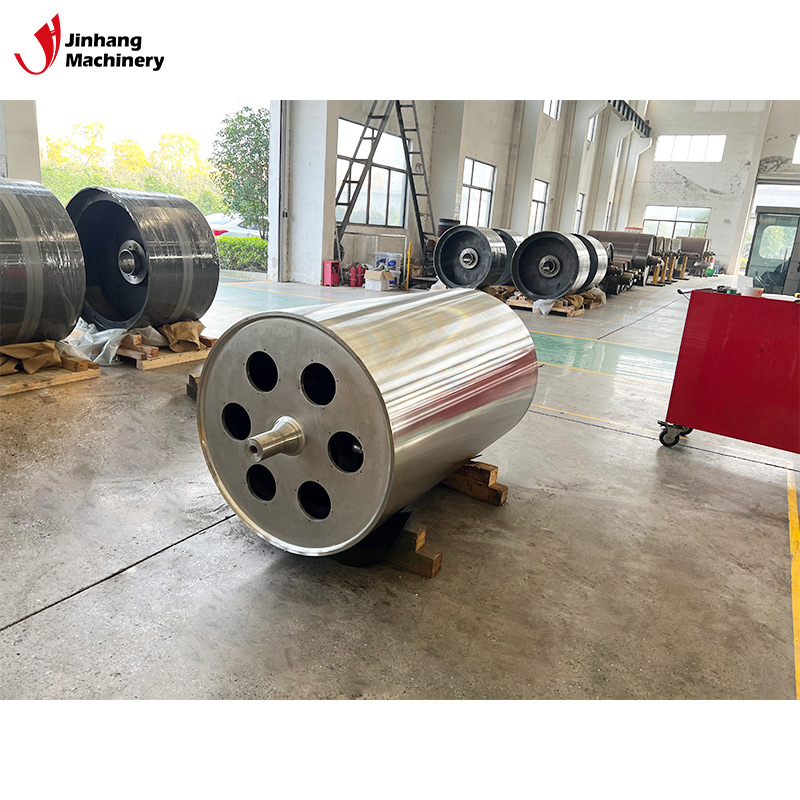
How can uneven temperature in industrial mirror rollers be detected? (Based on production observations)
The presence of temperature differences in the mirror roller can be identified by the following signs:
•Inconsistent surface gloss (streaking)
•Fluctuations in material thickness across the width
•Presence of shadows or bright spots on the product
•Appearance of water-ripple patterns or "orange peel" texture
•Unstable product curling direction
•Inability to stabilize web width despite tension adjustments
•Inconsistent surface temperatures (visible via infrared thermography)
If these phenomena occur frequently, the issue is likely related to the temperature uniformity of the industrial mirror roller.