
Is Chromium Plating Necessary for Industrial Mirror Rollers?
In industrial manufacturing, mirror rollers are core functional components widely used in industries such as plastic film, lithium battery separators, copper and aluminum foil, paper, coating, and calendering. They are renowned for their high gloss, high stability, and high wear resistance.
However, the question of whether chromium plating is necessary for the surface treatment of mirror rollers is frequently discussed among engineers, purchasing personnel, and equipment manufacturers.
So, is chromium plating always necessary for industrial mirror rollers? Is it acceptable to skip it?
This not only relates to the cost of the mirror roller but also directly affects product quality, durability, and process performance.
This article will provide an in-depth analysis from multiple dimensions, including structural materials and process requirements, to help you determine whether chromium plating is necessary for mirror rollers and under what circumstances it can be omitted.
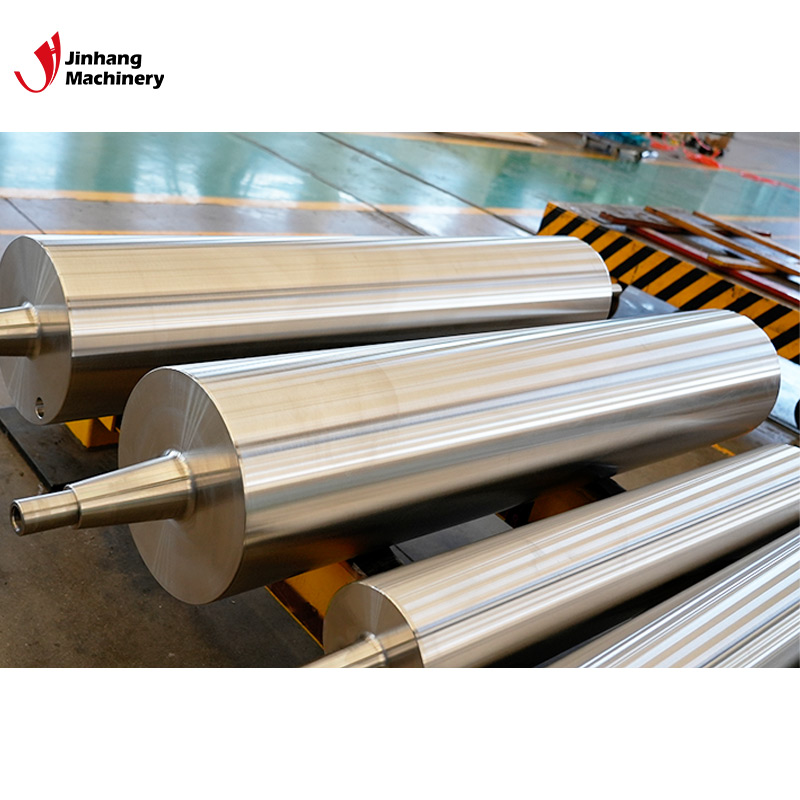
Why is Chromium Plating Commonly Used for Mirror Rollers?
The core functions of chrome plating:
1. Significantly increases hardness (hard chrome plating can reach 900–1100 HV)
2. Improves wear resistance and corrosion resistance
3. Enhances surface finish (achieving a true mirror-like finish)
4. Extends the service life of mirror rollers under high pressure and high speed.
For most industries requiring ultra-high gloss, smoothness, and wear resistance, chrome plating has become almost standard practice. Therefore, many people mistakenly believe that mirror rollers must be chrome-plated, but this is not absolutely true.
Do mirror rollers always need chrome plating?
Most mirror rollers require chrome plating, but not all mirror rollers must be chrome-plated.
Why is that?
Whether or not chrome plating is necessary depends on the following factors:
• Process requirements
• Operating temperature
• Pressure load
• Material type
• Operating speed
• Surface roughness requirements
• Operating environment (corrosion, cleanliness, humidity, etc.)
When the requirements for mirror rollers are particularly high, chrome plating offers significant advantages. However, under certain conditions, it can be used normally without chrome plating, and may even be more cost-effective.
The following detailed analysis will help you determine this.
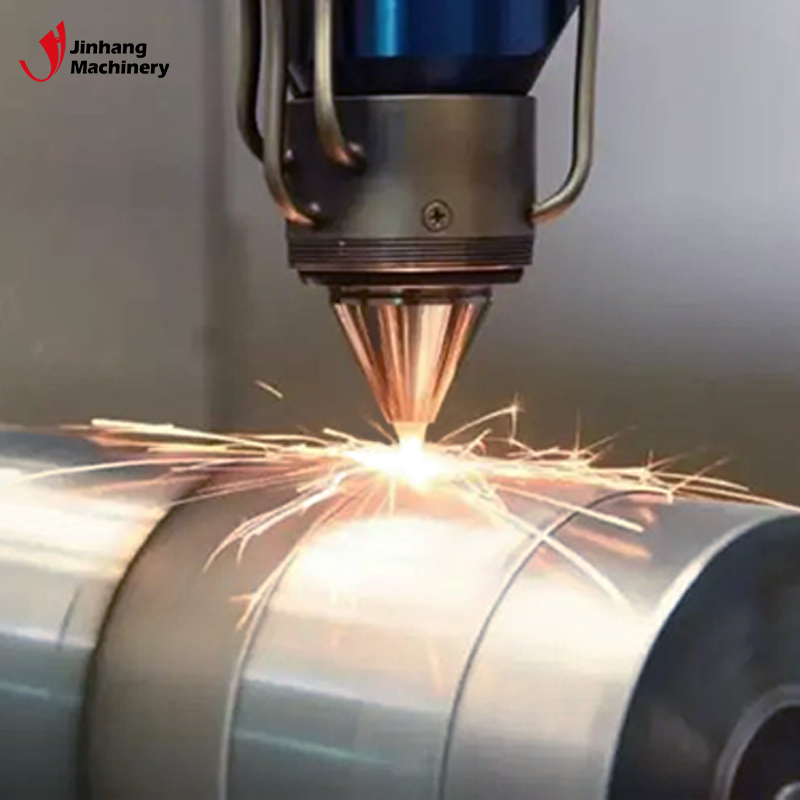
Can mirror rollers be used without chrome plating?
In what situations is it acceptable, and in what situations not?
1. Is it feasible to use mirror rollers without chrome plating under low load, low speed, and non-corrosive environments?
Answer: Yes.
If the operating conditions of the mirror roller are:
• Low-speed operation
• Soft contact material (such as some paper products)
• No need for extremely high reflectivity
• High hardness of the substrate itself (such as high-strength steel)
• Low risk of surface wear
• Dry working environment and no need for corrosion resistance
Then, precision grinding and polishing are sufficient to meet the process requirements for the mirror roller. In these situations, chrome plating actually increases costs and is not very meaningful.
For example (not a case study, just describing the type of operation):
• Mirror finish on some low-speed pressure rollers
• Some take-up rollers that do not come into contact with abrasive materials
• Some ordinary mirror-finish flattening rollers at room temperature
In these scenarios, mirror rollers can be used without chrome plating.
2. Is it feasible to use mirror rollers without chrome plating in high-temperature environments?
It depends on the temperature.
• Below 200℃: Most steel substrates and chrome plating layers can withstand this; chrome plating or no plating is feasible.
• 200–400℃: Chrome plating layers may experience microcrack propagation, color change, and decreased adhesion.
• Above 400℃: Hard chrome plating is not recommended.
Therefore:
➡ In high-temperature conditions, it may actually be safer not to plating, such as using nitriding, ceramic spraying, or other similar methods.
3. Mirror rollers need to withstand high pressure and high speed; is it okay to not plating them?
Answer: Basically not.
Under high-speed or high-pressure conditions:
• The surface of the mirror roller will be subjected to continuous friction.
• Surface wear will directly affect the product's gloss and thickness uniformity.
• Micro-damage invisible to the naked eye will be magnified, causing process defects.
The high hardness (above 900 HV) of hard chrome plating is extremely advantageous in such high-load environments. Unplated surfaces struggle to maintain gloss and wear resistance over long periods.
Therefore, in the following situations, not plating is almost impossible:
• Lithium-ion battery separator calendering
• High-speed stretching of PET/CPP/BOPP
• High-pressure rolling of metal foils
• Cooling section of mirror rollers for T-die extruded films
• High-speed coating machines
These demanding production lines are extremely critical to the surface stability of mirror rollers, and chrome plating is usually necessary.
4. Is it okay to not plating when in contact with corrosive materials?
No.
Some processing materials, solvents, or moisture can corrode mirror rollers, such as:
• Certain chemical coating solutions
• Water-based systems
• Acid and alkali residues
• High humidity environments
Chromium plating provides excellent corrosion resistance, protecting the mirror roller substrate from corrosion.
Unchrome-plated mirror rollers in corrosive environments will exhibit:
• Mirror spots
• Surface oxidation
• Micro-corrosion pits
• Reduced surface finish
• Affected product appearance
Therefore, mirror rollers must be chrome-plated if there is a risk of corrosion.
5. Is it okay to not plating mirror rollers when extremely high surface finish is required?
Generally not.
The natural hardness of chrome plating is more beneficial for:
• Maintaining mirror surface roughness (Ra ≤ 0.01μm)
• Reducing micro-scratches during use
• Maintaining stable reflective gloss
While unchrome-plated mirror rollers can be polished to a high finish, they are easily scratched or worn during use.
If your process requires:
• High gloss
• High smoothness
• Zero scratches
• High reflectivity
• Precision optical-grade effect
Then chrome plating is an irreplaceable solution.
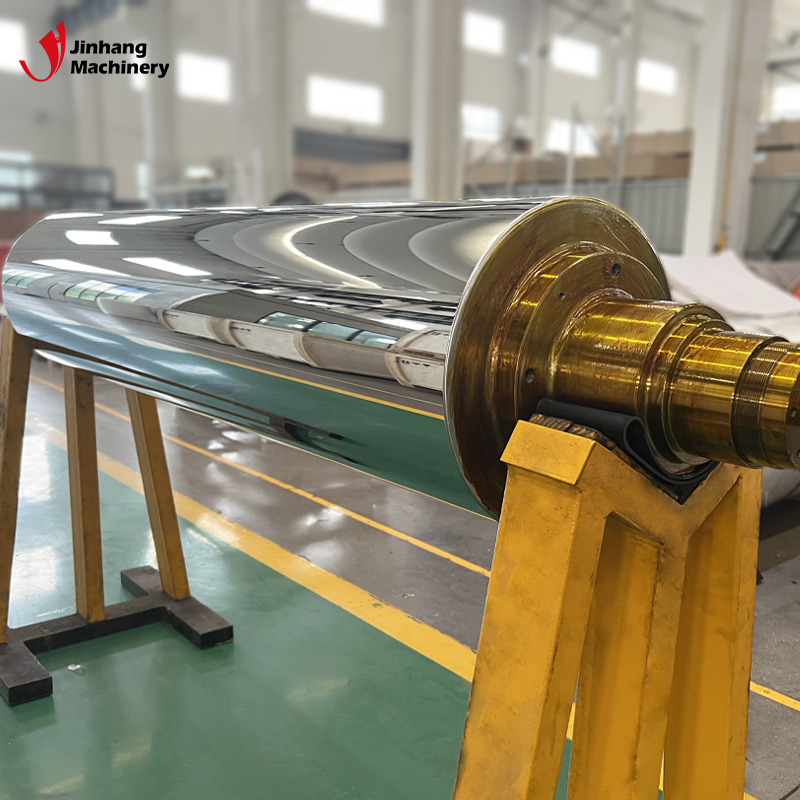
Why must mirror rollers be chrome-plated in many cases?
Here are the professional reasons why chrome-plated mirror rollers cannot be easily replaced:
1. Chrome plating has extremely high hardness, maintaining mirror-like stability over a long period
Hardness 900–1100 HV, far exceeding that of ordinary steel.
This means:
• Less prone to wear
• Scratch resistant
• Indentation resistant
• Maintains surface roughness over a long period.
For mirror rollers requiring long lifespan and low wear, chrome plating offers significant advantages.
2. Chrome plating improves corrosion resistance
The chrome plating layer can isolate the substrate from corrosion by moisture, chemicals, and humidity.
Especially suitable for:
• Production lines requiring solvent cleaning
• Coating industry
• High humidity production workshops
3. Chrome plating achieves extremely high mirror finish
Through electroplating and post-polishing, chrome-plated mirror rollers achieve:
• Extremely low roughness
• Clear reflection
• High flatness
This is crucial for industries such as high-end films and optical materials.
4. Extended lifespan and reduced maintenance costs
Chrome-plated mirror rollers have a longer lifespan than unplated ones, reducing:
• Downtime
• Maintenance costs
• Re-grinding frequency
For high-speed production lines, reducing production losses is even more valuable.
Can mirror rollers use alternatives to chrome plating?
If chrome plating is not desired, there are other ways to improve the performance of mirror rollers, such as:
1. Nitriding
Features:
• Higher abrasion resistance
• Higher temperature resistance
• Higher surface hardness than chrome plating
• Lower gloss than chrome plating
Suitable for: High-temperature conditions, but not suitable for scenarios requiring high mirror reflectivity.
2. Ceramic Spraying (e.g., chromium oxide, zirconium oxide)
Advantages:
• Ultra-high hardness
• Strong wear resistance
• High temperature resistance
Disadvantages:
• Difficult to achieve a true mirror finish
• High cost
• Difficult to repair in certain areas
3. Tungsten Carbide Coating (HVOF)
Advantages:
• Extremely strong wear resistance
• High hardness
• More suitable for high-pressure applications
Disadvantages:
• Less reflective than chrome plating
• Difficult to achieve an ultra-mirror finish
4. Direct Polishing Steel Rollers
Suitable for:
• Low speed
• Low pressure
• Low surface requirements
• Non-corrosive environments
Not suitable for:
• High-end thin films
• High-pressure rolling
• High speed
• Applications requiring high wear resistance
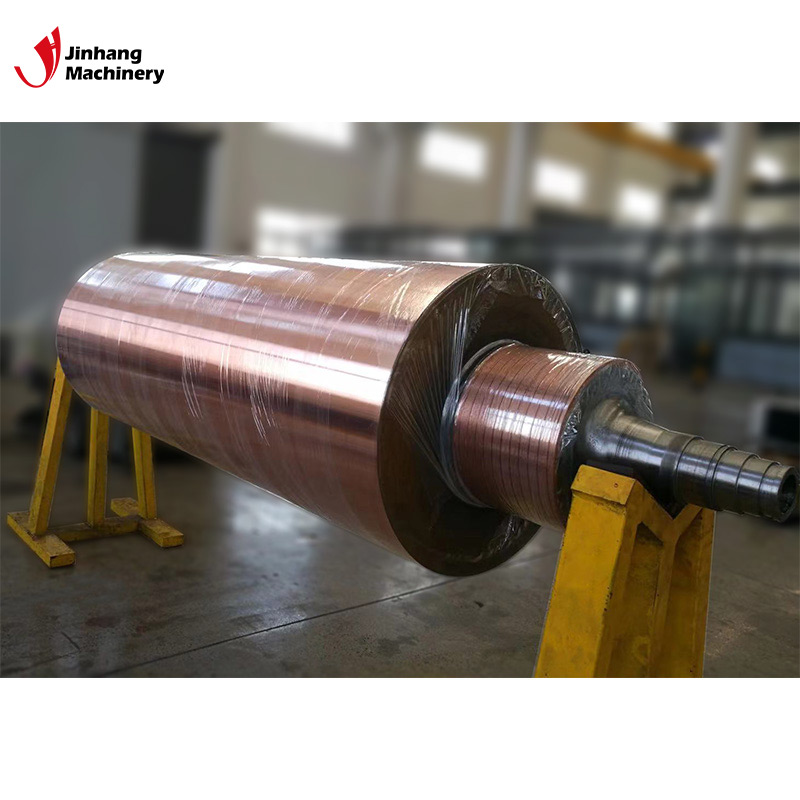
Do mirror rollers always need chrome plating?
Not all mirror rollers need chrome plating, but most mid-to-high-end applications rely on chrome plating for stable and efficient operation.
Specific answers:
✔ Mirror rollers require high gloss, high wear resistance, high stability, and long lifespan.
➡ Chromium plating is mandatory.
✔ Mirror rollers operate in high-speed, high-pressure, and corrosive environments.
➡ Chromium plating is mandatory.
✔ Mirror rollers are only used in low-speed, low-load, and general-requirement conditions.
➡ Chromium plating is not necessary.
✔ Mirror rollers operate at high temperatures (above 400℃).
➡ Chromium plating is not suitable; nitriding or ceramic coatings should be considered instead.
Overall, chromium plating is the most mature, cost-effective, and versatile surface technology for mirror rollers, and therefore the most widely used in industry.