
Is EPDM Rubber Roller Heat-Resistant?
In industrial roller products, EPDM rubber rollers are widely used in printing, textiles, chemicals, packaging, and metal processing industries due to their excellent weather resistance, aging resistance, and chemical stability. Especially when facing harsh environments such as high-temperature steam, hot air, and hot water, EPDM rubber rollers are often a preferred material for many companies.
So, the question arises: Is EPDM rubber roller actually heat-resistant? What is its heat resistance limit?
This is the core content that this article will delve into.
The following will provide a professional analysis from multiple dimensions, including material structure, thermal stability, steam environment performance, comparison with other rubbers, temperature rating, and application conditions, to help you fully understand its advantages in industrial scenarios.
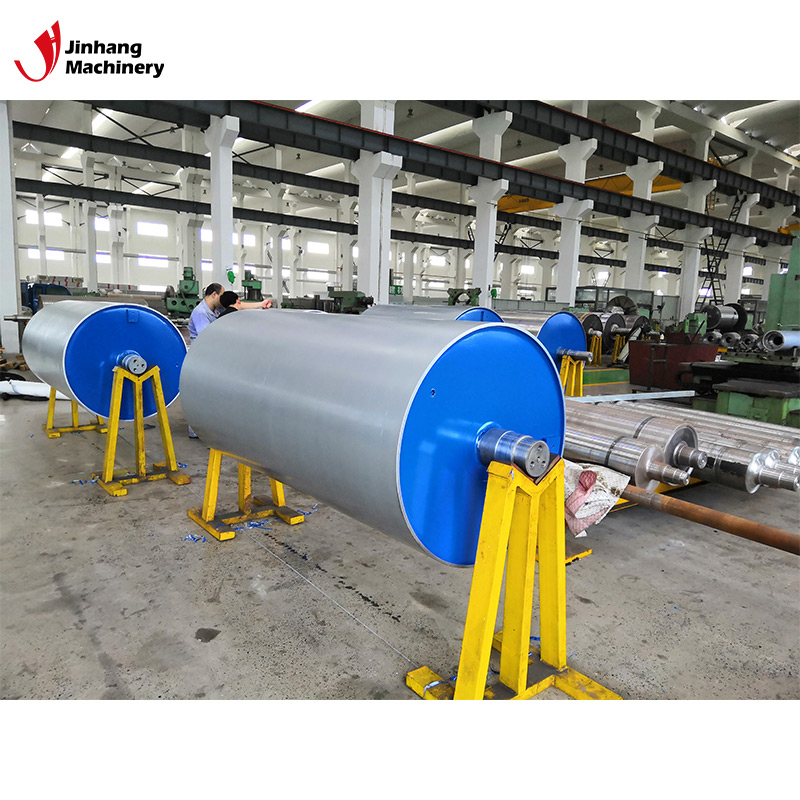
Why is EPDM rubber roller considered to have good heat resistance?
EPDM stands for Ethylene Propylene Diene Monomer. Its molecular structure does not contain easily oxidized double bonds, but is mainly composed of saturated segments, which gives it the following characteristics:
• Excellent resistance to hot air aging
• Structural stability in medium and high temperature environments
• Strong resistance to ultraviolet rays and ozone, not prone to aging
• Outstanding steam resistance
Because of the stability of its molecular structure, EPDM rubber rollers are not prone to cracking, hardening, or deformation in high-temperature environments, which is why they are frequently used in many heat processing production lines.
It is worth noting that:
EPDM has excellent steam resistance. Tests have shown that its heat resistance is even better than its steam environment tolerance. After nearly 100 hours in superheated steam at 230°C, its appearance remains stable.
This is a very high level of heat resistance for any industrial rubber, providing a reliable foundation for the use of EPDM rubber rollers in high-temperature environments.
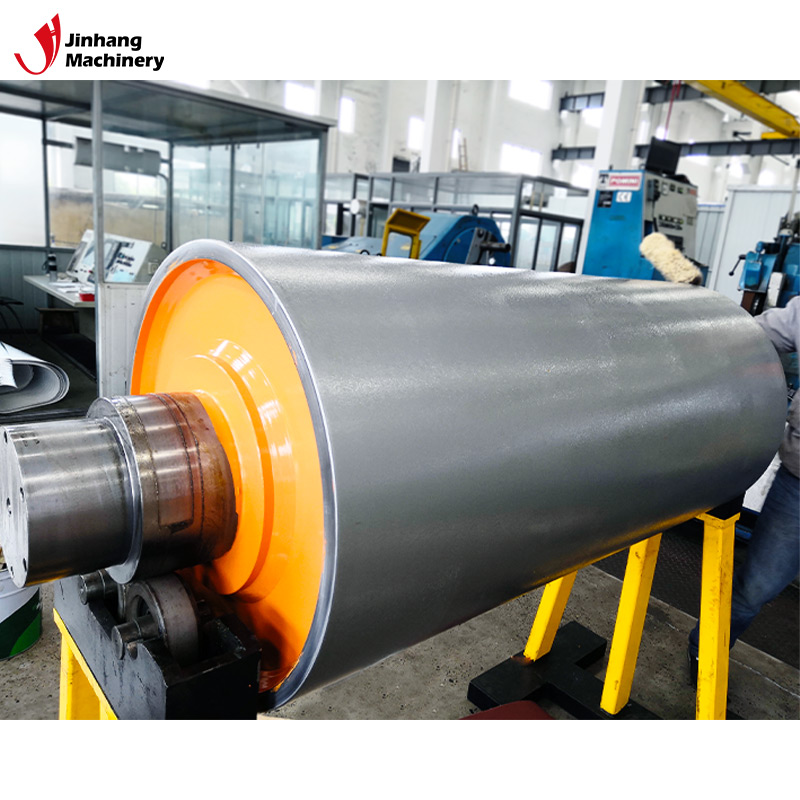
What is the heat resistance range of EPDM rubber rollers?
To answer the question "Are EPDM rubber rollers heat-resistant?", it is necessary to analyze the actual temperature range.
Heat Resistance Range in Typical Air Environments
The stable operating temperature of EPDM in air environments is typically:
• Continuous operating temperature: 120°C~150°C
• Short-term withstand temperature: 150°C~180°C
This means that EPDM rubber rollers are perfectly capable of handling printing, conveying, heat treatment, and drying systems.
Stronger Heat Resistance in Steam Environments
EPDM exhibits superior resistance to steam compared to air temperatures:
• EPDM maintains good performance in 200°C steam
• It can withstand nearly 100 hours of superheated steam at 230°C without significant appearance changes.
This is not something all rubbers can achieve; for example:
• Nitrile rubber (NBR) ages rapidly in 100°C steam
• Neoprene rubber (CR) is prone to failure in high-temperature steam environments
• Natural rubber (NR) softens significantly around 90°C
In comparison, the advantages of EPDM rubber rollers are very prominent. Therefore, if your application involves high-temperature hot water, hot air, steam transport, or hot air drying systems, then EPDM rubber rollers are an extremely suitable choice.
Why can EPDM rubber rollers withstand high temperatures?
To deeply understand the heat resistance of EPDM rubber rollers, it is essential to start with their molecular structure and material properties.
1. Saturated main chain structure provides strong thermal stability
The main chain of EPDM is almost entirely composed of saturated bonds, making it less susceptible to thermal oxidation. In high-temperature air environments, the EPDM molecular structure remains stable and does not decompose rapidly like unsaturated rubber.
2. Extremely low polarity reduces sensitivity to thermal reactions
EPDM rubber has very low polarity, meaning it is insensitive to chemical reactions caused by heat.
This allows EPDM rubber rollers to maintain long-term stability in hot processing or drying environments.
3. Excellent steam stability stems from its unique copolymer structure
The unique position of the third monomer (Diene) in EPDM prevents chain segment weakening, thus maintaining its elasticity and heat resistance even in steam environments.
4. High Thermal Decomposition Temperature
EPDM's thermal decomposition temperature is typically above 300°C, far exceeding that of most commonly used rubbers.
This means that within the operating temperature range of 150°C to 200°C, EPDM rubber rollers remain completely within a safe range.
5. Slow Thermal Aging Rate
EPDM's aging rate under high-temperature conditions is significantly lower than that of other rubbers such as NBR, CR, and NR. This ensures that industrial equipment can operate for extended periods without frequent roller replacements.
In summary, the heat resistance of EPDM rubber rollers is determined by its molecular structure and physical properties, not solely by surface treatment.
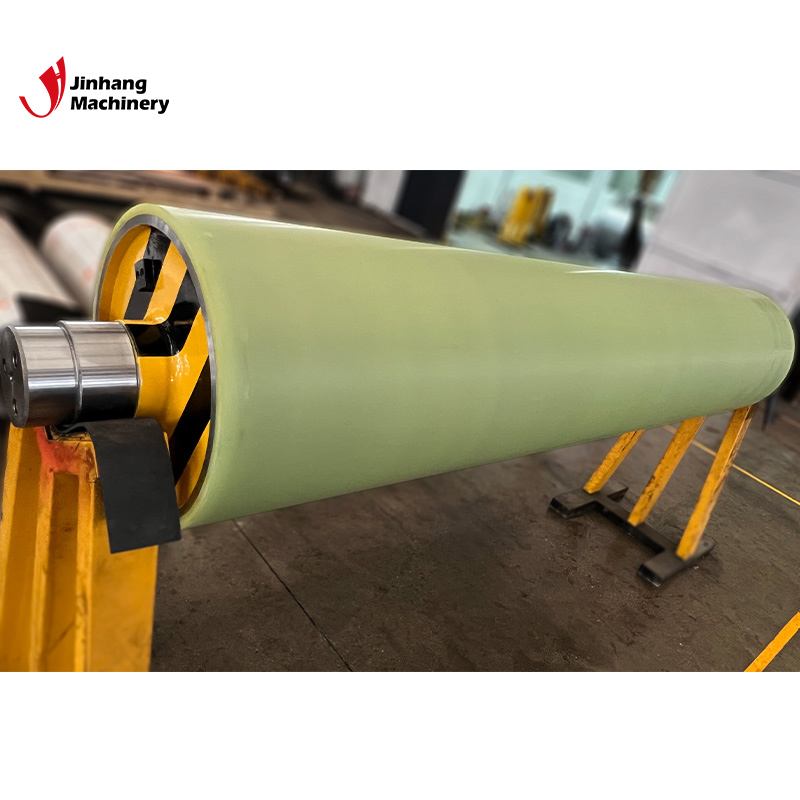
How do EPDM rubber rollers perform under different temperature conditions?
To help you truly understand the question "Are EPDM rubber rollers heat-resistant?", we analyze their performance at different temperatures:
How do EPDM rubber rollers perform in environments ranging from 80°C to 120°C?
Within this temperature range, EPDM exhibits extremely stable performance:
• Minimal change in rubber hardness
• Good elasticity maintained
• Almost no decrease in mechanical strength
• No surface cracking or softening issues.
This is the most common operating temperature range for many industrial production lines (e.g., hot air conveyors, drying lines), allowing EPDM rubber rollers to operate continuously under these conditions.
How stable are EPDM rubber rollers when operating continuously at 120°C–150°C?
This range falls within the typical high-temperature operating range for EPDM.
The results are as follows:
• Minimal performance degradation
• No material deformation
• Stable outer rubber structure
• Sustained long-term operation
For example:
Many devices requiring hot pressing, hot drying, and heat conversion utilize EPDM rubber rollers to ensure equipment stability and lifespan.
Can EPDM rubber rollers still be used at short-term high temperatures of 150°C–180°C?
In short-term operating conditions lasting no more than a few hours, EPDM rubber rollers maintain basic stable performance.
While this temperature is not the recommended continuous operating temperature, EPDM's heat resistance is sufficient to ensure no damage occurs during occasional high-temperature fluctuations.
Will EPDM rubber rollers be damaged in a steam environment of 200°C–230°C?
This is a crucial range for evaluating EPDM performance.
In a steam environment:
• EPDM can withstand prolonged steam exposure at 200°C
• No change in appearance after nearly 100 hours in superheated steam at 230°C
This indicates:
• No expansion
• No softening
• No cracking
• No delamination
Extremely high-temperature steam environments are a "disaster zone" for most rubbers, but EPDM maintains stable performance.
Therefore, if your applications involve steam sterilization, steam drying, steam conveying, or contact with high-temperature fluids, EPDM rubber rollers are one of the most advantageous options.
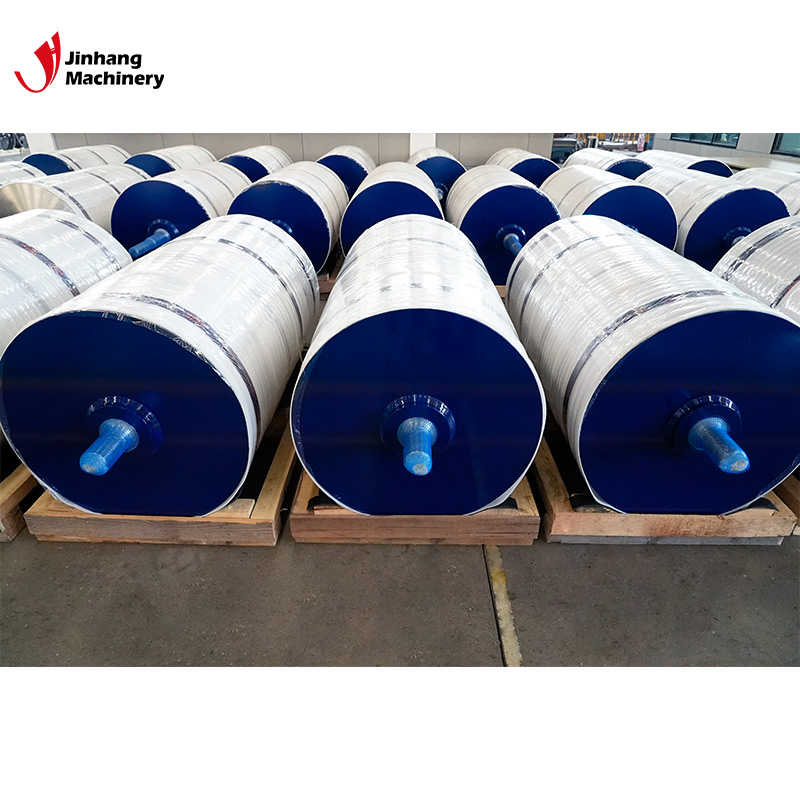
What performance changes will occur in EPDM rubber rollers at high temperatures?
Although EPDM rubber rollers exhibit excellent heat resistance, high temperatures will still cause some predictable changes in their physical properties. These changes are not defects but normal material reactions.
These include:
1. Slight increase in hardness
Under prolonged high-temperature air aging, the hardness of EPDM may increase slightly, but the change is much smaller than that of other rubbers.
2. Slight decrease in tensile strength
Under extremely high temperatures, the cross-linking structure may change slightly, but the decrease is controllable and does not affect usability.
3. Slight reduction in surface gloss
This is mainly a natural phenomenon caused by changes in the outer layer's microstructure.
Even so, the overall service life of EPDM rubber rollers is still superior to most rubber rollers.
Are EPDM rubber rollers more heat-resistant than other rubbers?
The following is a comparison of the heat resistance of common rubbers:
Material | Continuous Heat Resistance Temperature | Steam Resistance | High Temperature Stability
EPDM | 120–150°C | Excellent (can withstand 200°C+) | Very High
NBR | 80–100°C | Poor | Moderate
CR | 100–120°C | Poor | Slightly Low
NR | 70–90°C | Very Poor | Low
Silicone | 180–200°C | Moderate | Very High
As can be seen from the table:
• EPDM rubber rollers perform significantly better than most rubbers in steam and humid environments.
• Although silicone rubber has slightly higher high-temperature resistance, its steam resistance is not as good as EPDM.
• In environments with a combination of humid heat, high temperature, and steam, EPDM can be considered the most balanced and efficient choice.
Therefore, if you ask: Is EPDM rubber roller a leader in high-temperature applications?
The answer is yes.
What temperature-related considerations should be taken into account when using EPDM rubber rollers?
Although EPDM rubber rollers have extremely high heat resistance, the following principles should still be observed in practical applications:
1. Avoid exceeding the upper limit of continuous operating temperature.
While it can withstand 180°C for short periods, continuous operation should be controlled within 120°C to 150°C.
2. Steam environments are more suitable than air environments.
If both high-temperature air and steam are present in the working conditions, pay special attention to the air temperature.
3. Avoid subjecting to strong mechanical deformation at high temperatures.
High temperatures may reduce material rigidity; strong extrusion, cutting, or impact should be avoided.
4. Use an appropriate adhesive system.
Bonding EPDM to metal mandrels requires heat-resistant adhesives; otherwise, overall stability may be affected.
Is EPDM rubber roller heat-resistant?
✅ EPDM rubber rollers are not only heat-resistant, but extremely heat-resistant.
• Stable long-term operation at 120–150°C
• Short-term tolerance to 150–180°C
• Stable in 200°C steam
• Unchanged appearance after nearly 100 hours in superheated steam at 230°C
• Insensitive to heat aging
• Significant advantages compared to many industrial rubbers
Therefore, if your equipment involves high temperature, high humidity, steam, continuous hot air, or other similar operating conditions, EPDM rubber rollers are an extremely reliable choice.