
Tungsten Carbide Coated Rollers: Why Can't Pure Tungsten Carbide Powder Be Used?
In modern industrial surface engineering, tungsten carbide coated rollers are widely used in metallurgy, papermaking, film processing, and plastics manufacturing due to their ultra-high hardness, strong wear resistance, and outstanding corrosion resistance. For production lines demanding high lifespan, high stability, and high wear resistance, tungsten carbide coated rollers are almost irreplaceable key equipment components.
However, many companies, when learning about tungsten carbide coated rollers, raise the question:
"Since tungsten carbide is so hard, why not just use pure tungsten carbide powder for spraying?"
Theoretically, pure tungsten carbide, with its high hardness, high melting point, and extremely strong wear resistance, seems ideal as a coating material. But this intuition is wrong. In reality, pure tungsten carbide powder can hardly be used directly in thermal spraying, and it is not used industrially in tungsten carbide coated rollers.
The reason is not only a technical issue, but also a decisive limitation imposed by the material science structure and the spraying process mechanism.
This article will guide you through a systematic understanding of why tungsten carbide composite powder containing a binder phase must be used in industrial production, instead of pure tungsten carbide powder.
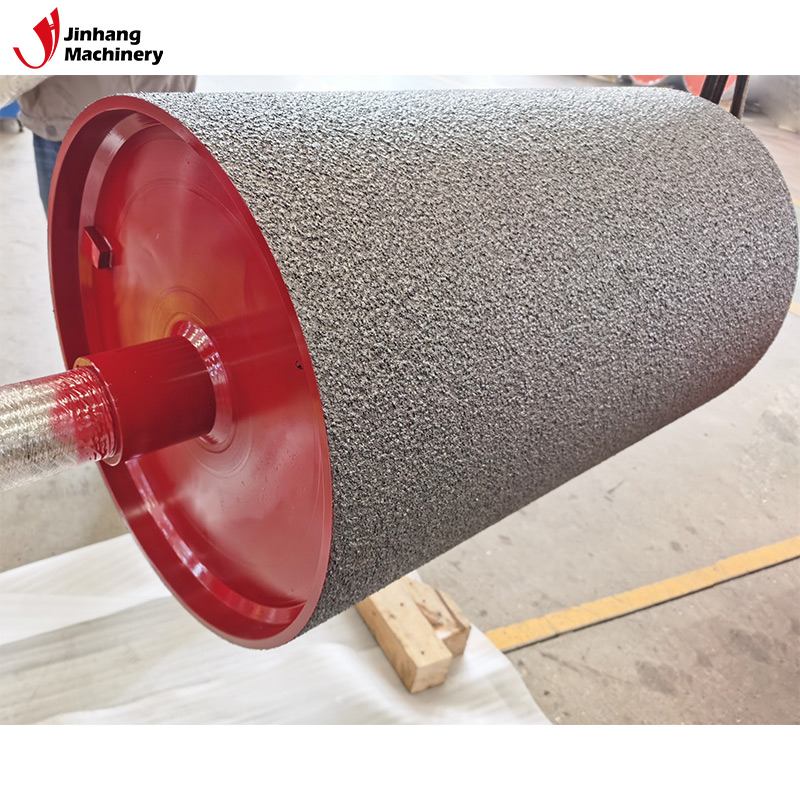
Why do tungsten carbide coating rollers require composite powder instead of pure tungsten carbide?
Before understanding the reasons, let's review the key characteristics of tungsten carbide:
• High melting point of 2870°C
• Extremely high hardness (HRA 90+)
• High brittleness
• Oxidation resistance depends on temperature environment
• Low coefficient of thermal expansion
While these characteristics make it wear-resistant, they also bring significant difficulties to the spraying process.
The manufacture of tungsten carbide coating rollers mainly relies on methods such as HVOF (High-Speed Flame Offset), plasma spraying, or explosive spraying. Although these processes involve high temperatures, they are insufficient to completely melt pure tungsten carbide particles.
This means:
• Pure tungsten carbide particles are difficult to melt.
• Inability to form an effective coating structure.
• Difficulty in achieving metallurgical bonding or mechanical interlocking with the substrate.
Therefore, industrially, a metallic binder phase must be added to form a fusible, bondable, and depositable composite powder, which is the key foundation for the successful manufacture of tungsten carbide coating rollers.
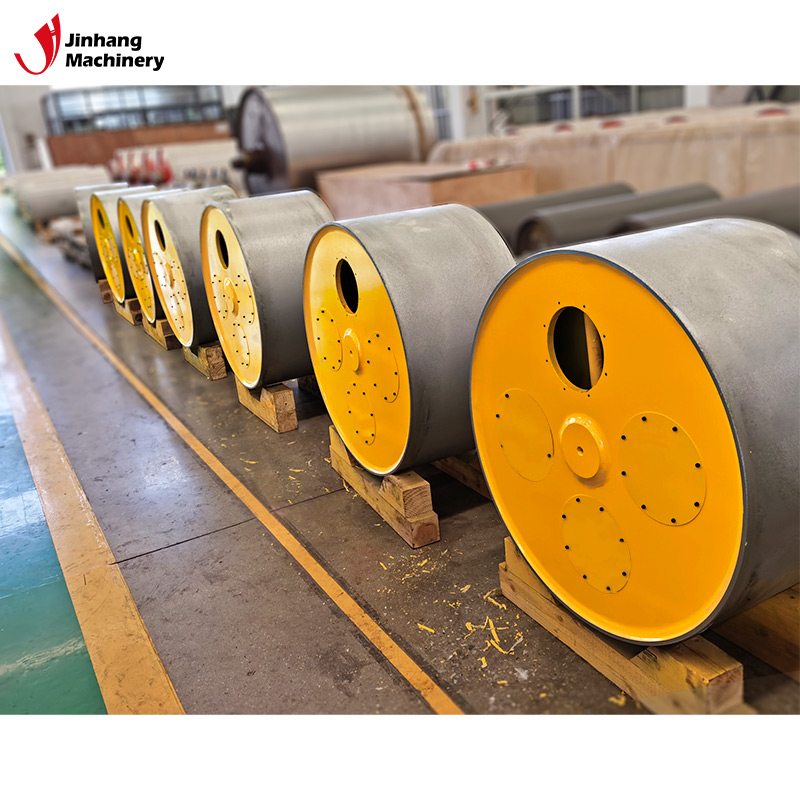
What problems occur with pure tungsten carbide powder during spraying?
Let's delve into the technical details.
During high-temperature spraying, pure tungsten carbide powder will experience the following serious problems:
1. The powder cannot completely melt
Although the spraying equipment temperature (approximately 2600–3000°C) is high, it is still insufficient to completely melt the tungsten carbide.
Results:
• Powder impacts the substrate in a solid state.
• Extremely poor coating density.
• Powder particles cannot fuse together.
• Insufficient strength, easily detached.
This makes it almost impossible for pure tungsten carbide to form a film in the sprayed coating.
2. Inability to Form a Bonding Phase Between Particles
Coating structures require a "splat structure," but pure tungsten carbide results in:
• Lack of adhesion between layers
• Numerous pores
• Overall fragile coating
Ultimately, this renders the tungsten carbide coating roller completely inoperable.
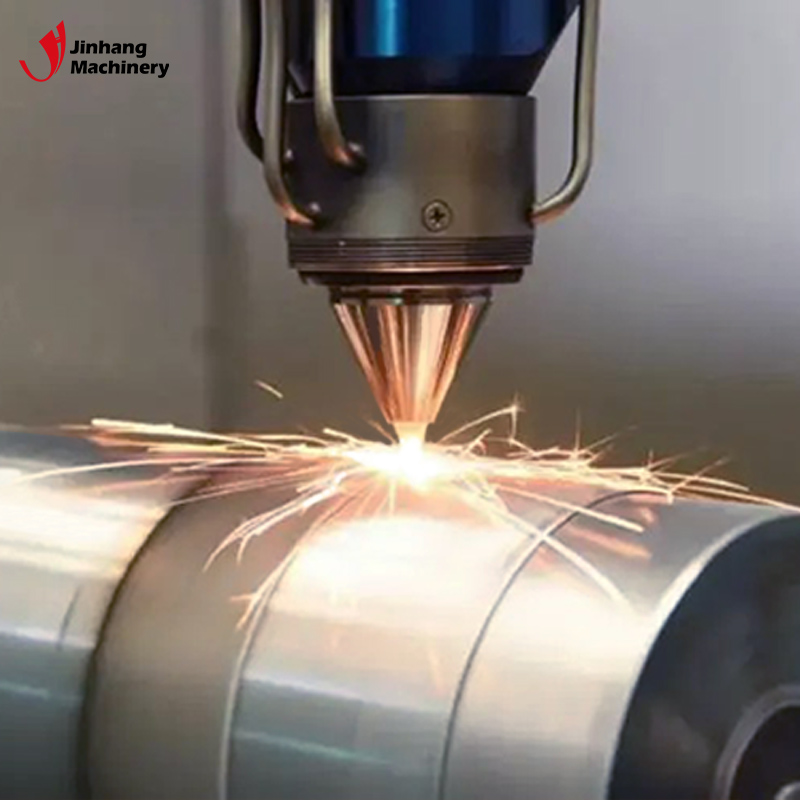
Why can't pure tungsten carbide powder form sufficient adhesion to the metal substrate?
This is a major reason why pure tungsten carbide powder is not used in industry.
The difference in thermal expansion coefficients between the metal substrate and tungsten carbide is significant.
• Metal substrate (e.g., 45# steel, stainless steel): High expansion coefficient
• Tungsten carbide: Very low expansion coefficient
This means severe stress will occur during the cooling phase:
• Coating cracking
• Coating peeling
• Severe delamination
Without a metallic binder phase to regulate thermal stress, the coating cannot adhere stably.
Metallic binder phases (Co, Ni, NiCr) can act as:
• "Buffer layer"
• "Stress relief channel"
• "Bonding bridge"
Creating a stable transition layer between the sprayed coating and the substrate.
Why does pure tungsten carbide oxidize easily after spraying?
Although tungsten carbide is heat-resistant, it is exposed to air, oxygen, or high-temperature combustion atmospheres during the spraying process.
When the temperature rises above 600°C, tungsten carbide will:
• Oxidize into WO₃ and CO₂
• Become brittle on the particle surface
• Decrease in structural stability
Pure tungsten carbide powder lacks a protective layer and will:
• Oxidize during airborne flight
• Reduce hardness
• Reduce abrasion resistance
• Graying of the coating color and decreased performance
Metallic binder phases can form a "protective barrier" around the particles, reducing the oxidation rate and ensuring stable chemical properties of the tungsten carbide coating roller.
What exactly is the role of the metallic binder phase in the tungsten carbide coating roller?
This is the core question.
Commonly used binder phases include:
• Co (Cobalt)
• Ni (Nickel)
• NiCr (Nickel-Chromium)
• CoCr (Cobalt-Chromium)
They play the following key roles in the coating:
1. Lowering the melting point, allowing the powder to partially melt.
2. Improving substrate adhesion and preventing coating peeling.
3. Improving toughness and reducing coating cracking.
4. Resisting oxidation and improving surface stability.
5. Forming a dense layer structure, enhancing overall strength.
The more uniform the metallic binder phase, the stronger the actual wear resistance of the tungsten carbide coated roller.
How can composite tungsten carbide powder improve the quality of tungsten carbide coated rollers?
Composite tungsten carbide powders are typically produced using:
• Spray granulation and sintering
• Carbide formation
• Mechanical coating
These powders are characterized by:
• Uniform particle size
• Stable particle structure
• Better melting capacity
• Reasonable distribution of binder phase
• Stronger peel resistance
Ultimately, this gives tungsten carbide coated rollers:
• Superior wear resistance
• Stable hardness (HRA 88–92)
• Low porosity (<1%)
• High adhesion
• Excellent corrosion resistance
All of this relies heavily on the participation of a metallic binder phase.
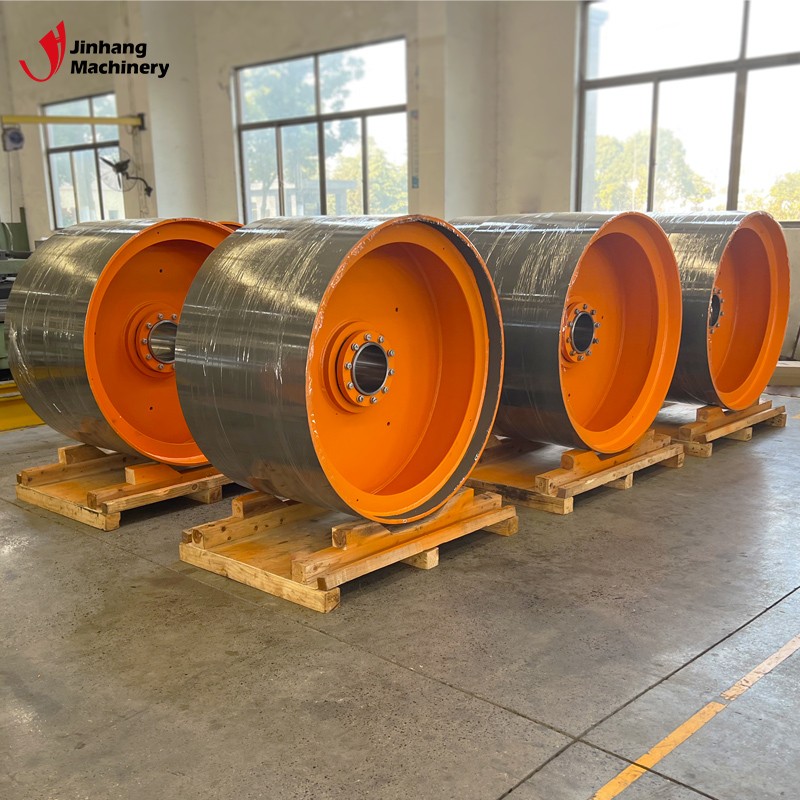
What structural defects will occur when using pure tungsten carbide for high-temperature spraying?
Using pure tungsten carbide for spraying will result in the following coating defects:
• Many pores (reduced wear resistance)
• Many cracks (reduced lifespan)
• Interlayer delamination (unusable)
• Unstable hardness
• Particle oxidation
• Rough structure
These defects severely impair the functionality of tungsten carbide coated rollers.
How to choose the most suitable powder ratio for tungsten carbide coated rollers?
Recommended for general industrial applications:
• WC-10Co-4Cr (classic combination)
• WC-12Co (extremely high wear resistance)
• WC-17Co (enhanced toughness)
• WC-Ni series (primarily corrosion resistance)
Powder formulation should meet the following requirements:
• Temperature requirements
• Wear type (erosion, sliding, fretting)
• Lubrication environment
• Coating thickness
• Substrate material
These factors collectively affect the final performance of tungsten carbide coated rollers.