
What are the special applications of NBR rubber rollers?
In the industrial roller industry, different rubber materials meet completely different operating conditions. Among them, nitrile rubber rollers (NBR) occupy an irreplaceable position due to their unique material properties. Especially in applications involving grease, solvents, mechanical friction, and stable transmission, NBR rollers are often the preferred choice.
However, many users only know that "NBR is oil-resistant" when selecting rollers, but they are unclear about the specific applications that NBR rollers are suitable for, and why they are indispensable in certain industries.
This article will systematically analyze the special applications of nitrile rubber rollers (NBR) based on their material characteristics, mechanical properties, chemical compatibility, and industrial operating conditions, helping you understand their application value from an engineering perspective.
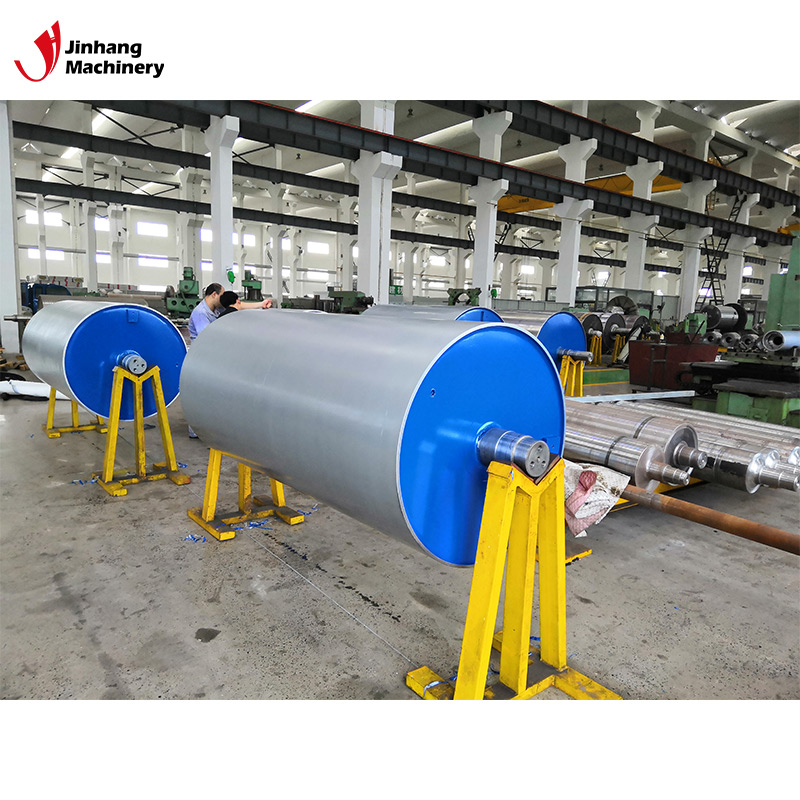
What is a nitrile rubber roller (NBR)?
Nitrile butadiene rubber (NBR) is a synthetic rubber copolymerized from butadiene and acrylonitrile. When this material is applied to the surface of industrial rollers through coating, casting, or vulcanization processes, it forms an NBR rubber roller.
In industrial applications, NBR rubber rollers typically use a metal roller core as a base, with an outer layer of NBR rubber of a certain thickness. Precision machining ensures its roundness, coaxiality, and surface properties.
Compared to ordinary rubber rollers, NBR rubber rollers are not general-purpose rollers but functional rubber rollers designed for specific working conditions.
What are the most prominent material properties of NBR rubber rollers?
To understand the special applications of NBR rubber rollers, it is essential to first understand their core material properties.
Key properties of NBR Rubber Roller include:
• Excellent oil resistance
• Good resistance to fuel oil and lubricating oil
• High mechanical strength
• Stable elasticity and resilience
• Good wear resistance
• Controllable coefficient of friction
These characteristics give NBR Rubber Roller a significant advantage in many environments where other rubbers struggle.
Why is NBR Rubber Roller the preferred choice for oily applications?
This is one of the most representative special applications of NBR Rubber Roller.
In industrial production, many operating conditions inevitably involve the following media:
• Lubricating oil
• Machine oil
• Cutting fluid
• Oily solutions
Ordinary rubber, after prolonged contact with oily media, is prone to:
• Swelling
• Softening
• Changes in viscosity
• Surface cracking
NBR Rubber Roller, due to the presence of acrylonitrile in its molecular structure, has a natural resistance to oils and can maintain stable dimensional and physical properties in oily environments.
Therefore, NBR rubber rollers have distinct applications in the following situations:
• Conveyor rollers for mechanical equipment
• Traction rollers for oil-impregnated films or materials
• Rollers before and after coating or cleaning
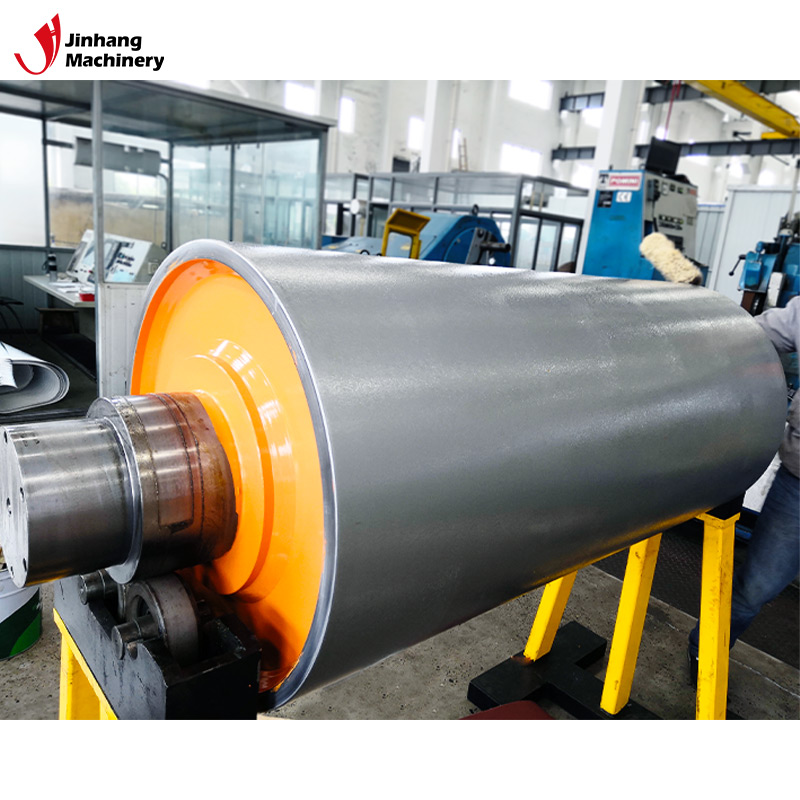
What are the special applications of NBR rubber rollers in mechanical transmissions?
Mechanical transmission systems place very specific requirements on rollers:
• Stable friction is required
• Slippage due to oil contamination is prohibited
• Long-term dimensional stability is required
NBR rubber rollers excel in these aspects:
• Relatively stable frictional properties even with an oil film on the surface
• Less prone to rapid hardness decrease due to oil immersion
• Controllable deformation over long-term operation
Therefore, NBR rubber rollers are often used in equipment requiring high transmission stability where the environment inevitably contains lubricating oil.
These applications are a key difference between NBR rubber rollers and natural rubber rollers.
Why are NBR rubber rollers suitable for high-friction applications?
Many industrial applications require both friction and the presence of oil or liquid, presenting contradictory requirements for rubber rollers.
NBR rubber rollers are suitable for high-friction conditions because:
• The material itself has a high coefficient of surface friction.
• It can maintain effective traction even in the presence of a certain oil film.
• The rubber molecular structure is stable and does not easily migrate to the surface.
In contrast, some rubber materials exhibit the following under high friction:
• Rapid surface wear.
• Heat accumulation leading to performance degradation.
NBR rubber rollers achieve a better balance between wear resistance and friction performance.
What special role do NBR rubber rollers play in the printing and coating industries?
In printing and coating processes, rollers often need to simultaneously meet the following conditions:
• Contact with ink or coating
• Maintain stable transfer
• No significant swelling
Since inks and coatings often contain oily components, ordinary rubber rollers are easily affected.
The special applications of NBR Rubber Rollers in these processes are reflected in:
• Adaptability to oily media
• Stable surface condition
• Good pressing and transfer properties
This makes NBR Rubber Rollers a common functional roller type in printing and some coating processes.
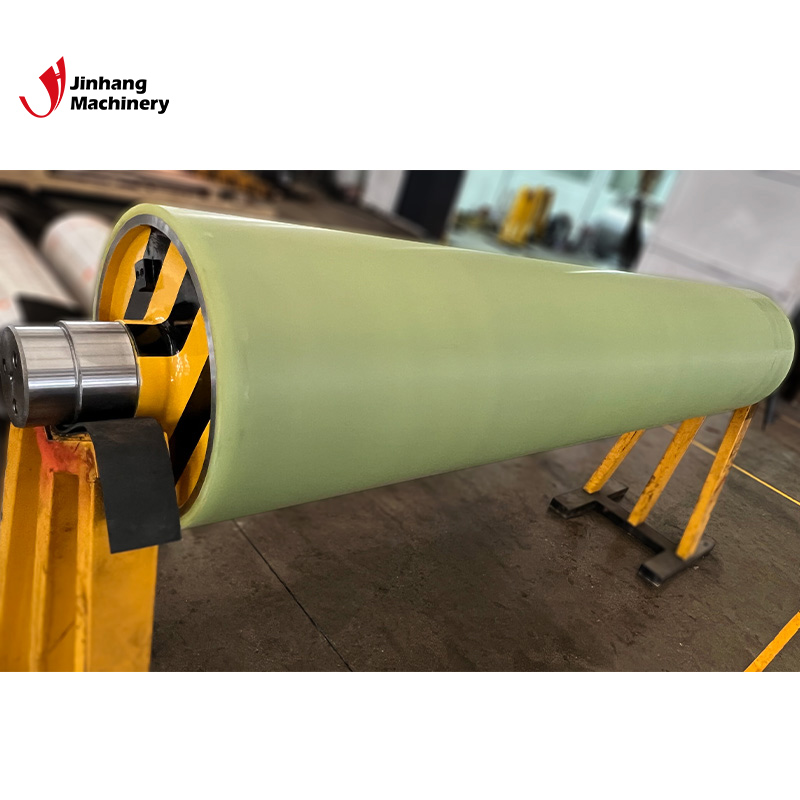
Is NBR Rubber Roller suitable for humid or liquid environments?
NBR Rubber Rollers perform excellently with oily media, but they also show certain advantages in liquid environments.
NBR Rubber Rollers exhibit good adaptability under the following conditions:
• Oily and watery environments
• Mildly chemical liquids
• Humid but not highly corrosive environments
Their molecular structure makes them less prone to structural damage under certain humidity levels, and changes in surface properties are relatively controllable.
However, it is important to emphasize that NBR Rubber Rollers are not designed for strong acids, strong alkalis, or highly polar solvents; their special applications are mainly focused on oily and mechanical environments.
What are the unique advantages of NBR Rubber Rollers in industrial conveying?
In industrial conveying systems, conveyor rollers often operate for extended periods and may come into contact with:
• Oil contamination
• Dust
• Liquid residue
The special applications of NBR rubber rollers are characterized by:
• High conveying stability
• Surface resistance to oil contamination failure
• Good resilience, maintaining good performance even after long-term compression
This makes NBR rubber rollers advantageous in conveying applications requiring "reliable rather than extreme performance."
How does the hardness range of NBR rubber rollers affect applications?
A key feature of NBR rubber rollers is their wide adjustable hardness range, typically selectable within the following ranges:
• 40–50 Shore A (softer)
• 60–70 Shore A (medium)
• 80–90 Shore A (harder)
Different hardness levels correspond to different applications:
• Low hardness NBR rubber rollers: Suitable for applications requiring good adhesion and cushioning.
• Medium to high hardness NBR rubber rollers: Suitable for applications involving transmission, traction, and conveying.
This adjustable hardness provides NBR rubber rollers with high flexibility in customized applications.
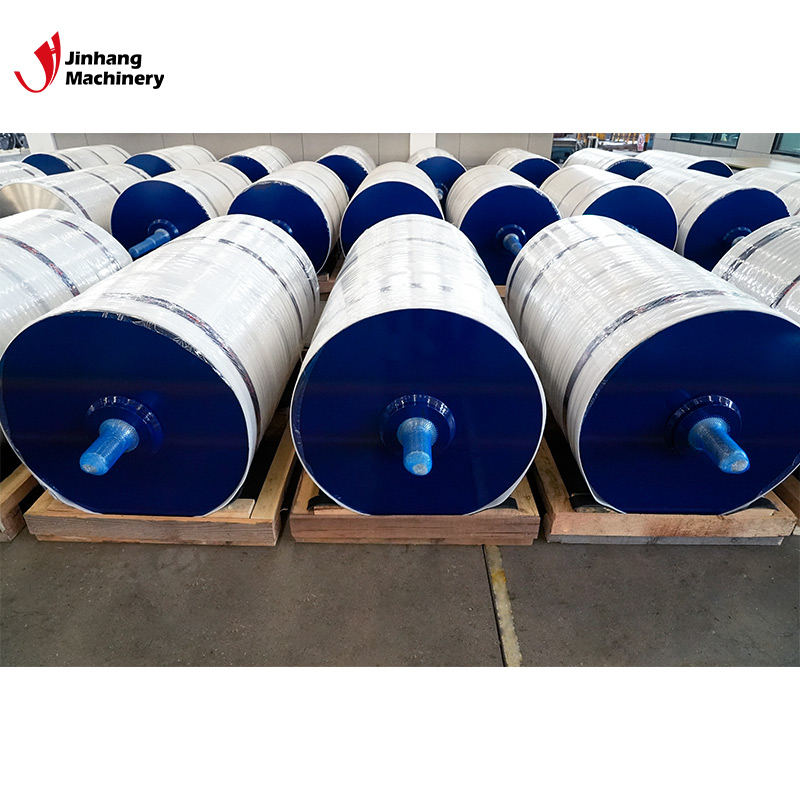
How does the NBR rubber roller perform in terms of dimensional stability?
The dimensional stability of rubber rollers is crucial during long-term operation.
NBR rubber rollers have the following characteristics:
• Relatively low compression set
• Stable performance over a reasonable temperature range
• Less prone to irreversible expansion from oil immersion
This makes them particularly advantageous in equipment requiring long-term continuous operation.
What operating conditions limit the use of NBR rubber rollers?
While NBR rubber rollers are versatile, they are not a panacea.
Caution or reassessment is required in the following operating conditions:
• High-temperature environments (long-term exposure to temperatures exceeding the material's upper temperature limit)
• Strong acid and alkali environments
• Prolonged contact with highly polar solvents
Understanding these limitations helps to more effectively utilize the "specialized uses" of NBR rubber rollers, rather than misusing them.
How do you ensure the stability of rollers used in high-speed lines?
As a precision industrial roller manufacturer, we emphasize dynamic balancing, hardness control, heat-resistant coatings, and structural integrity. High-speed printing, coating, and laminating lines require rollers with minimal vibration and perfect surface uniformity. Every roller we deliver undergoes balance testing on advanced balancing machines to ensure stable rotation even at high RPM, extending the lifespan of both rollers and associated production equipment.