
What is the hardness of industrial tungsten carbide rollers?
Among many industrial rollers, tungsten carbide coated rollers are widely used in industries such as papermaking, film production, lithium battery separators, metal processing, textiles, and plastic calendering due to their extremely high wear resistance, corrosion resistance, and impact resistance. One of their core performance indicators is hardness.
Many engineers and purchasing personnel ask the following questions when selecting rollers:
• What is the exact hardness of tungsten carbide rollers?
• Is the hardness of tungsten carbide coated rollers from different processes the same?
• Why can tungsten carbide coated rollers achieve such a high level of hardness?
• Is there a direct relationship between hardness and wear resistance?
This article systematically explains the standards, influencing factors, measurement methods, and industrial significance of tungsten carbide roller hardness, helping you fully understand this key parameter.
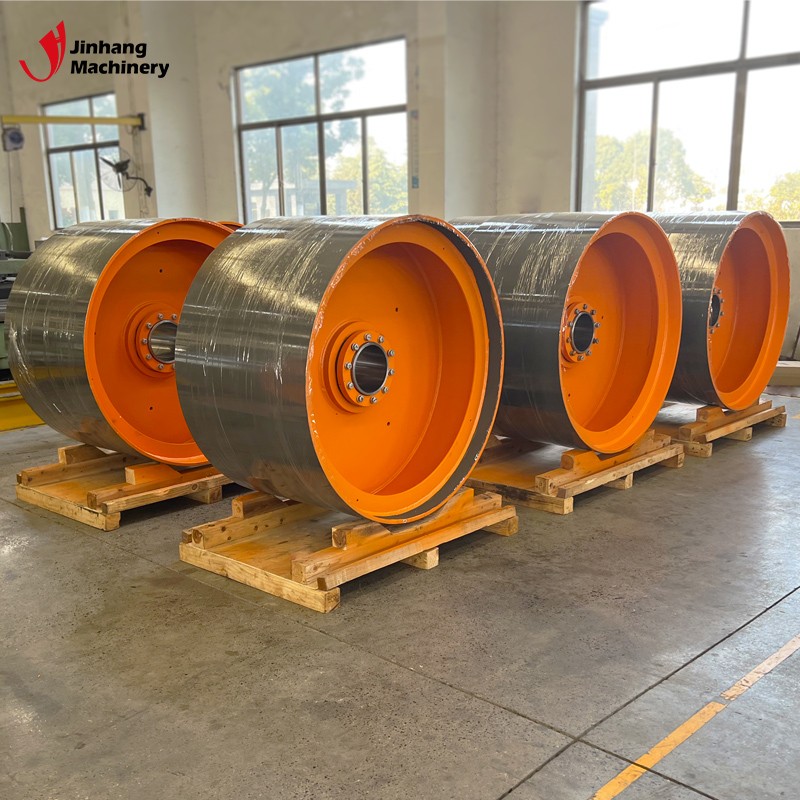
What are the industry standards for tungsten carbide roller hardness?
In the industrial field, the hardness of tungsten carbide coated rollers is typically between HV1100 and HV1600. Most established manufacturers produce tungsten carbide rollers with a stable hardness within the following ranges:
• HV 1200–1400: The mainstream hardness range for high-pressure, high-speed flame (HVOF) tungsten carbide coated rollers.
• HV 1000–1200: A relatively lower hardness range for plasma-sprayed tungsten carbide coatings.
• HV 1400–1600: High-end tungsten carbide coated rollers with optimized formulations, strictly controlled particle size, and precise phase ratios.
These hardness parameters are significantly higher than ordinary steel rollers (HRC 30–55 ≈ HV 300–550) and also noticeably higher than chrome-plated surfaces (HV 800–1000). This is why tungsten carbide coated rollers have gradually replaced traditional chrome-plated rollers in extreme abrasion environments.
Why can tungsten carbide coated rollers achieve such high hardness?
The extremely high hardness of tungsten carbide (WC) coated rollers essentially stems from the following three aspects:
1. Tungsten carbide itself possesses extremely high inherent hardness
Tungsten carbide has a hardness of HV 1700–2400, classifying it as an ultra-hard material, second only to top-tier materials like diamond and cubic boron nitride. Therefore, as long as the WC content in the coating is sufficient and the particle structure is stable, the hardness of the tungsten carbide roller will naturally be very high.
2. Enhanced overall strength through the use of a metallic binder phase
Since WC cannot be sprayed alone, a metallic binder phase (such as Co, CoCr, or NiCr) needs to be added to form a composite structure.
This composite structure brings two major advantages:
1) The binder phase provides toughness, preventing the tungsten carbide coating from becoming brittle.
2) WC particles provide hardness, achieving a balance between high wear resistance and stability.
After spraying, it exhibits a typical microstructure of "hard particles + metallic binder," which allows the tungsten carbide roller to maintain its ultra-high hardness without experiencing brittle fracture.
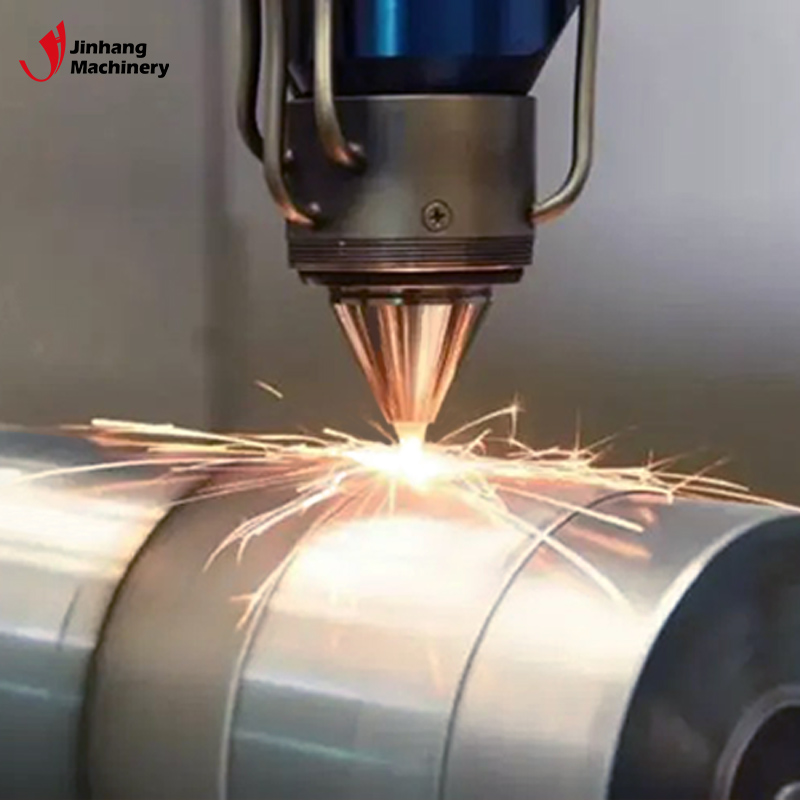
3. High-Density Coating Resulting from HVOF High-Speed Flame Spraying
The stable hardness above HV1200 is closely related to the density of the spraying process.
Specifically:
• HVOF coating density > 98%, extremely low porosity
• Particle impact velocity reaches 600–800 m/s, fully compacting particles
• Dense coating structure, naturally resulting in higher hardness
Therefore, tungsten carbide coated rollers using high-quality HVOF exhibit significantly better hardness performance than those using ordinary spraying processes.
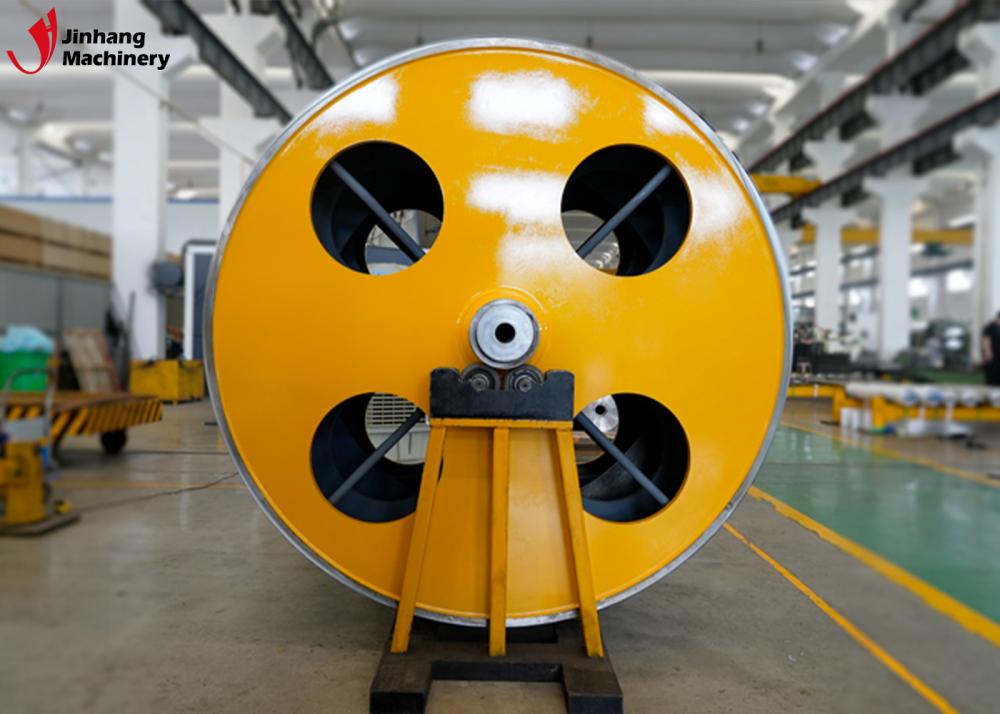
What are the differences in hardness between tungsten carbide rollers under different spraying processes?
This is one of the most frequently asked questions by users. The following is a systematic comparison:
1. Hardness of HVOF (High-Speed Flame Coating) Tungsten Carbide Coated Rolls
• Hardness: HV 1200–1600
• Dense coating, low porosity
• Most commonly used for high-end requirements: lithium battery separators, optical films, electronic films, high-end paper conditioning rolls, metal calendering rolls, etc.
• High yield strength, not prone to chipping or cracking
This is the most recommended tungsten carbide coated roll process with the most ideal hardness performance.
2. Hardness of Plasma-Sprayed Tungsten Carbide Coated Rolls
• Hardness: HV 1000–1200
• Relatively high porosity
• Relatively weak adhesion and high-temperature performance
• Mostly used in applications with less stringent requirements
Although the hardness is also high, it is generally inferior to HVOF.
3. Flame-Sprayed Tungsten Carbide Rollers (Less Commonly Used)
• Hardness: HV 800–1000
• Low cost but generally mediocre performance
• Gradually abandoned by most modern industries
This process is not recommended if a truly ultra-hard, wear-resistant roller body is required.
How to test the hardness of tungsten carbide coated rollers?
Hardness cannot be judged by the naked eye or experience; it requires specialized equipment for testing. The main methods are as follows:
1. Vickers Hardness (HV) Test
This is the most commonly used and authoritative method for measuring the hardness of tungsten carbide coated rollers.
Features:
• Applying pressure to the coating surface using a diamond drill bit
• Recording the indentation size
• Obtaining the HV value
Almost all hardness standards for tungsten carbide rollers are based on HV.
2. Microhardness Measurement
Used to analyze the hardness of different depths of the coating, such as:
• 0–20 μm surface hardness
• Intermediate layer hardness
• Bonding zone hardness
Help in judging coating quality and bonding layer reliability.
3. Nanoindentation Test (High Precision)
Used for high-precision roller surfaces, such as rollers for electronic thin films and lithium battery separators.
It can accurately analyze the hardness differences of embedded WC particles.
Is higher hardness always better for tungsten carbide coated rollers?
Many people mistakenly believe that higher hardness means greater wear resistance, but this is not the case.
Excessive hardness can lead to:
• Increased coating brittleness
• Decreased impact resistance
• Potential for microcracks under high loads
Therefore, high-quality tungsten carbide rollers do not aim for the highest hardness, but rather a comprehensive balance between:
• Hardness
• Toughness
• Bond strength
• Density
• Surface quality
HV 1200–1400 is generally the optimal range.
What factors affect the final hardness of tungsten carbide coated rollers?
The hardness of tungsten carbide (WC) coated rollers is not a fixed value, but is determined by a combination of factors:
1. WC Powder Particle Size
• Smaller particles → denser coating → higher hardness
• Larger particles → increased coating roughness → decreased hardness
Commonly used in industry:
• 15 μm, 20 μm, 30 μm particle sizes
2. Ratio of WC to Metallic Bound Phase
Common formulations:
• WC-12Co
• WC-10Co-4Cr
• WC-NiCr
Higher WC content results in higher hardness, but lower toughness.
Therefore, the formulation must balance strength and durability.
3. Spraying Temperature and Speed
Spray gun parameters directly affect hardness:
• Flame temperature
• Powder feed rate
• Gas flow rate
• Spraying distance
Improper handling of any of these factors will decrease hardness.
4. Coating Thickness
Typically, the thickness is typically 150–350 μm.
Excessive thickness reduces bonding strength, while insufficient thickness leads to faster wear and more pronounced hardness fluctuations.
5. Subsequent Grinding and Polishing
Tungsten carbide rollers typically require:
• Fine grinding
• Mirror grinding
• Ultra-fine polishing
Over-polishing weakens the surface strength, slightly reducing hardness.
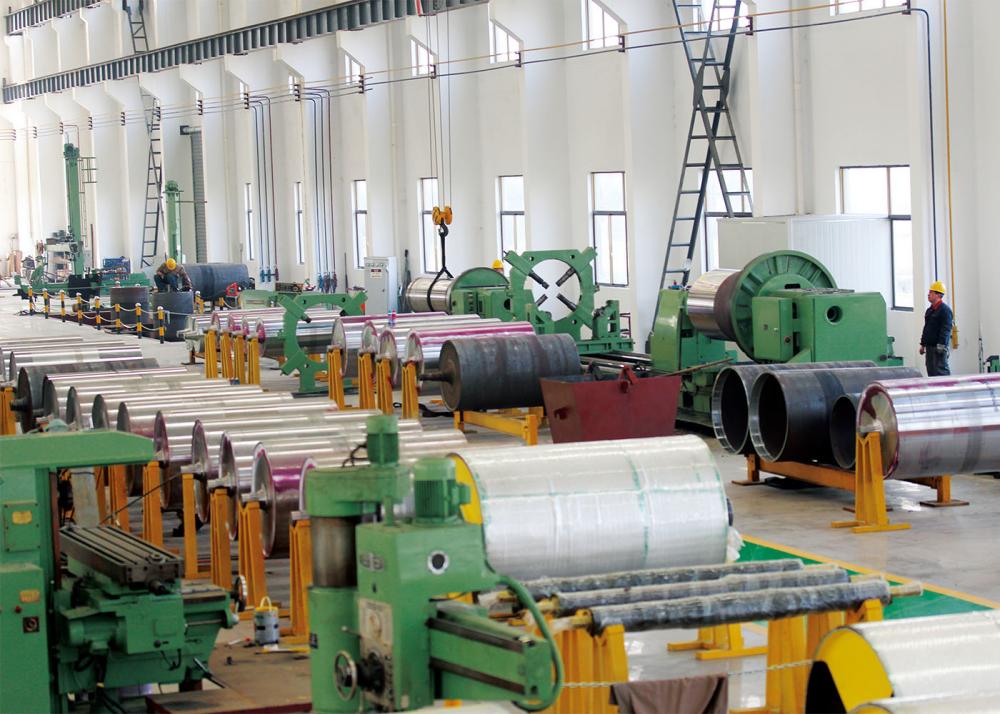
What is the significance of the hardness of tungsten carbide rollers for industrial applications?
Hardness determines whether tungsten carbide coated rollers can withstand heavy loads, high wear, and high speeds.
The main advantages of high hardness include:
1. Superior wear resistance
The higher the hardness, the less easily the roller surface is worn by the material.
Applications:
• Metal calendering
• Lithium-ion battery separator calendering
• PVC/PP/PE film calendering
• Paper surface calendering
• Functional film finishing
2. High Corrosion Resistance
High coating hardness means a dense structure, making it less susceptible to chemical corrosion.
3. Stable Roll Surface Roughness
Tungsten carbide coated rolls can maintain:
• Ra 0.02–0.05 μm over a long period
• Particularly outstanding in mirror roll applications
High hardness makes it less prone to wear-induced roughness degradation even during long-term operation.
4. Suitable for High-Temperature Environments
The WC coating has certain high-temperature resistance and is not easily softened, thus ensuring stable hardness.
How to ensure you purchase high-hardness, high-quality tungsten carbide coated rolls?
When selecting tungsten carbide coated rolls, pay close attention to:
1. Does it use the HVOF process?
2. Does the actual hardness reach HV 1200 or higher?
3. Is the coating microstructure dense?
4. Does it possess sufficient bonding strength?
5. Can a hardness test report be provided?
The more complete these conditions are, the more reliable the roller quality.
What makes your polyurethane rollers different from others?
As an experienced roller manufacturer, our polyurethane rollers are produced using advanced automatic PU casting machines, ensuring excellent bonding strength and uniform surface characteristics. PU rollers offer high resilience, chemical resistance, and long wear life, making them ideal for packaging, laminating, and lithium-battery equipment. We control every step—from raw material mixing to grinding—to ensure consistency and precision.