
Why Do Industrial Mirror Rollers Require Precise Dynamic Balancing?
In high-end industrial continuous production equipment, industrial mirror rollers are an extremely important yet extremely demanding core component. Whether in film, papermaking, coating, printing, metal rolling, composite materials, or precision surface treatment industries, industrial mirror rollers play a crucial role in transmitting tension, controlling surface quality, correcting material flatness, and determining the final product's appearance.
However, many people, while focusing on the surface roughness, coating type, or processing dimensions of industrial mirror rollers, easily overlook a decisive factor—dynamic balancing accuracy.
In fact, without precise dynamic balancing, industrial mirror rollers can hardly operate stably for extended periods under high-speed, high-precision conditions. Dynamic balancing is not an additional requirement, but a prerequisite for the "truly usable" state of industrial mirror rollers.
So the question arises:
Why must industrial mirror rollers undergo precise dynamic balancing?
What are the consequences if the dynamic balancing is substandard?
What is the necessary connection between dynamic balancing and mirror surface accuracy?
This article will provide a comprehensive, systematic, and professional analysis of "Why Industrial Mirror Rollers Require Precise Dynamic Balancing" from multiple dimensions, including mechanical principles, operational logic, processing requirements, and equipment stability.
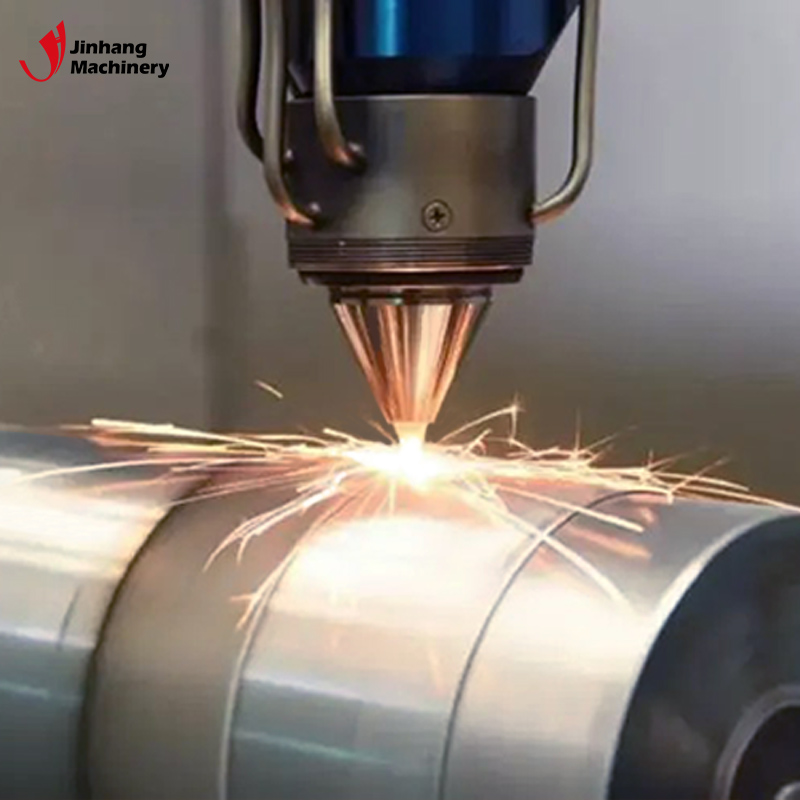
What is Dynamic Balancing of Industrial Mirror Rollers?
Before discussing "Why Precise Dynamic Balancing is Required," a fundamental concept must be clarified: What is dynamic balancing?
Dynamic balancing refers to the state in which the centrifugal force and torque generated by the mass distribution of a rotating body within its operating speed range can cancel each other out, thus ensuring that no harmful vibrations occur during rotation.
For industrial mirror rollers, dynamic balancing means:
• No periodic jumping during high-speed rotation
• No bearing vibration
• No irregular radial forces
• No impact on the material surface condition
It is particularly important to emphasize that:
Dynamic balancing is not "static centering," but rather "stability under high-speed operating conditions."
Industrial mirror rollers typically possess the following characteristics:
• High aspect ratio
• High rotational speed
• Extremely high surface finish
• Long operating time
This makes them far more sensitive to dynamic balancing than ordinary industrial rollers.
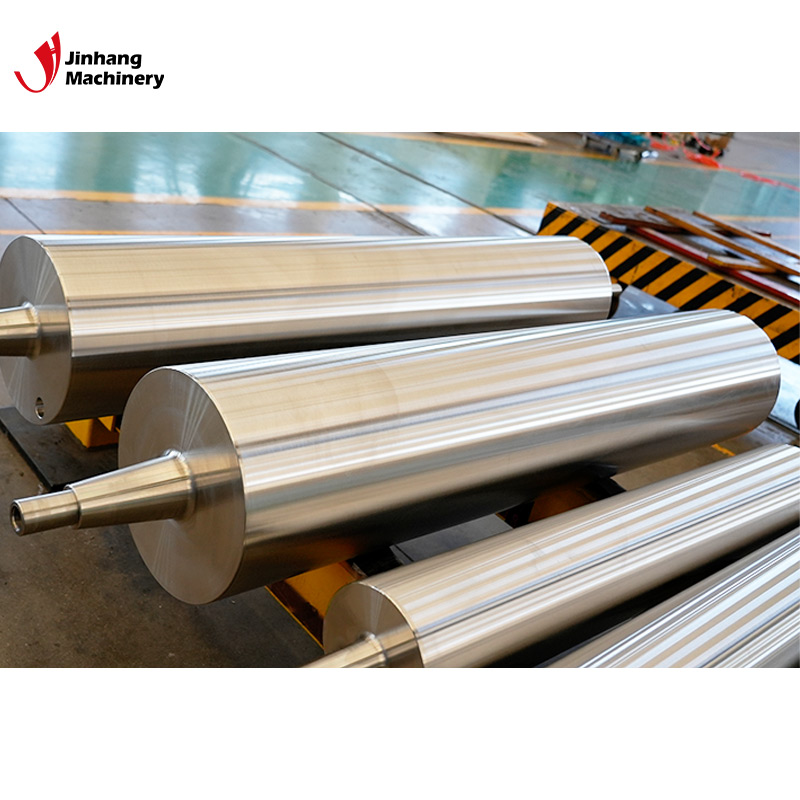
Why do industrial mirror rollers require dynamic balancing more than ordinary rollers?
This is one of the keys to understanding the problem.
1. Industrial mirror rollers have "zero tolerance" for vibration
Ordinary rollers (such as guide rollers and support rollers) allow for a certain degree of vibration and surface error, while industrial mirror rollers are entirely different.
Typical characteristics of industrial mirror rollers include:
• Surface roughness can reach Ra0.01 or even lower
• Direct contact with the surface of the final product
• Determine the gloss, smoothness, and consistency of the product
In this case, even extremely small vibrations will be "amplified" into:
• Surface ripples
• Micro-vibration marks
• Stripes
• Periodic variations in thickness
Therefore, industrial mirror rollers must maintain extremely high stability during rotation, which can only be achieved through precise dynamic balancing.
2. Industrial mirror rollers typically operate at high speeds
Industrial mirror rollers are not low-speed equipment components. Common operating conditions include:
• Continuous high-speed production lines
• High-linear-speed material transport
• Long-term uninterrupted operation
At high speeds, even a tiny mass eccentricity will translate into a significant centrifugal force.
Centrifugal force formula:
F = m × r × ω²
This means:
• Higher rotational speed
• Smaller eccentricity
• More severe vibrations
If an industrial mirror roller is not dynamically balanced, the problem will be magnified exponentially.
Why does the rotational speed of an industrial mirror roller amplify dynamic balance problems?
This is a very important but often overlooked physical fact.
When the rotational speed of industrial mirror rollers increases:
• The force generated by the unbalanced mass increases quadratically with the rotational speed.
• Even small imbalances can create periodic impacts.
• The equipment system may experience resonance risks.
Especially in the following situations:
• Long roller body
• Hollow structure
• Internal flow channels (heating rollers, cooling rollers)
• Surface coatings or spray coatings
These structures all increase the sensitivity of industrial mirror rollers to dynamic balance.
Therefore, the higher the rotational speed, the greater the requirement for dynamic balance, not linearly.
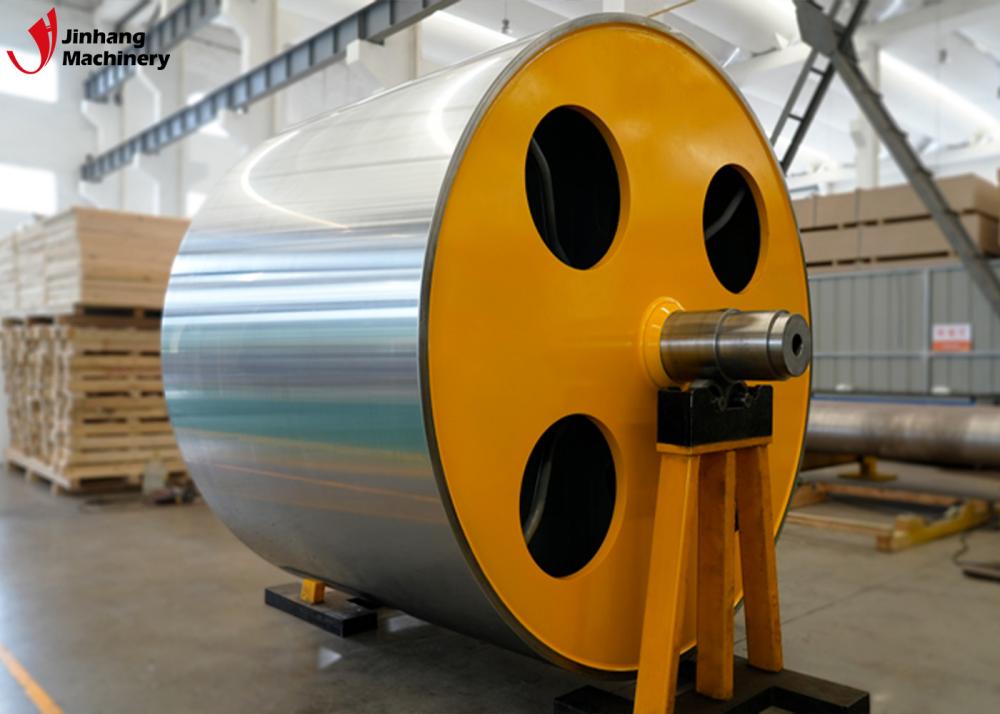
What are the direct effects of poor dynamic balance on industrial mirror rollers?
If the dynamic balance accuracy of industrial mirror rollers is insufficient, it will trigger a series of chain reactions. These problems are not just "possible," but "inevitable."
1. Periodic vibration
This is the most direct consequence. Vibration will:
• be transmitted to the equipment frame through the bearings
• affect the stability of the entire production line
• cause frequent corrections to the control system
2. damage the surface finishing of mirror rollers
Industrial mirror rollers often undergo:
• fine grinding
• ultra-fine grinding
• mirror polishing
• fine grinding after coating
Vibration will cause:
• surface micro-cracks
• coating fatigue
• localized stress concentration
• decreased surface finish
This directly negates the value of the high-cost initial processing.
3. Accelerated Bearing and Transmission System Damage
Unbalanced forces subject bearings to:
• Radial loads outside the design direction
• Uneven impacts
• High-frequency fatigue stress
Ultimately leading to:
• Significantly shortened bearing life
• Increased equipment maintenance frequency
• Increased downtime risk
4. Impact on Material Surface Quality
Industrial mirror rollers directly contact the material surface, and their vibrations create:
• Ripples
• Uneven brightness
• Micro-stripes
• Periodic defects
These defects are often difficult to eliminate through subsequent processes.
Why does dynamic balance affect the surface accuracy of industrial mirror rollers?
This is a logical chain between "structure—motion—surface quality".
1. Vibration Disrupts Contact Stability
Industrial mirror rollers require maintaining:
• Stable contact pressure
• Continuous linear contact
• Uniform tension distribution
Insufficient dynamic balance causes the contact state to become:
• Intermittent contact
• Periodic pressure changes
• Localized stress concentration
This is directly reflected on the material surface.
2. Poor dynamic balancing can induce surface "dynamic runout."
Even if industrial mirror rollers pass static inspection:
• Roundness meets requirements
• Coaxiality meets requirements
However, during high-speed rotation, uneven mass distribution will lead to:
• Dynamic radial runout
• Periodic surface undulations
This runout is difficult to detect with the naked eye, but it is enough to affect high-precision production.
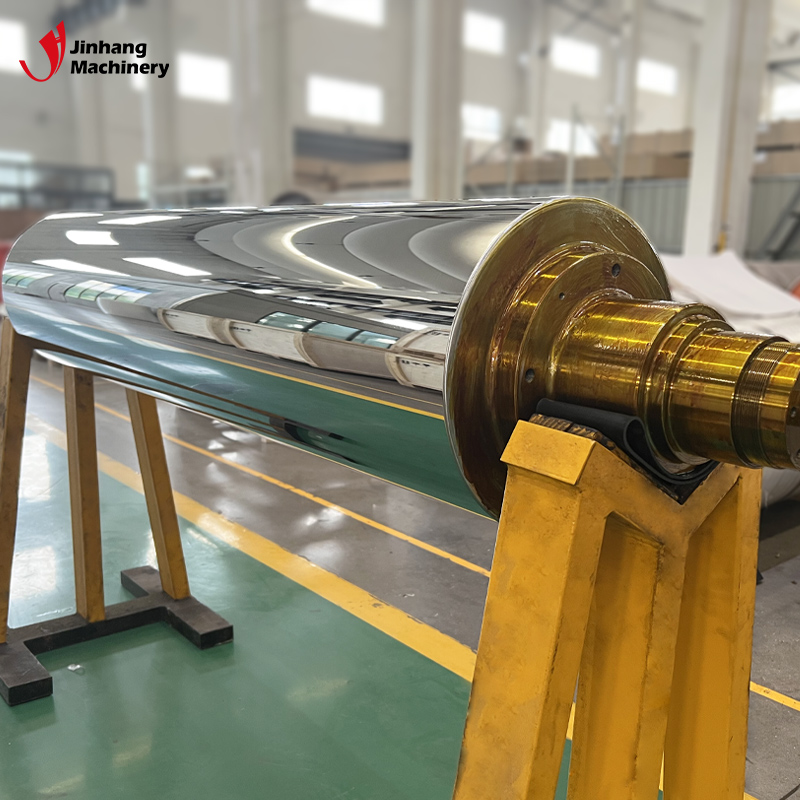
Why must industrial mirror rollers be dynamically balanced in their finished state?
This is a common misconception.
Incorrect belief:
"One dynamic balancing after rough machining of the roller is enough."
Correct practice:
Industrial mirror rollers must be dynamically balanced in their final finished state.
Reasons include:
• The coating changes the mass distribution
• Polishing changes the local weight
• The internal flow channel structure affects the moment of inertia
• Keyways, shaft ends, and flanges all introduce uneven weight distribution
Only by performing dynamic balancing in the final state can the stability of industrial mirror rollers under real-world operating conditions be guaranteed.
What is the relationship between dynamic balancing and equipment lifespan?
The dynamic balance of industrial mirror rollers essentially determines the "health level" of the entire equipment.
Precise dynamic balancing can:
• Reduce bearing load
• Reduce equipment vibration
• Extend transmission system lifespan
• Improve operational stability
• Reduce maintenance frequency
Insufficient dynamic balance will:
• Increase equipment failure rate
• Cause resonance
• Shorten the lifespan of critical components
• Increase long-term operating costs
Therefore, from a system perspective, precise dynamic balancing is not a cost, but a protective mechanism.
What are the common dynamic balancing requirements for industrial mirror rollers?
Different applications have different dynamic balancing requirements for industrial mirror rollers, but they are generally higher than those for ordinary rollers.
Common levels include:
• G6.3: Low-speed or general-purpose (not suitable for mirror rollers)
• G2.5: Commonly used level for medium- and high-speed industrial mirror rollers
• G1.0 or higher: High-speed, high-precision mirror rollers
For truly industrial mirror rollers, G2.5 is often the minimum requirement.
Why do industrial mirror rollers require precise dynamic balancing?
The answer can be summarized in one sentence: Because of the high speed, high surface precision, and direct contact process of industrial mirror rollers, they are extremely sensitive to even the slightest imbalance.
Precise dynamic balancing can:
• Ensure stable operation of industrial mirror rollers
• Protect the results of mirror finishing
• Ensure material surface quality
• Extend the lifespan of equipment and rollers
• Reduce overall operational risks
Therefore, in the manufacturing and selection of industrial mirror rollers:
Dynamic balancing is not an option, but a fundamental requirement;
It is not an added value, but a prerequisite for use.