
How are rubber-coated industrial rollers manufactured?
In modern industrial manufacturing, industrial rubber rollers are widely used in printing, papermaking, packaging, plastic film, textiles, and metal surface treatment industries. Their role in equipment operation is not only to support material movement, but more importantly, to ensure the stability of pressure, tension, and surface treatment. One of the key factors affecting the quality of an industrial rubber roller is the manufacturing quality of its "rubber coating."
Many people only know that industrial rubber rollers are covered with rubber, but they are unaware that this structure is produced through a series of rigorous and precise processes.
This article will systematically answer the question: How are rubber-coated industrial rollers manufactured? It will also provide professional analysis of the key steps in this manufacturing process to help readers comprehensively understand the core value of industrial rubber rollers from engineering, materials, and process perspectives.
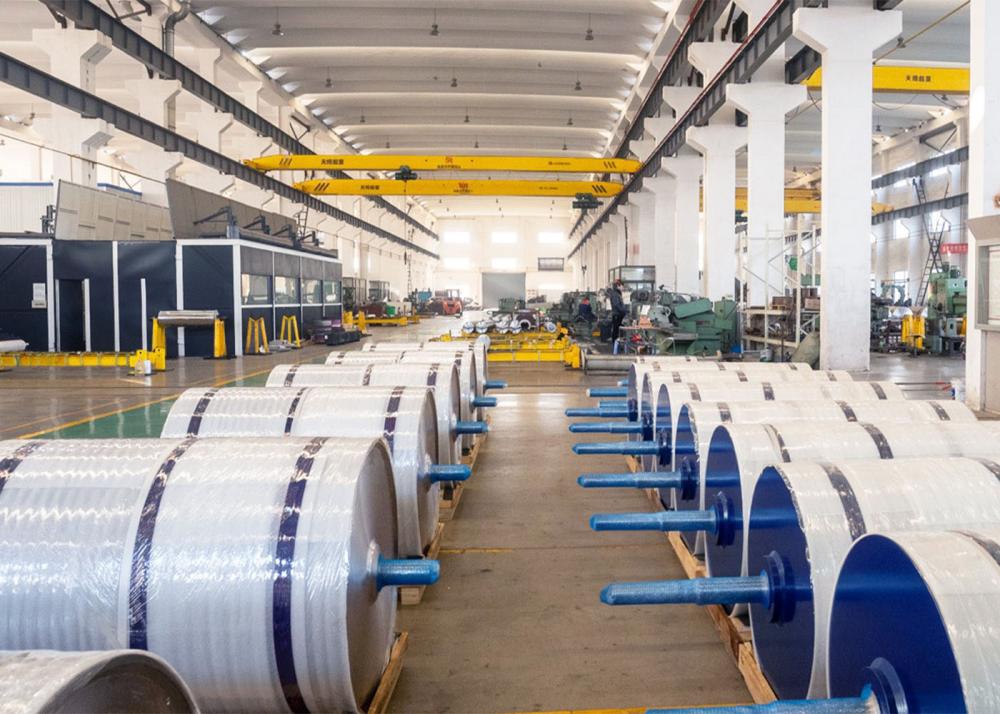
What is an industrial rubber roller?
An industrial rubber roller is a rotating roller assembly with an outer layer of rubber material and an internal core, typically a metal shaft. The rubber layer can possess various properties, such as wear resistance, high-temperature resistance, chemical corrosion resistance, pressure resistance, and shock absorption, enabling it to perform critical functions in various production lines.
Typically, a qualified industrial rubber roller possesses the following characteristics:
• Controllable surface hardness (Shore A or D standard)
• High dimensional stability and circular runout accuracy
• Good wear resistance and elasticity
• Ability to withstand the pressure and speed during equipment operation
• Strong bonding between the rubber layer and the metal mandrel, preventing delamination
Therefore, the manufacturing of industrial rubber rollers is not a simple rubber coating process, but involves complex procedures such as material formulation, machining, vulcanization control, and precision grinding.
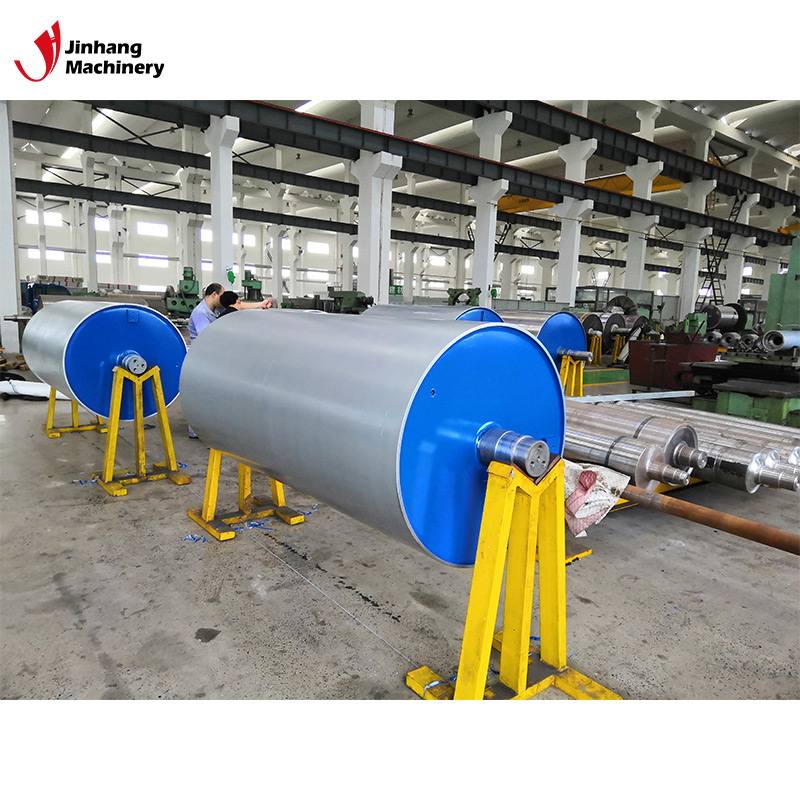
What are the key steps in the manufacturing process of industrial rubber rollers?
Let's delve into the main topic: How exactly are rubber-coated industrial rollers manufactured?
The entire process can be roughly divided into the following stages:
1. Metal mandrel preparation (turning and cleaning)
2. Rubber formulation preparation and mixing
3. Rubber coating process (extrusion coating or calendering coating)
4. Vulcanization and curing (curing)
5. Precision grinding
6. Dynamic balancing
7. Surface treatment and final inspection
Each step will be explained in detail below.
Why must the metal mandrel be processed before manufacturing industrial rubber rollers?
The base material of an industrial rubber roller is called the "mandrel," which is usually made of steel, aluminum, or other metal materials. It is the structural core of the entire industrial rubber roller, therefore, the mandrel must undergo rigorous processing before rubber coating.
1. Turning and Dimensional Correction
Through lathe machining, the mandrel's outer diameter is trimmed, the end face is machined, and the shaft head structure is fabricated to meet the equipment installation dimension requirements.
• Ensure concentricity
• Control roundness and straightness
• Achieve the required surface roughness for rubber coating
2. Surface Sandblasting
Sandblasting effectively removes oxide scale, oil, and rust, while increasing surface roughness, resulting in a stronger bond between the rubber and metal.
3. Cleaning and Coating
After sandblasting, the mandrel is thoroughly cleaned with solvent and then coated with a specialized primer (adhesive system), typically containing:
• Primer: Increases the viscosity at the rubber-metal interface
• Topcoat: Enhances the chemical bond with the rubber layer
This step is crucial as it determines whether industrial rubber rollers will experience serious quality problems such as "rubber delamination."
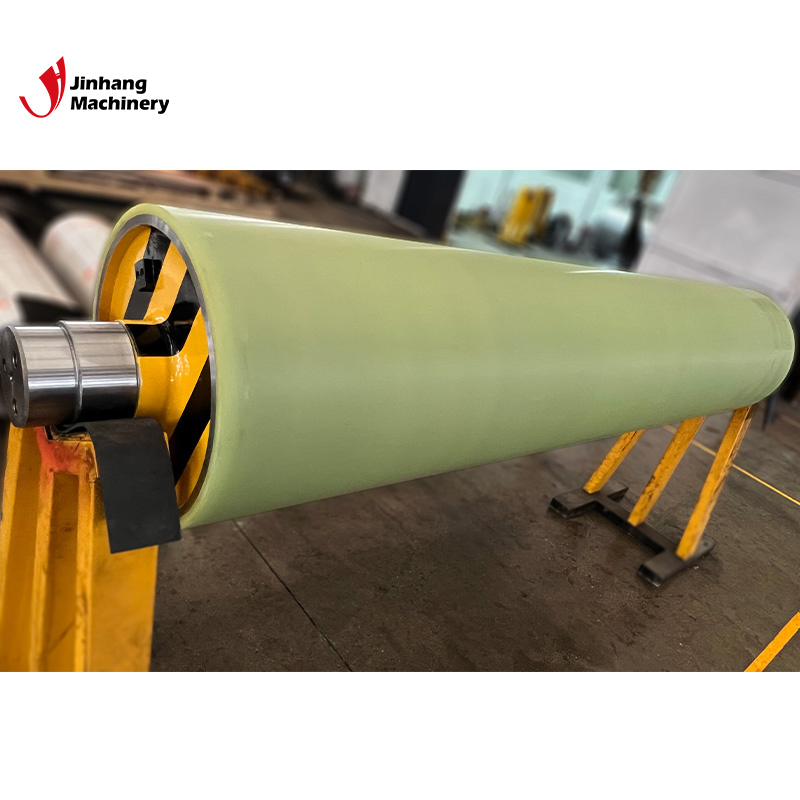
How is the rubber used for the rubber coating compounded?
Next comes the preparation of the rubber materials. Different rubbers are selected for different applications, including:
• Nitrile rubber (NBR)
• Ethylene propylene diene monomer (EPDM)
• Chloroprene rubber (CR)
• Natural rubber (NR)
• Silicone rubber
• Polyurethane (PU)
Each rubber formulation is specifically designed based on customer needs, temperature conditions, chemical resistance, and other requirements.
The compounding process includes:
1. Raw Rubber Feeding
The raw rubber is fed into an internal mixer or open mixing mill.
2. Adding Formulation Additives
Includes vulcanizing agents, plasticizers, reinforcing agents, accelerators, antioxidants, etc.
3. Uniform Mixing
Ensuring uniform dispersion of the entire rubber compound to stabilize the physical properties of the final industrial rubber roller.
4. Finished Rubber Inspection
Testing its:
• Mooney viscosity
• Specific gravity
• Plasticity
• Uniformity
Only qualified rubber compounds can proceed to the overcoating process.
How is the rubber layer of an industrial rubber roller coated onto the mandrel?
There are two main types of rubber overcoating processes: extrusion overcoating and calendering overcoating.
1. Extrusion Overcoating
The mixed rubber compound is extruded into a circular sleeve using a rubber extruder and then coated onto the outer surface of the mandrel.
Advantages:
• Stable thickness
• Suitable for mass production
• High coating efficiency
2. Calendering Coating
Rubber sheets are calendered into uniform thin sheets, then manually or mechanically wound onto a mandrel.
Suitable for:
• Large-diameter industrial rubber rollers
• Special rubber rollers
• Multi-layer coating structures
Regardless of the method used, it is essential to ensure:
• Uniform rubber layer, free of air bubbles
• Tight seams
• Sufficient control of rubber tension
This process determines the final thickness uniformity of the industrial rubber roller and the quality of subsequent vulcanization.
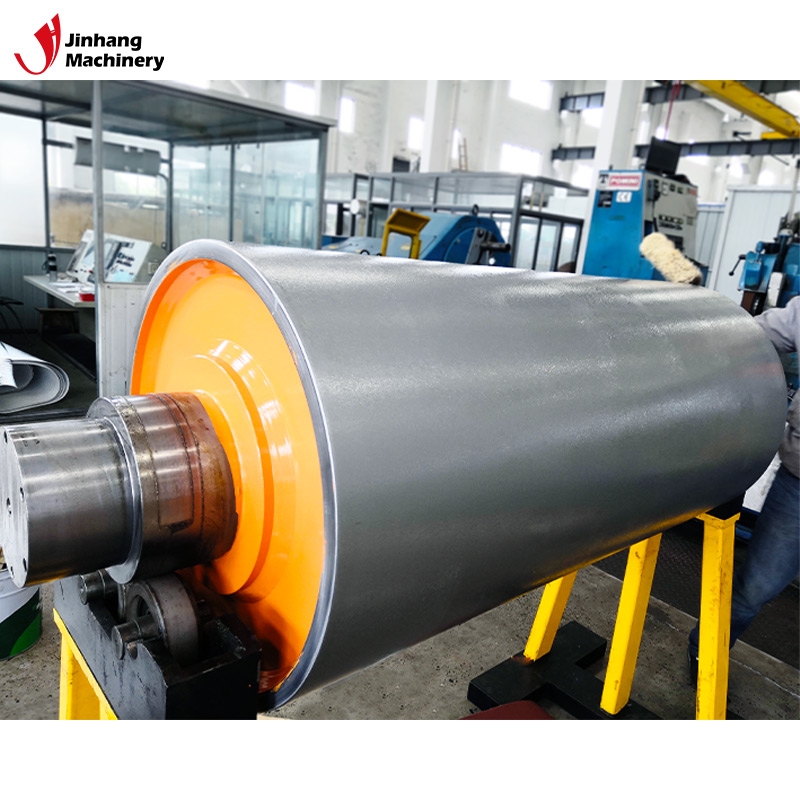
Why do industrial rubber rollers need vulcanization?
The coated rubber layer is still in a soft rubber state and needs to be stabilized through vulcanization.
Vulcanization utilizes heat and pressure to induce cross-linking of rubber molecules using a vulcanizing agent, giving the rubber:
• Elasticity
• Strength
• Heat resistance
• Shape stability
The main vulcanization methods are:
1. Steam vulcanization
Steam heating of the vulcanizing tank causes the rubber layer to slowly cross-link and solidify.
2. Electrothermal vulcanization
Using an electric heating furnace for precise temperature control, suitable for high-precision industrial rubber rollers.
3. Fluid vulcanization and water bath vulcanization
Providing a more uniform temperature environment, commonly used in high-precision rollers.
Key aspects of vulcanization control include:
• Temperature profile
• Time control
• Pressure regulation
• Preventing air bubbles or defects
Vulcanization is a crucial step in the formation of rubber properties; even slight errors can render the entire industrial rubber roller unusable.
Why do vulcanized industrial rubber rollers still require precision grinding?
The appearance of the vulcanized rubber layer is not completely smooth, and the dimensional accuracy cannot directly meet equipment requirements; therefore, precision grinding is necessary.
Grinding processes include:
1. Outer Diameter Grinding
Using a rubber grinder to adjust the final diameter of the rubber roller to ensure:
• Outer diameter accuracy
• Roundness
• Circular runout requirements
2. Surface Roughness Adjustment
Different applications require different surface roughnesses, such as:
• Printing rollers require extremely low roughness
• Coating rollers require specific micro-textures
• Conveyor rollers require moderate friction
3. End Face Chamfering
Preventing rubber edges from cracking or curling during use.
The grinding process is one of the key steps determining the final quality of industrial rubber rollers.
Why is dynamic balancing necessary for industrial rubber rollers?
In high-speed operating scenarios, if industrial rubber rollers are eccentric or have uneven weight distribution, it will cause:
• Equipment vibration
• Unstable finished product quality
• Component damage
• Shortened service life
Therefore, dynamic balancing is necessary to achieve the specified balance level.
For high-speed printing or coating equipment, the balance requirements are even higher, making it an essential step that cannot be ignored.
What are the final inspection items for industrial rubber rollers?
Before leaving the factory, industrial rubber rollers must undergo a series of rigorous tests to ensure they meet usage requirements, including:
• Hardness testing
• Thickness and outer diameter inspection
• Circular runout inspection
• Surface inspection (roughness, defects)
• Bond strength testing
• Dynamic balance test records
• Rubber layer uniformity inspection
Only fully qualified industrial rubber rollers can proceed to the final packaging and transportation stage.
Why is the manufacturing of industrial rubber rollers so complex?
Finally, let's answer a common question: Why is the manufacturing process of industrial rubber rollers so complicated?
The reasons are:
1. Industrial rubber rollers need to withstand high temperature, high pressure, and high speed environments.
2. Extremely high requirements for dimensional and surface precision.
3. The performance of the rubber layer directly affects the operating efficiency of the production line.
4. Different operating conditions require special rubber formulations and hardness control.
5. The rubber layer and metal mandrel must be firmly bonded.
Every qualified industrial rubber roller is a combination of precision machining, chemical technology, and materials science.