
What is the temperature difference of industrial heating rollers?
Industrial heating rollers are widely used in industries such as plastic film, non-woven fabrics, paper, metal foil, coating, printing, and lithium-ion membrane separators. One of their most important performance indicators is the temperature difference across the roller surface.
Typically, the temperature difference of high-quality industrial heating rollers is strictly controlled to:
➡ Approximately ±0.5℃ (i.e., overall temperature uniformity controlled within 0.5℃).
This is an extremely high temperature control standard because heating rollers often range in length from 1 to 6 meters and in diameter from 100mm to 800mm. Maintaining a nearly uniform temperature at every end of the roller surface places extremely high demands on structural design and media control.
This article will provide an in-depth explanation from an engineering perspective:
• Why heating rollers must achieve a temperature difference of only about 0.5℃
• How is the temperature difference of heating rollers controlled?
• The core factors causing temperature difference variations
• What problems arise from substandard heating roller temperature differences?
Through rigorous logic, this article will help you fully understand the importance of heating roller temperature uniformity.
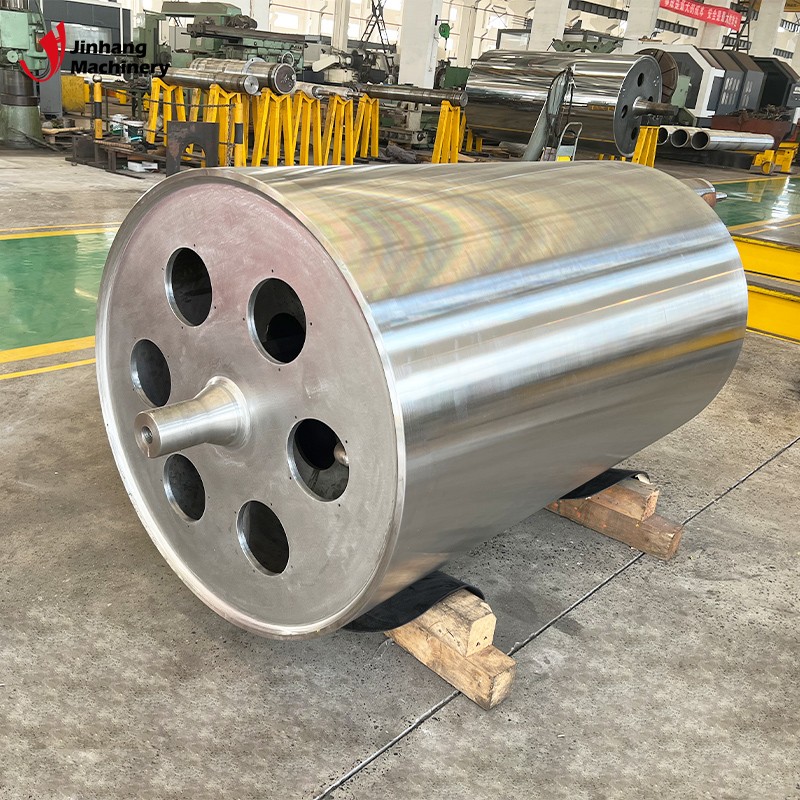
What is the temperature difference of a heating roller?
Why is temperature difference control so important?
"Heating roller temperature difference" refers to:
The maximum actual temperature difference along the length and circumference of the heating roller surface.
For example, if the highest temperature point on the roller surface is 150.6℃ and the lowest temperature point is 150.1℃,
then the temperature difference is 0.5℃.
For industrial heating rollers, the smaller the temperature difference, the more uniform the temperature, and the more evenly the material is heated.
Why can't the temperature difference exceed ±0.5℃?
Because:
• Most materials (especially films) are temperature sensitive.
• Slight temperature differences can lead to uneven thickness.
• Surface gloss, transparency, and coating leveling will all be affected.
• Mechanical strength in the tensile direction will be inconsistent.
In high-end equipment, a temperature difference of ±0.3~0.5℃ for the heating roller is considered excellent quality.
Therefore, a temperature difference of approximately 0.5℃ is not only an engineering standard but also a mandatory requirement to ensure product quality.
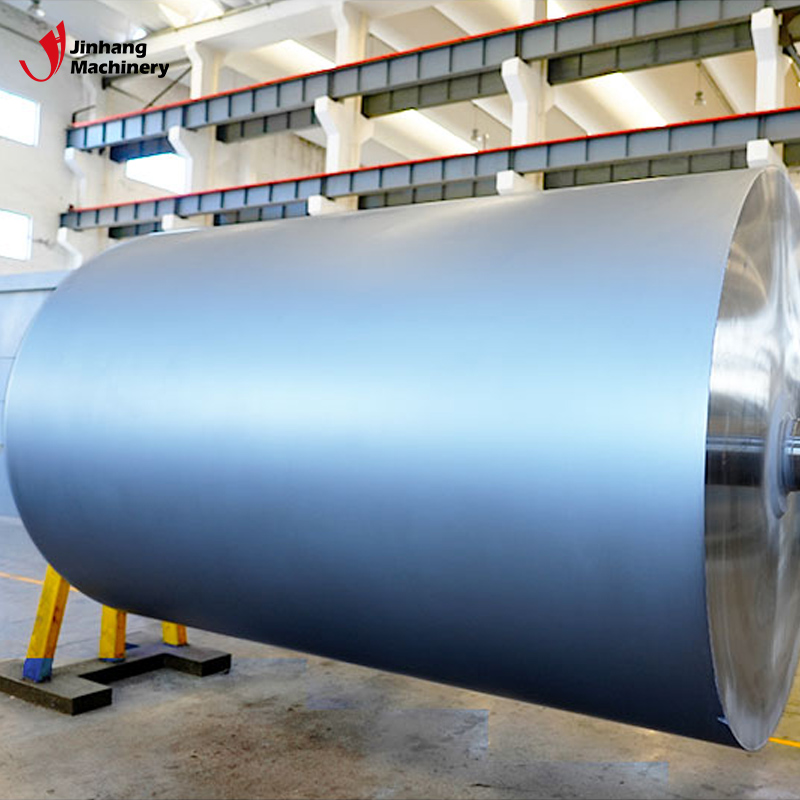
What media are used inside the heating roller to maintain the temperature difference?
Why are these media chosen?
The industrial heating roller can maintain a temperature difference of approximately 0.5℃ because it uses a highly stable circulating medium inside.
Common media include:
1. Hot Water
Hot water temperature control range is typically:
• 30℃~98℃
• High temperature control accuracy
• Suitable for low-temperature calendering, coating, laminating, and other industries
Hot water as a medium has the following advantages:
• High specific heat capacity → stable temperature
• Fast thermal response
• Less prone to localized overheating
Therefore, hot water heating rollers are the easiest to achieve a ±0.5℃ temperature difference target.
2. Heat Transfer Oil
Hot oil is suitable for:
• High-temperature heating rollers of 120℃~300℃
• Plastic molding
• Hot pressing
• Continuous lamination
• Embossing, calendering, and other processes
Its advantages include:
• Achievable high temperatures
• Strong thermal stability
• Controllable flow rate and easy temperature difference adjustment
In high-temperature processes, if the heating roller can achieve a 0.5℃ temperature difference, it indicates an extremely excellent flow channel design and temperature control system.
3. Cold Water
Cold water is suitable for:
• Cooling-type heated rollers
• Processing within a stable temperature range
• Precise temperature control required to prevent overheating
Cold water is generally controlled within:
• 5℃~25℃
Used for:
• Temperature control
• Assisting in maintaining temperature differences
• Preventing the roller body from overheating during high-temperature processing
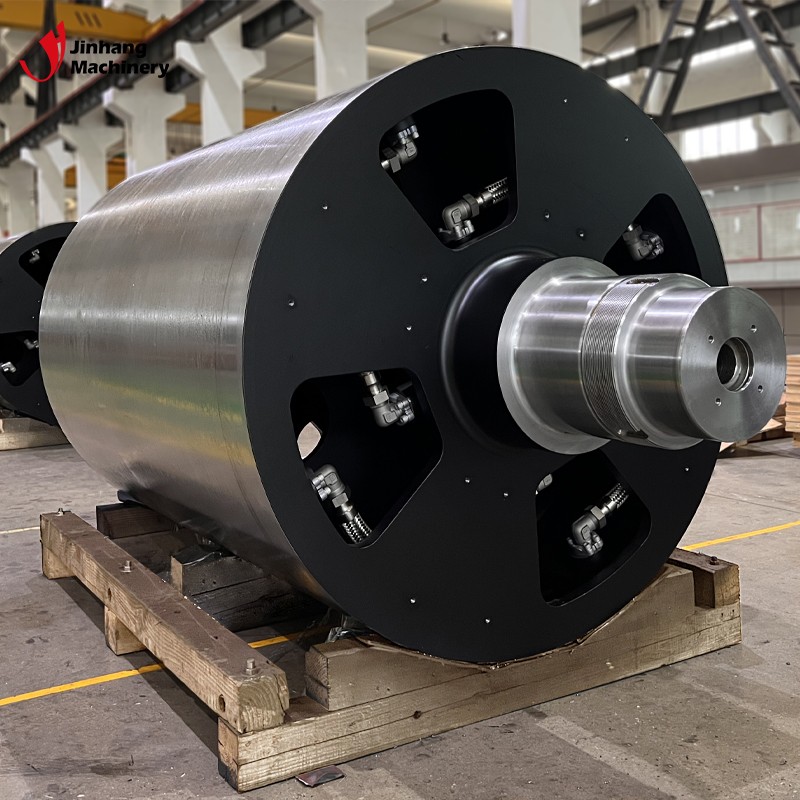
How do industrial heated rollers maintain a temperature difference of only 0.5℃?
Excellent temperature difference control relies on a precise internal structure, not simply heating methods.
The following are the core elements of heated roller temperature difference control:
1. Spiral Flow Channel Structure (Most Common)
The heated roller uses a spiral flow channel inside the roller body to allow hot oil/hot water to:
• Flow evenly
• Cover the entire roller body
• Avoid temperature dead zones
The more uniform the spiral flow channel → the smaller the temperature difference.
2. Labyrinth Channel
The labyrinth structure is a common design for high-end heated rollers, offering advantages including:
• High channel density
• Uniform coverage
• Extremely stable heat distribution
Achieving a temperature difference of ±0.3~0.5℃ is very easy.
3. Multi-Zone Control
The heating system divides the roller into:
• Left zone, middle zone, right zone
• Even 4, 6, or 8 zones
Each zone's temperature can be independently adjusted to eliminate:
• Inlet and outlet temperature differences
• Localized overheating
• Differences in heat absorption at different locations in the production material
This type of heated roller is ideal for the demanding film industry.
4. Flow and Pressure Control
The medium must maintain:
• High flow rate
• Stable pressure
• Constant circulation
This ensures that every part of the roller receives the same amount of heat.
5. Roller Material Selection
Common Materials:
• 45# Steel
• 42CrMo
• Stainless Steel
• High Thermal Conductivity Alloy Steel
The better the thermal conductivity, the smaller the temperature difference.
Inferior materials will lead to uneven heat conduction.
Why can't the temperature difference of the heating roller be large?
What are the consequences of an excessive temperature difference?
An excessive temperature difference—for example, exceeding 1℃~3℃—will significantly affect processing quality.
The following explains each point in detail.
1. Material Thickness Deviation
Inconsistent thickness in the longitudinal or transverse direction is the most direct consequence of uneven temperature.
Because different temperatures affect:
• The degree of material softening
• The stretching ratio
• The rolling pressure
Ultimately, this leads to the product thickness failing to meet allowable tolerances.
2. Inconsistent Surface Gloss
Temperature deviation → Inconsistent cooling rate → Different gloss levels
Resulting in:
• Localized matte finish
• Localized bright areas
• Uneven reflection
This has a significant impact on the film and coating industries.
3. Uneven internal stress, leading to easy material deformation
Temperature differences affect molecular arrangement, causing:
• Uneven shrinkage
• Rippling
• Twisting
• Bending
The thinner the material, the more pronounced the problem.
4. Poor coating leveling
For coating, temperature differences lead to:
• Orange peel texture
• Flow marks
• Uneven curing
• Changes in adhesion
Severely affecting product stability.
5. Decreased production efficiency
Operators are forced to:
• Reduce speed
• Adjust tension
• Frequently correct parameters
Leading to reduced actual production capacity.
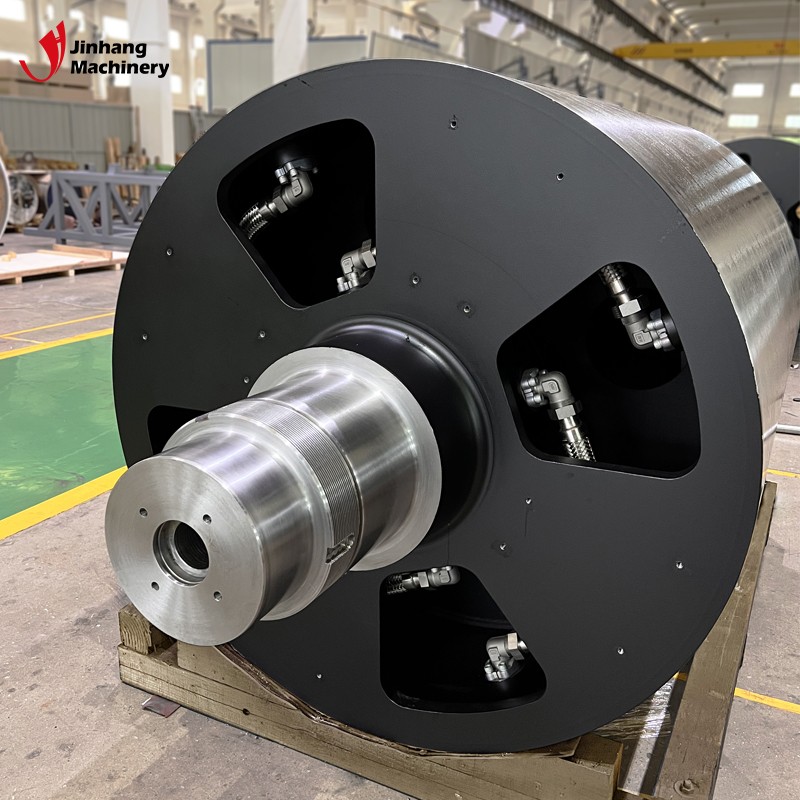
What factors cause increased temperature difference in the heating roller?
How to avoid uneven temperature difference?
To control the temperature difference of the heating roller within 0.5℃, the following influencing factors must be considered:
1. Inappropriate flow channel design
Too few, too shallow, or improperly oriented flow channels can lead to localized hot spots.
2. Insufficient medium flow rate
Low circulation velocity → uneven heat exchange → increased temperature difference.
3. Inconsistent Thermal Conductivity of Materials
Imperfections or structural defects within the material can reduce thermal conductivity.
4. Excessive Error in Temperature Control Equipment
For example:
• Insufficient temperature controller accuracy
• Slow response of the heating system
• Inappropriate multi-zone temperature control settings
These can all lead to increased temperature differences.
5. Large Fluctuations in Heat Load
Uneven heat absorption by the production materials can also cause sudden temperature changes.
Maintaining a temperature difference of 0.5℃ on industrial heating rollers is a key indicator for stable production.
Based on the above analysis, we can conclude that:
1. The temperature difference of industrial heating rollers is generally controlled within ±0.5℃.
2. The circulating media used include:
Hot water, cold water, and heat transfer ink.
3. The ability to achieve a temperature difference of 0.5℃ mainly relies on:
✔ Precision flow channel structure
✔ High thermal conductivity roller material
✔ Stable circulation system
✔ Multi-zone intelligent temperature control
4. Excessive temperature difference directly affects:
• Thickness uniformity
• Surface gloss
• Coating quality
• Material stability
Therefore, temperature difference control is a core indicator of heating roller quality and an important basis for judging whether manufacturing equipment meets standards.