
Why Does Manufacturing Need Industrial Rollers?
In modern manufacturing systems, production efficiency, product consistency, processing precision, and stability are crucial indicators of a company's core competitiveness. Whether in metal processing, textiles, papermaking, packaging, printing, or the manufacturing of plastics, rubber, and new materials, all rely on a seemingly ordinary yet extremely critical basic component—the industrial roller.
Industrial rollers are not simple parts with a single purpose; they are vital execution carriers throughout the entire manufacturing process.
Understanding why manufacturing needs industrial rollers not only helps in recognizing their value in production systems but also helps companies understand the relationship between manufacturing efficiency and product quality from a more fundamental perspective.
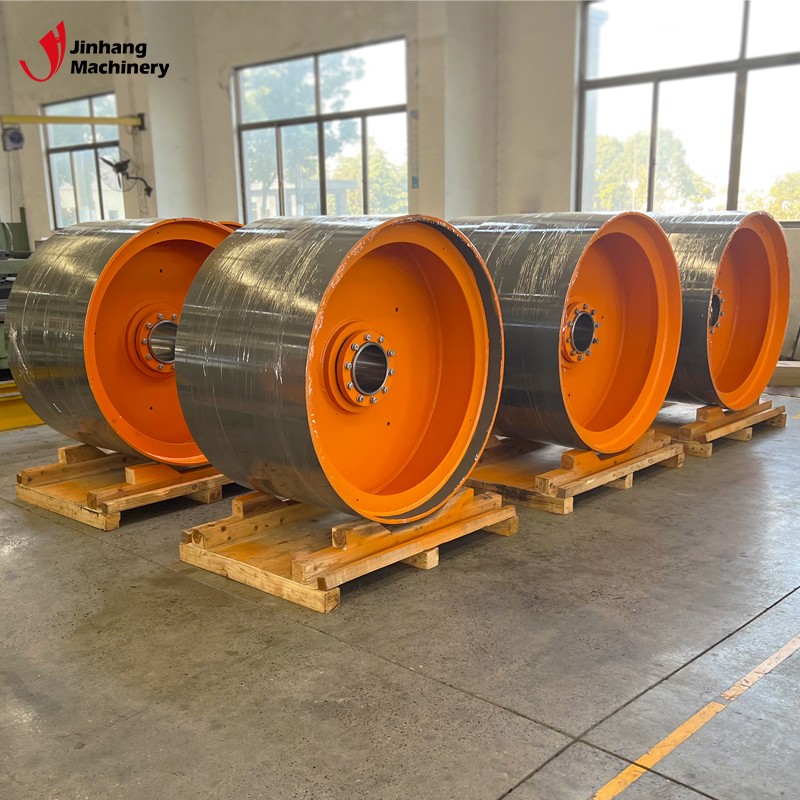
What exactly are industrial rollers?
Why are they ubiquitous in manufacturing?
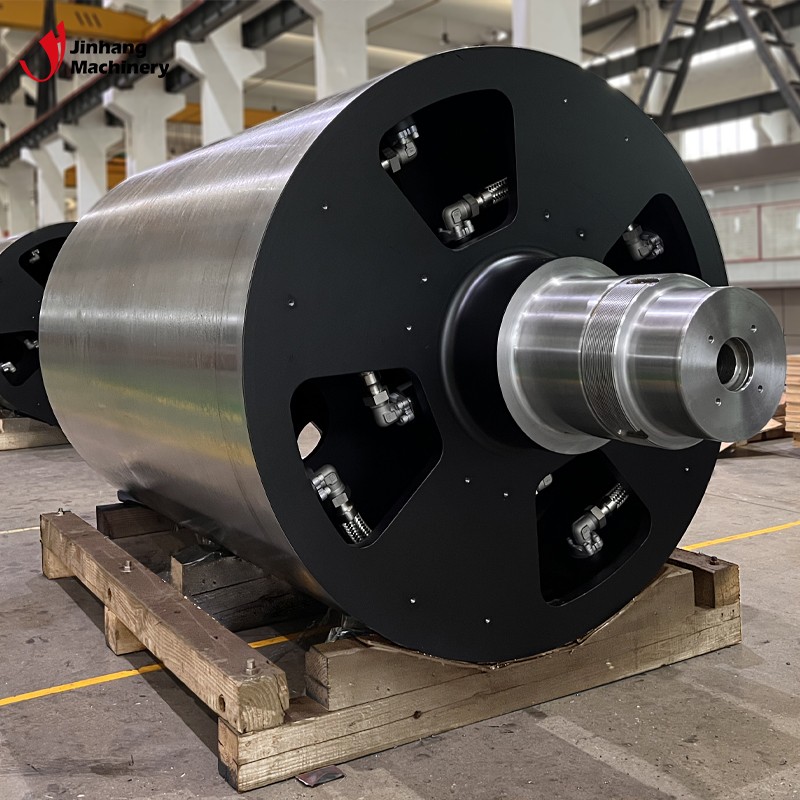
Industrial rollers generally refer to cylindrical functional components used in industrial production processes for supporting, conveying, calendering, guiding, coating, traction, or shaping materials. Industrial rollers are typically made of metal or composite materials, and their surfaces can be coated, chrome-plated, sprayed, or treated with special processes depending on requirements.
The reason industrial rollers are ubiquitous in manufacturing is that most continuous production processes require material processing through rotation, linear contact, or surface pressure. Industrial rollers are one of the core structures that enable these actions.
In short, industrial rollers are almost always used in any production process involving the movement, unfolding, pressing, conveying, or surface treatment of materials.
Why is the manufacturing industry inseparable from the "continuous transmission" capability of industrial rollers?
Manufacturing emphasizes stable, continuous, and efficient production methods. A core value of industrial rollers lies in their ability to convert intermittent power into smooth, controllable continuous motion.
Through the rotation of industrial rollers, materials can be continuously conveyed to the next process without drastic speed fluctuations. This continuous transmission capability is particularly crucial for:
• Ensuring stable production cycle time
• Reducing the risk of material deformation during conveying
• Minimizing surface defects caused by pauses or vibrations
It is precisely because of this continuous transmission characteristic of industrial rollers that manufacturing can achieve assembly line production, thereby improving overall capacity and consistency.
How do industrial rollers play the role of "force transmission" in the manufacturing process?
In manufacturing, many processing steps are essentially processes of applying "force" to materials, such as pressing, calendering, flattening, and stretching. Industrial rollers are crucial mediums for achieving these mechanical effects.
Industrial rollers, through their own weight, external loading, or drive systems, can uniformly apply force to the material surface, thereby achieving:
• Uniform control of material thickness
• Stable output of surface flatness
• Reasonable distribution of processing stress
Without industrial rollers as a force transmission and dispersion carrier, the pressure during the manufacturing process often concentrates in localized areas, leading to unstable product quality and even structural defects.
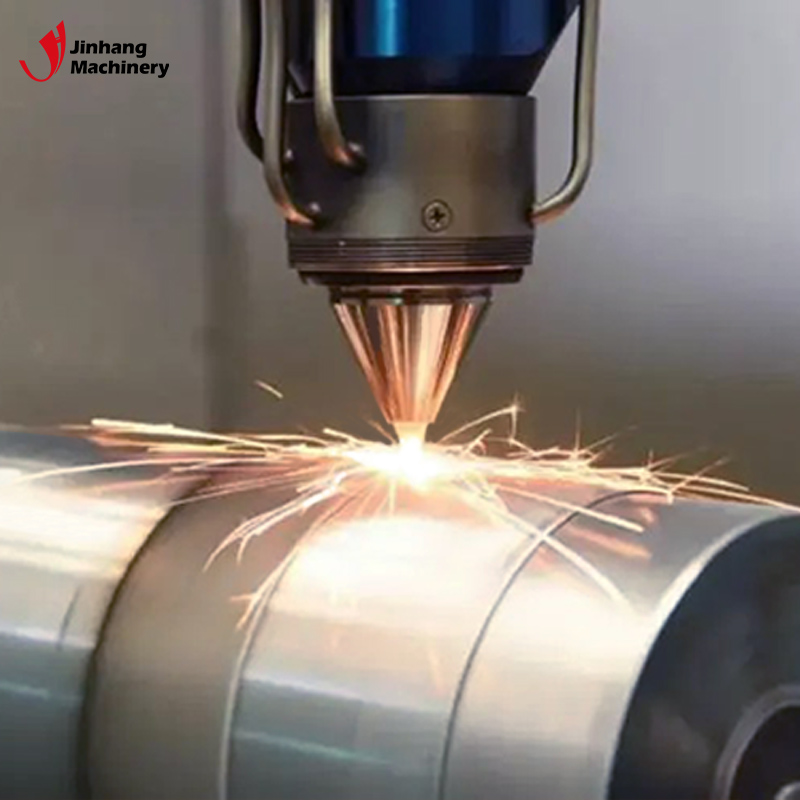
Why are industrial rollers a vital guarantee of manufacturing precision?
The precision requirements of the manufacturing industry are often reflected in multiple aspects such as dimensions, flatness, and surface consistency. Industrial rollers play a direct role in these aspects.
High-precision industrial rollers typically possess the following characteristics:
• Strict control over roundness and coaxiality
• Precise adjustment of surface roughness
• Minimal runout during operation
When industrial rollers operate stably in the production line, they ensure that the material maintains a consistent stress state and movement trajectory throughout the entire processing process. This stability is the foundation for maintaining manufacturing precision over the long term. Therefore, the manufacturing industry needs industrial rollers not only for "being able to produce," but also for "precise production."
How do industrial rollers affect product consistency in manufacturing?
Product consistency is one of the core objectives of quality management in manufacturing. Even if raw materials are qualified, if there are unstable factors during processing, the final product will be difficult to maintain consistency.
Industrial rollers directly affect product consistency during manufacturing by:
• Ensuring constant material tension
• Controlling uniform contact pressure
• Reducing deviations during operation
If an industrial roller has dimensional errors, uneven surface, or unstable operation, it can lead to systematic deviations in the entire batch of products. Therefore, industrial rollers are not only mechanical components but also key variables affecting quality stability.
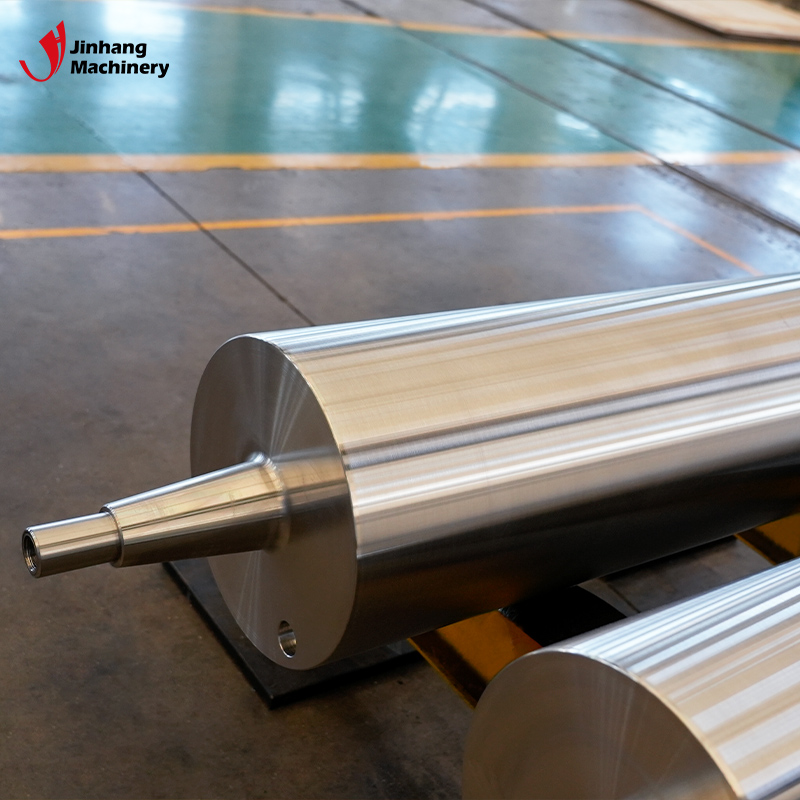
Why does manufacturing require different types of industrial rollers?
Manufacturing processes are complex and diverse. Different materials and processes place vastly different performance requirements on industrial rollers. This is a major reason for the wide variety of industrial roller types.
Common types of industrial rollers include, but are not limited to:
• Conveyor industrial rollers
• Calendering industrial rollers
• Coating industrial rollers
• Guide industrial rollers
• Tensioning industrial rollers
Each industrial roller is designed around specific process requirements. Manufacturing needs these different types of industrial rollers precisely to ensure that each process is completed under the most suitable mechanical conditions.
How do industrial rollers help reduce production fluctuations in manufacturing?
Production fluctuations are a common problem in manufacturing, stemming from factors such as equipment vibration, material tension variations, or external environmental disturbances. The structural and functional stability of industrial rollers makes them an important tool for reducing production fluctuations.
By properly configuring industrial rollers:
• They can buffer instantaneous changes in material movement.
• They can absorb some mechanical vibrations.
• They help stabilize the overall production state.
This "stabilizer" role makes industrial rollers not only actuators but also regulators in manufacturing systems.
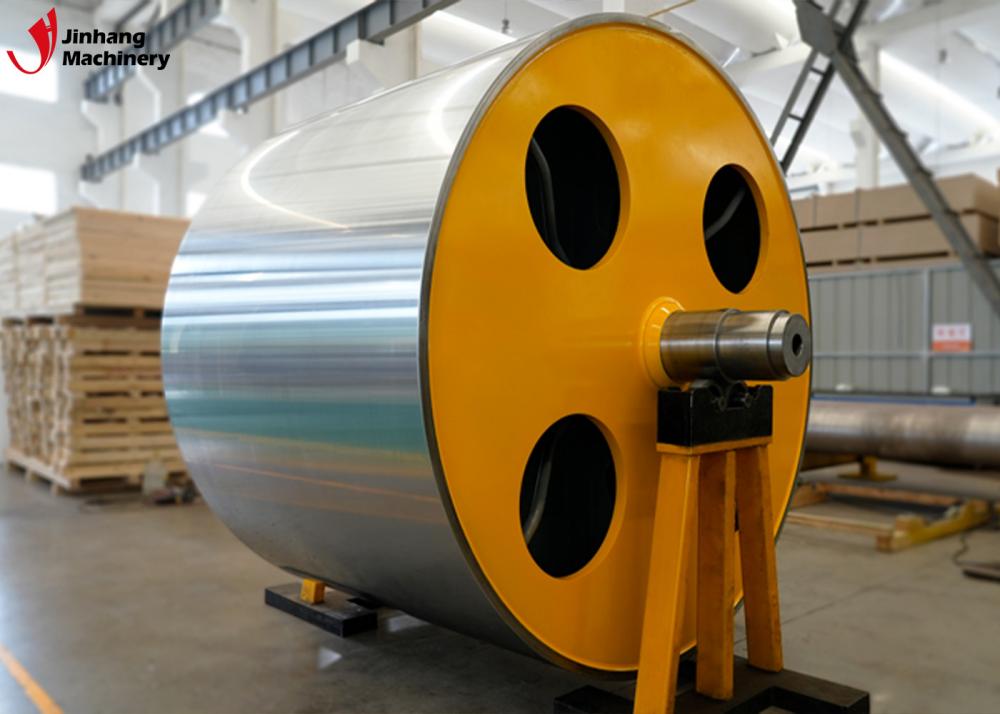
Why are industrial rollers directly related to production efficiency?
Production efficiency is not just a matter of equipment speed; it is also closely related to the continuity of equipment operation, failure rate, and adjustment frequency. As a high-frequency operating component, the performance of industrial rollers directly affects production efficiency.
If industrial rollers operate smoothly and have good wear resistance:
• Production line downtime will be significantly reduced.
• Process adjustment time will be shorter.
• Material waste rate will be lower.
Conversely, insufficient industrial roller performance will lead to frequent calibrations, downtime, and even rework, thereby reducing overall efficiency. This is the fundamental reason why the manufacturing industry places such high importance on the selection and quality of industrial rollers.
What role do industrial rollers play in manufacturing equipment systems?
From a systems perspective, industrial rollers are not isolated components, but rather key nodes in the entire equipment system. They connect the power system, control system, and the workpiece, serving as a crucial bridge between the three.
The roles of industrial rollers in equipment systems include:
• Execution end of power output
• Physical manifestation of process parameters
• Direct influencer of processing quality
Because of their central position, the manufacturing industry places extremely high demands on the design, manufacturing, and assembly precision of industrial rollers.
Why are the requirements for the materials and surface properties of industrial rollers so stringent in the manufacturing industry?
The manufacturing production environment is complex, and different processes may involve high temperatures, high humidity, corrosion, wear, or high loads. Industrial rollers need to operate stably under these conditions for extended periods, thus requiring extremely high standards for materials and surface properties.
Common performance requirements for industrial rollers include:
• Sufficient structural strength
• Good wear resistance
• Stable surface friction characteristics
These requirements are not additional conditions, but rather the foundation upon which industrial rollers can fulfill their manufacturing tasks. The manufacturing industry sets such stringent standards for industrial rollers precisely because of these practical needs.
Why are industrial rollers among the "critical few" of basic components in manufacturing?
In manufacturing, the number of basic components is vast, but only a few truly have a decisive impact on the process outcome. Industrial rollers are precisely this "critical few."
On the one hand, industrial rollers directly participate in material processing; on the other hand, changes in their state often have a magnifying effect. A tiny deviation can accumulate over continuous production, ultimately affecting the entire batch of products. This characteristic gives industrial rollers an irreplaceable position in manufacturing.
From a manufacturing logic perspective, why are industrial rollers not easily replaced?
From a manufacturing logic perspective, the irreplaceable nature of industrial rollers stems from their simultaneous fulfillment of the following multiple requirements:
• Continuous motion
• Uniform force distribution
• Controllable contact
• Structural stability
Other mechanical structures struggle to achieve these functions simultaneously in the same time and space. Therefore, under current manufacturing logic, industrial rollers remain one of the most rational and efficient solutions.
Understanding Industrial Rollers is Understanding the Underlying Logic of Manufacturing
Manufacturing needs industrial rollers not for a single function, but because they play multiple crucial roles in continuous drive, force transmission, precision control, efficiency improvement, and system stability.
Industrial rollers are inconspicuous, yet deeply embedded in every stage of the manufacturing process. They support material movement, fulfill process requirements, and maintain production quality. In short, understanding the role of industrial rollers in manufacturing is understanding the underlying logic of how manufacturing achieves stable, efficient, and controllable production.
Can Jinhang Machinery provide rollers with mirror-polished surfaces?
Yes. Our advanced grinding and polishing equipment allows us, as a precision roller manufacturer, to deliver mirror-finish rollers with extremely low surface roughness. These rollers are widely used in film stretching, coating, printing, and packaging equipment where surface accuracy directly affects product quality. We ensure consistent gloss and uniformity across the entire roller surface.