
Industrial Mirror Roller: What is Rough Polishing and Fine Polishing?
Industrial mirror surface rollers are crucial components in modern manufacturing, essential for achieving high-gloss, high-flatness, and high-consistency surface finishes. Whether in plastic films, lithium battery separators, optical films, metal foils, or in precision coating, calendering, and thermal bonding processes, mirror surface rollers play a decisive role.
The surface quality of the mirror surface roller directly affects the product's appearance, thickness uniformity, optical properties, and the stability of subsequent processing.
In the manufacturing and reprocessing of mirror surface rollers, "rough polishing" and "fine polishing" are two extremely critical stages. Many people wonder—since the ultimate goal is to manufacture mirror surface rollers with extremely high gloss, why not directly use a fine polishing process in one step? Why is it necessary to clearly distinguish between rough polishing and fine polishing in the polishing process of mirror surface rollers?
This article will provide an in-depth analysis from a professional perspective on why industrial mirror surface rollers must be divided into rough polishing and fine polishing, helping users fully understand the process principles, technical logic, and the significant impact of this classification on the performance of mirror surface rollers.
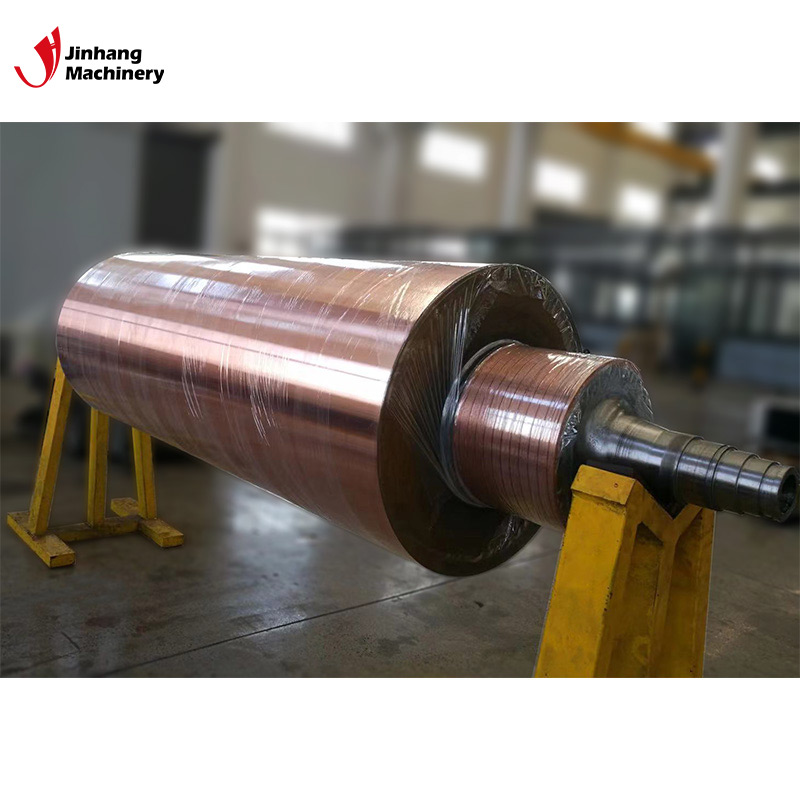
What is a mirror surface roller? Why are its surface requirements so stringent?
An industrial mirror surface roller is a roller whose surface has been precisely machined to achieve extremely high reflectivity and extremely low roughness. Its core characteristics include:
• Surface roughness Ra typically needs to reach 0.005~0.01 μm or lower
• Surface morphology must be highly uniform, defect-free, and free of ripples
• High hardness, strong wear resistance, and corrosion resistance
• Ability to stably influence product surface quality during the manufacturing process
The surface precision of mirror surface rollers plays a crucial role in downstream products. For example:
• Mirror rollers used in plastic film production determine the film's gloss, transparency, and thickness uniformity.
• Mirror rollers used in lithium battery separator production affect the microstructural stability of the film surface.
• Mirror rollers used in optical films are directly related to the finished product's optical performance.
Therefore, the surface of mirror rollers must undergo extremely rigorous and precise polishing processes; these steps are complex and cannot be omitted.
What is the purpose of rough polishing? Why can't fine polishing be performed directly?
1. Rough polishing is used to quickly remove residual processing defects
After machining steps such as turning and grinding, the surface of mirror rollers often has:
• Tool marks
• Ripples
• Surface stress layer
• Localized micro-pits
• Residual hard spots from machining
The task of rough polishing is to quickly remove these primary defects with a high material removal rate.
Without rough polishing, the fine polishing process becomes extremely difficult:
• The amount of material removed during fine polishing is minimal, failing to effectively eliminate large defects.
• It requires a significant amount of time without achieving the desired effect.
• Small surface pits will become sources of film defects in subsequent use.
Rough polishing lays the foundation for subsequent fine polishing on the mirror roller.
2. Rough Polishing Establishes a Uniform and Controllable Surface Morphology
Another core objective of the rough polishing stage is:
To transform the surface morphology of the mirror roller from "rough and uneven" to "homogeneous and controllable fine-textured surface."
Fine polishing, based on this uniformity, can further reduce roughness, achieving mirror-like quality on the metal surface.
3. Rough Polishing Prevents Damage and Excessive Wear to Fine Polishing Tools
Because the abrasive materials used in fine polishing are extremely fine, directly processing a rough surface will lead to:
• Rapid damage to the polishing belt
• Accelerated deterioration of the fine polishing fluid
• Increased machine vibration
• Deteriorated surface finish
Therefore, rough polishing is a necessary step to protect fine polishing tools and improve the quality of fine polishing.
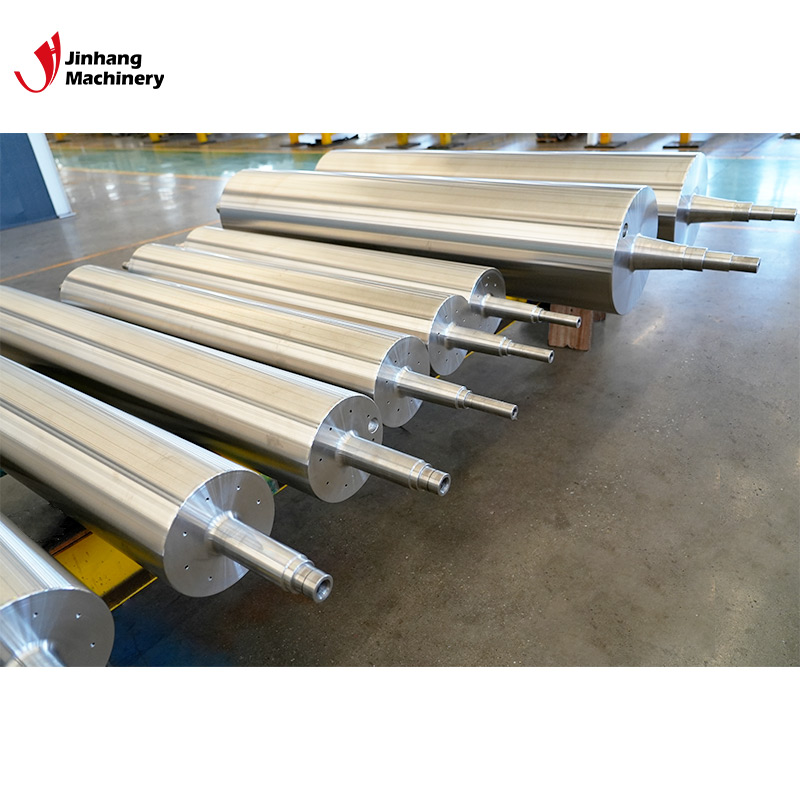
What role does the fine polishing stage play?
After rough polishing, the surface of the mirror roller is relatively uniform, but it's still far from a true mirror finish. Fine polishing is essential to achieve the final surface quality.
1. Fine Polishing Achieves Ultra-Low Surface Roughness
Fine polishing utilizes:
• Ultra-fine abrasive slurry
• Precision gloss varnish
• Nanoscale abrasives
• Low-pressure polishing process
This gradually achieves mirror-level roughness (e.g., Ra 0.005 μm) with extremely low material removal rates.
The role of fine polishing is not "defect removal," but rather "micro-shaping the surface," enabling the mirror roller to achieve optical-grade reflectivity.
2. Fine Polishing Enhances the Optical Reflective Performance of the Mirror Roller
When surface roughness is reduced to the nanometer level, the light reflection mode changes from "diffuse reflection" to "specular reflection." This is crucial for:
• Optical film calendering
• High-gloss processing of thin film surfaces
• High-precision bonding processes
3. Fine polishing creates a denser surface layer, improving wear resistance.
The fine polishing process creates a denser structure on the metal surface, which helps to:
• Inhibit microcrack formation
• Improve wear resistance
• Extend the lifespan of mirror rollers
• Reduce the formation of micro-defects during long-term use
4. Fine polishing eliminates the micro-texture left by rough polishing.
Rough polishing inevitably leaves fine but still noticeable textures. Fine polishing peels away these textures layer by layer, bringing the surface closer to a perfectly smooth state.
What specific steps does a mirror roller undergo during rough polishing?
Although the processes may vary slightly between different companies, rough polishing generally includes the following key points:
1. Primary rough grinding, removing machining textures
Main task: Quickly remove macroscopic defects left by turning or grinding.
2. Intermediate rough polishing, reducing surface texture size
Using finer abrasives to gradually reduce roughness.
3. Coarse Polishing: Forming a Uniform and Controllable Surface Substrate
This is a crucial step in coarse polishing, providing an ideal foundation for fine polishing.
The core objective of coarse polishing is:
To form a fine-textured surface structure that is "uniform, controllable, and suitable for fine polishing."
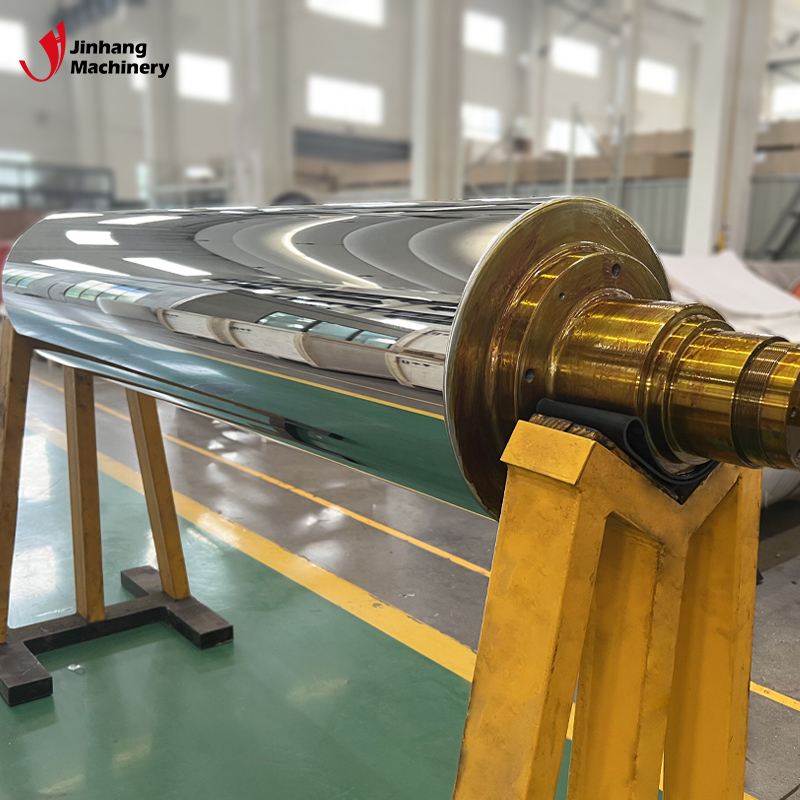
What are the key technical points in the fine polishing stage?
Fine polishing is far more difficult than coarse polishing. Its purpose is not to remove large amounts of material, but to precisely improve surface properties.
1. Use of Nanoscale Abrasives
Fine polishing typically uses:
• Alumina micro powder
• Cerium oxide
• Nano-silica
Particle sizes may be as low as 50 nanometers or even smaller.
2. Fine Polishing Angle and Pressure Control
Insufficient pressure will not result in effective processing, while excessive pressure will damage the surface; therefore, precise control is essential.
3. Multi-Stage Fine Polishing Process
Fine polishing is often performed in multiple stages using abrasives of different particle sizes to ensure a final mirror-like finish.
4. Final Polishing
This stage focuses on improving the gloss and reflection uniformity of the mirror roller.
Why can't a mirror roller be finished with a single polishing process?
1. Different types of metal surface defects require different grades of abrasive.
Large defects require rough grinding for removal, while small defects require fine polishing for finishing.
No single process can simultaneously achieve both.
2. Rough polishing and fine polishing have completely different goals.
• Rough polishing goal: Initial homogenization of surface morphology
• Fine polishing goal: Ultimate smoothness and optical-grade mirror effect
Different goals naturally cannot be achieved with the same process.
3. Fine polishing alone cannot achieve large-area morphology adjustments.
Fine polishing has an extremely low material removal rate and cannot replace rough polishing.
4. Rough polishing alone cannot achieve a mirror-level effect.
The texture left by rough polishing inevitably affects optical performance, making it impossible to achieve mirror-like results.
Why is the transition between rough and fine polishing on a mirror roller so crucial?
1. Any rough polishing defects will be further amplified during fine polishing.
If tiny pits are left during rough polishing, fine polishing cannot compensate for them, ultimately forming visible defects on the film surface.
2. The processability of fine polishing depends on the uniformity of rough polishing.
Uneven rough polishing will lead to the following in fine polishing:
• Localized over-polishing
• Localized under-polishing
• Uncontrolled surface ripples
3. Good transition determines the final performance of the mirror roller.
Precise transition between rough and fine polishing ensures:
• Higher mirror finish
• Lower roughness
• Better product stability
• Longer service life
Why do the rough and fine polishing processes of mirror rollers have such a significant impact on manufacturing costs?
1. The equipment and material costs used in the two stages differ.
Rough polishing equipment is mostly high-efficiency grinding equipment; fine polishing requires high-precision, low-vibration, and high-stability polishing machines.
2. Fine polishing takes significantly longer than rough polishing.
Fine polishing typically takes several times longer than rough polishing.
3. Significantly Different Abrasive Grades Lead to Vastly Different Costs.
Nano-grade abrasives are far more expensive than ordinary abrasives.
4. Poor rough polishing quality will significantly increase fine polishing time.
Leading to a sharp increase in overall costs.
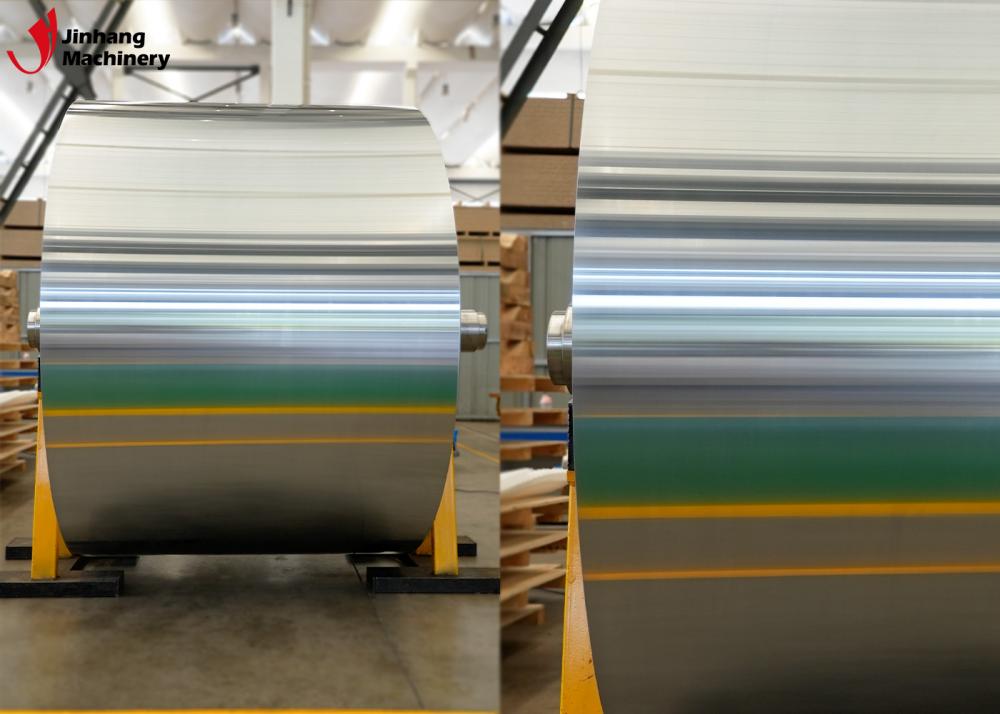
Why must mirror polishing rollers place special emphasis on "surface topography control"?
Mirror polishing rollers do not only pursue high gloss, but also "high gloss + high precision + high stability."
Without a foundation of rough polishing, even the highest mirror gloss achieved through fine polishing may result in:
• Localized ripples
• Affected film thickness stability
• Formation of periodic patterns during large-area calendering
• Reduced product grade
Rough and fine polishing are designed precisely to achieve highly controlled surface topography.
Why must the differences between rough and fine polishing be considered when using mirror polishing rollers?
In the reprocessing of mirror surface rollers, different types of wear require different treatment methods:
• Deep wear or scratches → Must be re-rough polished
• Only slight loss of gloss → Can be directly restored with fine polishing
The deeper the user's understanding of rough polishing and fine polishing, the better they can maintain the performance of the mirror surface roller.
Rough Polishing and Fine Polishing Together Constitute the Core Processing System of Mirror Surface Rollers
Industrial mirror surface rollers must be divided into rough polishing and fine polishing because these two stages are completely different in terms of objectives, process logic, material removal methods, and surface quality control, and both are indispensable.
Rough polishing solves macroscopic defects and surface homogenization, while fine polishing achieves microscopic clarity and an optical mirror effect.
Rough polishing paves the way for fine polishing, and fine polishing ensures that the mirror surface roller truly meets the usage requirements.
The proper division of labor between roughing and fine polishing enables mirror-finish rollers to achieve:
• Nanoscale roughness
• Highly stable surface morphology
• High-gloss mirror reflection
• Capability for high-end manufacturing processes
Understanding the differences between roughing and fine polishing is a crucial foundation for correctly understanding the production and maintenance system of mirror-finish rollers.
What industries do your rollers serve?
Jinhang Machinery produces rollers suitable for a wide range of industries: printing, packaging, metallurgy, mining, lithium battery production, and automotive testing, among others. Our brand is recognized by procurement teams that require specialized roller types—from mirror surface rolls for printing to heavy-duty carbide-coated rolls for metalworking. We support buyers with product datasheets, competitive quotes, and options for discounted bulk purchases.
As factory-direct suppliers in China, we emphasize stable performance, long service life, and reliable after-sales service to ensure continuous production for our customers.