News

  • How Long Does a Stainless Steel Heating Roller Need to Preheat?
    24
    2026-04
    Typical preheating time: 30–45 minutes This time range applies to the following conditions: • Common stainless steel heated roller diameters (200–400 mm) • Heating temperature 80°C–120°C • Heat transfer medium is thermal oil or high-temperature hot water • Appropriately matched heating system power
  • How Many Coating Layers Does a Tungsten Carbide Coated Roller Have?
    23
    2026-04
    Standard industrial tungsten carbide coated rollers typically consist of 2-3 coating layers: 1. Bond Coat → Improves adhesion to the base metal 2. Interlayer (optional) → Enhances coating stability or buffers stress 3. Top Coat → Provides final hardness, abrasion resistance, and corrosion resistance
  • EPDM Rubber Rollers: Will Performance Decrease After Repair?
    22
    2026-04
    It's important to emphasize that repair is not always equivalent to a "completely new roller." The performance of a repaired EPDM rubber roller may indeed be limited when: • Structural damage to the metal core • Insufficient dimensional allowance due to repeated repairs • Original design parameters no longer suitable for current operating conditions
  • Do Industrial Thin-Wall Rollers Require Regular Wall Thickness Inspection?
    21
    2026-04
    Yes, regular wall thickness checks are necessary for industrial thin-walled rollers. However, it's important to emphasize that this "necessity" does not stem from the certainty that thin-walled rollers will malfunction, but rather from the following engineering considerations.
  • Is a Thicker Coating Always Better for Industrial Rollers?
    20
    2026-04
    • Thicker coatings can indeed improve lifespan and abrasion resistance. • However, excessively thick coatings may lead to decreased coating hardness or internal stress cracking. Therefore, thicker coatings are not always better; the optimal coating thickness is closely related to the application conditions.
  • Why Must Stainless Steel Industrial Heating Rollers Be Fully Preheated?
    17
    2026-04
    The core purpose of preheating is to prevent drastic temperature shocks to the overall structure of the heated roller, thus allowing the roller to reach a balanced, stable, and controllable working state in the thermal environment.
  • How to Determine if a Cast Film Roller Needs Repolishing?
    16
    2026-04
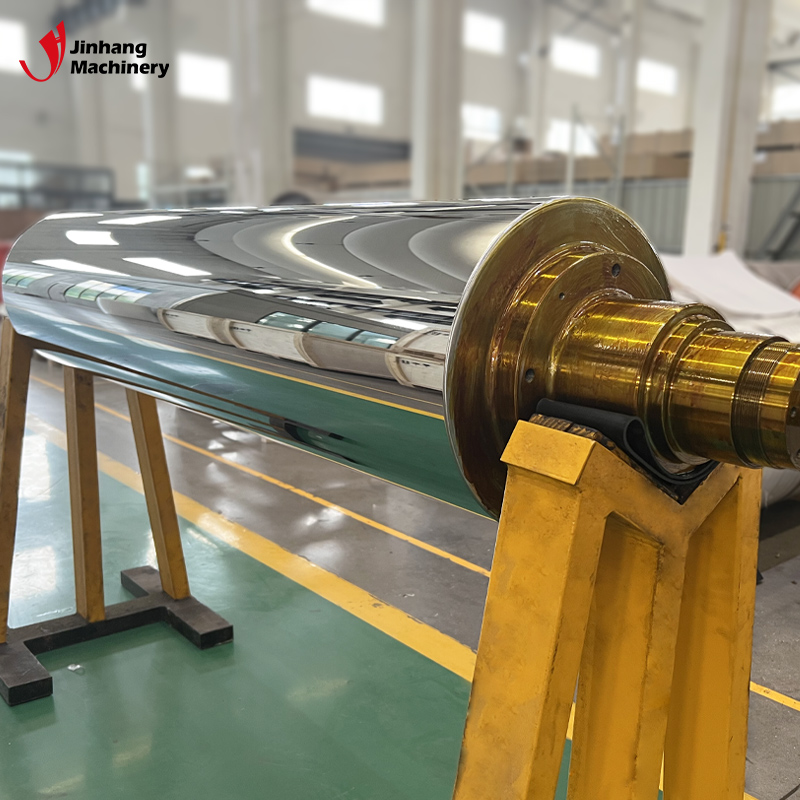
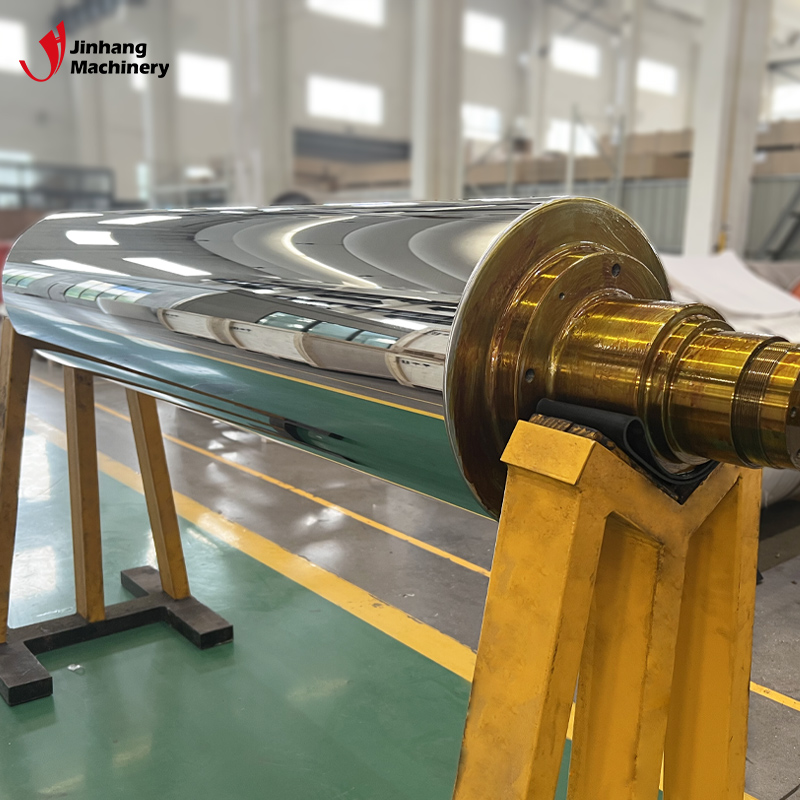
    A well-maintained cast film roller surface should have uniform reflection. If you observe: • Discontinuous light reflection • Localized dark areas or increased scattering This may indicate a change in surface roughness.
  • Is EPDM Rubber Roller Heat-Resistant?
    15
    2026-04
    The stable operating temperature of EPDM in air environments is typically: • Continuous operating temperature: 120°C~150°C • Short-term withstand temperature: 150°C~180°C This means that EPDM rubber rollers are perfectly capable of handling printing, conveying, heat treatment, and drying systems.
  • What Industrial Rollers Are Better Than Chrome-Plated?
    14
    2026-04
    Carbide-coated rollers are among the most common and significantly outperform chrome-plated rollers in high-end industrial applications. Carbide is typically composed of materials such as tungsten carbide (WC), titanium carbide (TiC), and chromium carbide (CrC), and the coating is formed through thermal spraying, HVOF, or plasma spraying processes.

  • What Temperature Range is Suitable for Epoxy-Coated Corona Rollers?
    13
    2026-04
    The applicable temperature range for epoxy-coated corona rollers is typically: 80°C to 120°C (for long-term continuous operation) It can withstand approximately 150°C under short-term peak conditions.
  • Will scratches on a casting film roller affect product quality?
    10
    2026-04
    If scratches exist on the surface of the casting film roller: • The material fills these tiny grooves. • After cooling, corresponding surface defects are formed. This is why scratches on the casting film roller directly affect the appearance quality of the product.
  • Why does film sticking occur on casting film rollers?
    09
    2026-04
    Temperature is one of the most critical factors. When the surface temperature of the cast film roller is too high, the following will occur: • The film separates from the roller before it has cooled sufficiently. • The surface remains viscous. • Adhesion to the roller surface.

40px

80px

80px

80px

Get the latest price? We will reply as soon as possible (within 12 hours)

40px

40px

40px

40px