News

  • Do industrial cooling rollers have temperature difference requirements?
    08
    2026-04
    From a thermal perspective, the greater the temperature difference, the more uneven the heat exchange on the cooling roller, and the worse the cooling quality. Therefore, most precision processes require the cooling roller temperature difference to be as small as possible, usually controlled within a very strict range.
  • Does EPDM Rubber Roller Absorb Water?
    07
    2026-04
    EPDM rubber rollers do not absorb water; their inherent properties determine their excellent water and steam resistance. EPDM (ethylene propylene diene monomer rubber) is composed of ethylene, propylene, and a small amount of a third monomer, and its molecular chain has a saturated structure.
  • Under what conditions will the lifespan of EPDM rubber rollers be shortened?
    06
    2026-04
    One of the biggest "no-go zones" for EPDM rubber rollers is oily media environments. This includes: • Mineral oil • Lubricating oil • Hydraulic oil • Animal and vegetable oils • Oil-containing emulsions
  • Can Industrial Heated Thin-Wall Rollers Replace Thick-Wall Rollers?
    03
    2026-04
    From an engineering perspective, heated thin-walled rollers are not simply a replacement for traditional thick-walled heated rollers, but rather a structural choice with significant advantages under specific operating conditions.
  • Tungsten Carbide Coated Rollers: Why Can't Pure Tungsten Carbide Powder Be Used?
    01
    2026-04
    In industrial production, a metallic binder phase must be added to form a fusible, bondable, and depositable composite powder, which is a crucial foundation for the successful manufacture of tungsten carbide coated rollers.
  • What are the special applications of NBR rubber rollers?
    27
    2026-03
    Ordinary rubber, after prolonged contact with oily media, is prone to: • Swelling • Softening • Changes in viscosity • Surface cracking NBR Rubber Roller, due to the presence of acrylonitrile in its molecular structure, has a natural resistance to oils and can maintain stable dimensional and physical properties in oily environments.
  • Which plastic film materials are suitable for industrial casting film rollers?
    26
    2026-03
    • Cast film rollers are widely applicable to a variety of thermoplastic film materials. • PE and PP are the most typical and suitable material types. • Materials such as PET and PVC place higher demands on cast film rollers, but are still suitable. • Multilayer composite films place even stricter performance requirements on cast film rollers.
  • What is an Industrial Casting Film Roller?
    25
    2026-03
    An industrial casting film roller is a high-precision industrial roller used in the casting process to achieve cooling, shaping, and surface replication by contacting molten or semi-molten material.
  • What are the advantages of an industrial hot oil roller?
    24
    2026-03
    The core advantage of hot oil rollers stems from a substance—thermal oil. Thermal oil, as a heat transfer medium, has the following characteristics: 1. High boiling point, not easily vaporized 2. Large heat capacity, strong heat retention 3. Good fluidity, easy to uniformly transfer heat 4. Low pressure, high system safety

  • Casting Film Roller vs. Cooling Roller: What's the Difference?
    23
    2026-03
    Cast film rollers are the core rollers that directly participate in material forming and determine product quality, while cooling rollers are mainly used to reduce material temperature and assist in stabilizing the process.
  • What is an Industrial Mirror-Surface Water-Cooled Roller?
    20
    2026-03
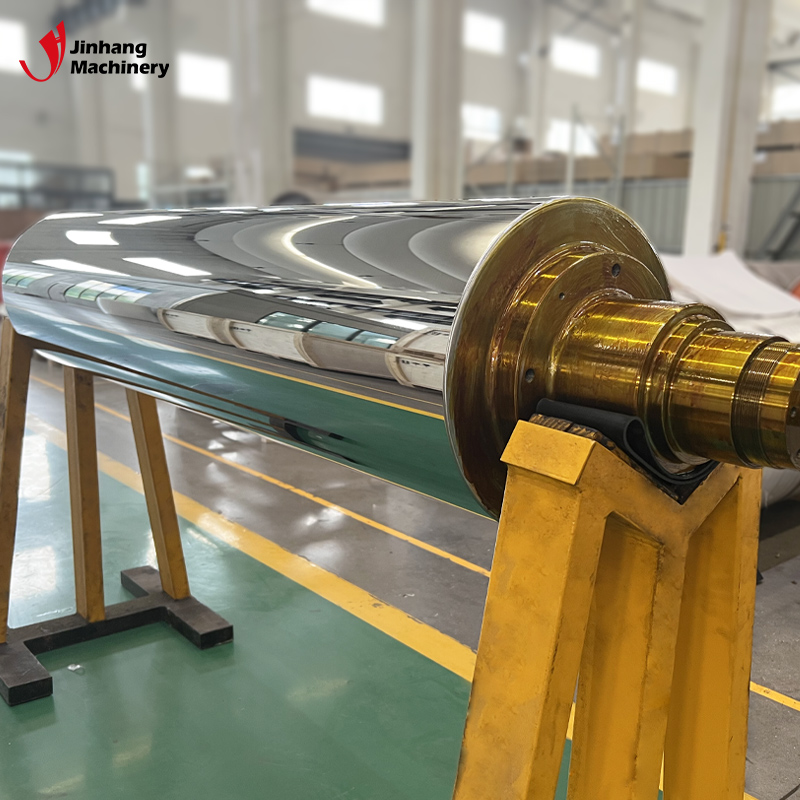
    An industrial mirror-surface water-cooled roller is a high-precision roller device specifically designed for material cooling, shaping, flattening, and surface treatment.
  • Why Must Industrial Casting Film Rollers Ensure High Surface Finish?
    19
    2026-03
    • The smoother the roller surface, the smoother the film surface • Microscopic defects on the roller surface will also result in corresponding defects on the film surface Therefore, the surface condition of the cast film roller is not an "indirect influence," but one of the core factors directly determining the surface quality of the film.

40px

80px

80px

80px

Get the latest price? We will reply as soon as possible (within 12 hours)

40px

40px

40px

40px