
Are Carbide-Coated Rollers Harder Than Steel?
In industrial manufacturing, rollers play crucial roles in rolling, support, traction, straightening, coating, and guiding. With increasing processing speeds, more complex operating conditions, and higher material hardness, traditional carbon steel or alloy steel rollers are increasingly unable to meet the requirements of high wear, high load, and high stability.
Therefore, carbide-coated rollers, high-performance surface-strengthening rollers, have become an important choice for many industries.
However, many people still ask a core question: Are carbide-coated rollers actually harder than steel?
How much harder are they than ordinary steel rollers? Why is their hardness increased so much? Are all carbide-coated rollers harder than steel? Does increased hardness mean a comprehensive performance improvement?
This article will delve into answering these questions.
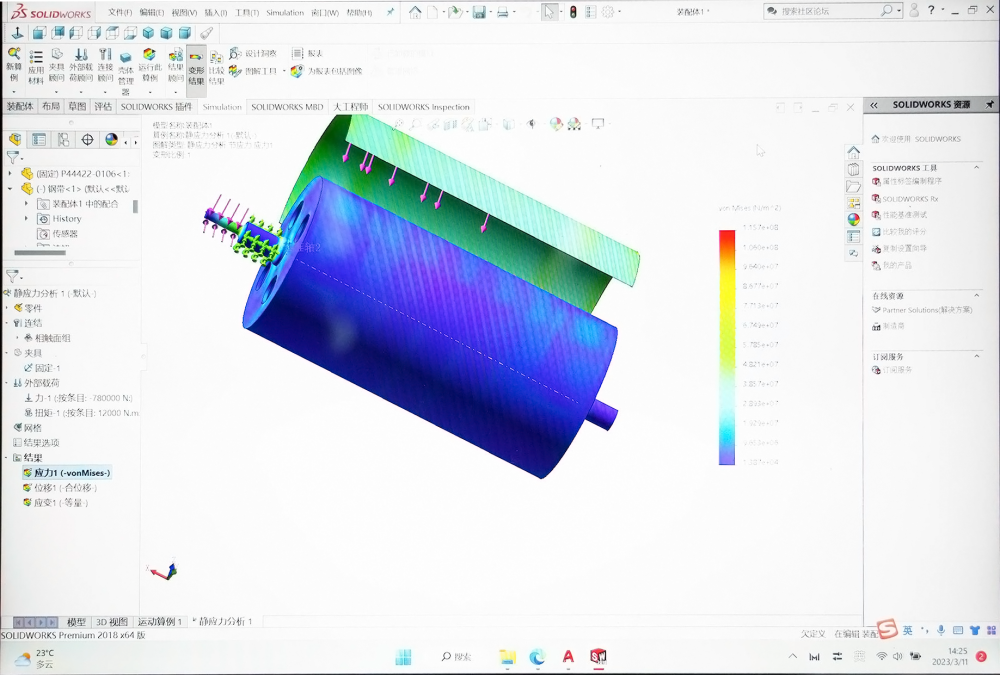
What are Carbide-Coated Rolls?
Carbide-coated rollers are rollers where carbide material is adhered to the roller surface through high-energy surface treatment technologies such as spraying, overlay welding, and HVOF (High-Voltage-Free Coating), giving the roller surface extremely high hardness, wear resistance, and corrosion resistance.
Common carbides include:
• Tungsten carbide (WC)
• Chromium carbide (Cr₃C₂)
• Titanium carbide (TiC)
• Metal binders (such as Co, NiCr)
The surface hardness of carbide-coated rollers often exceeds that of steel by several times or even tens of times.
What does "hardness" actually mean in industry?
Judging the hardness of a roller is not based on intuition, but on scientific indicators, such as:
• HV (Vickers hardness)
• HRC (Rockwell hardness)
• HRA (Hardness measurement for superhard materials)
Hardness represents a material's resistance to deformation, indentation, and wear.
Higher hardness generally means:
• Greater wear resistance
• Less prone to scratches
• Less prone to denting
• Longer service life
Therefore, hardness is one of the core indicators for measuring the surface performance of rollers.
Are carbide-coated rollers harder than steel?
The answer is a resounding yes: carbide-coated rollers are harder than steel, several times or even more than ten times harder.
Why can we be so certain?
The reason is that their hardness ranges are completely different.
What is the typical hardness of carbide-coated rollers?
Depending on the material composition and manufacturing process, the surface hardness of carbide-coated rollers is generally as follows:
HVOF Carbide Coating:
• HV 1100 – 1500
• Common WC-Co, WC-CoCr coatings
Plasma Spray Coating:
• HV 900 – 1300
Chromium Carbide Coating:
• HV 700 – 1100
• Particularly suitable for corrosive environments
Laser Cladding Carbide Coating:
• HV 600 – 1200
• Extremely high bond strength
These hardnesses far exceed those of ordinary steel rollers and most alloy steel rollers.
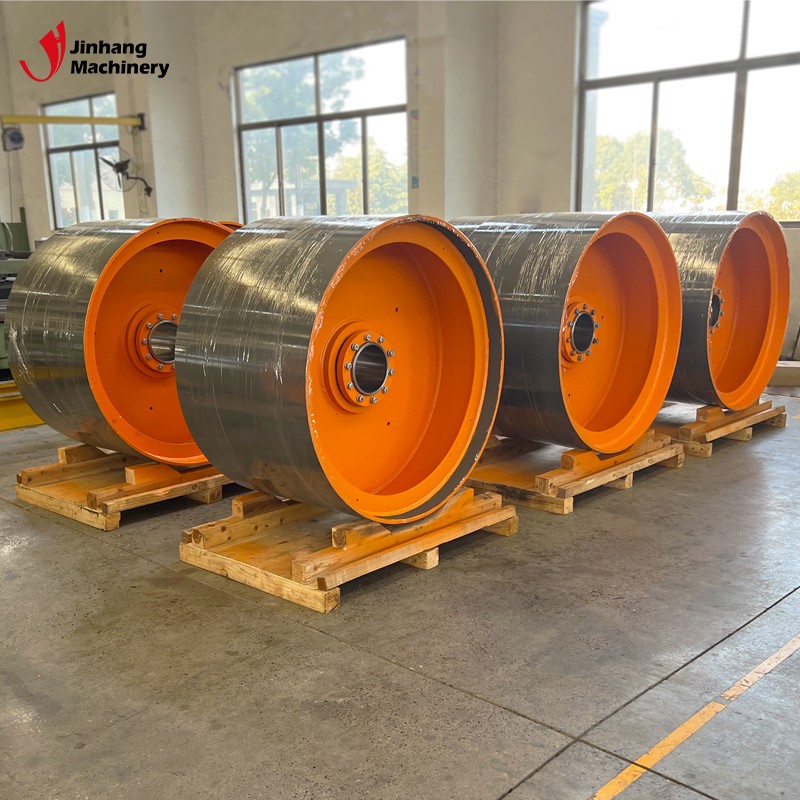
What is the typical hardness of steel?
Depending on the material, the hardness range of steel is as follows:
Ordinary carbon steel:
• HV 120 – 200
Alloy steel after heat treatment:
• HV 300 – 500
Tool steel (quenched):
• HV 600 – 800
However, even the highest grade tool steel is difficult to approach the hardness of the WC coating in carbide-coated rollers (approximately HV 1100 – 1500).
Therefore:
The hardness of carbide-coated rollers is typically 2, 3, or even more than 10 times that of steel.
Why can carbide-coated rollers have a higher hardness than steel?
The high hardness of carbide-coated rollers comes from three aspects:
1. The material itself is extremely hard
Carbide compounds (such as WC, Cr₃C₂) are inherently extremely hard, making them materials for manufacturing cutting tools, molds, and grinding wheels.
For example:
• WC's microhardness can reach HV 2000
• Tool steel is only around HV 800
Hard alloy is essentially "one of the superhard materials in industry."
2. Spraying or cladding processes make the coating dense and uniform
For example, the HVOF process allows powder to impact the roller surface at supersonic speeds, forming:
• High density
• High bonding strength
• Extremely low porosity
This further enhances the coating hardness.
3. Controllable coating thickness allows hardness to be more concentrated on the surface
Hardness does not need to penetrate the entire roller body; it only needs to be concentrated on the roller surface.
This leads to:
• Reduced costs
• Improved performance
• Unaffected roller body strength
The coating effectively "amplifies" the hardness, making it the most wear-resistant part of the roller body.
In what specific ways does the high hardness performance of hard alloy coated rollers manifest itself?
Many users do not know the true meaning of high hardness.
Hardness is not just a number; it reflects the overall performance of the roller.
Are hard alloy coated rollers more wear-resistant?
Yes.
High hardness means the roll surface is less prone to:
• Scratches
• Dents
• Wear bands
• Deterioration of surface roughness
Suitable for long-term high-speed operation.
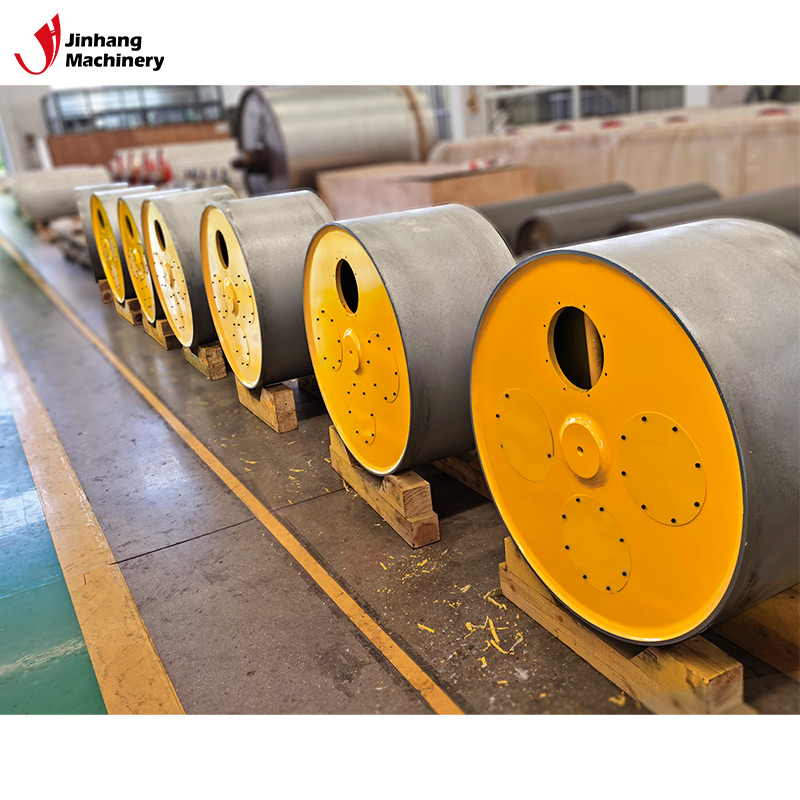
Can carbide-coated rolls withstand higher pressure?
Compared to steel rolls:
• Coated rolls are more resistant to pitting
• Less prone to surface indentations
• Withstand higher friction
Therefore, they are ideal for high-stress conditions such as calendering, rolling, and stretching.
Are carbide-coated rolls more corrosion-resistant?
Some carbides (such as Cr₃C₂) are more corrosion-resistant than steel.
For example:
• Acid resistance
• Alkali resistance
• Salt spray resistance
• Wet corrosion resistance
Therefore, carbide-coated rolls are suitable for coating, wet processes, and chemical environments.
Why can the hardness of carbide-coated rolls vary even when they are the same type?
The following factors affect the final hardness of carbide-coated rollers:
1. Different material formulations
For example:
• WC–Co coatings have higher hardness than Cr₃C₂–NiCr
• WC–CoCr has stronger corrosion resistance than pure WC
Therefore, the coating selection must match the operating conditions.
2. Different processes
For example:
• HVOF achieves the highest hardness
• Plasma spraying is the next best
• Laser cladding has stable but slightly lower hardness
The processing technology determines the coating quality.
3. Different coating thicknesses
Too thick a coating is prone to cracking; too thin a coating is not wear-resistant.
4. Different substrate material strengths
A substrate that is too soft may affect the overall surface support effect.
Does high hardness mean that carbide-coated rollers are more suitable for all operating conditions?
High hardness does not mean "all-around advantage."
Although the hardness of carbide-coated rollers is much higher than that of steel, this does not mean that it is necessarily suitable for all applications.
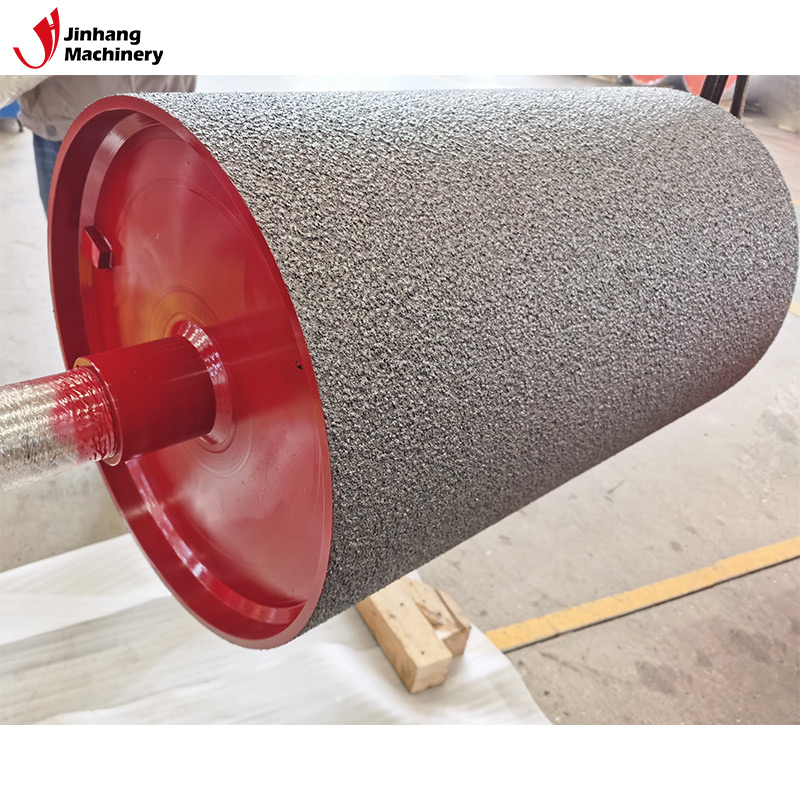
Are there any potential disadvantages to the high hardness of carbide-coated rollers?
The following points should be noted by users:
1. Coating may become brittle
Higher hardness generally means a more brittle material.
Therefore, carbide-coated rollers may not be suitable for:
• High impact
• Intermittent impacts
• Excessively high point loads
In these situations, a solid steel roller is more stable.
2. Coating may peel off (if the process is poor)
The risk of coating peeling usually stems from:
• Low bond strength
• Coating too thick
• Thermal expansion mismatch
• Inadequate roller pretreatment
High hardness itself does not necessarily mean high reliability.
3. Roll surface repair is difficult
Higher hardness makes polishing and repair more difficult.
When is a steel roller more suitable than a carbide-coated roller?
Although steel is less hard than cemented carbide coatings, it remains a better choice in certain scenarios:
• High-impact environments
• High toughness requirements
• Contact with flexible materials
• Cost constraints
• When extremely high deformation tolerance is required
Therefore, the key to selecting a roller is not "the harder the better," but rather "the most suitable hardness."
Cemented carbide coated rollers are significantly harder than steel, typically several to ten times harder.
This makes them exceptionally superior in terms of wear resistance, surface stability, and corrosion resistance.
Advantages of carbide-coated rollers:
• HV can reach 900–1500, several times higher than steel
• Excellent wear resistance
• Good corrosion resistance
• High surface stability
• Long service life
Disadvantages of carbide-coated rollers:
• The coating may be brittle, requiring avoidance of impacts
• Difficult to repair
• Higher cost than ordinary chrome-plated or steel rollers
• Reliance on high-quality spraying processes
While carbide-coated rollers are indeed harder than steel, their suitability depends on the specific operating conditions, not just the "hardness value" itself.