Are EPDM Rubber Rollers Hard or Soft?
In the manufacturing and application of industrial rollers, EPDM rubber rollers are widely used in printing, papermaking, textiles, packaging, food processing, and various humid and hot environments due to their excellent resistance to aging, heat, water vapor, and ozone.
However, one of the most frequently asked questions when selecting EPDM rubber rollers is:
"Are EPDM rubber rollers hard or soft?"
This is a crucial question because the hardness of the rubber roller directly affects the pressure transmission capacity, contact characteristics, wear rate, traction capacity, and overall service life of the equipment.
This article will start from the basic physical properties of industrial rubber materials, deeply analyze the hardness range of EPDM rubber rollers, the factors affecting hardness changes, the applicable scenarios for different hardness levels, and help you clarify how to determine whether an EPDM rubber roller is "hard" or "soft" in actual selection.
Are EPDM Rubber Rollers Hard or Soft?
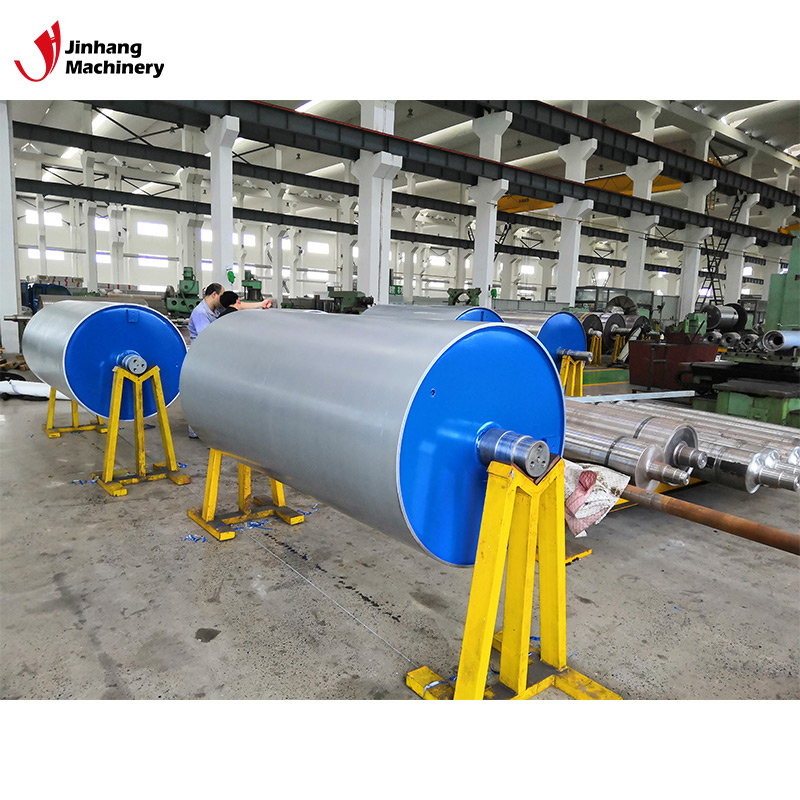
Standard Answer: EPDM rubber rollers can be both hard and soft, with a very wide hardness range, generally between Shore A 40°–95°.
In other words:
• Soft EPDM rubber rollers: 40°–60° A
• Medium-hardness EPDM rubber rollers: 60°–75° A
• High-hardness EPDM rubber rollers: 75°–95° A
This means that EPDM rubber rollers cannot be simply categorized as "soft" or "hard."
Its hardness depends entirely on factors such as formulation design, crosslinking density, filler ratio, and operating temperature.
What exactly is the hardness range of EPDM rubber rollers?
The hardness of EPDM materials can be made very wide because its polymer structure allows for the addition of different types of reinforcing fillers and plasticizers, which have a significant impact on hardness.
The common hardness ranges of EPDM rubber rollers used in industry are as follows:
Application Type | Common Hardness (Shore A) | Characteristics
Soft EPDM Rubber Roller | 40–60 | Good elasticity, strong adhesion, excellent cushioning performance
Medium Hardness EPDM Rubber Roller | 60–75 | Stable pressure transmission, commonly used in printing and pressure rollers
Hard EPDM Rubber Roller | 75–95 | High rigidity, stronger wear resistance, suitable for high-load areas
Due to the inherent ozone, heat, and steam resistance properties of EPDM material, it maintains stable aging resistance across any hardness range.
Why can EPDM rubber rollers be made both hard and soft?
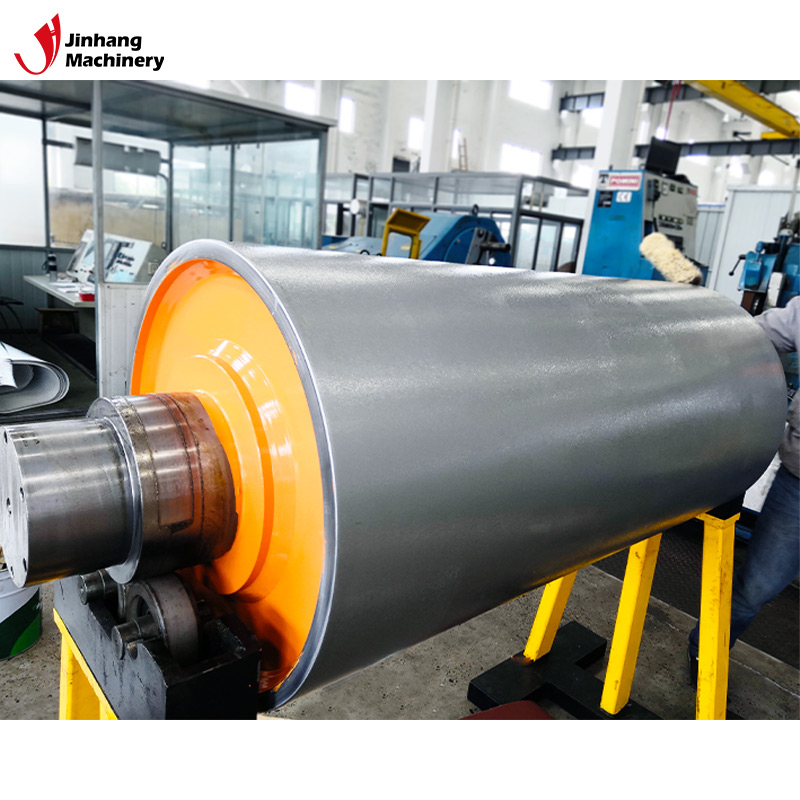
This is because the hardness of EPDM rubber rollers is controlled by several adjustable parameters, such as:
1. Adjustable Crosslinking Density
The higher the crosslinking density, the harder the rubber; the lower the crosslinking density, the softer it is.
EPDM materials commonly use vulcanization systems, including sulfur vulcanization and peroxide vulcanization. Both systems allow for flexible control of hardness.
2. Adjustable Reinforcing Filler Ratio
Adding fillers such as carbon black and silica to EPDM rubber can significantly increase its hardness.
The more filler, the harder the EPDM rubber roller.
3. Adjustable Plasticizer Dosage
The amount of plasticizer added determines the softness of the EPDM rubber roller.
More plasticizer = softer; less plasticizer = harder.
4. Hardness Determined by Process Requirements
Different industries have different requirements for contact pressure, temperature resistance, and shock absorption. Therefore, the hardness of EPDM rubber rollers must be set according to the working conditions.
Conclusion:
EPDM material is not fixed as "hard" or "soft," but rather EPDM rubber rollers can be adjusted to any hardness range suitable for your needs.
What factors determine the hardness of EPDM rubber rollers?
The following factors collectively determine the final hardness of EPDM rubber rollers:
1. Molecular Structure of the Rubber Matrix
EPDM itself has a low-unsaturation structure, resulting in high hardness and plasticity.
2. Selection of Vulcanization System
Sulfur systems tend to be softer, while peroxide systems can achieve higher hardness.
3. Filler System Ratio
The higher the proportion of carbon black, the higher the hardness.
4. Requirement for Steam and Heat Resistance
High-temperature conditions often require a higher degree of cross-linking to increase hardness.
5. Processing Method
Different calendering, extrusion, and vulcanization methods result in different hardness characteristics.
In other words, the hardness of EPDM rubber rollers is a comprehensive result controlled by both the chemical formulation and the processing technology.
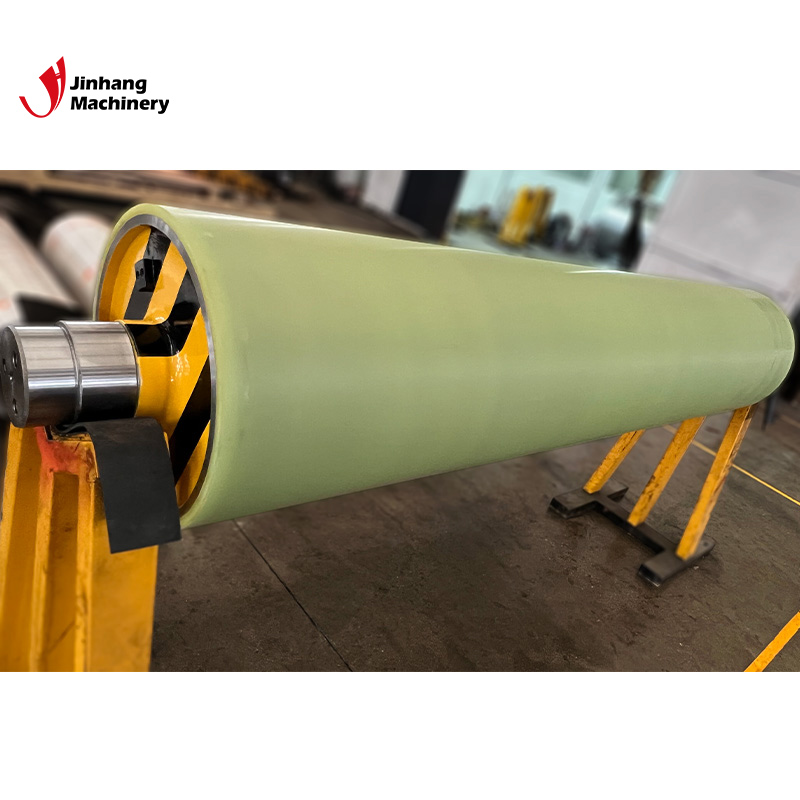
What are the industrial applications of EPDM rubber rollers with different hardnesses?
1. Soft EPDM rubber rollers (40–60 A) are commonly used in:
• Applications requiring high elasticity, cushioning, and coating
• Water treatment equipment conveyor rollers
• Food conveyor rollers (EPDM food grade)
• Thin material traction and low-pressure contact applications
Features: Flexibility, good fit, and less impact on the processed material.
2. Medium-hardness EPDM rubber rollers (60–75 A) are commonly used in:
• Press rollers in the printing industry
• Conveying and pressing in the paper industry
• Medium-pressure conveying systems
• Transfer rollers in various processing liquids and hot water environments
Features: Balances elasticity, wear resistance, and structural stability; this is the most widely used type of EPDM rubber roller.
3. High-hardness EPDM rubber rollers (75–95 A) are commonly used in:
• Press rollers requiring high pressure
• High-abrasion environments
• Industrial traction rollers
• Large-diameter, high-load mechanical equipment
Features: Higher rigidity, stronger wear resistance, and able to withstand greater mechanical forces.
How to determine whether your equipment requires hard or soft EPDM rubber rollers?
The judgment rules are as follows:
Situations where equipment requires "soft EPDM rubber rollers":
• High elasticity and cushioning are required.
• The material surface must not be damaged by pressure.
• Primarily used for conveying, not applying pressure.
• The environment is humid and hot, but the pressure is not high.
Situations where equipment requires "hard EPDM rubber rollers":
• The machine needs to apply high pressure.
• High wear life is required.
• The roller body needs higher rigidity.
• Strong traction is required.
In short:
Hardness is determined primarily by pressure requirements, with material sensitivity and fit as secondary factors.
What are the relationships between the hardness of EPDM rubber rollers and other properties?
1. Hardness vs. Elasticity
• Soft EPDM rubber rollers have high elasticity.
• Hard EPDM rubber rollers have lower elasticity but smaller deformation.
2. Hardness vs. Abrasion Resistance
• Higher hardness results in better abrasion resistance.
• Softer rollers have weaker abrasion resistance.
3. Hardness vs. Compression Set
• Higher hardness results in lower compression set.
• Softer rollers have greater deformation but better adhesion.
These properties determine the positioning and selection logic of EPDM rubber rollers in different industries.
Are there EPDM rubber rollers that are "too hard" or "too soft"? What are the risks?
Of course, there are.
Risks of Overly Hard EPDM Rubber Rollers:
• Inability to provide necessary linear pressure distribution
• Potential damage to the processed material
• Lack of cushioning leading to vibration transmission
• Increased rolling noise
Risks of Overly Soft EPDM Rubber Rollers:
• Prone to permanent deformation
• Reduced abrasion resistance
• Difficulty maintaining cylindrical consistency
• Insufficient pressure transmission
Therefore, the hardness of EPDM rubber rollers must be precisely designed, not simply a matter of harder or softer is better.
How to Choose the Right EPDM Rubber Roller Supplier Based on Hardness?
When selecting a supplier, the following technical capabilities should be confirmed:
✔ Can they provide accurate formulations for a specified hardness range?
✔ Do they have a dedicated EPDM vulcanization process?
✔ Can they provide hardness testing reports (Shore A)?
✔ Can they customize hardness according to operating conditions instead of just providing a fixed model?
✔ Are they familiar with the material changes of EPDM rubber rollers in high-temperature steam/hot water environments?
Professional suppliers can provide the optimal hardness according to your equipment requirements, rather than using generic formulations.