
Are Smoother Industrial Mirror Rollers Always Better?
In the industrial manufacturing field, "mirror rollers" are often seen as a symbol of high-precision, high-quality processing equipment. Many people, upon encountering mirror rollers, easily form an intuitive understanding: the smoother the industrial mirror roller, the better the product quality. This understanding seems reasonable on the surface, but from the perspective of manufacturing processes and physical mechanisms, it is not entirely valid.
In fact, the smoothness of industrial mirror rollers is not necessarily better the higher it is. Excessively pursuing extreme smoothness may actually cause a series of quality problems in actual production. To truly understand this, a systematic analysis must be conducted from multiple dimensions, including the functional positioning of mirror rollers, contact mechanisms, friction characteristics, and process adaptability.
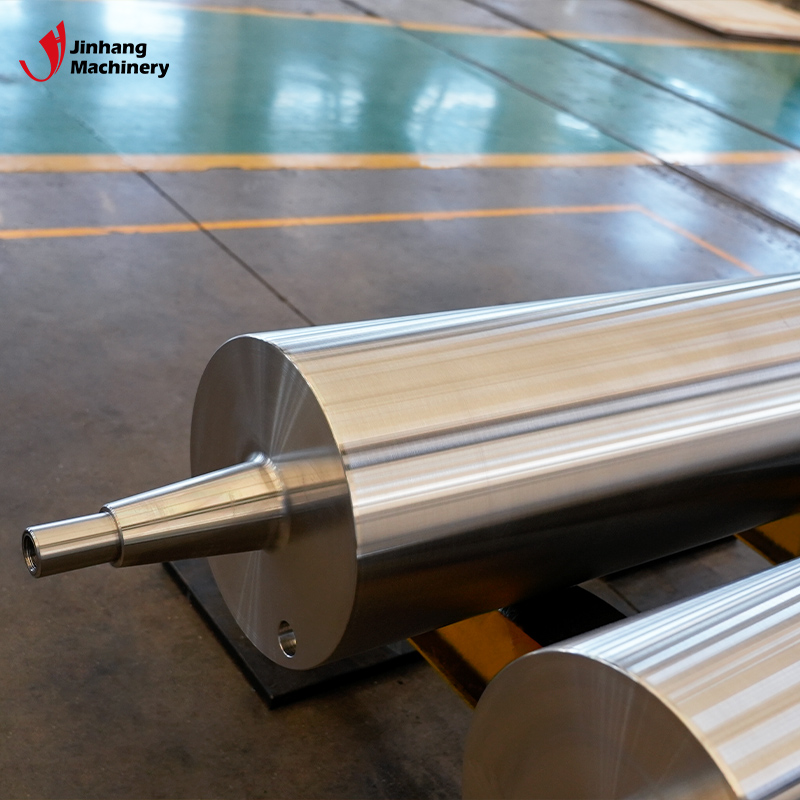
What is a mirror roller? What role does it play in industrial manufacturing?
Mirror rollers generally refer to industrial roller components whose surfaces have undergone precision machining and polishing, resulting in extremely low surface roughness. Their surface finish is close to a mirror effect, hence the name "mirror roller."
In industrial manufacturing, mirror rollers primarily serve the following functions:
• Providing a stable and uniform contact surface for materials
• Controlling the surface quality and appearance consistency of materials
• Participating in key processes such as pressing, coating, shaping, and lamination
• Maintaining stable operation in continuous production
Because mirror rollers are in direct contact with the material surface, their surface condition directly impacts product quality, which is why "smoothness" is highly valued.
Why do many people believe that the smoother the mirror roller, the better?
This viewpoint stems mainly from the following intuitive perceptions:
• Smooth surfaces make it easier to obtain high-gloss products
• Lower surface roughness results in fewer friction marks
• Mirror effects are often associated with high-end manufacturing
Under certain specific process conditions, a higher smoothness industrial mirror roller can indeed help improve the surface appearance of products. However, the problem is that this effect is not applicable to all processes and all materials. Treating "the smoother the better" as a universal principle often ignores the complexities of industrial manufacturing.
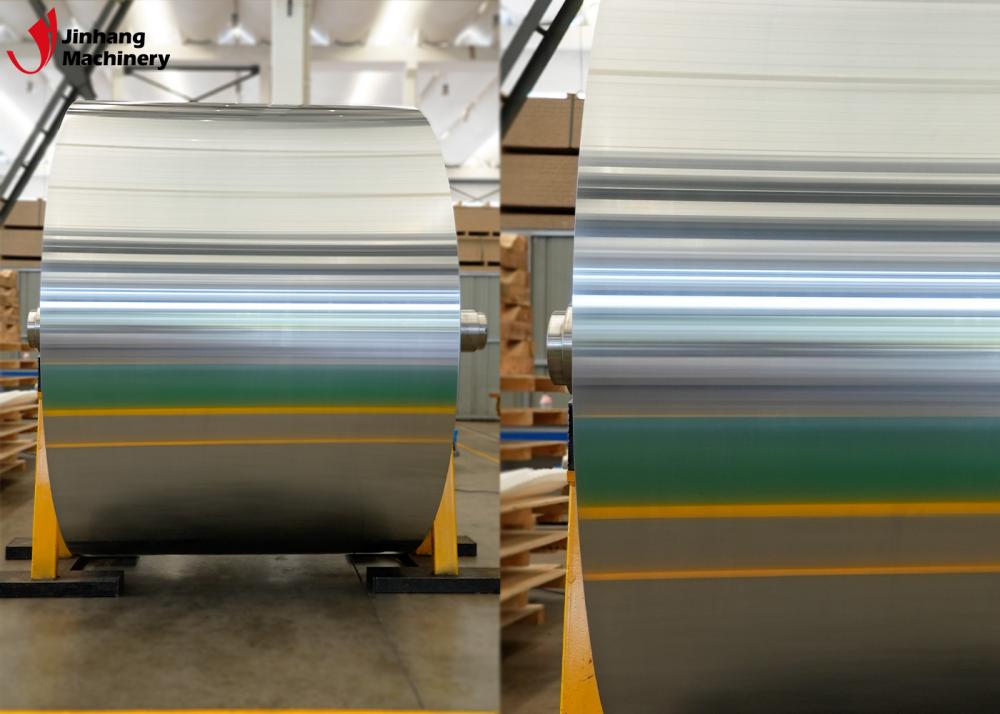
What exactly does the surface smoothness of a mirror roller mean?
To discuss whether smoother industrial mirror rollers are always better, we first need to clarify the meaning of "smoothness." In industrial context, the smoothness of a mirror roller usually refers to its surface roughness, not the "brightness" visible to the naked eye.
The surface roughness of a mirror roller directly affects:
• Actual contact area
• Magnitude of friction
• Material slippage behavior on the roller surface
When the surface of an industrial mirror roller is too smooth, the contact state between the material and the roller surface changes significantly, and this change is not always beneficial.
Is a smoother mirror roller always better?
From a friction mechanism perspective, not necessarily.
In industrial processing, the ideal state of "completely frictionless" contact between the industrial mirror roller and the material is not ideal. On the contrary, moderate and controllable friction is often a prerequisite for stable process operation.
When the surface of a mirror roller is excessively smooth, the following problems may occur:
• Insufficient friction, making it difficult to effectively traction the material.
• Material slippage on the roller surface.
• Unstable tension control.
From a friction mechanism perspective, industrial mirror rollers do not aim to minimize friction, but rather to achieve stability and controllability of friction. Excessive smoothness disrupts this balance.
Why does an overly smooth mirror roller affect the stable operation of materials?
In continuous production processes, materials typically need to maintain a stable operating state on the industrial mirror roller surface. If the mirror roller surface is extremely smooth, the material's "adhesion" to the roller surface will significantly decrease.
This may lead to:
• Unstable material trajectory
• Increased frequency of positional deviation
• Frequent adjustments to process parameters.
Therefore, mirror rollers do not simply aim for the smoothest surface, but rather need to find a reasonable balance between smoothness and operational stability.
Why might an excessively smooth mirror roller surface cause adhesion or peeling problems?
Many people mistakenly believe that a smooth surface is always easier to peel off materials, but in actual processes, an excessively smooth industrial mirror roller may actually lead to abnormal contact conditions.
When the surface roughness of a mirror roller is extremely low:
• A localized vacuum effect may form between the material and the roller surface.
• Separation resistance in the contact area increases.
• The peeling process becomes less smooth.
This phenomenon is particularly noticeable in certain material processing processes, indicating that higher smoothness of the mirror roller is not necessarily safer.
Is a smoother mirror roller always better for surface quality?
From a surface quality perspective, the industrial mirror roller does indeed determine the final appearance of the product to some extent. However, this does not mean that extreme smoothness always leads to a better surface finish.
If the mirror roller surface is too smooth:
• Tiny impurities are more easily "completely replicated" on the contact surface.
• Localized defects are more difficult to disperse or buffer.
• Surface imperfections become more noticeable.
A moderate surface microstructure can sometimes actually help improve overall appearance consistency.
What is the relationship between mirror roller smoothness and pressure distribution?
In many processes, the mirror roller not only contacts the material but also applies pressure. The surface condition of the industrial mirror roller directly affects how pressure is distributed within the contact area.
When a mirror roller is excessively smooth:
• The actual contact points are highly concentrated.
• Local pressure peaks increase.
• The material is more prone to localized deformation.
In contrast, mirror rollers with a reasonable surface microstructure are more conducive to uniform pressure distribution.
Why is it that "the brighter the mirror roller, the better" is not true?
From a manufacturing perspective, the processing goal of industrial mirror rollers is not simply to pursue visual effects, but to serve specific process requirements. Polishing is merely a means, not an end.
Problems that may arise from over-polishing include:
• Increased costs with limited benefits.
• Surface properties deviating from process requirements.
• Decreased stability during use.
Therefore, whether a mirror roller needs to achieve extremely high smoothness should be determined by process conditions, not by a single performance indicator.
How does the smoothness of a mirror roller affect production consistency?
Production consistency is one of the core indicators in industrial manufacturing. Once the surface condition of an industrial mirror roller is unreasonable, its impact will be amplified continuously in the production process.
If a mirror roller is excessively smooth:
• It becomes more sensitive to environmental changes.
• Its tolerance for material fluctuations decreases.
• It becomes more difficult to maintain product consistency over the long term.
This illustrates that the "appropriate smoothness" of an industrialmirror roller is more important than its "extreme smoothness."
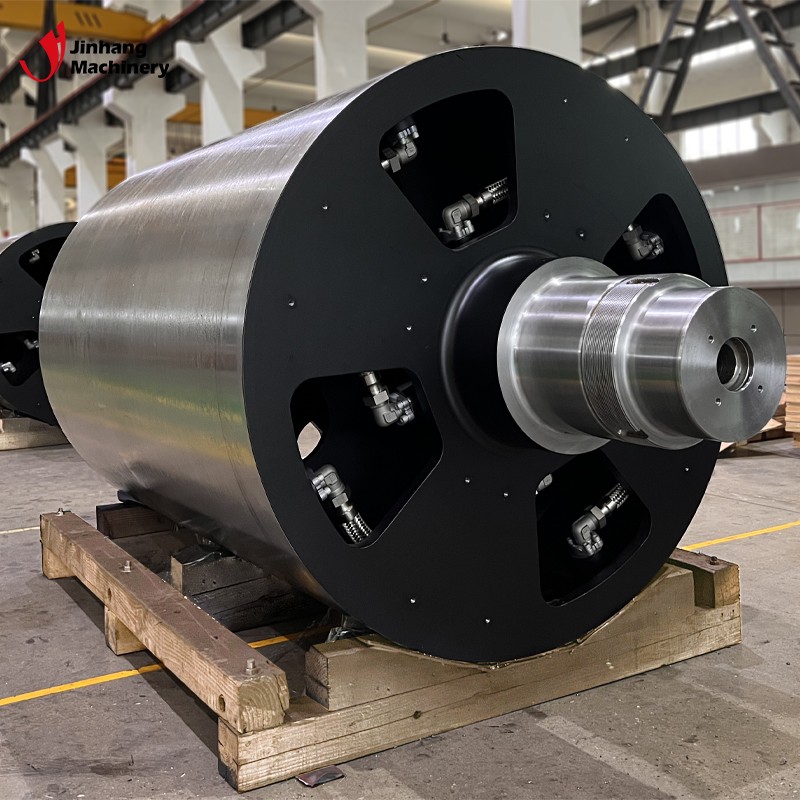
Why should the smoothness of a mirror roller be defined based on process rather than aesthetics?
The design and manufacturing of industrial mirror rollers are essentially engineering endeavors serving the manufacturing process, not aesthetic ones. Different processes have significantly different requirements for mirror rollers.
A reasonable mirror roller smoothness should satisfy:
• Stable process operation
• Controllable friction and contact states
• Repeatable product quality indicators
Discussing "the smoother the better" without considering specific processes is a one-sided understanding.
From a systems perspective, why can't mirror rollers be pursued for extreme smoothness?
In a manufacturing system, the mirror roller is not an independent component but interacts with materials, tension systems, drive systems, etc.
An overly smooth mirror-finish roller can disrupt the overall system balance, leading to:
• Frequent adjustments to other parameters
• Decreased system stability
• Increased operational difficulty
From a systems engineering perspective, the performance of a mirror-finish roller must conform to the overall process logic.
What coating options does your roller manufacturing service include?
As a specialized roller manufacturer, Jinhang Machinery offers a wide selection of coating materials such as rubber, polyurethane, ceramic, chromium, and tungsten carbide. These coatings enhance wear resistance, chemical stability, temperature control, and surface functionality. Whether you need anti-corrosion properties, enhanced friction, or ultra-high hardness, we select the most suitable coating process based on your application requirements.