
Can Magnets Attract to Industrial Tungsten Carbide Coated Rollers?
In industrial production, the surfaces of roller equipment often require special treatment to withstand harsh conditions such as high wear, high temperature, high speed, and chemical corrosion. In recent years, industrial tungsten carbide coated rollers have been widely used in the plastic film, paper, textile, battery material, and metal embossing and coating industries due to their ultra-high hardness, strong wear resistance, and stable long lifespan.
With the expansion of their application, some technicians have raised a seemingly simple but crucial question: Can magnets adhere to industrial tungsten carbide rollers?
This question not only relates to determining the roller material but also affects the factory's operational methods in daily maintenance, fixture identification, assembly positioning, and the use of magnetic testing tools.
This article will answer this question through rigorous materials science analysis, analyzing why or not tungsten carbide coated rollers can be attracted to magnets from multiple perspectives, including hardness, coating structure, substrate material, and magnetic characteristics.
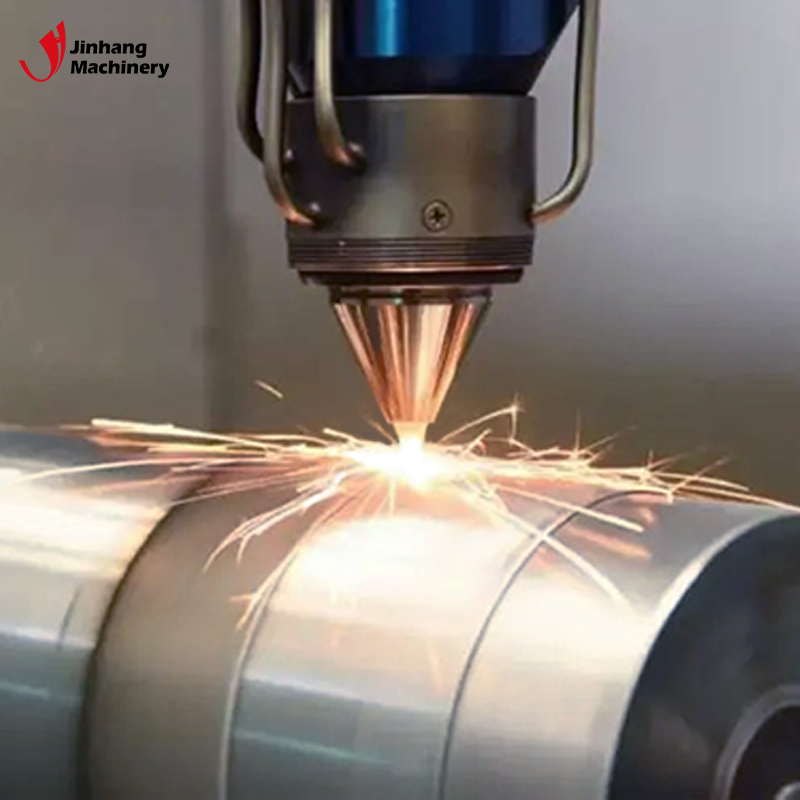
What is a tungsten carbide coated roller?
To answer the question "Can magnets adhere to tungsten carbide coated rollers?", we must first understand the structure of tungsten carbide coated rollers.
A tungsten carbide coated roller consists of two parts:
1. Roller Core
Typically, one of the following metals is used:
• Medium carbon steel (e.g., 45# steel)
• Alloy steel (e.g., 42CrMo)
• Stainless steel (e.g., 304, 316)
• High-strength steel
Different materials have completely different magnetic properties, which is crucial to whether a magnet can attract them.
2. Surface Tungsten Carbide Coating (WC-Co / WC-Ni / WC-Cr)
This coating is typically formed using HVOF (High-Voltage Flame) thermal spraying technology, with a thickness of approximately:
• 50–300 μm. The coating is composed of the following materials:
• WC (tungsten carbide) particles: providing high hardness
• Co (cobalt), Ni (nickel), Cr (chromium) binders: enhancing toughness and adhesion
This coating is extremely dense, achieving a hardness of:
• HV1100–1400
The resulting surface is almost ceramic.
Therefore, when determining magnetism, it is essential to distinguish:
• Is the coating magnetic?
• Is the substrate magnetic?
• Can a magnet penetrate the coating and affect the substrate?
Now, let's address the core question:
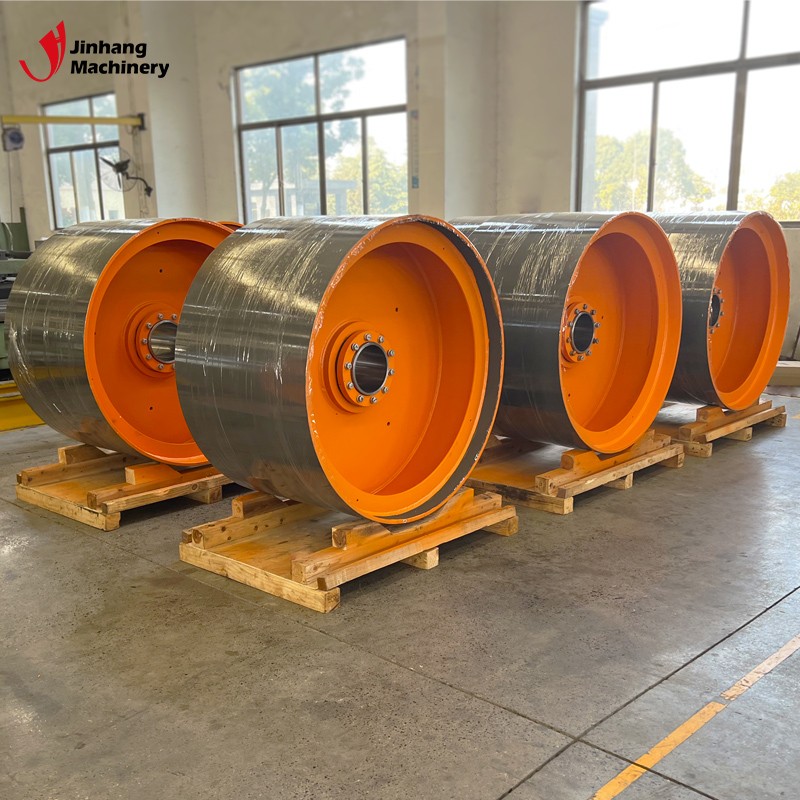
Can a magnet be attracted to a tungsten carbide coating?
Generally: A magnet cannot be attracted to the "coating itself."
The reasons are:
• Tungsten carbide (WC) is not a ferromagnetic material.
• Although cobalt, nickel, and chromium in the coating are metals, their magnetic properties are extremely weak or they remain non-magnetic in their composite state.
• Although the coating thickness is relatively thin, the coating itself will not be attracted by a magnet.
In other words:
➡ A magnet will not attract the tungsten carbide coating itself.
However, whether a magnet can attract the entire "tungsten carbide roller" depends on whether the roller substrate is magnetic.
For example:
• If the substrate is carbon steel → magnetic → a magnet can attract it.
• If the substrate is 304/316 stainless steel → non-magnetic → a magnet cannot attract it.
Even with a tungsten carbide coating on the surface, a magnet can still affect the substrate.
Does tungsten carbide itself possess magnetism?
Tungsten carbide (WC) is not magnetic.
Tungsten carbide is a hard inorganic compound, similar to ceramics. Its crystal structure determines that:
• It is non-ferromagnetic
• It does not attract magnets
• It is not affected by magnetic clusters
• Its properties are not altered by external magnetic fields
Therefore, even if a tungsten carbide coated roller has a thick WC coating, the surface will not be attracted by a magnet.
Does the substrate material of the tungsten carbide roller affect magnetic attraction?
The answer is: Absolutely.
The substrate materials of industrial rollers are broadly classified into two categories: "magnetic metals" and "non-magnetic metals."
1. Magnetic Substrates (Magnetic Attraction)
Mainly includes:
• Carbon steel
• Alloy steel
• Some martensitic stainless steel
These materials have a high iron content and strong magnetism. Even with a tungsten carbide coating, magnets can still attract them because the magnetic field can penetrate the coating, which is tens or even hundreds of micrometers thick.
Therefore:
➡ Tungsten carbide coated rollers using carbon steel or alloy steel as the substrate are inherently magnetic.
2. Non-magnetic substrates (magnets cannot attract them)
Mainly include:
• 304 stainless steel
• 316 stainless steel
• Some austenitic stainless steel
If the coated roller uses these non-magnetic materials as the substrate, then:
➡ Magnets cannot attract the entire tungsten carbide coated roller.
Because the substrate itself is not magnetic.

Why are some tungsten carbide rollers magnetic while others are not?
The reasons are summarized as follows:
1. Differences in substrate material
• Carbon steel, alloy steel → Strongly magnetic
• Stainless steel (304/316) → Non-magnetic
2. Coating thickness does not affect the substrate's magnetism
Coating thickness is typically tens to hundreds of micrometers, and magnetism can easily penetrate this thickness.
3. The coating material itself is not magnetic
WC coating does not affect the strength of magnet attraction, nor does it enhance or eliminate magnetism.
Therefore:
➡ Whether a tungsten carbide coating roller is magnetic depends on the substrate, not the coating.
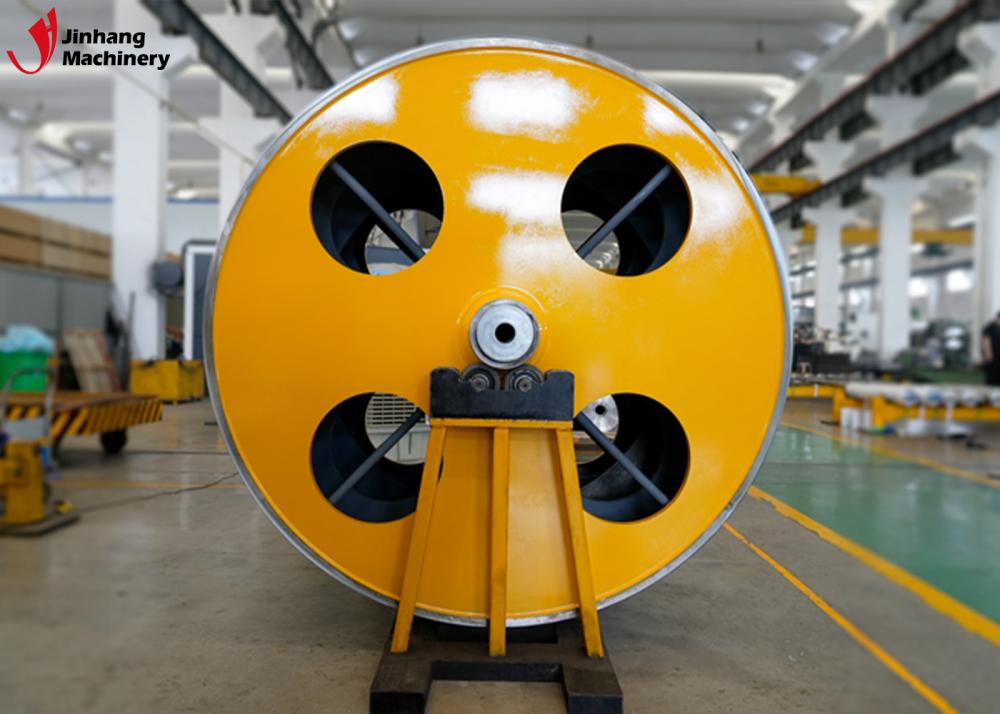
Will the magnetism of a tungsten carbide coating roller affect production?
Generally:
Magnetic properties have no negative impact on production.
This is because:
• The coating surface itself is non-magnetic → it will not attract dust
• The roller surface will not attract iron filings → it will not scratch the material
• The magnetic field strength is extremely weak → it will not affect the flow of films, pastes, or inks
Tungsten carbide coating rollers will not have their function or processing performance affected by substrate magnetism during high-speed operation.
The only points to note are:
• If the production process involves ultrafine iron powder
• If magnetic tools are used around the roller
In this case, it is necessary to confirm whether the roller's magnetism is suitable for the application environment.
How to determine the source of magnetism on a tungsten carbide coating roller?
To determine the source of magnetism, consider the following:
1. Check the substrate material (most crucial)
• Material markings such as 45#, 42CrMo → Inevitably magnetic
• Markings such as 304, 316 → Non-magnetic
2. Use a magnet to test the coating surface and sides
• Significant adhesion → Substrate is steel
• No adhesion at all → Substrate is non-magnetic stainless steel
3. Check the manufacturing drawings
Industrial roller drawings will clearly indicate the substrate material.
Is using a magnet to test tungsten carbide rollers accurate?
Magnetic testing of substrate material is generally effective, but it cannot determine coating quality.
A magnet can only determine:
• Whether the roller substrate is steel
• Whether coating thickness affects magnetism (usually not)
However, a magnet cannot determine:
• Whether the coating material is genuine WC
• Whether the coating is dense
• Whether the adhesive layer quality is acceptable
• Whether there are voids
Therefore, a magnet should not be used as a "coating quality inspection tool."
Can the quality of the coating be determined by magnetism?
The answer is clear:
No. Magnetism has no direct correlation with coating quality.
The reasons are as follows:
• Tungsten carbide coatings are non-magnetic and their magnetic field does not change with mass variations.
• The substrate's magnetism is independent of the coating's properties.
• Coating thickness has no significant impact on magnetic field penetration.
• No coating defects can be identified by a magnet.
Therefore:
➡ Using a magnet to judge coating quality is neither scientific nor reliable.
Common methods used in the industry to judge the quality of tungsten carbide coated rollers include:
• Coating hardness testing
• Coating thickness measurement
• Microstructure observation
• Coating adhesion testing
• Coating roughness testing
• Surface smoothness testing
These are the professional methods.
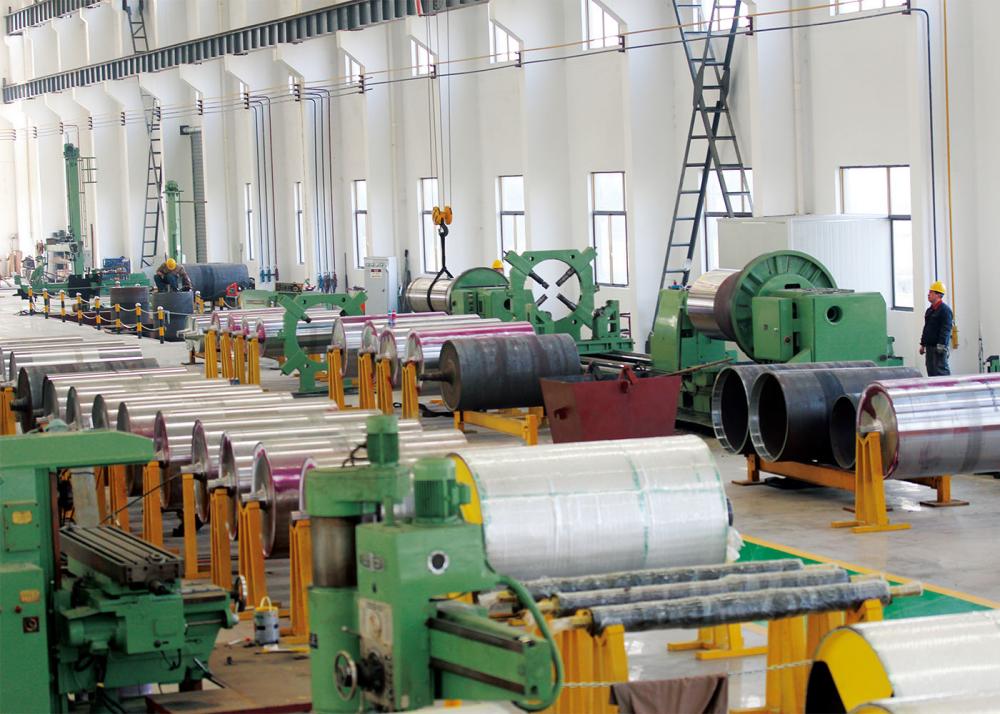
What technical equipment supports your roller manufacturing capability?
Jinhang Machinery operates a fully equipped workshop featuring high-capacity lathes (CW61190, 61160, 61120, etc.), Italian universal grinders, dynamic balancing machines, automatic welding lines, vertical mills, boring machines, and automated polyurethane casting systems. These advanced resources enable us, as an efficient roller manufacturer, to execute high-precision machining and coating for both standard and custom roller projects.